





Coastal Cottage Landscape
Coastal cottage landscape paintings capture maritime dwellings through the brushwork of Victorian, Edwardian and mid-century British artists.
Coastal Cottage Landscape
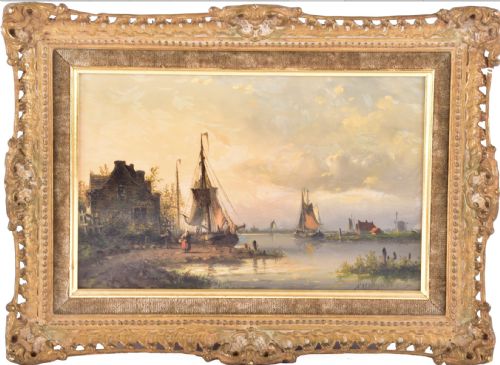
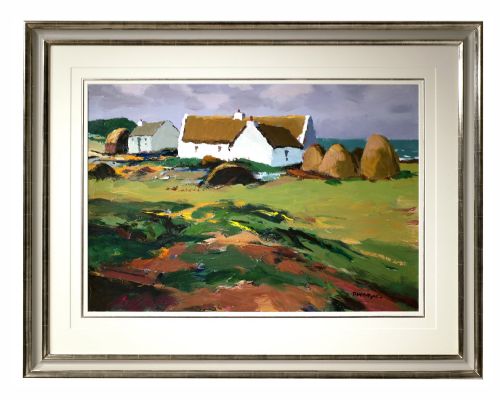
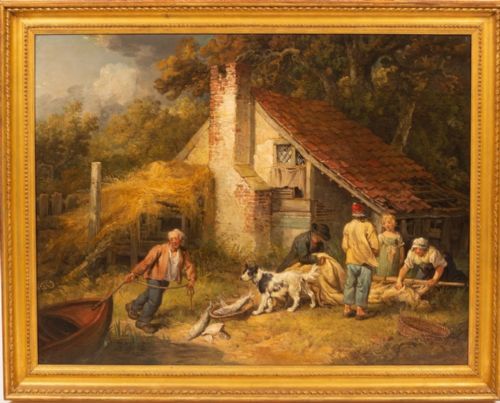
A coastal cottage landscape brings together seaside settings and rural dwellings in painted form, spanning Victorian, Edwardian and mid-century periods. These works capture coastal scenes featuring cottages, fishing boats and rural daily life.
The most common examples on this page are watercolours on paper and oil paintings on canvas or board, created by British and international artists during the nineteenth and twentieth centuries.
Materials and methods
Artists painted these subjects primarily using watercolour on paper or oil paint applied to canvas, wood panels and boards. These traditional materials define the surface texture and appearance of each period.
Framed works often incorporate protective glass over delicate watercolours on paper, whilst oil paintings on canvas and board rely on direct application of pigment to build depth and atmosphere.
Coastal Cottage Landscape Retail Price Guide 2026
Typical asking prices for coastal cottage landscape among the pieces listed under this phrase on Sellingantiques today, from the lower quarter to the upper quarter. They describe what is for sale here now, not the wider market.
Several cottages clearly needed a fresh coat of paint long before the artist arrived with their easel.
Factors of quality
Quality rests upon the confidence of the brushwork and the artist's handling of light and coastal atmosphere. Stronger pieces display deliberate composition and assured handling of pigment.
The choice of medium and support also influences character, with substantial oil paintings on canvas offering different visual weight compared to finely detailed watercolours on paper.
Donald McIntyre·Arthur Tucker·John McDougal·Walter Henry Sweet·Henry Valter
The Coastal Cottage Landscape Glossary
- Watercolour
- A paint consisting of pigment suspended in a water-based solution, typically applied to paper surfaces in these coastal scenes.
- Oil Paint
- A slow-drying paint made with pigments suspended in oil, utilised on canvas, wood panels and boards.
- Victorian
- Relating to the reign of Queen Victoria, a period frequently represented among these nineteenth-century paintings.
- Impressionism
- An art style focused on accurate depiction of light in its changing qualities, seen in several twentieth-century works here.
Coastal Cottage Landscape: Frequently Asked Questions
What periods do these paintings come from?
The works span from the nineteenth century through the Victorian and Edwardian eras up to the mid-twentieth century. Various distinct artistic movements are represented across these dates.
Each period brings its own characteristic palette and choice of medium, from nineteenth-century watercolours to mid-century oils on board.
Are these works framed?
Many examples are offered in frames, which helps protect works on paper such as watercolours under glass. Oil paintings on canvas or board are also frequently presented framed.
Framing styles vary according to the period of the artwork, ranging from traditional Victorian mouldings to later twentieth-century surrounds.
What subjects appear in these scenes?
The primary subjects involve coastal dwellings, cottages, fishing boats and maritime shorelines. Figures engaged in daily coastal life also feature in several compositions.
Locations range from Welsh bays and Yorkshire villages to Devon estuaries and Danish shores.
How do I distinguish watercolours from oil paintings?
Watercolours are painted on paper and typically displayed beneath glass to protect the delicate medium from moisture and damage. They possess a translucent quality.
Oil paintings utilise thicker pigments on canvas, wood panels or boards, creating a textured surface that does not require protective glass.