


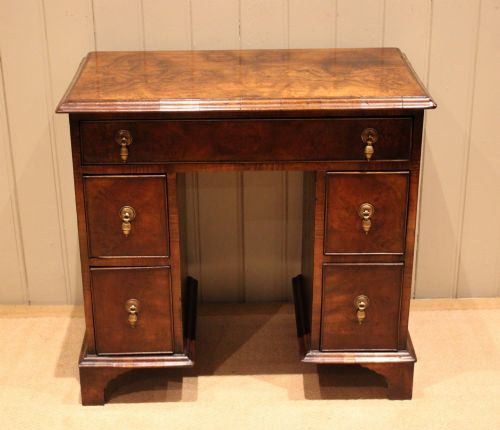
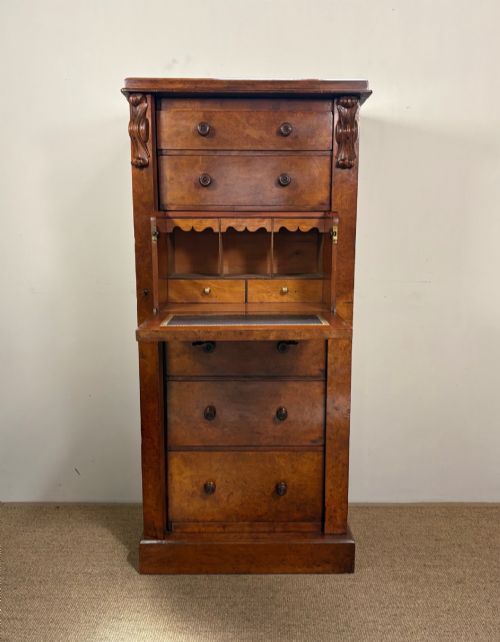
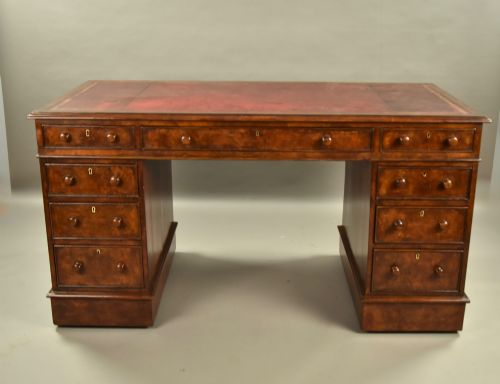
Traditional Walnut Writing Desk
A traditional walnut writing desk brings deep grain and working practicality to a room, offering a surface designed for correspondence.
Traditional Walnut Writing Desk
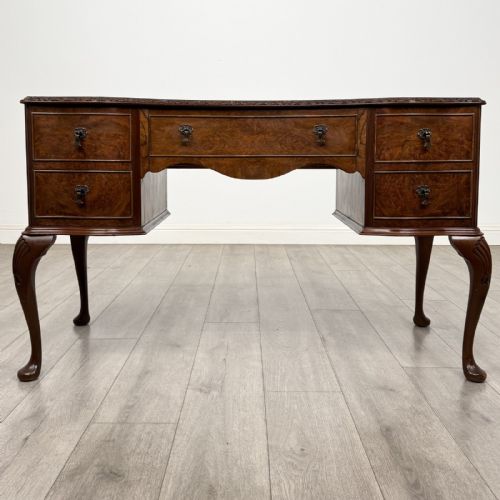
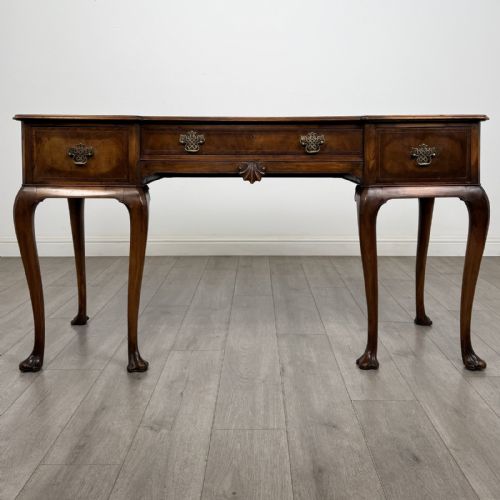
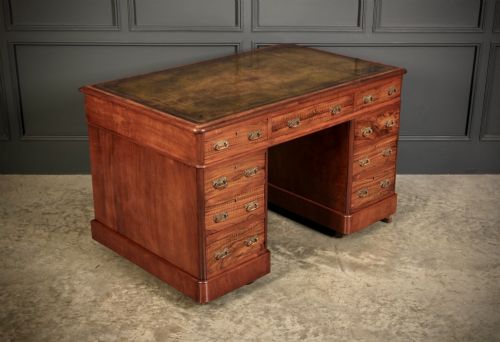
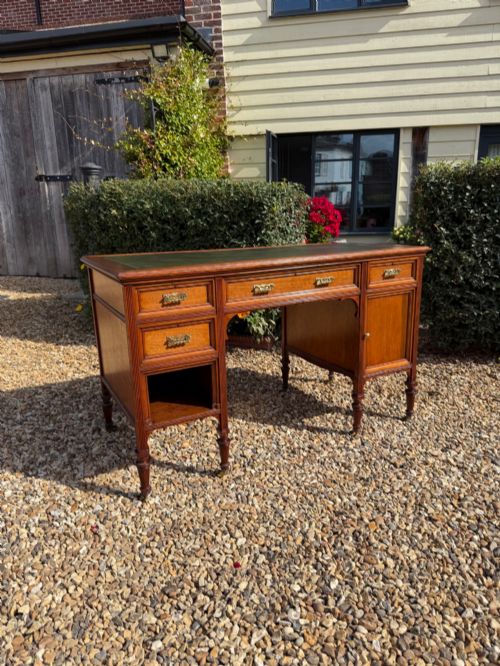
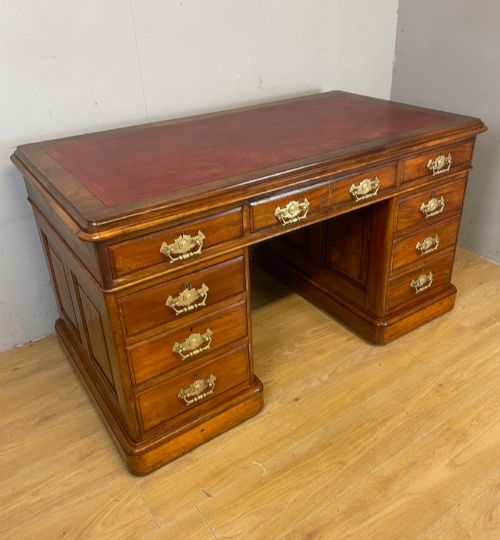
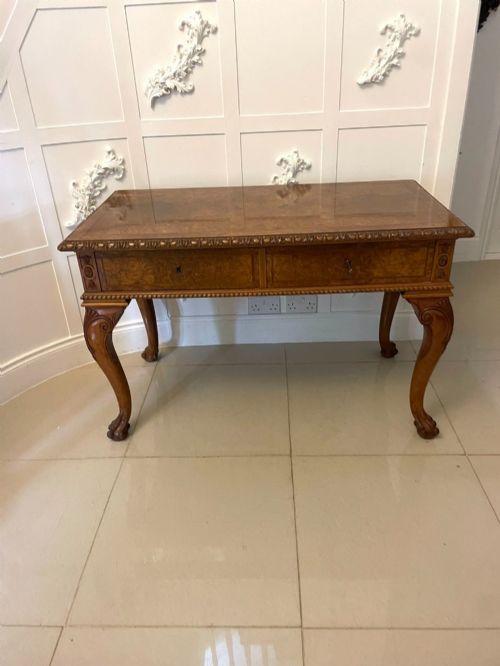
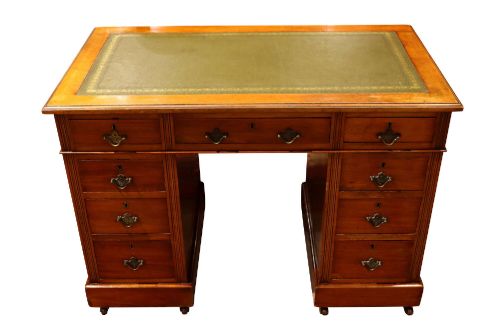
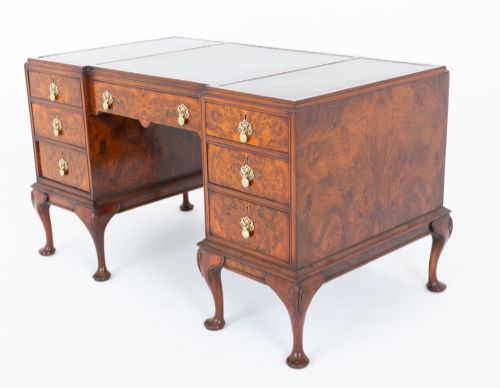
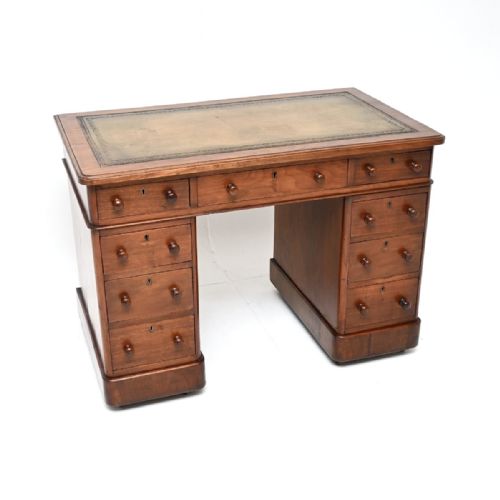
A traditional walnut writing desk encompasses everything from compact Edwardian pedestal formats to generous nineteenth-century partners tables and bureau forms. Buyers searching for a traditional walnut writing desk will frequently encounter pedestal desks and writing tables built during the Victorian period and the early twentieth century. These pieces span stylistic revivals including Queen Anne and Georgian influences, drawing on centuries of cabinet-making traditions.
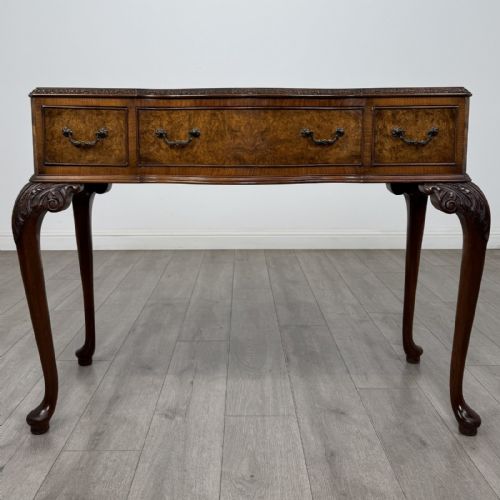
The selection ranges from small ladies writing desks and lowboys to large breakfront configurations fitted with multiple drawers. Many examples incorporate fitted writing surfaces lined in leather, providing both a functional workspace and a distinct period aesthetic. Origins stretch across the nineteenth and twentieth centuries, incorporating Edwardian interpretations alongside earlier Victorian craftsmanship.
Assessing Quality
Quality rests principally on the selection of the burr walnut veneer and the crispness of any inlaid marquetry work. Finer examples display symmetrical grain matching across drawer fronts and top panels, demonstrating deliberate planning by the maker.
The choice of secondary woods, the weight and finish of the brass hardware, and the neatness of the leather writing surface inset all distinguish standard production from superior workshop output.
Traditional Walnut Writing Desk Retail Price Guide 2026
Typical asking prices for traditional walnut writing desk among the pieces listed under this phrase on Sellingantiques today, from the lower quarter to the upper quarter. They describe what is for sale here now, not the wider market.
Some nineteenth-century makers thoughtfully provided hidden compartments inside bureaus for stashing love letters or tax exemptions.
Wylie & Lochhead Glasgow·Gillow & Co
The Traditional Walnut Writing Desk Glossary
- Burr walnut
- A veneer taken from the warted growth of a walnut tree, producing highly figured, swirling grain patterns. It provides decorative movement across large surfaces like desk tops.
- Pedestal desk
- A form comprising two freestanding drawer stacks supporting a wide writing surface. This layout provides substantial storage beneath the main top.
- Partners desk
- A large double-sided desk designed for two people to work opposite one another. Drawers and cupboards are traditionally duplicated on both faces.
- Bureau
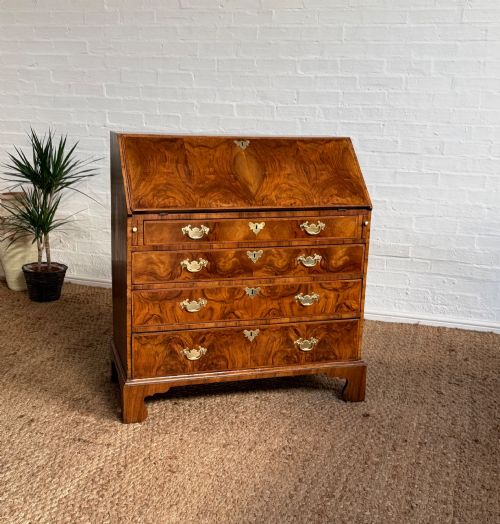
- A writing cabinet featuring a sloping fall-front that opens to reveal internal compartments and pigeon holes. It often sits above a chest of drawers.
- Lowboy
- A small side table fitted with one or more rows of drawers beneath the working surface. These pieces often function as compact writing or dressing tables.
- Marquetry
- The art of applying pieces of veneer to a structure to form decorative patterns. This technique appears on select revival desks.
Traditional Walnut Writing Desk: Frequently Asked Questions
What is a partners desk?
A partners desk is a large, double-sided writing table designed with drawers and cupboards on both operational faces. This layout allowed two individuals to sit and work opposite each other in a shared study or library.
These pieces typically date from the nineteenth century and represent some of the most substantial desk forms available to buyers.
How do I care for leather desk tops?
Leather writing surfaces benefit from periodic cleaning with a damp cloth followed by suitable leather balm to prevent drying and cracking. Avoiding direct sunlight helps preserve the colour and integrity of the leather.
Careful maintenance keeps the tooled borders and writing surface in good condition for daily use.
How do I identify a Queen Anne style desk?
Queen Anne style desks often exhibit characteristics such as cabriole legs, pad feet, and graceful curved lines derived from early eighteenth-century design. Many walnut examples found today are Edwardian or later revivals inspired by this era.
Examining the construction methods helps determine whether a piece is an early example or a later interpretation.