
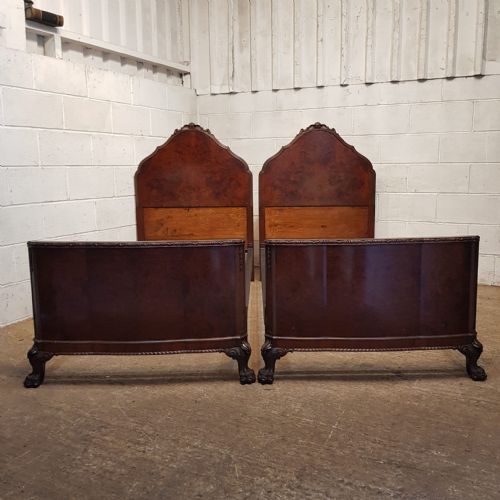


Traditional Twin Bedsteads
Traditional twin bedsteads offer matching sleeping quarters designed for symmetry, bringing period character and dual frames into a bedroom.
Traditional Twin Bedsteads
Traditional twin bedsteads span the Victorian era, the Edwardian period, and the early decades of the twentieth century. These matching pairs of single beds and bedsteads are constructed to be used separately or joined together.
The materials range from cast iron and brass to timbers such as oak, mahogany, and burr walnut. Styles cover Queen Anne Revival, Arts and Crafts, Colonial Revival, French Empire, and Portuguese traditional designs.
How they were made
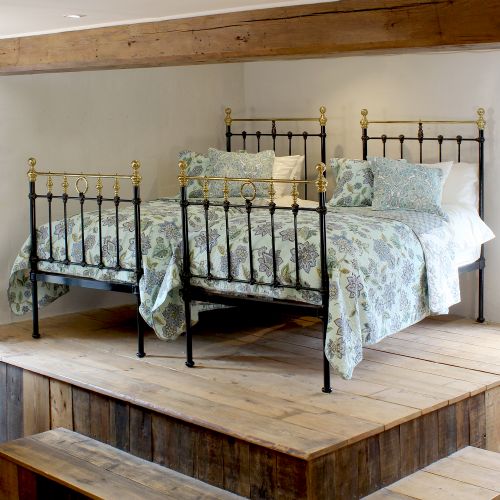
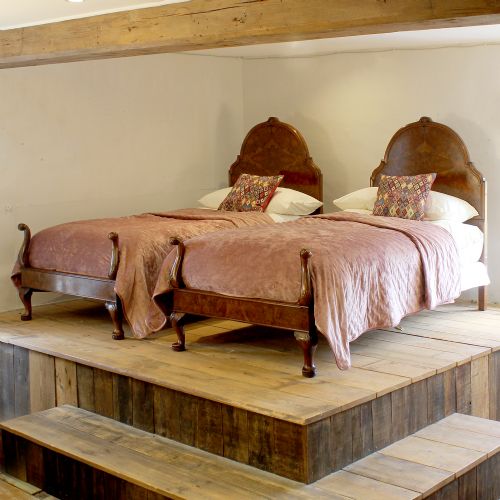
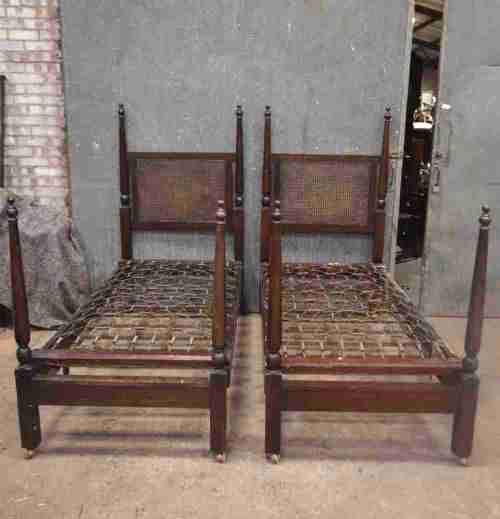
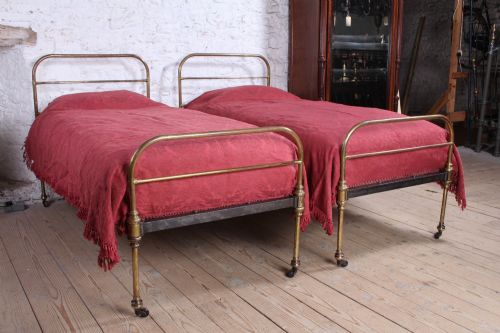
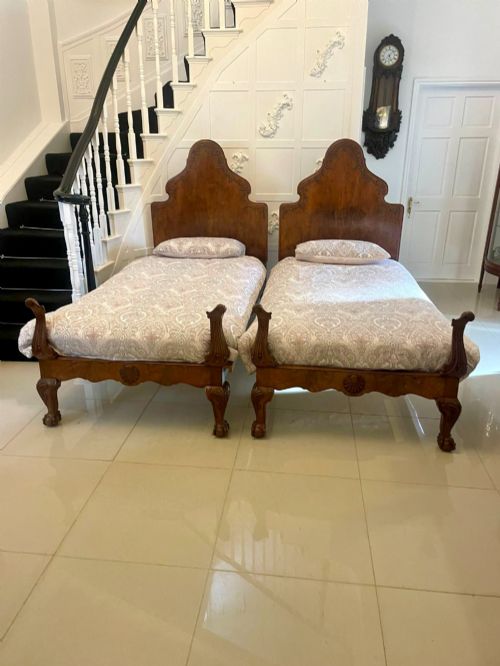
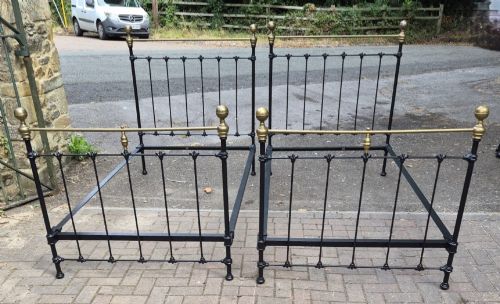
Metal bedsteads combine cast iron and brass, often utilising structural iron for strength alongside polished brass components and decorative rings for visual contrast. Wooden examples employ solid oak, mahogany, and burr walnut, sometimes incorporating carved details, inlaid woods, or woven bergere panels.
Surface finishes involve traditional paint in black, cream, or white, alongside polished wood treatments and upholstered elements. Many iron and metal variants are built with side rails that allow two single frames to be joined securely.
Some iron beds come with optional rings, proving that even Victorian sleepers appreciated a little extra hardware to hold onto.
What varies in quality
Quality rests in the choice of materials and the substance of the construction, from heavy gauge cast iron and solid brass tubing to finely figured burr walnut and carved mahogany. Finer examples show careful attention to surface finish, whether through crisp metal castings, precise wood inlays, or detailed carving.
The matching of the pair dictates much of the appeal, as true uniformity in height, footboard style, and decorative detailing ensures visual balance. Well-executed joining mechanisms and sturdy original side rails also distinguish superior frames from simpler utilitarian examples.
Hoskins and Sewell·R W Winfield·Heal and Son
The Traditional Twin Bedsteads Glossary
- Twin bedsteads
- A pair of matching single bed frames intended to sit together in a bedroom. They frequently share identical hardware and proportions.
- Bergere
- A closed-arm upholstered chair or bed component featuring cane or wicker work panels. This technique lightens heavy wooden furniture.
- Burr walnut
- Timber taken from a walnut tree growth, yielding intricate swirling grain patterns. It is sliced into veneers for decorative furniture surfaces.
- Inlaid
- Woodwork decorated by embedding small pieces of contrasting timber or shell into the surface. This creates flat patterns across headboards and footboards.
- Cast iron
- Iron poured into a mould to shape structural and decorative bed components. It provides heavy, rigid support for metal frames.
Traditional Twin Bedsteads: Frequently Asked Questions
Can these twin beds be joined together?
Many of the metal and iron twin bedsteads are constructed with side rails that allow two single frames to be secured together as a larger unit.
Buyers should inspect the specific configuration of the rails and fixings listed to confirm whether a particular pair is designed to connect.
What periods do these bedsteads date from?
The selection spans the Victorian era through the Edwardian period and into the 1920s and 1930s.
Dates are attributed based on the stylistic traits, materials, and construction methods recorded in each listing.
What wood types are used in these beds?
Timber frames are constructed from oak, mahogany, and burr walnut, occasionally featuring decorative inlays or woven cane panels.
These woods provide sturdy structures alongside varied grain patterns and polished surface finishes.
Are these beds made of brass or iron?
Metal bedsteads utilise brass, iron, cast iron, and wrought iron, frequently combining black or painted iron frames with polished brass details.
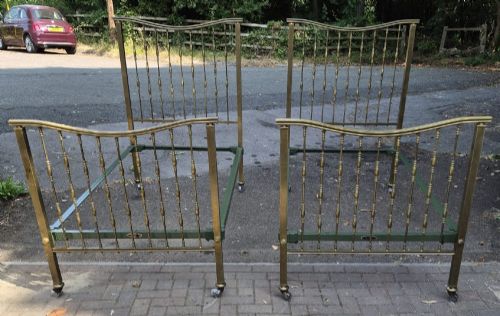
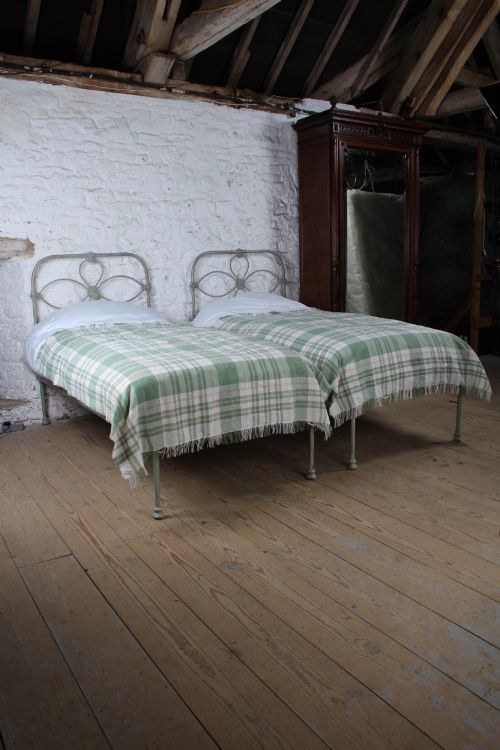
Some examples are constructed entirely of brass tubing, while others employ all-iron frames with decorative rings.