
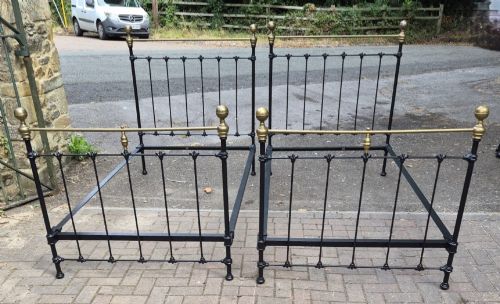
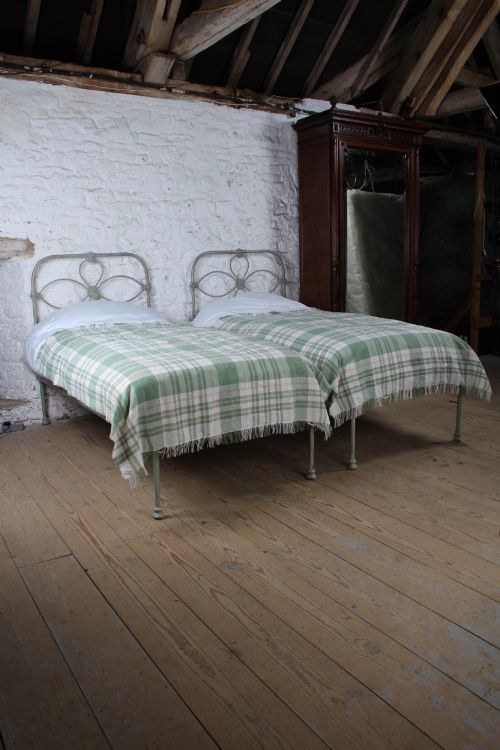


Wrought Iron Bedstead Pair
These wrought iron bedstead pair pieces offer matched twin sleeping furniture in durable metal, bringing historical character and practical flexibility to guest rooms.
Wrought Iron Bedstead Pair
A wrought iron bedstead pair brings together matching twin beds created in iron, often featuring the joined configuration capability seen in Victorian and later examples. These items span periods from 1880 to 1900, originating from English, French, Portuguese, and broader European workshops.
Most items meeting the wrought iron bedstead pair description take the form of single beds, frequently designed with no end footboards for a streamlined appearance. The selection includes classic Victorian styling alongside French country and rustic European aesthetics.
Buyers encounter surfaces finished in white paint, cream, or bare metal, sometimes accented with brass components. These twin bed sets provide historical presence while accommodating contemporary mattress arrangements through joinable frames.
How they were made
These metal furniture pieces utilise structural iron and wrought iron frameworks, often combined with cast iron decorative junctions and polished brass details. Makers employed traditional metalworking techniques to forge and assemble sturdy headboards and side rails.
Surfaces received protective and decorative coatings, utilising traditional paint finishes in shades like cream and white to complement the underlying metal construction. Some variations incorporate platform bases and specialised framing designed to allow separate single beds to link together.
Listings feature items exclusively from the Victorian era and the years 1880, 1890, and 1900, constructed from iron, wrought iron, cast iron, and brass.
What varies in quality
The standard of a wrought iron bedstead pair rests upon the intricacy of the metalwork and the crispness of any brass or cast embellishments. Finer examples display superior proportion and cleaner joinery across the matched frames.
Condition of the painted surfaces and the integrity of the original joining mechanisms influence the overall standard. Pieces retaining well-applied period paintwork or uncompromised structural connections demonstrate higher grade manufacturing.
The Wrought Iron Bedstead Pair Glossary
- Wrought iron
- A tough, malleable form of iron that can be heated and worked into decorative and structural shapes. This material forms the primary framework for many period bed frames.
- No end
- A bedstead design featuring a headboard but lacking a raised footboard. This configuration creates a lighter visual presence in smaller bedrooms.
- Platform bed
- A bed frame constructed with a solid base to support a mattress directly without traditional box springs. These appear in painted finishes within the period selection.
- Cast iron
- Iron poured into a mould to create complex decorative shapes and structural joints. It frequently appears alongside wrought iron elements in Victorian bedframes.
Wrought Iron Bedstead Pair: Frequently Asked Questions
Can these twin beds be joined together?
Many of the listed twin bed frames are specifically designed with mechanisms that allow them to be linked together into a single larger sleeping platform. This provides flexibility for guest accommodation while retaining the option to use them separately.
Makers achieved this through compatible side rail fixings and matching dimensions across the pair. Buyers should examine the specific listing details to confirm the joining capability for each set.
What periods do these metal beds represent?
The available examples predominantly date from the late nineteenth and turn of the twentieth century, specifically spanning the 1880s through to 1900. This encompasses the Victorian era alongside continental European periods.
Design characteristics from these decades include simpler rustic frameworks as well as more ornate Victorian styling featuring brass accents. Each era brings distinct decorative tendencies to the metalwork.
How do French and English styles differ?
French and Portuguese examples often embrace lighter country aesthetics, while English pieces frequently display classic Victorian proportions and heavier brass detailing. Regional workshops applied distinct aesthetic preferences to standard iron framing.
Surface finishes also vary by origin, with cream and white paint appearing alongside traditional metal patinas. These regional variations help define the character of each matched pair.
What does no end mean on a bedstead?
A no end bedstead lacks a traditional raised footboard, leaving the foot of the bed open and unobstructed. This design was particularly popular in the late nineteenth century for smaller rooms.
Removing the footboard creates a lighter visual feel and allows easier access around the bedding. It also accommodates varying room layouts more readily than high-footboard designs.