


Traditional Turned Spindle Chair
A traditional turned spindle chair brings robust country character and honest timber construction straight into a modern interior.
Traditional Turned Spindle Chair
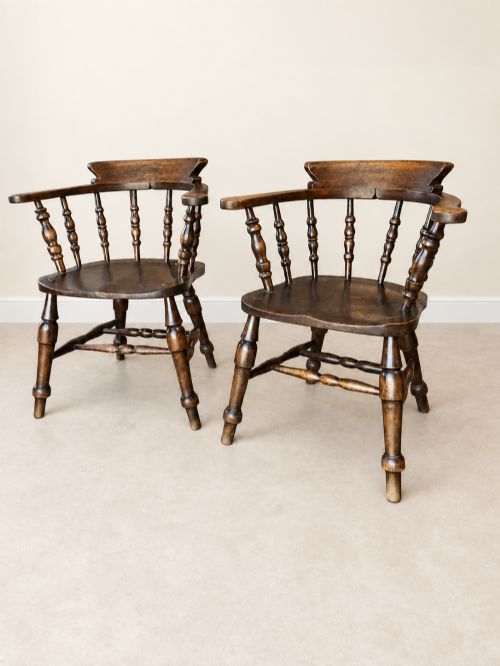
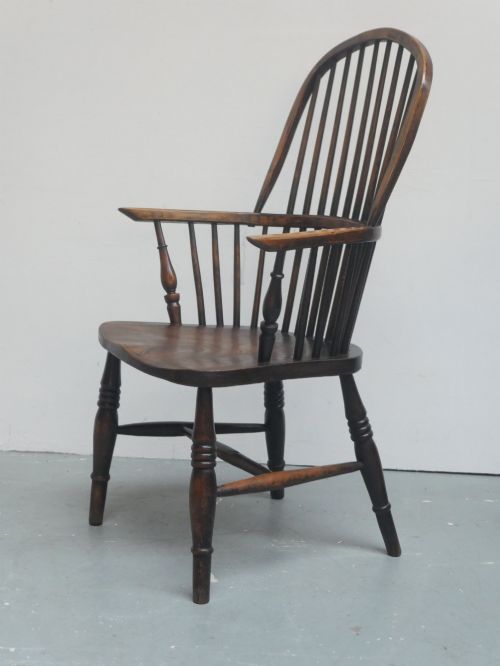
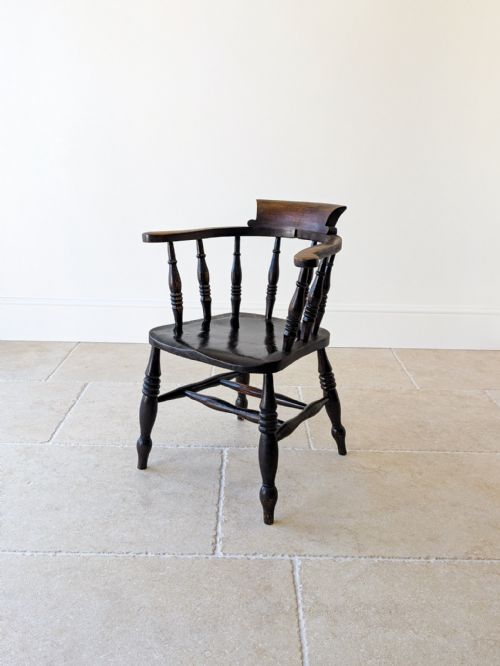
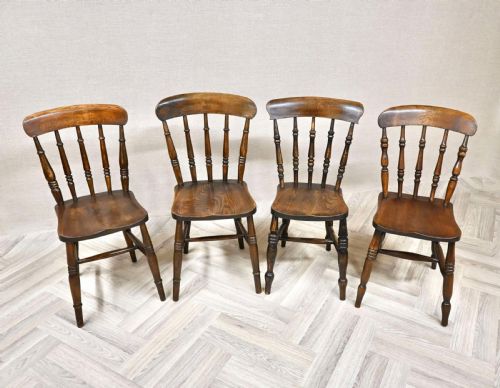
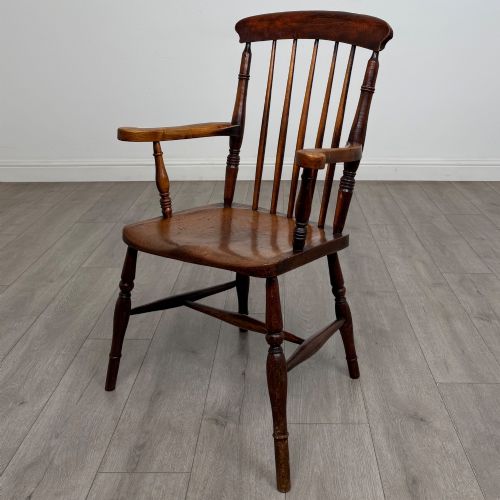
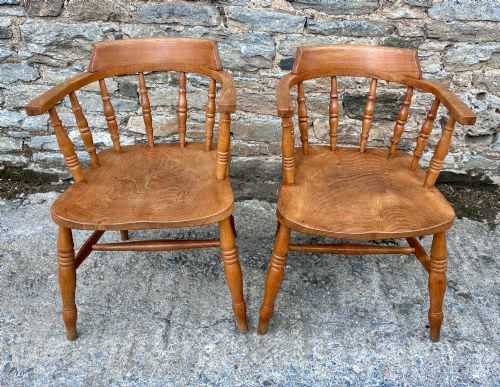
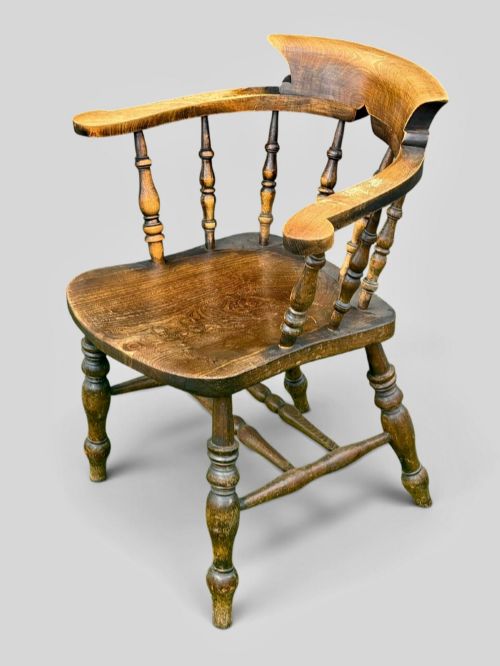
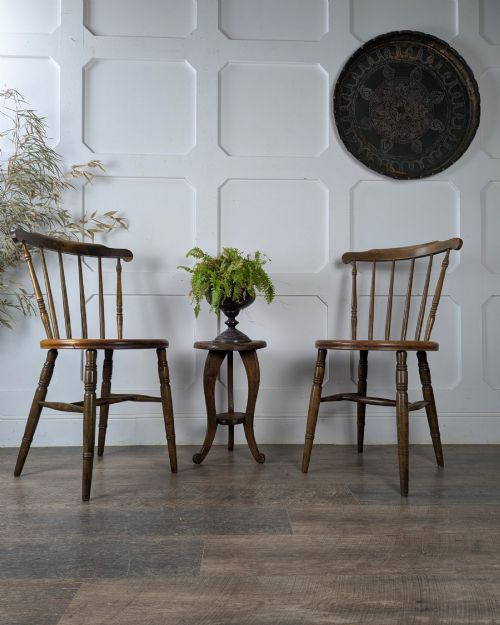
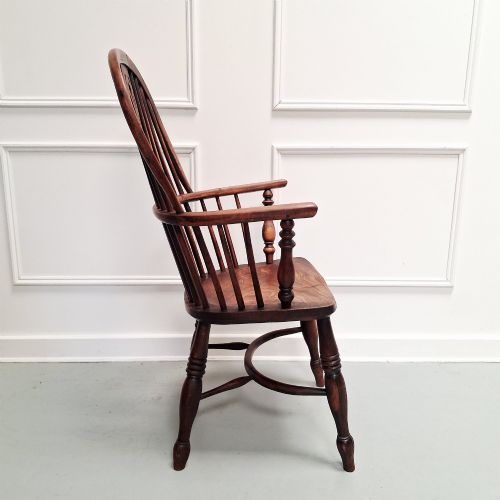
A traditional turned spindle chair is a sturdy vernacular seat built by regional carpenters during the nineteenth and early twentieth centuries. These chairs draw on English country traditions, taking the form of Windsor armchairs, stick back kitchen chairs, and smokers bows.
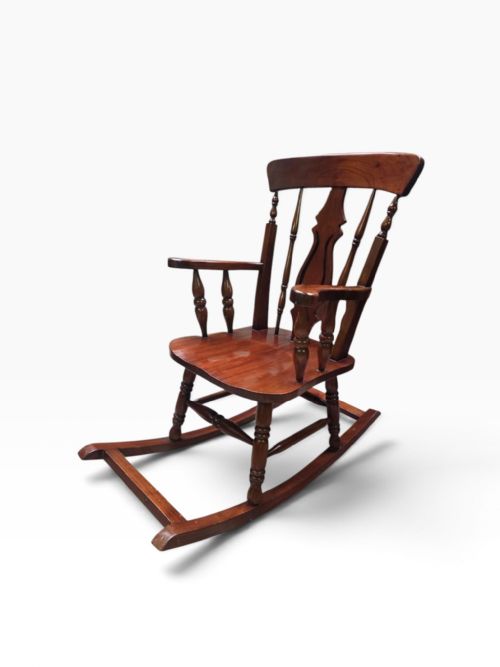
Most examples found here date from the Victorian and Edwardian eras, spanning farmhouse kitchens to country house libraries. Forms range from low corner chairs and rocking chairs to dining sets and spacious captains chairs.
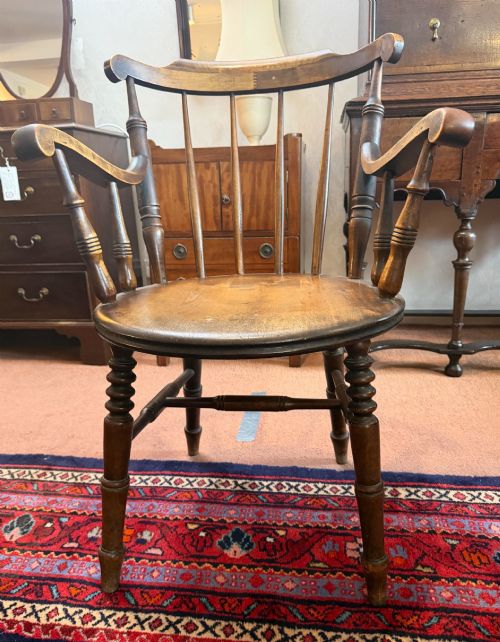
Makers shaped these pieces for daily utility, combining simple seats with shaped spindles and turned stretchers. The selection leans heavily towards English country vernacular designs rooted in utilitarian comfort.
How they were made
Craftsmen utilised native hardwoods such as elm for solid, saddle-shaped seats, paired with ash, beech, and birch for turned legs and slender back spindles. This multi-timber construction exploited the specific properties of each wood, placing resilient ash in steam-bent bows and tough elm where solid shaping was required.
Joinery relied on traditional methods, fitting turned components directly into bored holes within thick plank seats. Frame members were secured with wedges and pegs rather than metal fasteners, resulting in durable joints that accommodated natural timber movement over decades of use.
What varies in quality
The distinction between standard utility seating and a superior piece lies in the subtlety of the turning and the harmony of the timbers. Master turners shaped spindles with crisp profiles and balanced proportions, whereas everyday workshop production resulted in heavier, thicker components.
Surface texture and timber selection heavily influence the character of a piece. Chairs fashioned from well-figured elm seats combined with richly grained ash backs display a depth of tone and tactile warmth that plain, uniform timber simply lacks.
Morris And Co·Philip Webb·J Spencer·E W Godwin·Worksop
The Traditional Turned Spindle Chair Glossary
- Spindle back
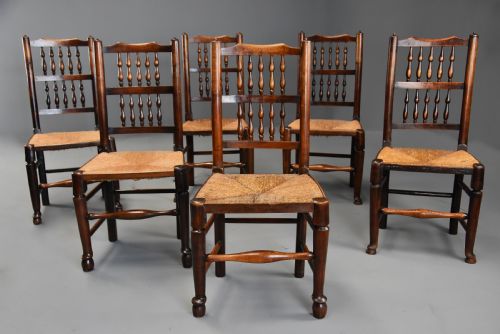
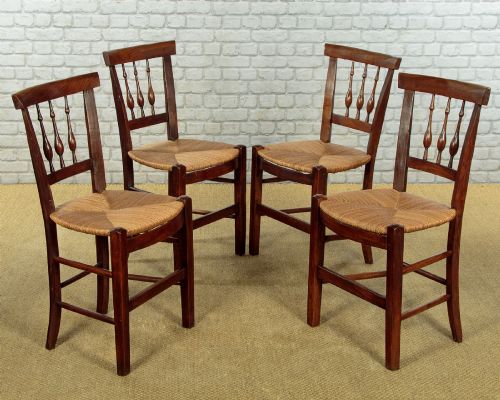
- A chair back constructed from multiple slender, turned wooden rods set between a crest rail and the seat. This method provided lightweight strength without requiring solid timber panels.
- Smokers bow
- A low-backed Windsor armchair featuring a continuous curved arm rail supported by turned spindles above a solid wood seat. These robust chairs gained popularity in nineteenth-century country pubs and parlours.
- Rush seat
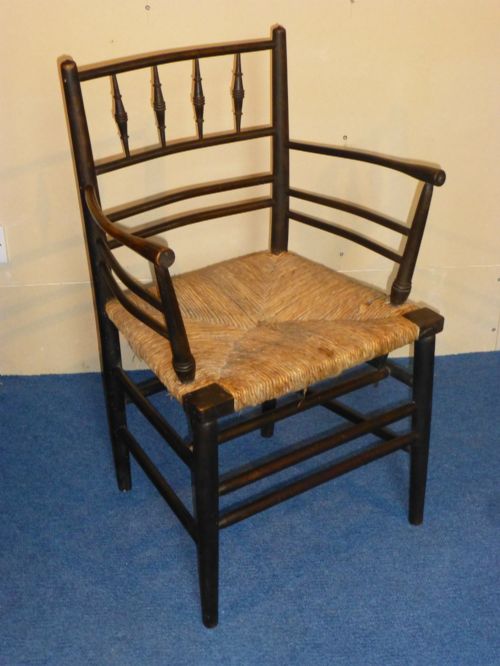
- A woven seating surface made from dried marsh rushes twisted into cords and hand-plaited across a wooden frame. It offers a resilient, flexible base that softens with age.
- Crinoline stretcher
- An arched or curved wooden brace connecting the legs of a chair near the base. It provides lateral stability while adding a decorative flourish to the lower frame.
- Turners chair
- A heavy armchair constructed entirely from turned wooden spindles and posts, following a historic design pattern. This form showcases the woodturner's skill in producing interlocking geometric components.
Traditional Turned Spindle Chair: Frequently Asked Questions
What is a traditional turned spindle chair?
A traditional turned spindle chair is a wooden seat constructed with vertical turned rods supporting the back or arms, originating from vernacular country furniture traditions.
These pieces were produced primarily in regional workshops across the nineteenth century, serving practical roles in farmhouses, cottages, and country houses.
How do I identify an older spindle chair?
Older chairs display hand-turned components with subtle irregularities, joined through solid plank seats using wedges and pegs. The timber often shows deep surface patination accumulated over generations of daily use.
Construction details, such as the absence of modern adhesives or screws, help distinguish nineteenth-century vernacular pieces from later reproductions.
Where were these chairs used originally?
These seats found places throughout nineteenth-century domestic and commercial interiors, from farmhouse kitchens and country house libraries to local inns and studies.
Rocking chairs and low elbow seats were designed for fireside comfort, while sturdy dining and desk chairs suited active daily work.
How do I care for a wood and rush chair?
Maintain wooden frames by applying traditional paste wax occasionally to nourish the grain and preserve the surface patina. Keep rush seats dry and away from direct heat sources to prevent the natural fibres from becoming brittle.
Regular dusting with a soft cloth prevents dirt accumulation in the intricate turned joints and woven seating areas.