



Bobbin Turned Accent Chair
A bobbin turned accent chair brings rhythmic, spool-turned wooden framing into a room, offering both structural strength and striking decorative presence.
Bobbin Turned Accent Chair
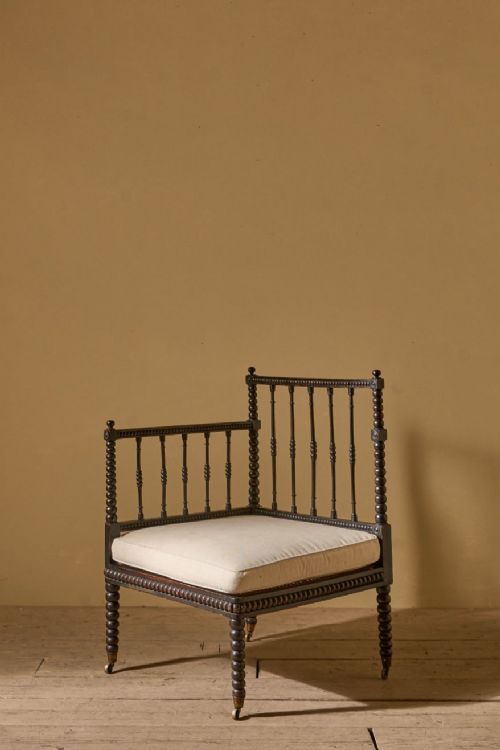
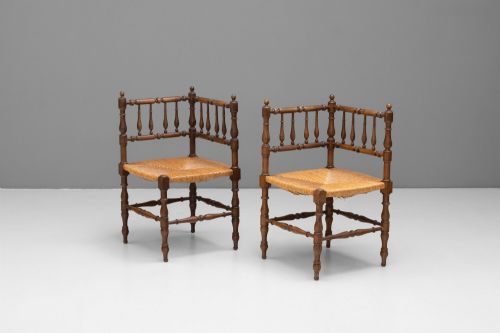
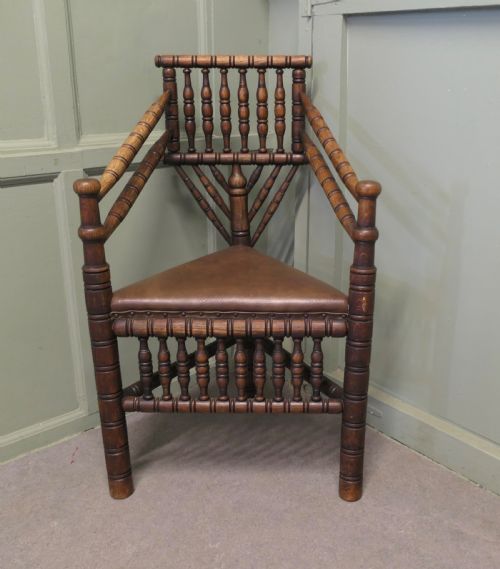
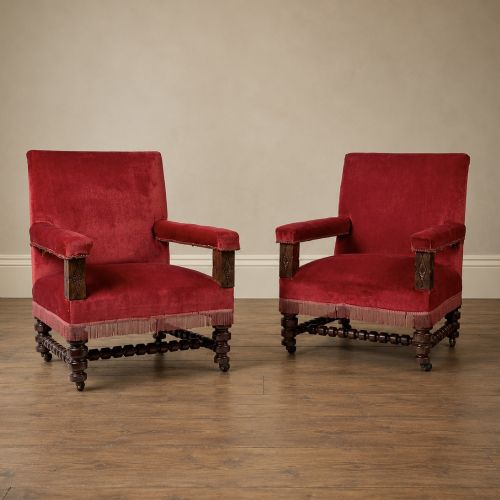
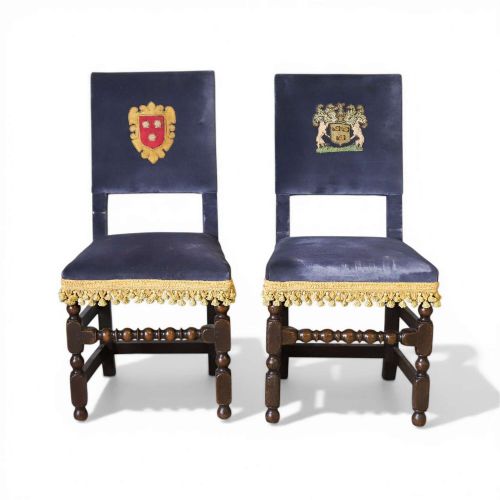
The selection ranges from sturdy oak armchairs and turners chairs to corner chairs, slipper chairs, and low seat bedroom chairs. Makers employed various woods including oak, walnut, beech, birch, and rosewood, often paired with rush seats or upholstery in velvet, leather, and fabric.
Forms extend from English country and Jacobean revival pieces to Scottish armorial clan chairs and Swedish country thrones. These diverse seating options serve functional roles while displaying notable historical character.
How they were made
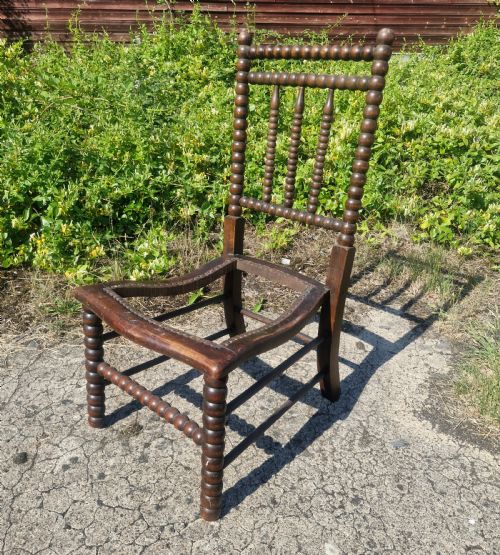
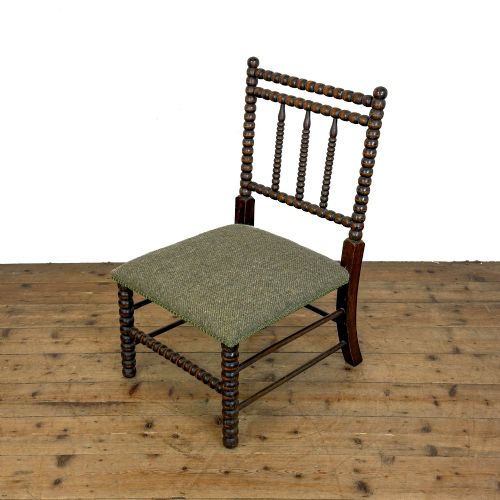
Craftsmen shaped solid hardwoods such as oak, walnut, and beech on lathes to produce the characteristic bobbin or spool turnings that define the framework. Joinery relied on traditional pegged or jointed construction methods to ensure the structural integrity of uprights, legs, and stretchers.
Seating areas incorporated woven rush or wooden panel bases, while upholstered variants utilised materials like velvet, leather, tweed linen, and fabric secured with brass detailing. Frames were sometimes ebonised to mimic more costly exotic timbers or left in their natural polished wood finish.
Listings feature oak, walnut, beech, birch, and rosewood, alongside upholstered surfaces in velvet, leather, and tweed linen.
What varies in quality
Quality depends upon the crispness and uniformity of the lathe-turned bobbin profiles along the legs, arms, and stretchers. Superior examples exhibit tightly fitted joinery and dense, well-selected timbers like oak or walnut rather than softer utility woods.
The choice of secondary materials, from hand-woven rush seats to high-grade velvet and leather upholstery, distinguishes standard workshop production from finer country or revival pieces.
Liberty & Co
The Bobbin Turned Accent Chair Glossary
- Bobbin turning
- A form of woodturning where a lathe cuts repeating spherical or cylindrical shapes resembling bobbins or spools along a length of timber. This decorative technique appears extensively on seventeenth-century and nineteenth-century revival seating.
- Turners chair
- A heavy, tripartite armchair constructed entirely from turned wooden spindles and rails, often associated with sixteenth and seventeenth-century vernacular traditions. These pieces typically feature solid wooden seats and low backs.
- Backstool
- An early form of seating consisting of an upholstered or wooden backrest mounted on a stool base without arms. Seventeenth-century examples frequently display robust joined oak construction.
- Ebonised
- Wood treated with a dark finish or stain to imitate ebony. This treatment was particularly popular during the Victorian period for accentuating turned furniture frames.
- Slipper chair
- A low-set upholstered chair traditionally used in bedrooms for dressing. These pieces sit close to the floor and often feature compact frames.
Bobbin Turned Accent Chair: Frequently Asked Questions
What is a bobbin turned chair?
A bobbin turned chair is a seating piece defined by its legs, stretchers, or framing shaped on a lathe into a series of rounded, spool-like segments. The style draws on seventeenth-century vernacular traditions and nineteenth-century revival movements.
These chairs range from compact corner seats and bedroom chairs to substantial armchairs and library chairs constructed in oak, walnut, and beech.
How old are these chairs?
The pieces available span several distinct periods, with authentic seventeenth-century examples existing alongside nineteenth-century Victorian interpretations and later revival pieces from around nineteen hundred. Construction details and timber selection help distinguish older vernacular framing from later revival work.
Many nineteenth-century makers actively reproduced seventeenth-century Jacobean styles, creating substantial demand for both antique originals and period revival pieces.
What woods were used?
Cabinetmakers and turners utilised a variety of native and imported hardwoods for these frames. Oak is the most common timber found in early and revival pieces, accompanied by walnut, beech, birch, and rosewood.
Some lighter frames were ebonised to achieve a dark, uniform appearance that contrasted with velvet or fabric upholstery.
How do I style an accent chair?
These characterful chairs function well as reading seats in studies, decorative corners in bedrooms, or fireside accent pieces in living rooms. Their distinct turned framing allows them to sit comfortably alongside both traditional antique interiors and contemporary spaces.
Pairing a low seat or corner chair with neutral textiles lets the intricate wooden turnings remain the visual focal point of the room.