




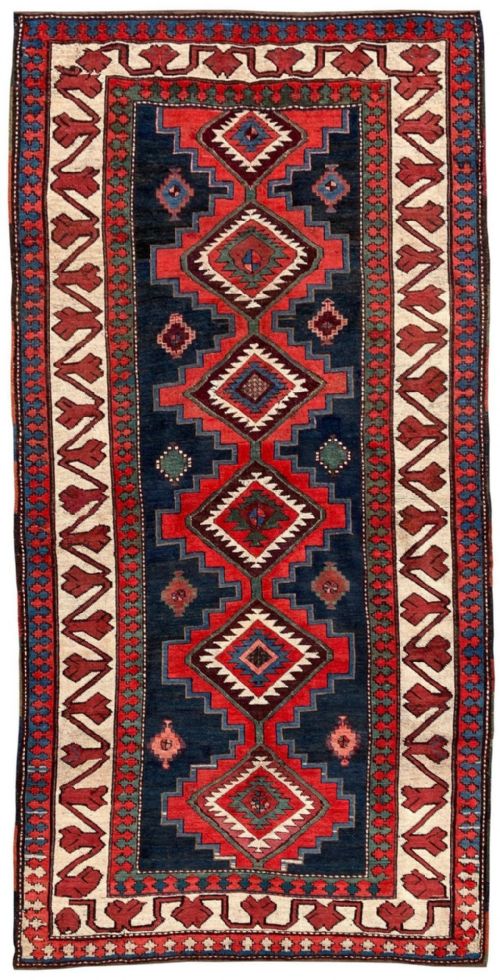
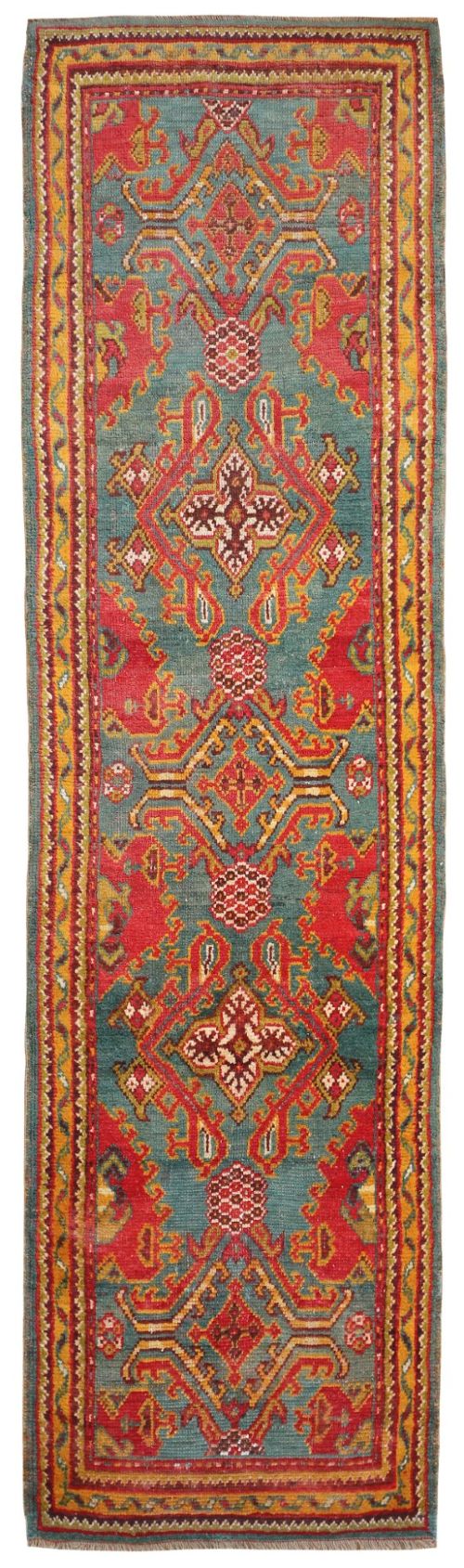
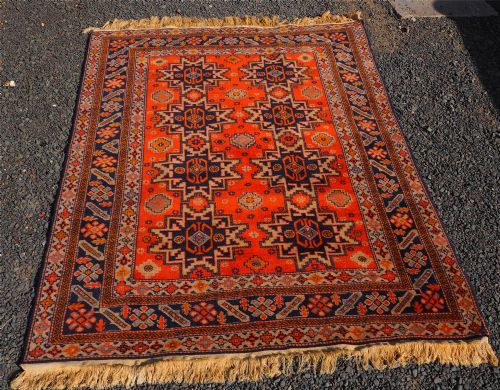
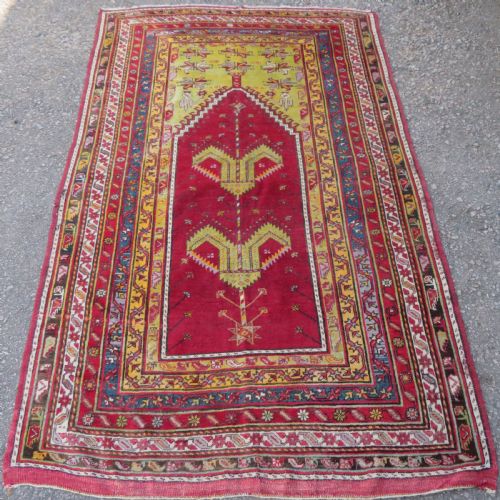
Traditional Tribal Runner Carpet
These traditional tribal runner carpets span the nineteenth and twentieth centuries, offering durable wool and camel hair weaves for hallways and narrow spaces.
Traditional Tribal Runner Carpet
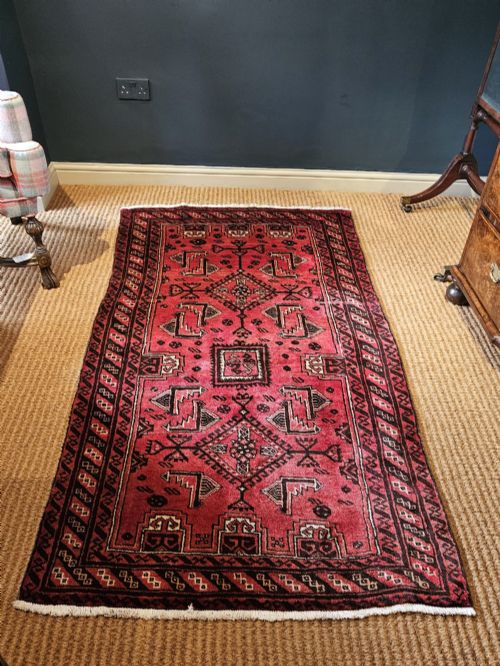
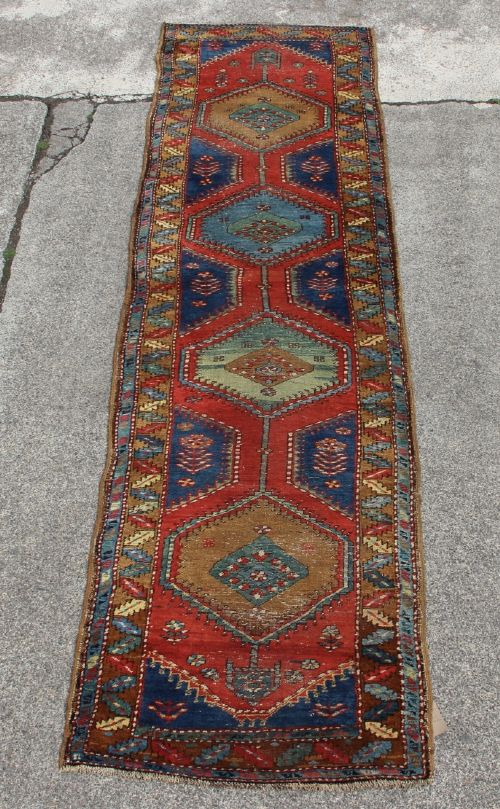
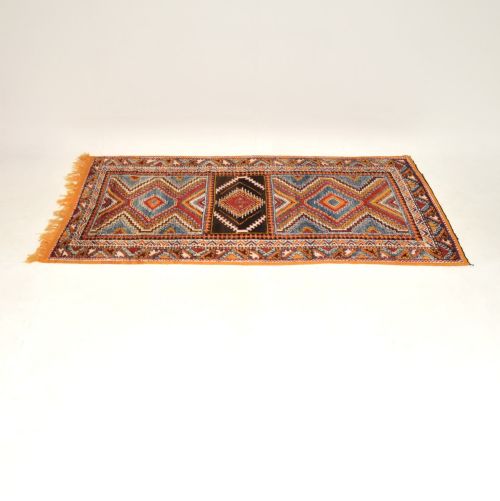
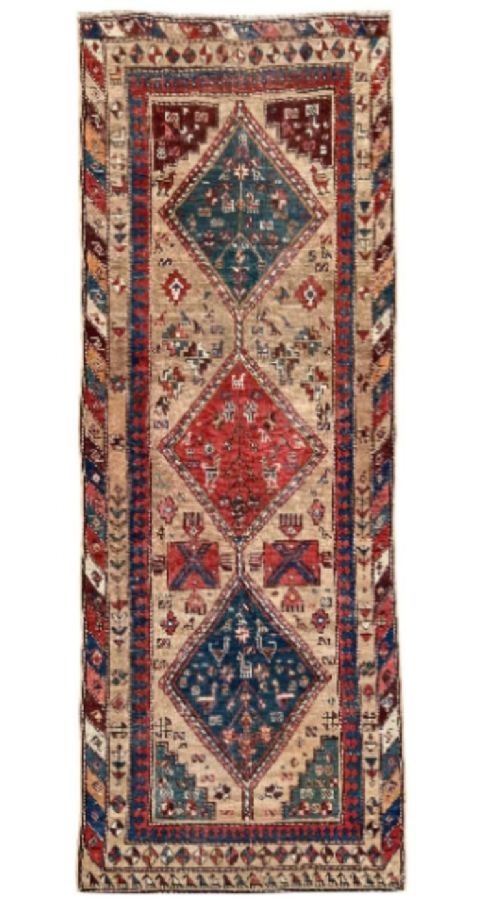
A traditional tribal runner carpet is an elongated textile designed primarily for hallways, landings, and narrow domestic spaces. These pieces originate from diverse weaving traditions across Persia, the Caucasus, Anatolia, and Central Asia, incorporating distinctive regional patterns. The selection encompasses formats ranging from room-length examples to specific hallway runner proportions.
The objects appearing in this category span dates from the mid-nineteenth century through to the mid-twentieth century. Buyers encounter village and nomadic productions alongside room-sized formats such as kelleh carpets and smaller prayer rugs. Formats often feature geometric motifs, lattice designs, and repeated medallions characteristic of their weaving groups.
How they were made
Makers constructed these textiles predominantly using wool, hand-spun wool, and cotton foundations, occasionally incorporating camel hair for natural coloration. The choice of material dictated both the handle of the textile and its resilience under foot traffic in domestic environments.
Weavers employed traditional knotting and flatweaving techniques unique to their specific tribes and villages, such as Kurdish, Baluch, Kazak, and Heriz communities. These methods utilised natural dyes and sturdy warp and weft structures that allowed the long runner format to maintain its shape over generations of use.
Materials recorded across the inventory include pure wool, hand-spun wool, cotton foundations, and natural camel hair.
What varies in quality
Quality in a traditional tribal runner carpet depends heavily on the crispness of the tribal design and the density of the weave. Finer examples display precise execution of geometric motifs, lattice patterns, and guls, reflecting the skill of the individual weaver.
The condition of the pile and the integrity of the wool foundation separate standard utility pieces from more desirable collector examples. Higher grade pieces maintain rich, saturated or mellowed natural dye palettes across their long spans without excessive wear to the structural foundation.
Kizyl Ayak Tribe·Baluch·Bakhtiar·Kazak·Heriz·Shahsavan
The Traditional Tribal Runner Carpet Glossary
- Runner
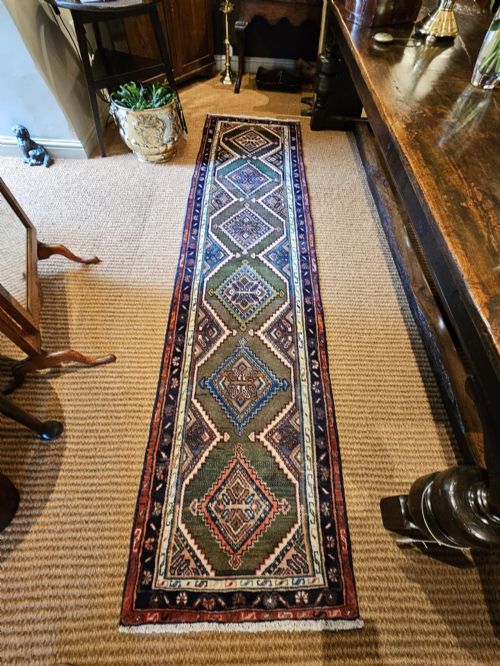
- A long, narrow carpet format traditionally utilised in corridors, staircases, and hallways. These pieces typically measure significantly longer than they are wide to fit passage spaces.
- Kelleh
- A large, room-sized format intermediate in proportion between a standard carpet and a long runner. This term describes substantial Persian and regional floor coverings.
- Gul
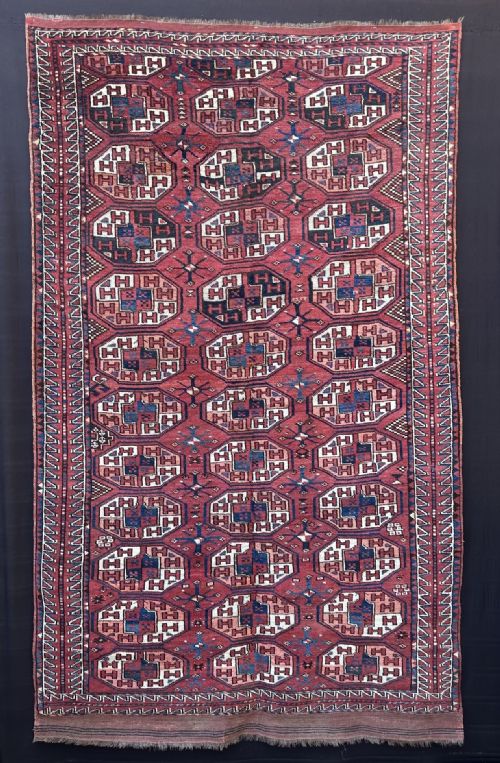
- A repeating medallion or octagonal motif frequently found in Central Asian and Baluch tribal weaving. Each design often signifies a specific tribal or clan affiliation.
- Mihrab
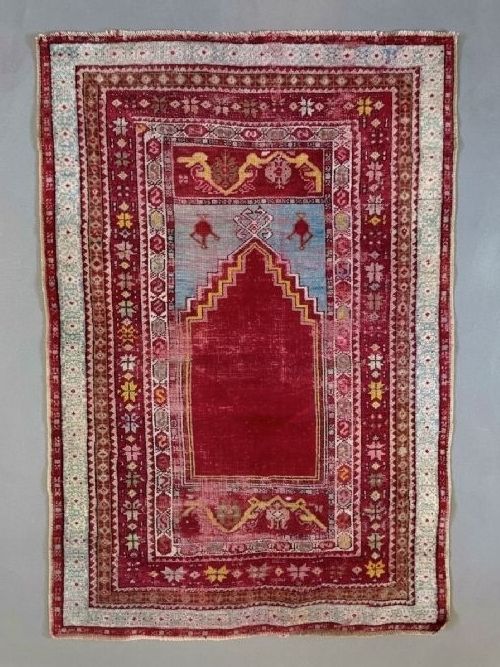
- An architectural arch design depicted on prayer rugs, representing the direction of prayer. This motif is commonly encountered in Anatolian and Caucasian pieces.
- Prayer Rug
- A smaller format textile featuring a mihrab design, originally utilised for personal daily prayer rituals. These rugs are often distinguished by their focused niche compositions.
Traditional Tribal Runner Carpet: Frequently Asked Questions
Where should I place a traditional tribal runner carpet?
These elongated carpets suit high-traffic passage areas such as hallways, long landings, and entrance corridors where narrow proportions are required. Their durable wool construction withstands regular foot traffic.
They also function effectively in narrow kitchen spaces or alongside bedroom furniture where a standard rectangular rug does not fit. The long format draws the eye along the length of the room.
How do I care for an old wool runner?
Regular gentle vacuuming without a rotating brush roll prevents dust accumulation in the wool pile. Avoid beating the textile or using aggressive cleaning chemicals that damage natural dyes.
Professional specialist cleaning is recommended for antique wool textiles to preserve the integrity of the hand-spun fibres and foundation. Placing a suitable underlay beneath the runner prevents slip and reduces friction against the floor.
How can I tell a Kurdish runner from a Kazak piece?
Kurdish weavings often feature distinct geometric repetitions, such as the mina khani lattice design, executed with heavy wool foundations. Their colour palettes tend towards earthy tones and rich, saturated blues and reds.
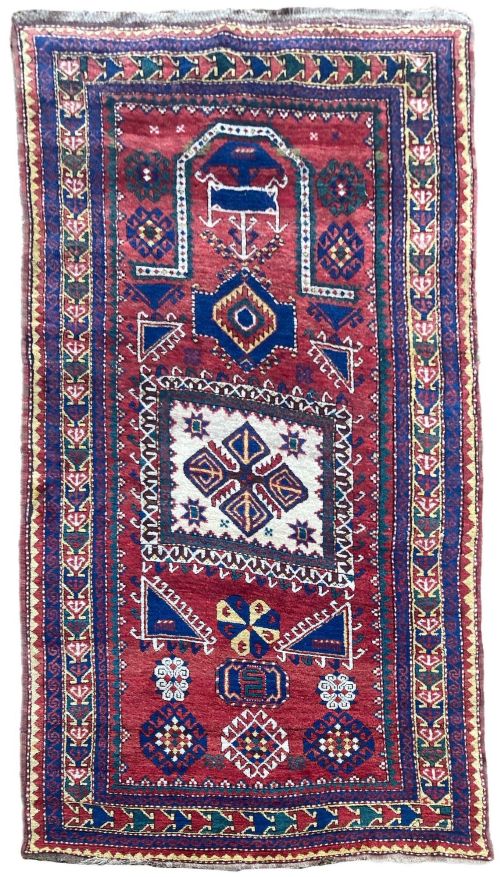
Kazak pieces from the Caucasus typically display bolder, primary-coloured geometric medallions and starker contrasting borders. The wool quality and knotting density also offer clues to their specific regional origin.
What is the difference between a runner and a kelleh?
A runner is characterised by an elongated, narrow proportion specifically designed for corridors and hallways. Its length greatly exceeds its width.
A kelleh is a much broader, substantial floor carpet format that bridges the size between standard rugs and large room carpets. Kellehs are proportioned for open rooms rather than narrow passages.