



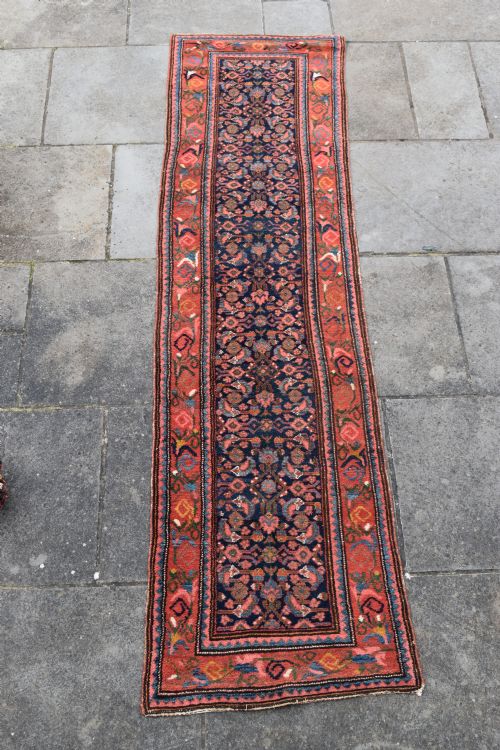

Kurdish Geometric Long Rug
A Kurdish geometric long rug brings tribal character and durable wool pile to a hallway or corridor.
Kurdish Geometric Long Rug
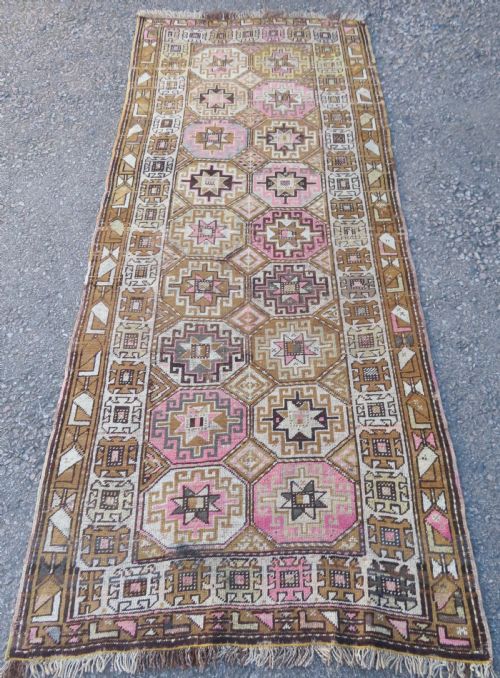
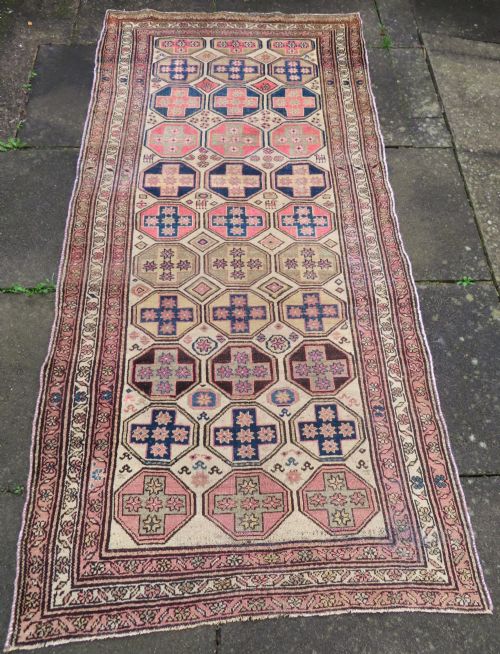
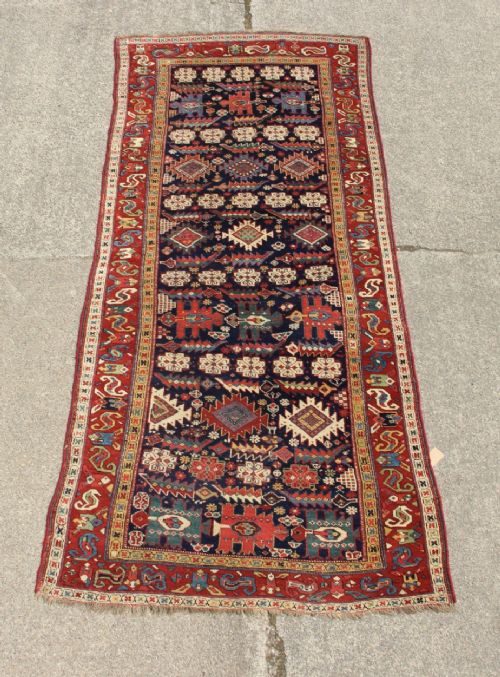
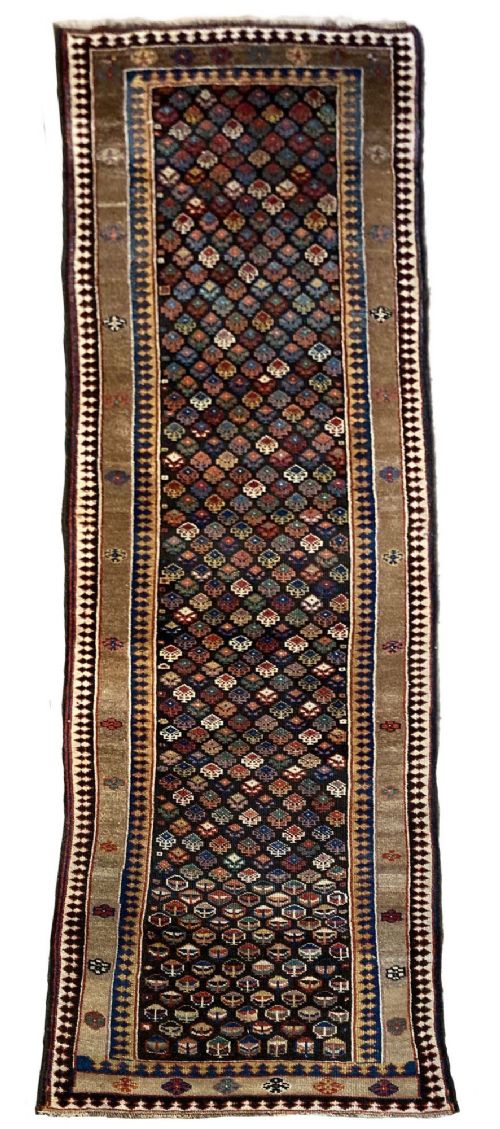
A kurdish geometric long rug is a tribal weaving created in the regions of northwest Persia, often proportioned as a narrow runner or an extended kelleh format for corridors and hallways. These textiles date from the nineteenth century into the early decades of the twentieth century, reflecting traditional nomadic designs.
The format usually spans rectangular dimensions that stretch significantly in length compared to their width. Pieces on this page emerge from Kurdish, Persian tribal, and South Caucasian contexts, showing distinctive tribal patterns.
Materials and Construction
Weavers utilised natural wool and cotton foundations, often incorporating hand-spun wool for the pile to achieve textural depth and resilience. The knotting secures dense wool onto sturdy warp and weft threads.
Dyes were derived from traditional natural sources, giving the wool its characteristic aged palette. The structure relies on village and tribal looms operating in regions like Bidjar, Senneh, and broader Kurdistan.
Kurdish Geometric Long Rug Retail Price Guide 2026
Typical asking prices for kurdish geometric long rug among the pieces listed under this phrase on Sellingantiques today, from the lower quarter to the upper quarter. They describe what is for sale here now, not the wider market.
Keep an eye out for woven depictions of birds perched in trees and traditional tribeswomen figures.
Assessing Quality and Execution
Quality rests upon the tightness of the weave and the clarity of the geometric drawing within the field and borders. Finer examples display precise execution of motifs like Memling guls, shrub patterns, or figurative elements such as birds and tribeswomen.
The integrity of the hand-spun wool and the retention of original outer edges and borders distinguish superior examples. Greater precision in proportion and symmetry separates standard village utility pieces from finer tribal room-size carpets and long runners.
Bidjar Bijar·Senneh Bijar·Hamadan Kurdistan
The Kurdish Geometric Long Rug Glossary
- Kelleh
- A large rectangular carpet format, longer than it is wide, typically suited for specific room proportions or extended spaces. These pieces occupy a middle ground between standard runners and full room carpets.
- Runner
- A long, narrow carpet format designed specifically for hallways, corridors, or alongside furniture. They guide movement through domestic interiors.
- Memling Gul
- An octagonal or polygonal tribal motif with hooked edges, frequently found in Anatolian, Caucasian, and Kurdish weaving. It originates from traditional Turkic tribal iconography.
- Warp
- The vertical threads stretched tightly on the loom before weaving begins, carrying the structural weight of the rug. The exposed ends often terminate in visible fringes.
Kurdish Geometric Long Rug: Frequently Asked Questions
Where should I place a long rug?
These pieces suit narrow hallways, corridors, or long gallery spaces where their extended proportions fill the floor effectively.
They also function well in large bedrooms or beside furniture where linear dimensions create balanced boundaries.
How do I identify a Kurdish tribal rug?
Look for dense wool construction, robust geometric motifs, and regional design markers such as dragon borders or shrub patterns.
The palette and knotting structure point directly to village and nomadic production across northwest Persia.
What is a kelleh carpet format?
A kelleh is a distinct format that is longer than a standard rug but broader than a narrow corridor runner.
This proportion makes them versatile for transitional spaces and grand hallways.
How should I care for antique wool runners?
Protect the pile with a quality underlay to prevent sliding and reduce friction during everyday walking.
Vacuum gently without using rotating brush attachments and consult a specialist for professional cleaning when needed.