







Traditional Timber Writing Desk
A traditional timber writing desk offers a solid workspace built from mahogany, walnut, oak, and pine across Georgian, Victorian, and Edwardian periods.

Traditional Timber Writing Desk
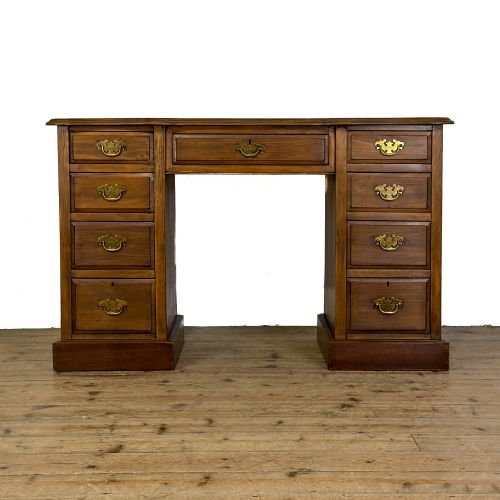
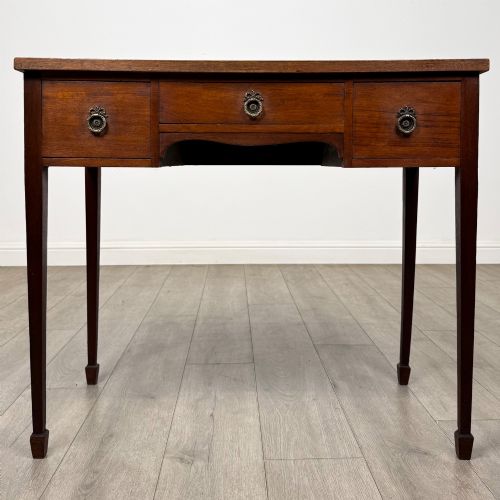
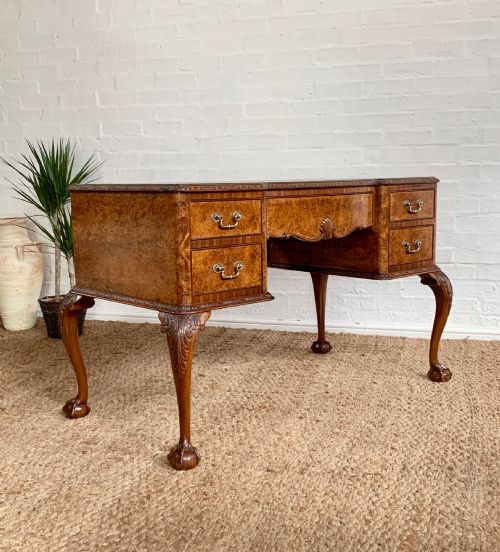
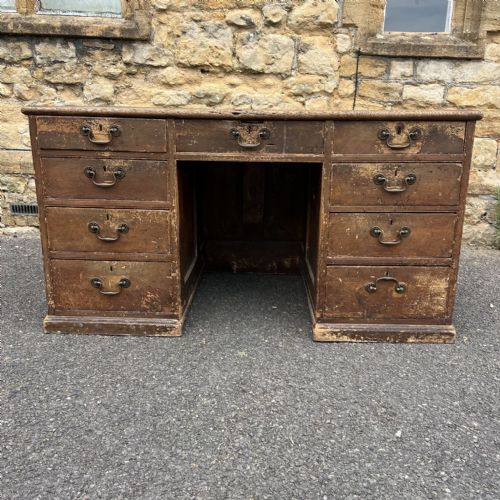
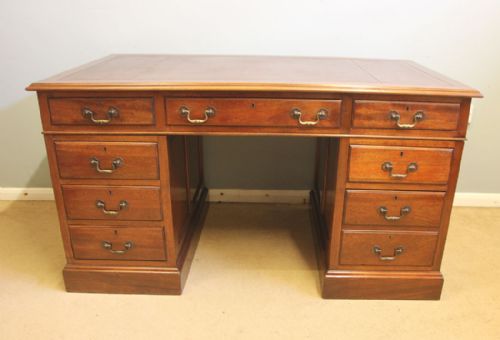
A traditional timber writing desk brings functional workspace and period character into a room through forms such as pedestal desks, kneehole desks, writing tables, and side tables. When searching for a traditional timber writing desk, buyers encounter pieces originating from the eighteenth, nineteenth, and early twentieth centuries.
The selections available range from formal mahogany Georgian and Victorian pedestal desks fitted with multiple drawers to simpler pine, oak, and fruitwood estate desks or rustic farmhouse tables. Regional variations extend to Chinese, Italian, and Japanese writing tables alongside Queen Anne style walnut examples.
Materials and Construction
Makers utilised timber such as mahogany, walnut, oak, pine, fruitwood, and burr walnut, often pairing the solid wood construction with brass hardware. Writing surfaces frequently incorporated tooled leather inserts to provide a durable and refined writing plane.
Construction techniques varied from grand multi-drawer pedestal arrangements and kneehole designs to simpler side tables and lowboys. Cabinetmakers selected figured veneers for primary display surfaces while utilising secondary timbers for drawer linings and internal framing.
Calligraphy tables and estate desks remind us that historic writing habits required entirely different postures than staring at a glowing monitor.
Evaluating Quality
Quality in a traditional timber writing desk is determined by the selection of cabinet timbers, such as figured mahogany or burr walnut, and the sophistication of the joinery. Well-proportioned pedestal arrangements and clean serpentine fronts distinguish finer workshop output from utilitarian estate furniture.
Trollope & sons
The Traditional Timber Writing Desk Glossary
- Pedestal desk
- A large freestanding desk comprising two supporting banks of drawers beneath a main writing surface.
- Kneehole desk
- A compact desk featuring a central recess for the user's legs flanked by smaller drawers or cupboards.
- Lowboy
- A small side table with one or more rows of drawers, commonly produced in eighteenth-century walnut or fruitwood.
- Pembroke worktable
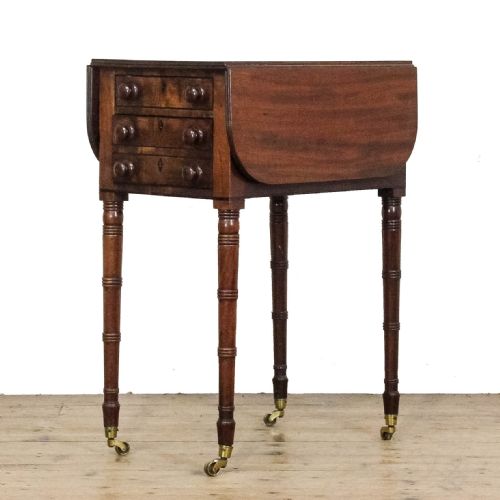
- A small table with hinged drop leaves on either side, often containing a single drawer used for writing or needlework.
- Partners desk
- A large double-sided desk designed for two people to work opposite one another with drawers on both faces.
Traditional Timber Writing Desk: Frequently Asked Questions
What is a pedestal desk?
A pedestal desk is a heavy freestanding writing table featuring two supporting columns of drawers that hold up the main writing top. These pieces often include multiple small drawers and a central locking mechanism.
They emerged as prominent fixtures in nineteenth-century studies and libraries, offering substantial storage alongside a formal architectural presence.
What woods were used for these desks?
Cabinetmakers relied heavily on mahogany, walnut, oak, and pine for the main carcass construction and structural frames. Finer decorative surfaces utilised figured mahogany, burr walnut, and fruitwood veneers.
Secondary timbers like pine or oak were regularly employed for internal drawer linings and hidden backing boards.
Where were writing tables placed?
Writing tables were historically positioned in private studies, libraries, or parlours, functioning as dedicated spaces for correspondence and business management. Partners desks often sat freestanding in the middle of a room.
Smaller side tables and lowboys served multi-purpose roles in bedrooms or smaller chambers where space remained limited.