

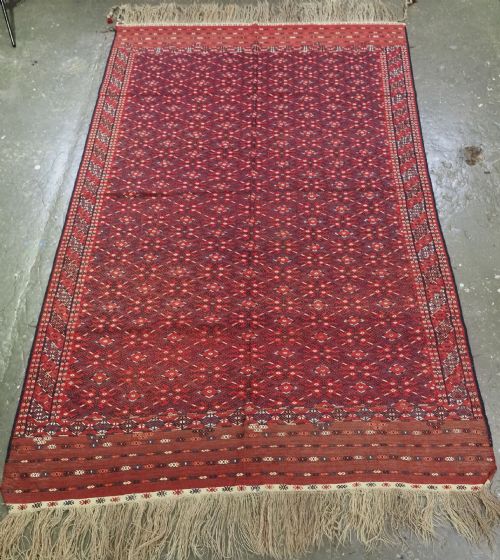
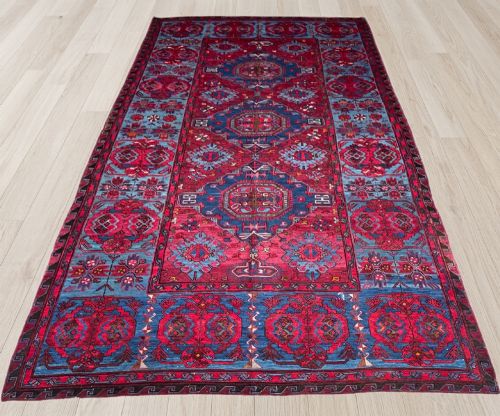
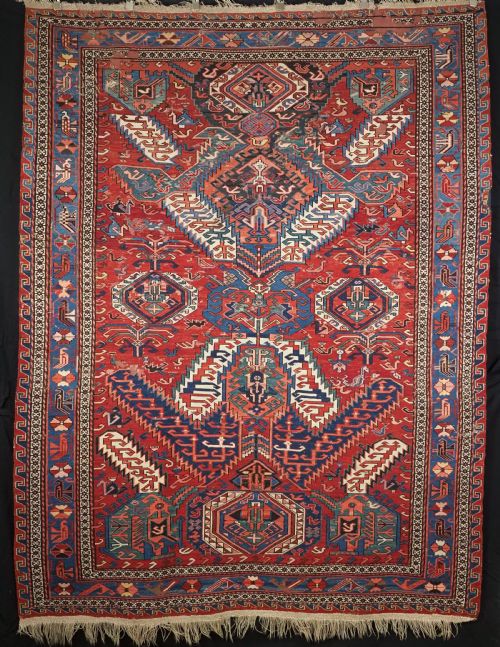
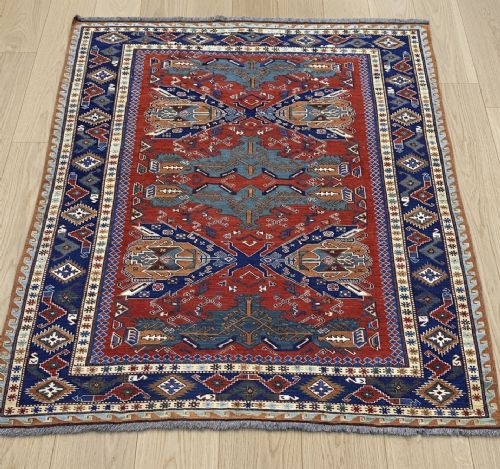



Traditional Soumak Carpet
These traditional soumak carpet pieces are flatwoven textiles of wool, prized for their intricate wrap-faced structure and bold tribal geometry.
Traditional Soumak Carpet
A traditional soumak carpet is a flatweave textile originating from Caucasian, Turkmen, and Persian tribal traditions. These rugs lack a traditional pile, relying instead on a distinctive weft-wrapping technique that creates a durable and textured surface.
Most examples encountered here date from the nineteenth century up to the early decades of the twentieth century. Common regional attributions include Daghestan, Kuba, and the territories of Yomut Turkmen and Quchan Kurdish weavers.
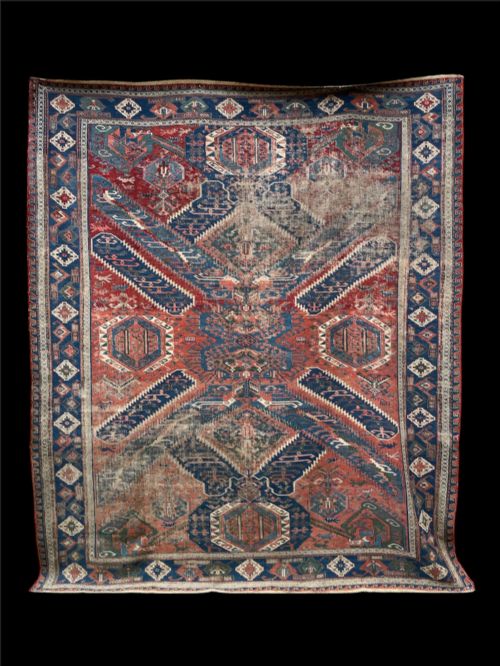
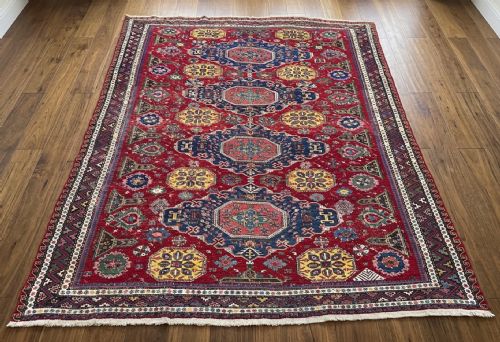
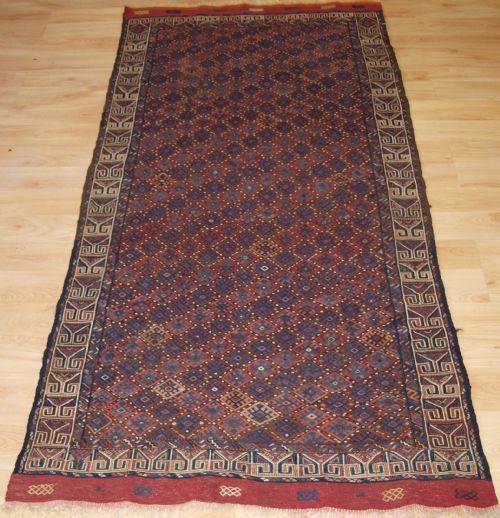
Design motifs span geometric medallions, dragon patterns, and long kilim ends with diamond motifs. Yomut palas kilims and Lesghi region pieces form a significant portion of these nomadic works.
Materials and construction methods
Every traditional soumak carpet is made from wool, spun and dyed by hand using traditional methods. The wool provides both the structural foundation and the colourful surface decoration characteristic of these nomadic weaves.
The defining technique involves wrapping weft threads around the warp threads in a continuous brocading process. This leaves floating threads on the reverse side while creating a sturdy, ribbed face on the front.
Traditional Soumak Carpet Retail Price Guide 2026
Typical asking prices for traditional soumak carpet among the pieces listed under this phrase on Sellingantiques today, from the lower quarter to the upper quarter. They describe what is for sale here now, not the wider market.
Listings feature wool rugs spanning from eighteen-seventy to nineteen-fifty, originating primarily from Caucasian and Turkmen tribal makers.
Evaluating quality and execution
Quality in a traditional soumak carpet rests upon the tightness of the weave and the precision of the geometric design. Finer wrapping creates a crisper pattern definition and a more resilient fabric.
The condition of the wool, the integrity of the flatweave structure, and the presence of original kilim ends distinguish superior examples. Pieces retaining intact supplementary structures and clear tribal motifs hold greater historical interest.
The Traditional Soumak Carpet Glossary
- Soumak
- A flatweaving technique where weft threads are wrapped over and under warp threads to produce a durable textile without a pile. This method creates a characteristic braided texture on the face of the rug.
- Kilim
- An untufted flatwoven carpet or rug produced in various regions of the Middle East and Caucasus. These ends often feature extended panels with supplementary geometric patterns.
- Warp
- The vertical threads stretched on a loom before weaving begins. Weft threads are passed through these stationary strands to build the fabric.
- Weft
- The horizontal threads passed through the warp to form the body and pattern of the textile. In soumak weaving, these threads wrap around the warp rather than simply passing back and forth.
- Medallion
- A central ornamental motif found within the field of a carpet. These designs often take geometric or stylized floral forms in tribal weaving.
Traditional Soumak Carpet: Frequently Asked Questions
What is a soumak carpet?
A traditional soumak carpet is a flatwoven textile made using a specific weft-wrapping technique. This method produces a textured, durable surface without a traditional pile.
These pieces originate from nomadic and tribal groups in the Caucasus, Persia, and Turkmenistan. They are known for their geometric designs and wool construction.
How are soumak rugs different from pile rugs?
Pile rugs feature vertical knots of wool cut to create a plush surface. Soumak rugs are flatwoven without knots, using wrapped weft threads instead.
This construction makes soumak carpets thinner and structurally distinct from knotted pile carpets while maintaining high durability.
Where were these carpets made?
These carpets originate from regions such as Daghestan and Kuba in the Eastern Caucasus. Others are attributed to Turkmen and Kurdish tribal groups.
Weavers in these areas utilised local wool and traditional geometric motifs specific to their respective communities.
How do I care for a flatweave carpet?
Flatweave rugs require gentle regular vacuuming without a rotating brush roll to protect the woven structure. Professional cleaning suitable for antique textiles is recommended.
Keeping the carpet out of direct sunlight helps preserve the natural dyed wool over time.