

Nomadic Turkmen Rug
When choosing a nomadic turkmen rug, a buyer explores woven tribal textiles from Central Asia created for practical use and ceremony.
Nomadic Turkmen Rug
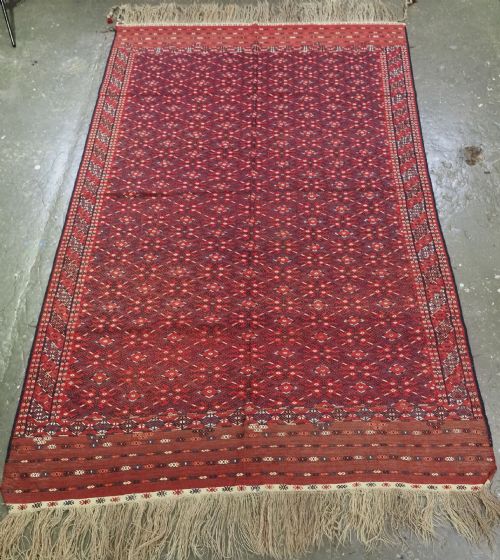
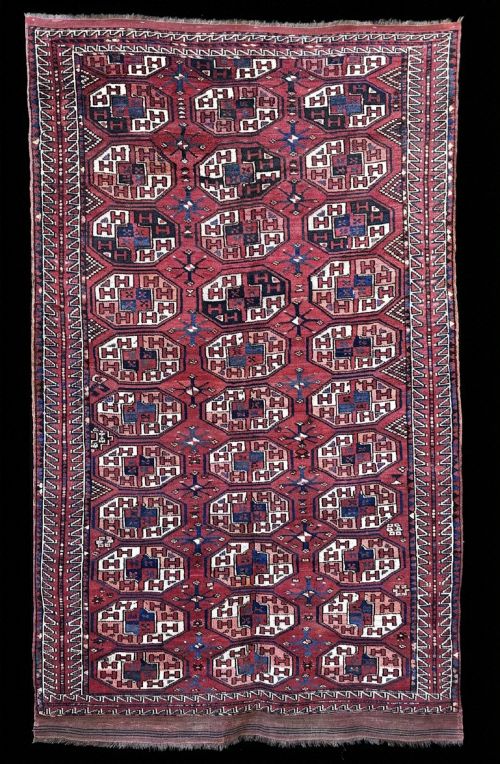
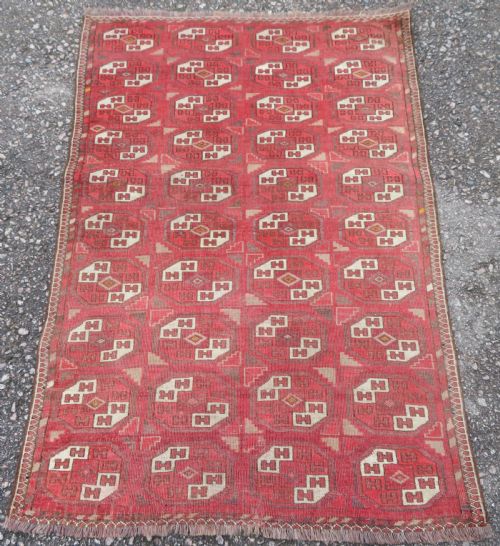
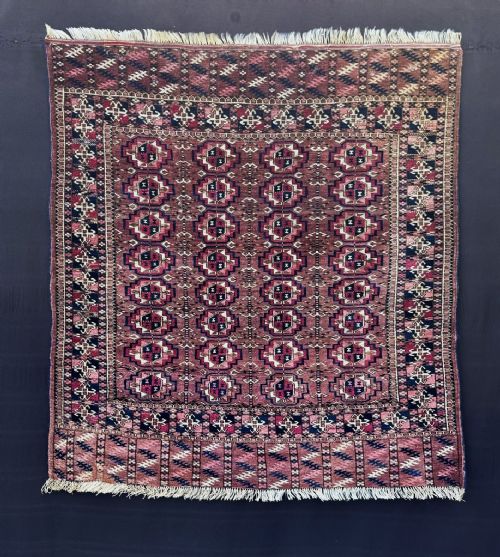
A nomadic turkmen rug encompasses floor coverings, tent door rugs, saddle covers, and storage bags originating from tribal groups across Turkmenistan and the Trans-Caspian steppes. These pieces date primarily from the nineteenth and early twentieth centuries, reflecting the distinct cultural identities of tribes such as the Yomut, Teke, Ersari, Saryk, and Kizyl Ayak.
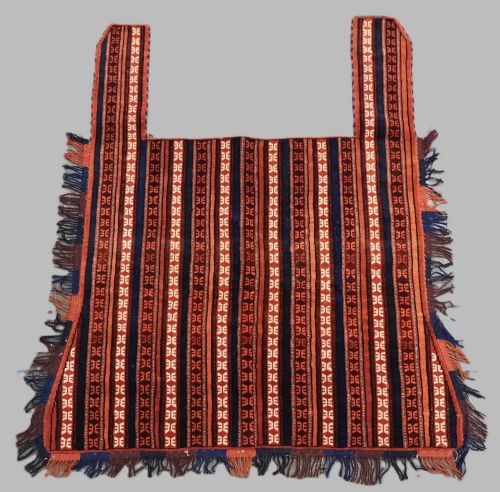
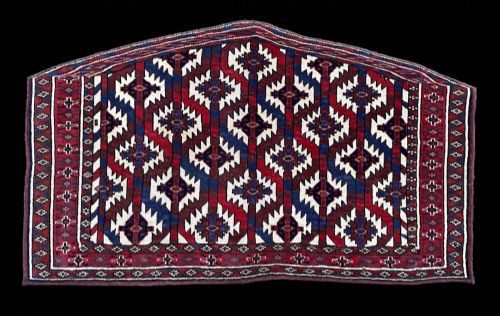
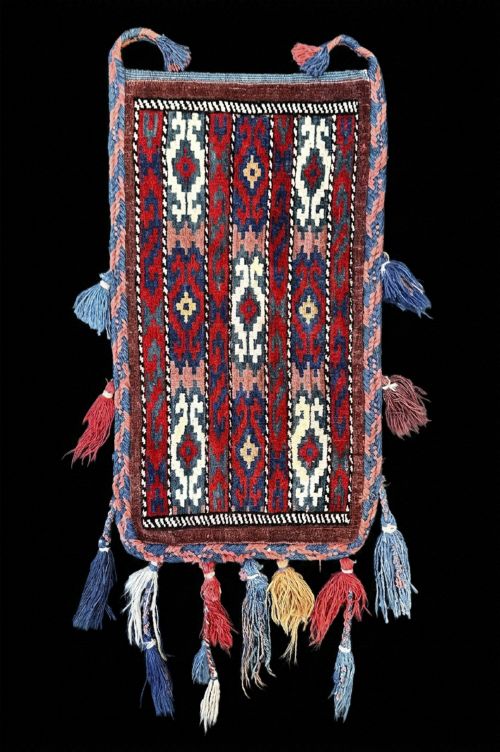
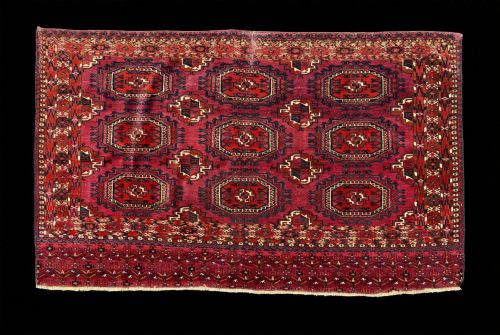
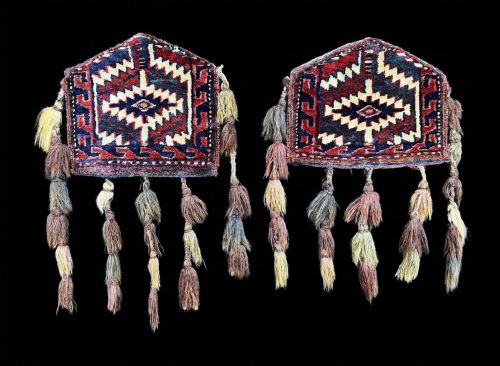
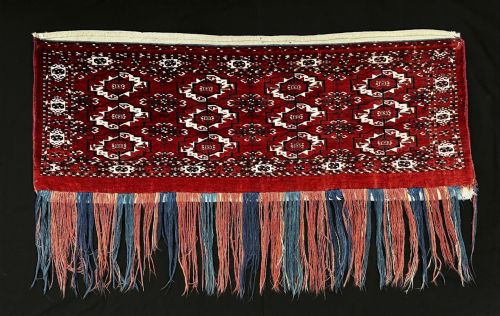
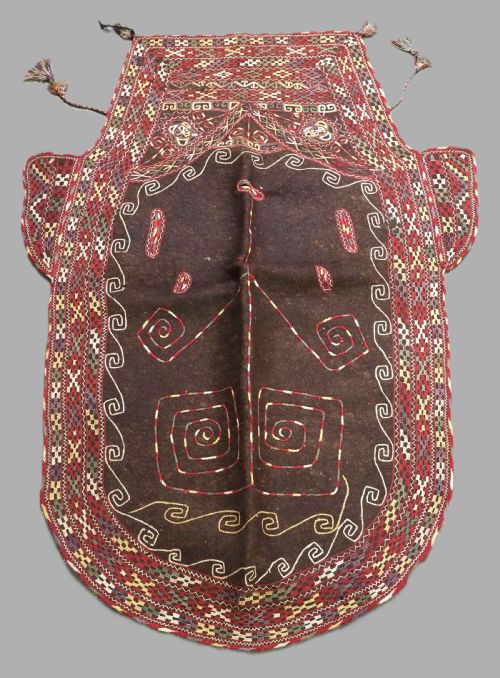
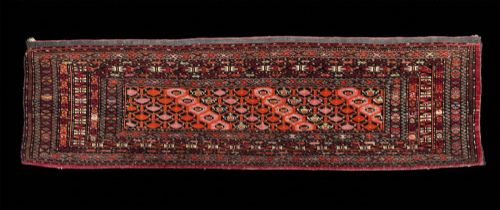
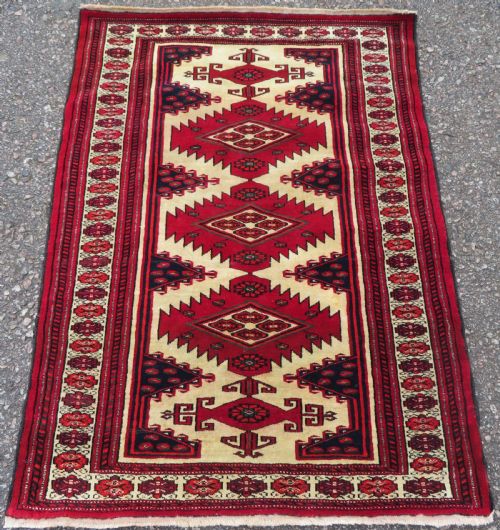
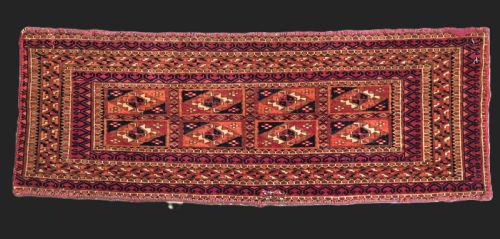
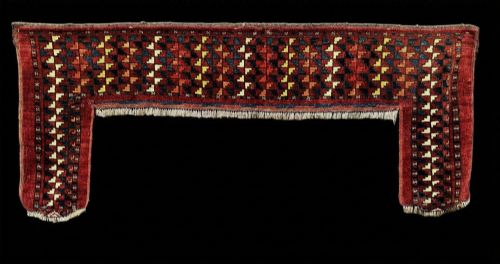
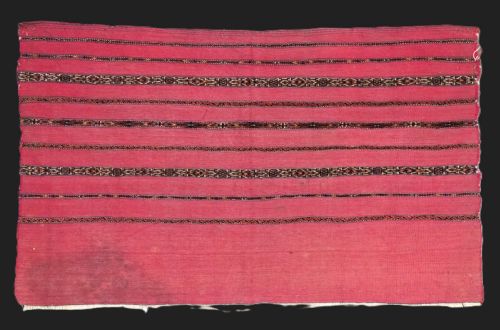
The selections on this page appear in various utilitarian forms rather than standard room-size carpets alone. Common formats include torba and chuval storage bags, asmalyk tent hangings, kap horse covers, and smaller wedding or saddle rugs.
These items were woven by nomadic and semi-nomadic weavers for domestic life, transport, and dowries. Their enduring appeal lies in disciplined geometric layouts and rich dye palettes that served both functional and symbolic purposes within tribal society.
What Varies in Quality
The standard of a piece depends on the precision of the weave and the clarity of the tribal motifs, such as the gul, kepse, or schemle designs. Finer densities and crisper geometry demonstrate greater technical control by the weaver.
Preservation of original structural elements influences the character of each textile. Examples retaining complete backs, original tassels, and well-maintained natural dyed wool show how the objects survived their utilitarian roles in tent interiors and transit.
Nomadic Turkmen Rug Retail Price Guide 2026
Typical asking prices for nomadic turkmen rug among the pieces listed under this phrase on Sellingantiques today, from the lower quarter to the upper quarter. They describe what is for sale here now, not the wider market.
Listings feature wool, cotton, and silk materials spanning the nineteenth and early twentieth centuries.
Yomut Tribes·Teke Tribes·Ersari Tribes·Saryk Tribe·Kizyl Ayak Tribe
The Nomadic Turkmen Rug Glossary
- Gul
- A repeated primary medallion or octagonal motif characteristic of Central Asian tribal weaving. Each tribe utilised specific variations to signal identity and lineage.
- Torba
- A small utility bag used within the yurt for storage. These faces are frequently encountered as independent collector fragments.
- Chuval
- A large tent bag designed for bedding and household storage. They display structured rows of guls across the primary field.
- Asmalyk
- A pentagonal or triangular trapping hung inside the yurt or used during wedding processions. They represent significant artistic investment by the weaver.
- Kaplyg
- A decorative tent door flap or hanging placed at the entrance of a nomadic dwelling. These items protected the threshold while displaying tribal status.
Nomadic Turkmen Rug: Frequently Asked Questions
What is a nomadic turkmen rug?
These textiles are woven floor coverings and utilitarian bags produced by tribal groups across Central Asia. They utilise wool and natural dyes to form geometric patterns.
Most items date from the nineteenth to early twentieth centuries and served practical roles in nomadic dwellings and transport.
How were these bags used?
Storage bags like torbas and chuvals held household items, bedding, and provisions inside tents. Other pieces functioned as saddle covers, door hangings, or wedding trappings.
Their construction was tailored for daily movement across the steppes by camel or horse.
How do you identify different tribes?
Tribal attribution relies on specific structural layouts, colour palettes, and primary motifs known as guls. Yomut, Teke, and Ersari weavers each employed distinct geometric vocabularies.
Examining the borders and secondary ornaments clarifies the likely origin within Turkmenistan.
How do I care for a textile?
Keep these pieces away from direct sunlight to protect natural dyed wool from fading. Gentle vacuuming without a rotating brush maintains the pile.
Allow professional textile conservators to handle any cleaning or structural stabilization.