
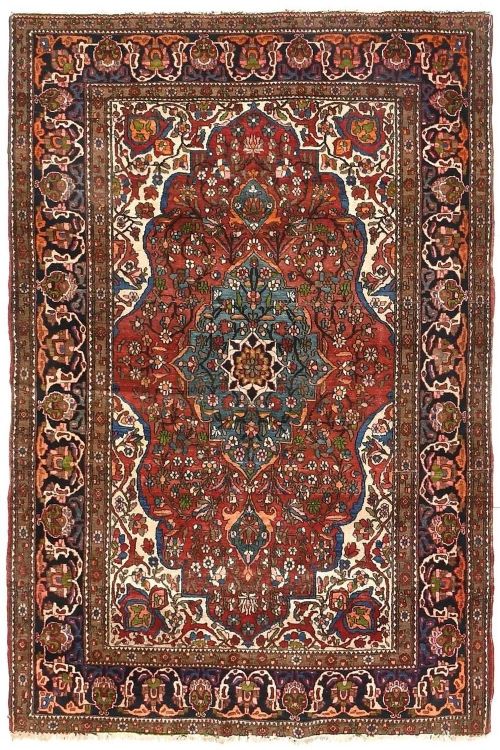


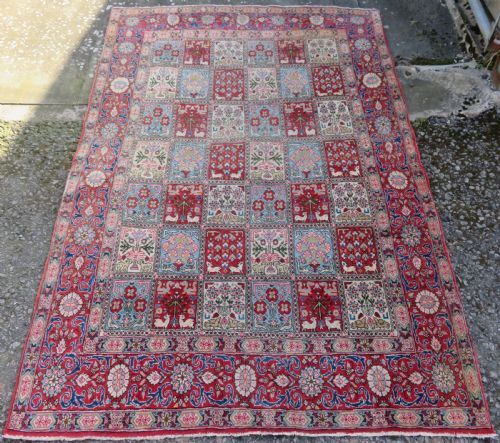
Traditional Silk Carpet
A traditional silk carpet brings tactile luxury to a room, offering intricate designs woven from fine natural threads.
Traditional Silk Carpet
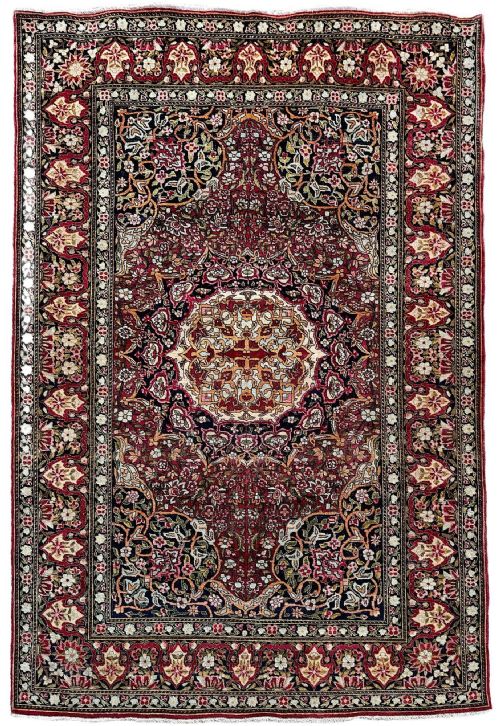
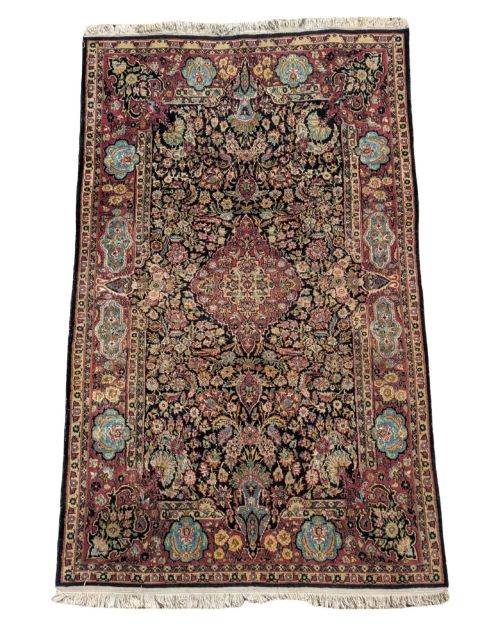
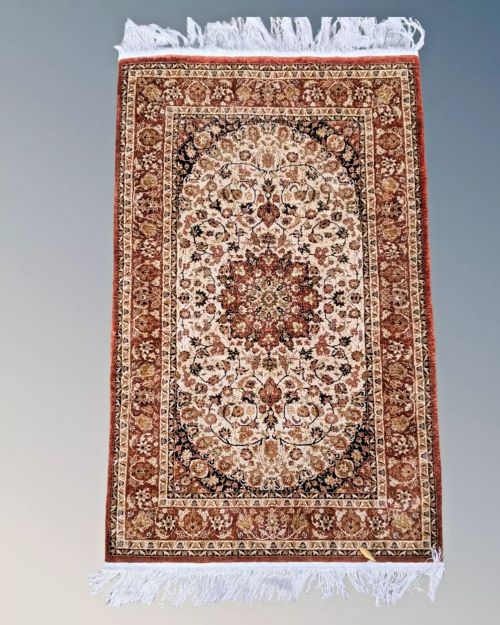
A traditional silk carpet represents a fine category of floor coverings originating from diverse weaving centres across Persia, Turkey, China, and Central Asia. When searching for a traditional silk carpet, buyers encounter pieces ranging from full silk construction to those featuring detailed silk highlights or silk foundations.
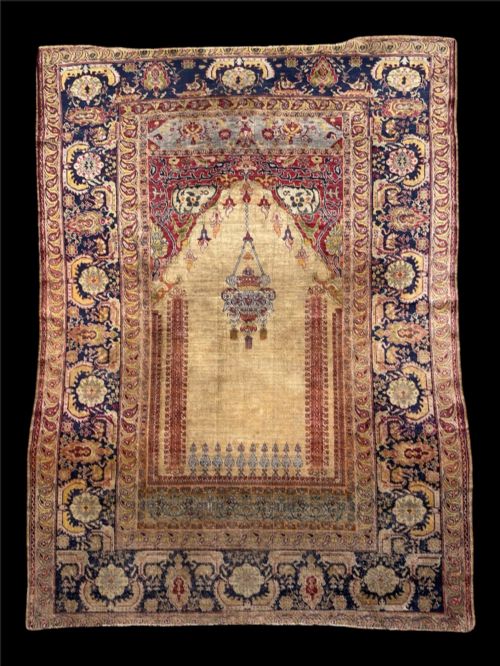
The selection here draws primarily from nineteenth-century origins up to the nineteen-thirties, encompassing regional styles such as Isfahan, Qum, Kashan, Kayseri, and Anatolian prayer rugs. These pieces appear in various formats, from compact area rugs to large carpets utilised in formal interior spaces.
How they were made
The construction of these textiles relies on natural materials, predominantly pure silk, floss silk, or art silk, frequently combined with a cotton or wool foundation. Weavers knotted these fibres by hand to build dense, durable piles capable of holding intricate pictorial and geometric patterns.
Many examples incorporate lambswool or mercerised cotton alongside silk highlights to create depth and texture within the central medallion or repeat floral designs. The precision of the weave varies by region, allowing for sharp architectural details and subtle colour transitions.
Several Kayseri rugs rely entirely on pastel shades to keep arguments over interior colour schemes remarkably brief.
What varies in quality
Quality in these textiles rests upon the density of the knotting and the purity of the materials used in the pile and foundation. Pieces with very fine weaves display sharper pattern definition and greater structural integrity over decades of use.
The sophistication of the dye palette and the harmony of the regional design also distinguish standard production from exceptional examples. Furthermore, the inclusion of pure silk throughout the pile rather than restricted silk highlights elevates the overall standard of the piece.
The Traditional Silk Carpet Glossary
- Silk foundation
- A structural base woven from silk threads rather than cotton or wool. This permits a finer knot count and allows the edges of the rug to drape with exceptional softness.
- Prayer rug
- A small format textile featuring a mihrab or arch design indicating the direction of prayer. These pieces were traditionally utilised for personal devotion in Islamic cultures.
- Kelleh
- A long, narrow carpet format traditionally placed alongside larger carpets in Persian interior layouts. It offers an elongated proportion suited to specific hallway or gallery spaces.
- Floss silk
- Unspun or loosely twisted silk fibres that yield a particularly lustrous pile. When knotted into a rug, this material reflects light strongly from different viewing angles.
- Medallion
- A central ornamental motif set into the field of the rug. It serves as the primary focal point around which floral or geometric corner designs are arranged.
Traditional Silk Carpet: Frequently Asked Questions
How do I clean a silk carpet?
Professional specialist cleaning is essential for these delicate natural fibres. Household water or standard chemical cleaners will damage the pile and weaken the foundation.
Regular gentle vacuuming without a beater bar removes surface dust safely between professional treatments.
Where were these carpets made?
Production centres span traditional weaving regions including Persia, Turkey, China, and Central Asia. Prominent towns such as Qum, Isfahan, Kashan, and Kayseri developed distinct regional styles.
Each area utilised specific colour palettes and ornamental motifs that help identify the origin of an antique piece.
Can I walk on a silk rug?
These textiles were originally intended for floor use, though their delicate nature makes placement important. Placing them in low-traffic areas preserves the fine pile and natural sheen over time.
Many owners choose to display them in bedrooms or formal sitting rooms where foot traffic remains minimal.
What is an art silk rug?
Art silk refers to artificial silk substitutes, such as mercerised cotton or rayon, utilised in place of natural mulberry silk. These materials provide a similar glossy appearance and soft texture.
Examining the fibre closely under magnification helps distinguish synthetic replacements from genuine insect-produced silk.