


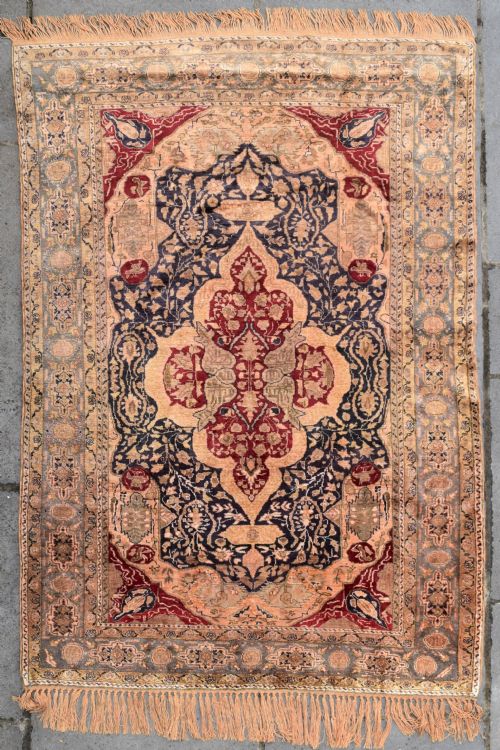

Medallion Silk Carpet
A medallion silk carpet brings intricate central symmetry and luminous pile to a floor.
Medallion Silk Carpet
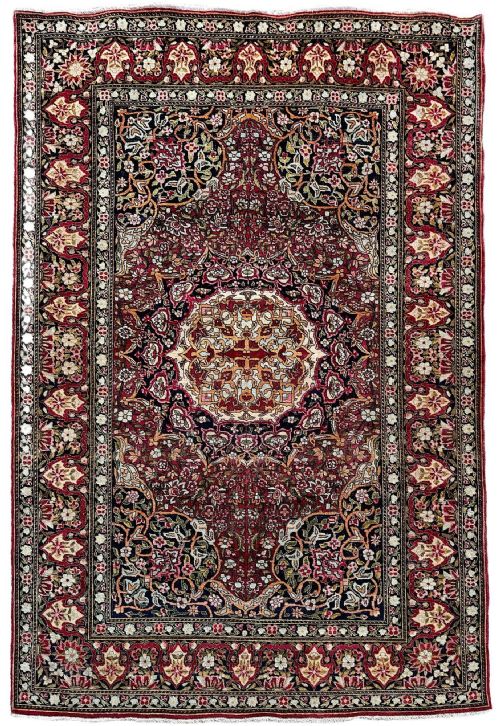
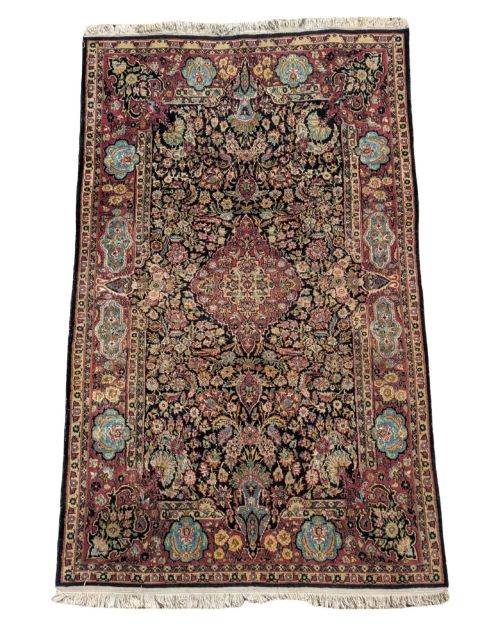
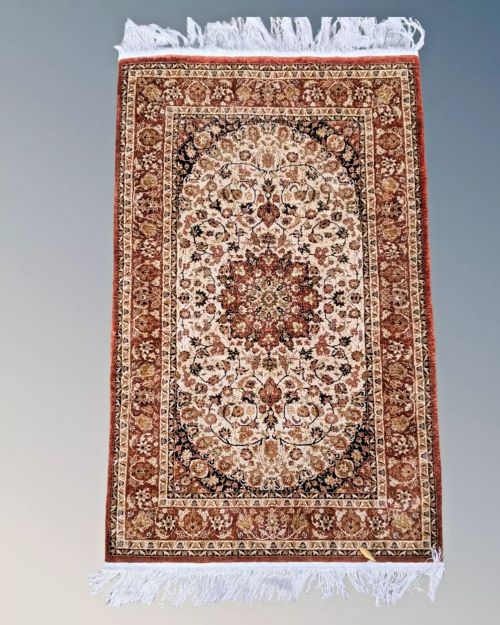
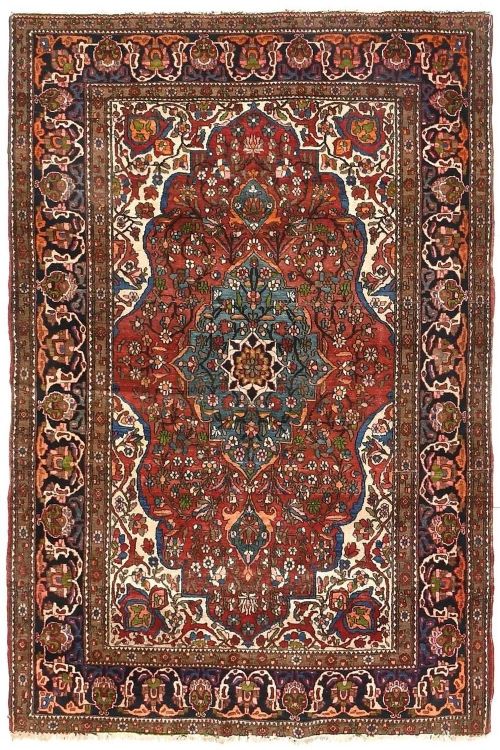
A medallion silk carpet is a woven floor covering defined by a central ornamental motif and constructed from silk or silk-blend fibres. The pieces encountered here span regional origins such as Persia, Turkey, China, and Kashmir, reflecting diverse weaving traditions.
The selections range from full silk constructions to rugs featuring silk highlights on cotton or wool foundations. Formats vary from small area rugs to larger carpets originating from periods between the mid-nineteenth century and the early twentieth century.
Buyers seeking this phrase most frequently encounter early twentieth-century examples, including Kayseri, Kashan, and Isfahan productions. These rugs showcase traditional styles such as Persian Safavid, Ottoman Revival, and Kashmiri Oriental.
How they were made
Construction relies on hand-knotting techniques executed on foundational warps and wefts of cotton, wool, or silk. Artisans utilise materials ranging from standard silk and mercerised cotton to floss silk and art silk.
Fibre selection dictates the handle and sheen of the pile, with pure silk and floss silk offering high reflectivity. Cotton and wool foundations provide structural stability beneath the silk knotting.
Materials across the listings include pure silk, cotton, wool, art silk, mercerised cotton, and floss silk.
What varies in quality
Quality diverges according to knot density and the purity of the pile materials utilised by the weaver. Pure silk and floss silk examples demonstrate greater precision in detail than pieces employing art silk or mixed wool foundations.
The refinement of the central medallion design and the harmony of the palette separate standard regional productions from finer workshops. Regional origin, such as Isfahan or Kashan, often correlates with meticulous execution.
The Medallion Silk Carpet Glossary
- Medallion
- A central ornamental design motif placed in the middle of the carpet field. This focal point is characteristic of traditional Persian and Turkish weaving styles.
- Art Silk
- A synthetic substitute or alternative material, often viscose, used to mimic the appearance of genuine silk. It appears in twentieth-century regional rug production.
- Floss Silk
- Unspun or loosely twisted silk fibres yielding a particularly soft and lustrous pile. This material is noted in specific Turkish Sivas rug productions.
- Kelleh
- A long, rectangular carpet format traditionally used in Persian and oriental room layouts. These formats offer elongated proportions compared to standard area rugs.
- Mercerised Cotton
- Cotton treated with caustic soda to increase lustre and strength, sometimes employed to simulate silk highlights. It provides a bright finish without pure silk content.
Medallion Silk Carpet: Frequently Asked Questions
How do I clean a silk carpet?
Professional cleaning specialised in delicate textiles is essential for maintaining silk piles. Household water and standard detergents damage the delicate fibres.
Vacuuming should be done gently without a rotating beater bar to protect the structure.
Are these carpets suitable for heavy foot traffic?
Silk carpets with lower pile density or part-silk construction are better suited to lighter traffic areas. Placing them in low-footfall spaces preserves the sheen and delicate knotting.
Pure silk rugs function exceptionally well as wall hangings or in formal reception rooms.
How do I identify the age of a rug?
Dating relies on material analysis, structural construction, and stylistic markers specific to regional workshops. Early twentieth-century pieces often display distinct transitional colour palettes.
Comparing knot types and foundation materials helps distinguish nineteenth-century examples from later revivals.
What is the difference between art silk and real silk?
Real silk is a natural protein fibre spun by silkworms, offering high durability and natural luminescence. Art silk is typically a regenerated cellulose material created to imitate that specific shine.
Burn tests or microscopic fibre examination definitively separate natural protein from artificial cellulose.