



Fine Silk Area Carpet
These fine silk area carpet examples are woven textile works offering intricate traditional patterns and soft foundations for any interior scheme.
Fine Silk Area Carpet
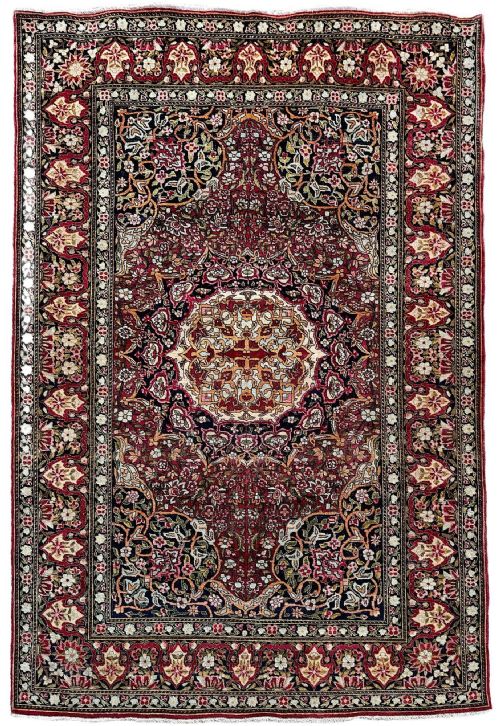
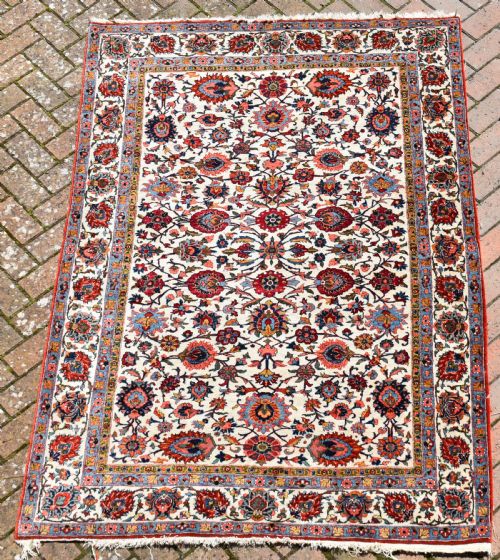
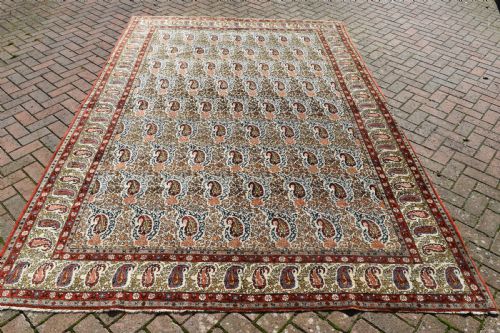
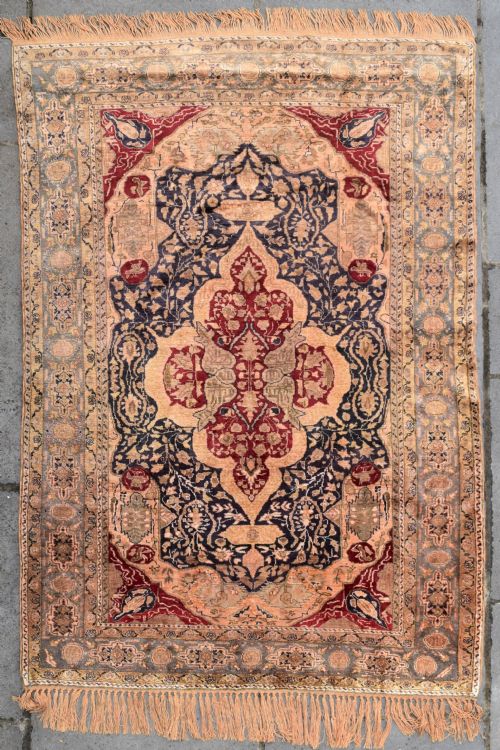
A fine silk area carpet brings together traditional Persian and Ottoman design influences, often featuring elaborate medallions or classical floral motifs across the central field. When searching for a fine silk area carpet, buyers typically encounter pieces originating from major weaving centres such as Qum, Isfahan, Tabriz, Kashan, Nain, Kayseri, Sivas, and Senneh. These floor coverings date from the mid-nineteenth century through the early decades of the twentieth century.
The format of a fine silk area carpet ranges from compact scatter sizes to large room dimensions, accommodating various spaces within a home. Persian Qum and Turkish Kayseri examples appear frequently in this selection, demonstrating high knot densities and refined colour palettes. Each piece reflects the specific regional aesthetic of its origin, whether through the pastel tones characteristic of Kayseri production or the detailed pictorial elements found in Isfahan and Tabriz weaving.
Materials and construction methods
The construction of a fine silk area carpet relies primarily on pure silk, floss silk, or wool piles knotted onto sturdy cotton or silk foundations. Master weavers utilised fine threads to achieve dense knots per square inch, creating supple surfaces that articulate complex ornamental schemes with precision.
Certain hybrid compositions incorporate lambswool highlights on silk foundations to introduce textural contrast and structural durability. Natural dyeing traditions applied to silk and cotton yarns ensure lasting depth within the pastel and saturated colour ranges visible across these historical floor coverings.
Listings feature pieces spanning from 1850 to 1930, utilising silk, cotton, wool, lambswool, and floss silk across Persian and Ottoman styles.
Assessing quality and execution
The quality of a fine silk area carpet depends directly on the density of the knotting and the fineness of the foundation materials used by the workshop. Higher-tier examples display exceptional precision in the execution of curves and small motifs, whereas simpler productions show broader interpretations of traditional patterns.
The integrity of the pile, the stability of the foundation, and the sophistication of the colour palette distinguish superior weaving from standard output. A harmonious balance between the central medallion and the surrounding borders indicates skilled workshop design rather than hurried commercial execution.
The Fine Silk Area Carpet Glossary
- Foundation
- The structural framework of warp and weft threads that supports the knotted pile of a carpet.
- Medallion
- A central ornamental design motif placed in the middle of the field, characteristic of traditional Persian and Ottoman weaving.
- Warp
- The vertical threads stretched tightly on the loom before the knotting process begins.
- Weft
- The horizontal threads passed back and forth between warp threads to secure the rows of knots.
- Pile
- The upright cut ends of yarn that form the usable surface of the carpet.
Fine Silk Area Carpet: Frequently Asked Questions
How do I clean a silk carpet?
Professional specialist cleaning is essential for historical silk textiles to avoid damaging the delicate foundation fibres and natural dyes. Standard domestic carpet cleaning methods and water saturation will permanently ruin the pile.
Regular gentle vacuuming without a beater bar removes surface dust safely between professional maintenance visits.
Can these carpets handle foot traffic?
A fine silk area carpet suits low-traffic locations such as formal sitting rooms, bedrooms, or display areas where wear remains minimal. Placing them away from heavy foot traffic preserves the integrity of the delicate silk pile.
Using a quality rug underlay prevents slipping and cushions the foundation against hard flooring.
Where were these carpets made?
Production centres span traditional weaving regions in Persia and Turkey, including renowned cities like Qum, Isfahan, Tabriz, Kayseri, and Sivas. Each workshop adhered to distinct regional design vocabularies and material preferences.
Local master weavers passed specific knotting techniques and stylistic motifs down through generations.
How do I identify the period?
Dating relies on stylistic analysis of the border designs, the specific colour combinations, and the structural characteristics of the foundation. Comparing the knot count and material composition against established regional timelines helps narrow the date of origin.
Wear patterns and the specific type of silk used also provide strong indicators of early twentieth-century or nineteenth-century manufacture.