
Traditional Rush Seating
Traditional rush seating spans solid oak, ash, and elm frames crafted for centuries of daily vernacular use.
Traditional Rush Seating
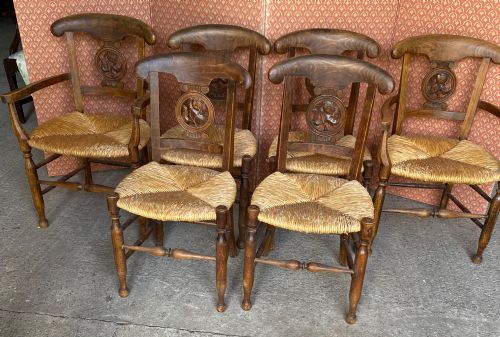
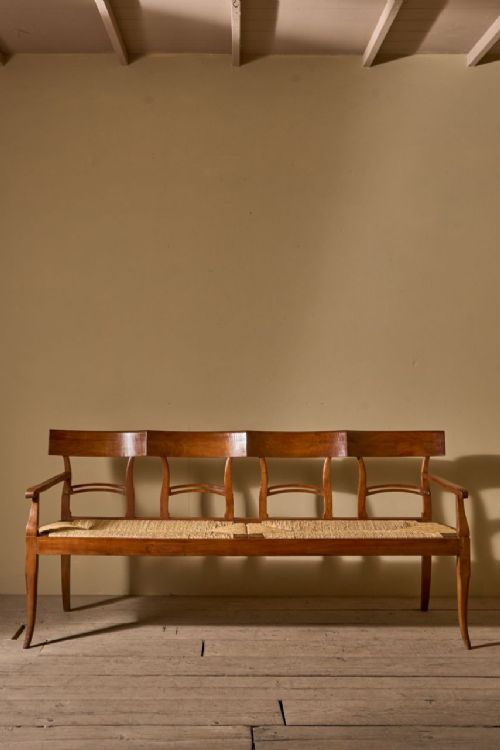
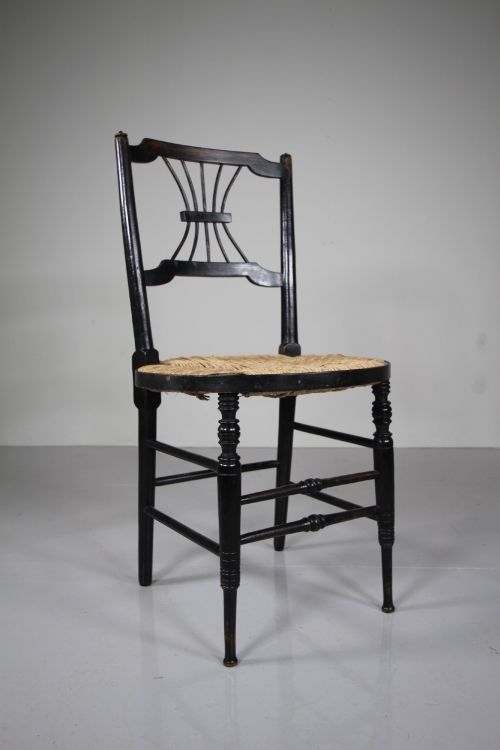
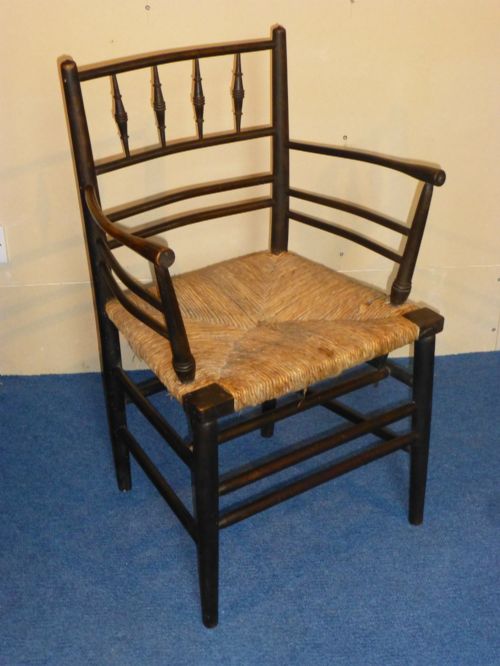
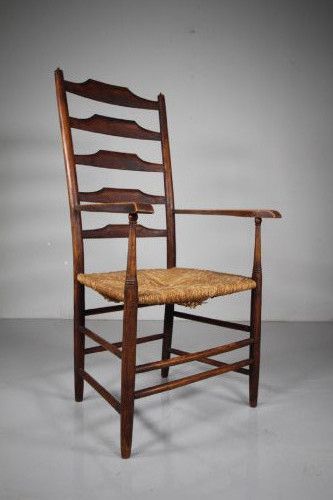
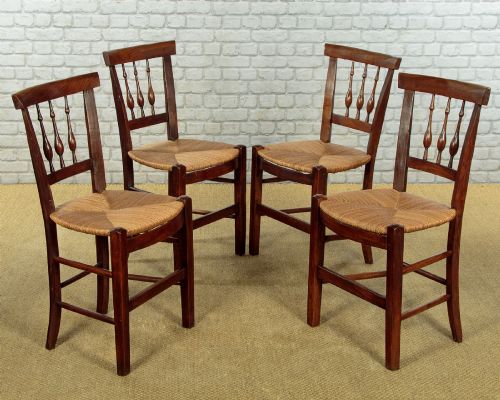
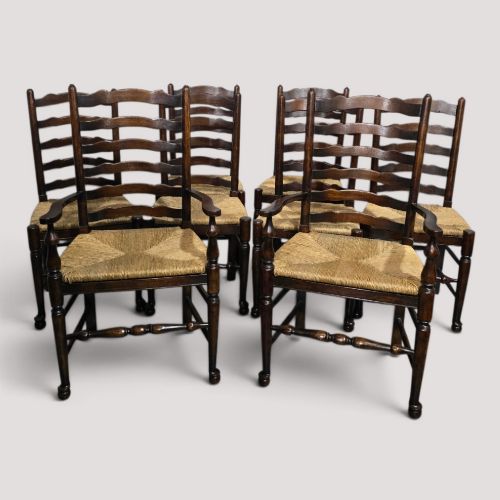
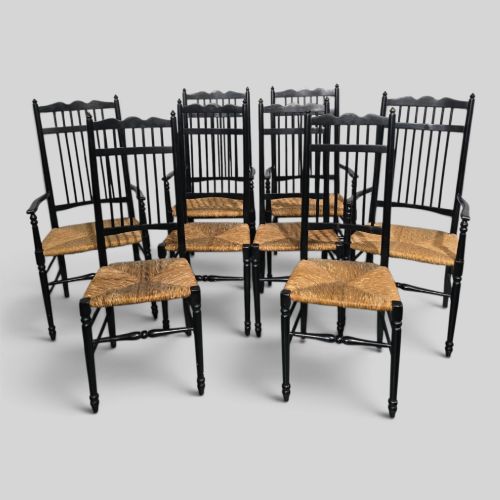
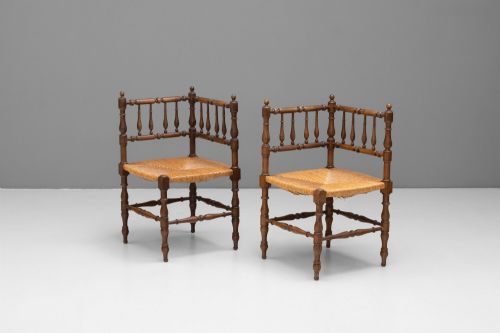
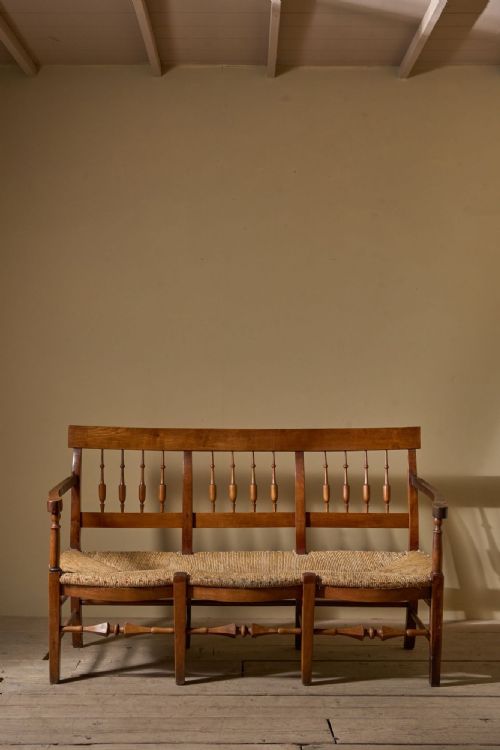
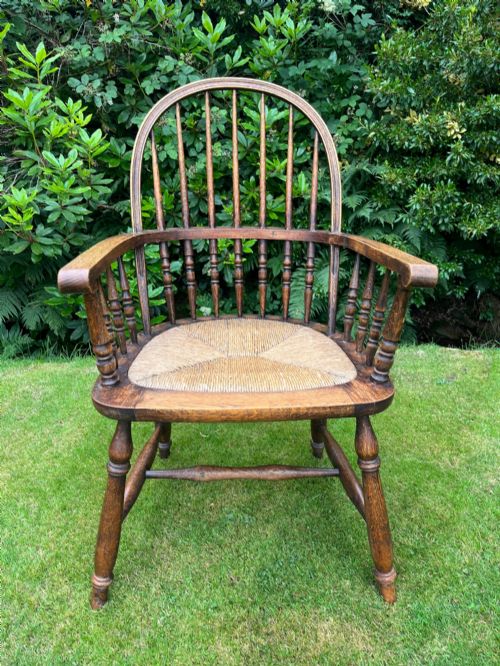
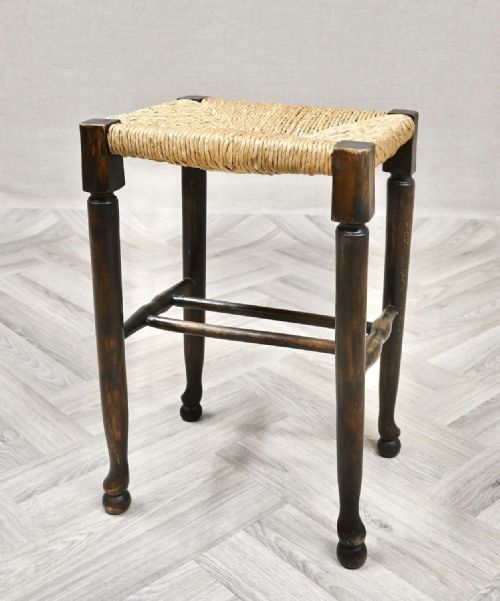
Traditional rush seating brings together country chairs, benches, and stools defined by woven seats and sturdy wooden frames. These pieces emerge primarily from nineteenth-century English and regional workshops, alongside notable Arts and Crafts interpretations.
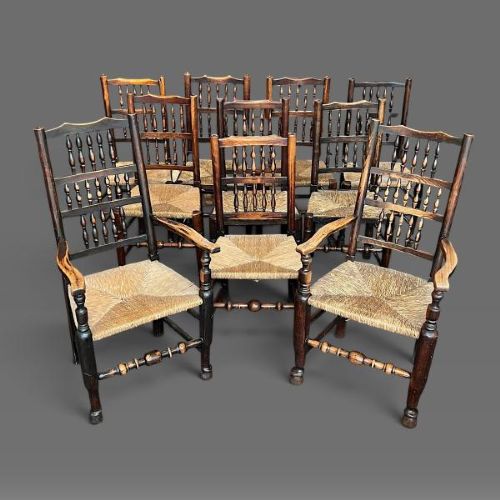
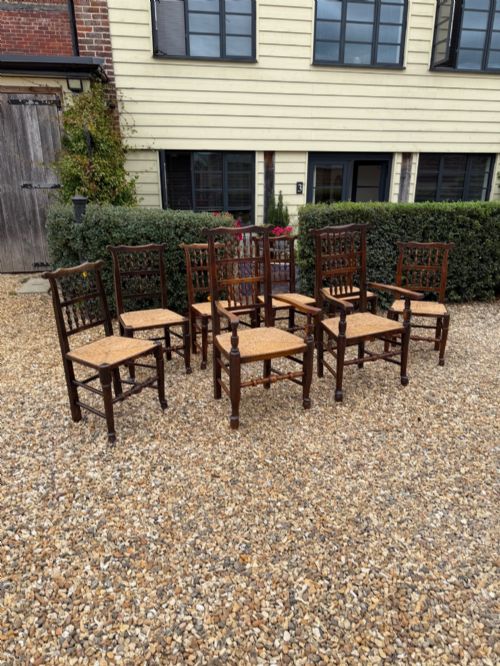
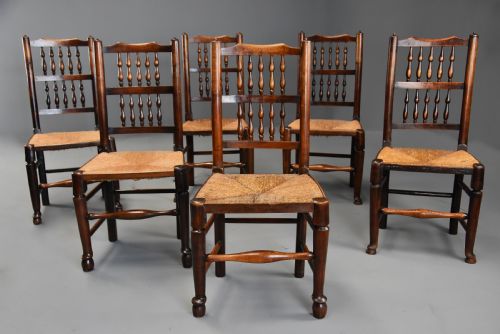
Buyers encounter dining chairs, armchairs, rocking chairs, and ladder-backed variations designed for practical household service. The forms range from simple farmhouse singles to matched sets of eight or ten.
Origins stretch from regional English counties like Cheshire and Lancashire to French provincial makers. The enduring appeal lies in the honest construction and tactile contrast between polished timber and dried marsh grass.
Assessing quality and character
Quality rests in the balance of the wooden frame, the tightness of the rush weave, and the integrity of the joints. Uniformity across large sets of dining chairs distinguishes exceptional commissions from standard utility seating.
Patina on the timber - whether fruitwood, oak, or ash - indicates decades of handling and polishing. Original painted surfaces or untouched vernacular repairs add historical weight to individual armchairs and benches.
Listings feature woods such as oak, ash, elm, beech, fruitwood, and cherrywood alongside woven rush seats.
William Morris·Rossetti·Philip Webb·Philip Clissett·E W Godwin
The Traditional Rush Seating Glossary
- Rush
- Dried marsh grass woven tightly to form resilient chair and stool seats. It offers a natural texture that wears smooth over decades of use.
- Ladder back
- A chair back featuring horizontal wooden rails stacked vertically between the upright posts. This traditional form provides sturdy lumbar support in country dining chairs.
- Spindle back
- A chair design incorporating numerous thin, turned wooden uprights along the backrest. These slender elements distribute weight evenly and lighten the visual mass of ash or beech frames.
- Vernacular furniture
- Objects built by local cabinetmakers and bodgers for everyday domestic life rather than high-style urban consumption. These pieces reflect regional timber availability and practical utility.
- Harlequin set
- A collection of dining chairs that share similar vernacular styles or materials but were not originally manufactured as a single group. They offer a collected, historical interior aesthetic.
Traditional Rush Seating: Frequently Asked Questions
How do I clean rush seats?
Keep woven seats dry and clean them gently with a soft brush or low-suction vacuum attachment to remove dust between the reeds.
Avoid excess moisture, as dampness degrades the natural fibres and weakens the underlying twist.
Are these chairs comfortable for daily use?
Traditional rush seats flex slightly under weight, offering a surprisingly supportive sit for dining or fireside reading.
Pairs and sets of ladder backs remain practical for modern dining tables when paired with appropriate cushion pads if extra softness is desired.
How do I date an elm ladder back?
Examine the turning marks on the stretchers, the method of joinery, and the degree of wear on the foot rails. Hand-shaped components and rich surface patination typically point towards earlier nineteenth or eighteenth-century origin.
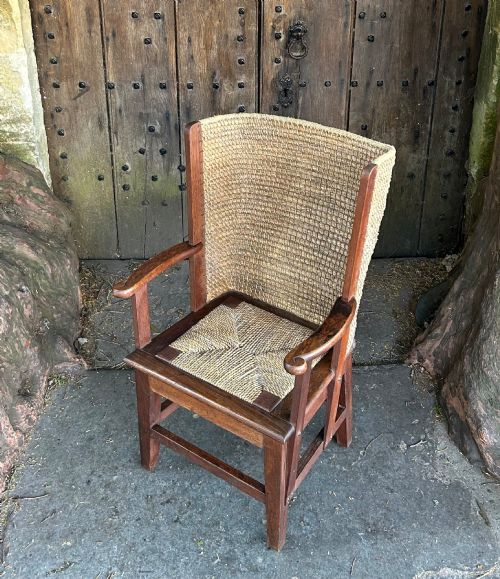
What is an Orkney chair?
The Orkney chair is a distinctive regional seating form traditionally featuring a low wooden frame and a high straw-backed hood. They were built to protect inhabitants from coastal drafts in northern dwellings.