
Traditional Rush Seat Chair
A traditional rush seat chair brings honest vernacular craftsmanship and organic texture into a room, offering simple comfort built to endure.
Traditional Rush Seat Chair
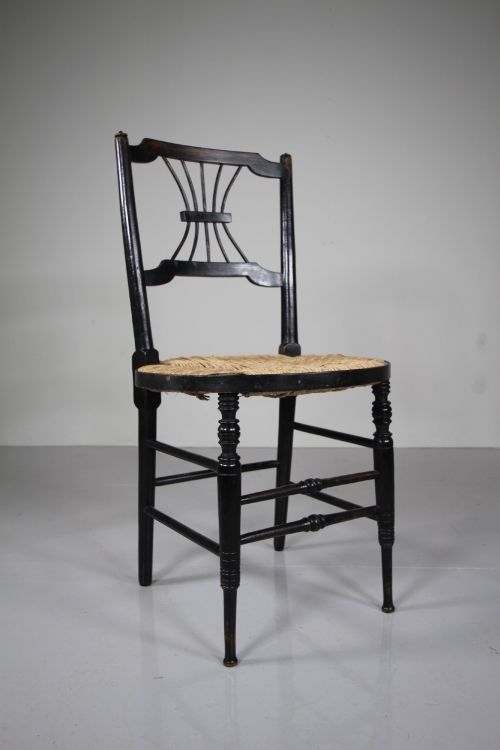
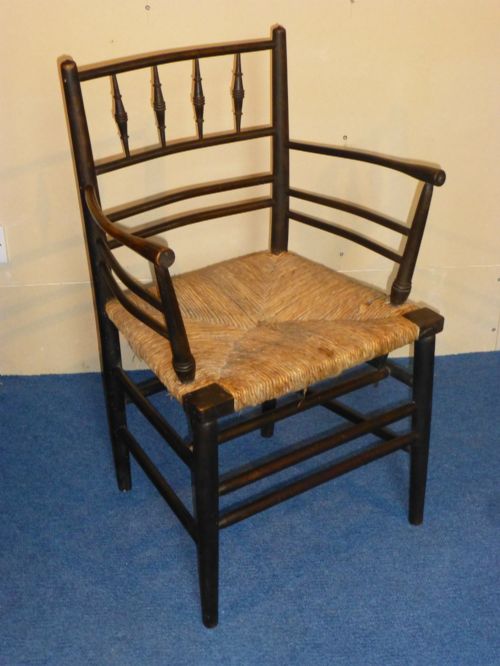
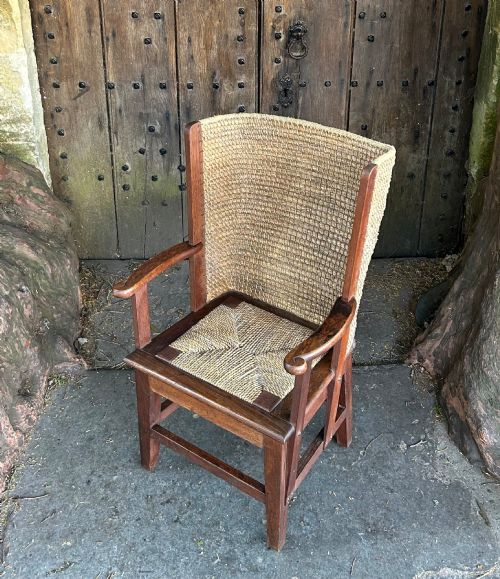
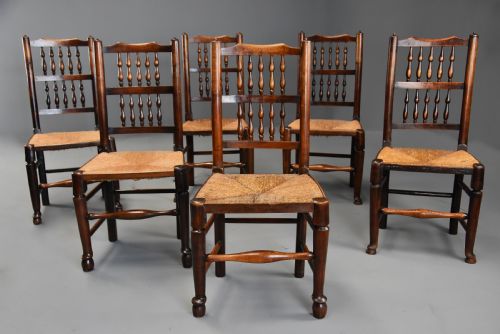
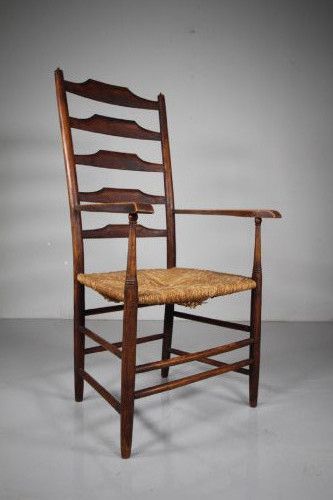
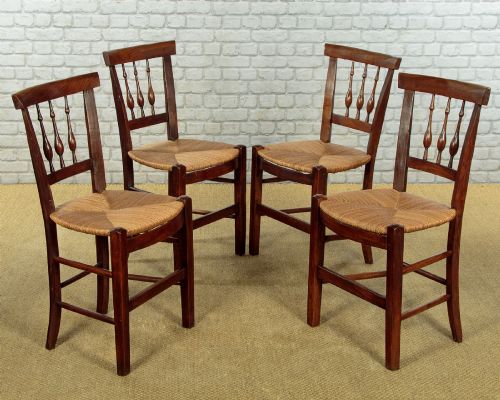
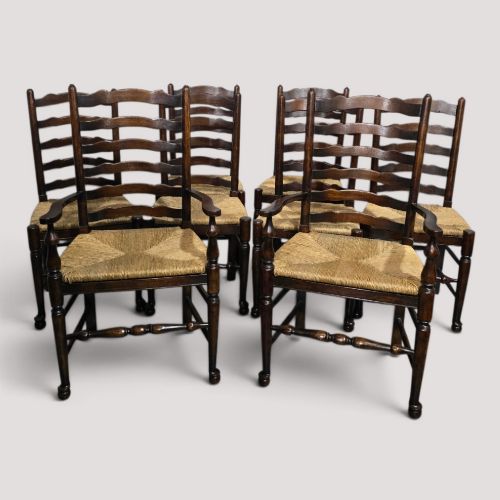
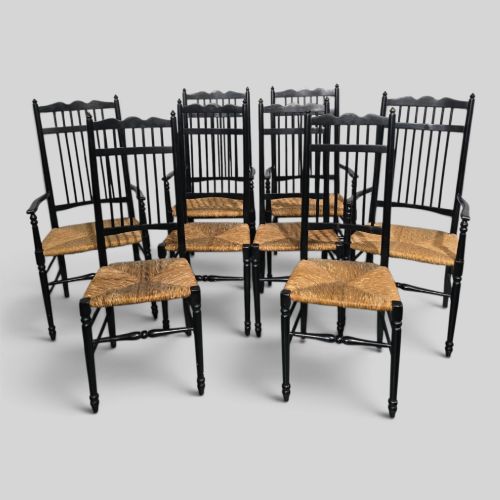
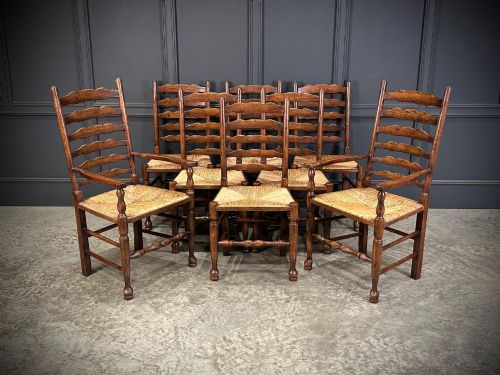
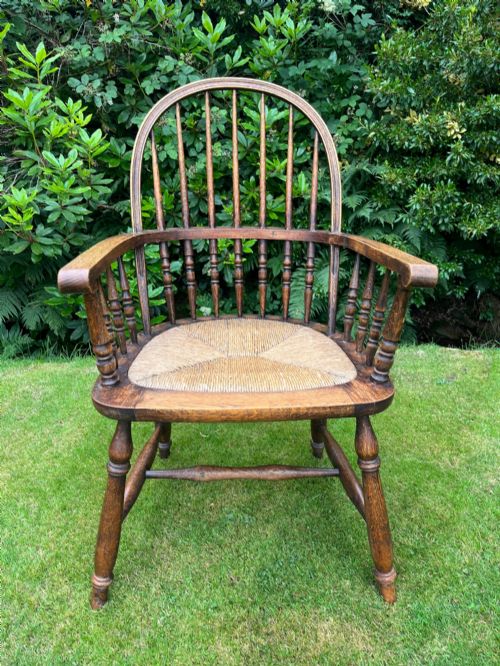
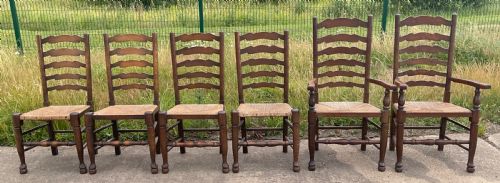
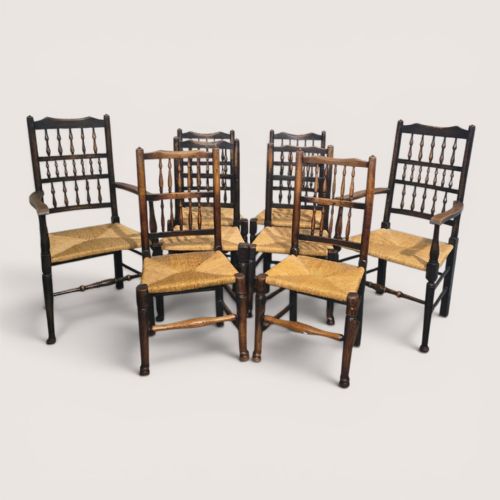
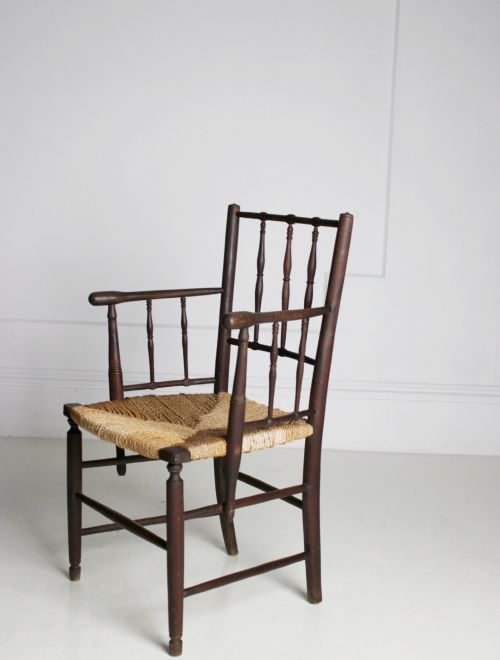
A traditional rush seat chair is a piece of vernacular furniture built for everyday domestic use, most commonly appearing as ladder backs, spindle backs, and armchairs from the eighteenth and nineteenth centuries. These seating forms span regional English country styles, French provincial work, and Arts and Crafts designs produced by makers working in ash, elm, oak, and fruitwood.
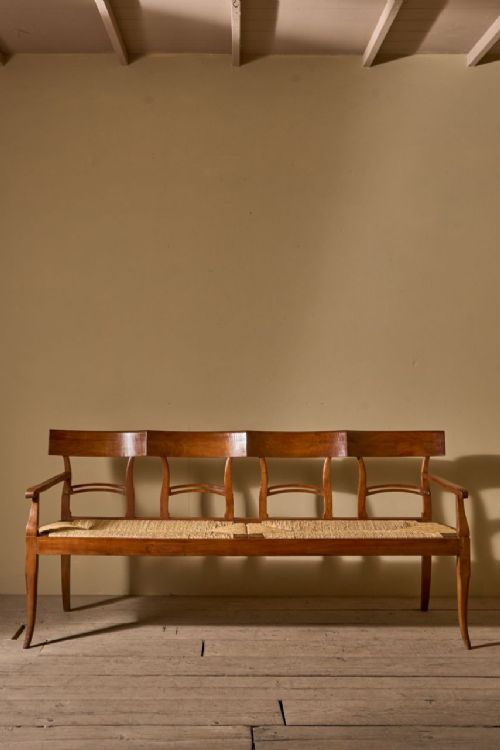
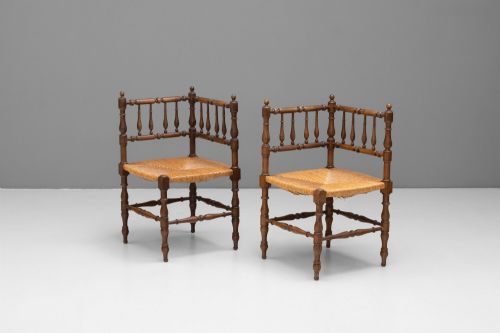
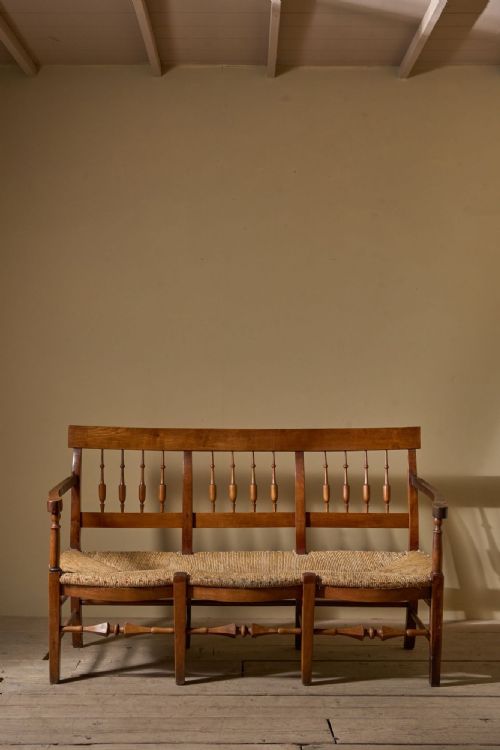
Buyers will encounter single chairs alongside matched sets of dining chairs, Windsor forms, rocking chairs, benches, and occasional corner chairs. The origins range from Lancashire and Cheshire workshops to continental provinces, showing straightforward construction methods intended for heavy kitchen or parlour use.
Judging quality and integrity
Quality rests in the crispness of the wood turnings, the tightness and evenness of the hand-woven rush, and the structural integrity of the joints. Chairs retaining their original surface patination, untouched timber, and early paint finishes command greater respect than those stripped or overly restored.
Proportion and balance define the better examples, where ladder backs curve gracefully to support the spine and legs maintain their original height without wear down to the feet.
Traditional Rush Seat Chair Retail Price Guide 2026
Typical asking prices for traditional rush seat chair among the pieces listed under this phrase on Sellingantiques today, from the lower quarter to the upper quarter. They describe what is for sale here now, not the wider market.
Several ladder back chairs turn up in harlequin sets, proving that past households were entirely comfortable mixing their seating at dinner.
Philip Webb·Philip Clissett·Rossetti·E W Godwin
The Traditional Rush Seat Chair Glossary
- Rush
- Dried marsh grass woven into cord and hand-twisted around seat rails. It creates a flexible, durable seating surface that softens and smooths in tone over decades of use.
- Ladder back
- A chair frame featuring horizontal arched wooden slats between the upright rear posts. This regional design provides back support and allows for lighter frame construction.
- Spindle back
- A seating form utilising numerous thin, turned vertical wooden rods set into the back rail. These members distribute pressure evenly across the sitter's back.
- Patina
- The surface sheen and colour acquired by wood through decades of handling, light exposure, and polishing. It serves as a visual indicator of age and careful preservation.
- Vernacular furniture
- Domestic pieces made by regional craftspeople for local use rather than following strict high-style metropolitan fashions. These objects prioritize utilitarian function and local timber availability.
Traditional Rush Seat Chair: Frequently Asked Questions
How do I care for a rush seat?
Keep natural rush seats dry and away from direct heat sources to prevent the dried grass from becoming brittle and snapping.
Clean the surface gently with a dry brush and avoid heavy moisture or traditional liquid furniture polishes on the woven strands.
Are these chairs suitable for daily dining?
Many examples were originally built for heavy kitchen and dining use, making them sturdy enough for everyday seating when joints are secure.
Check that the frames are firm and the woven rush remains taut before placing them into regular service around a dining table.
How do I distinguish regional styles?
Regional differences appear in the profile of the turnings, the height and number of ladder slats, and the specific choice of local woods.
Northern English chairs from Lancashire or Cheshire often display distinctive bobbin or mushroom turnings combined with robust ash frames.