


Traditional Pine Wardrobe
A traditional pine wardrobe brings honest timber warmth and generous storage to a bedroom, built from softwood that takes wax or paint with ease.
Traditional Pine Wardrobe
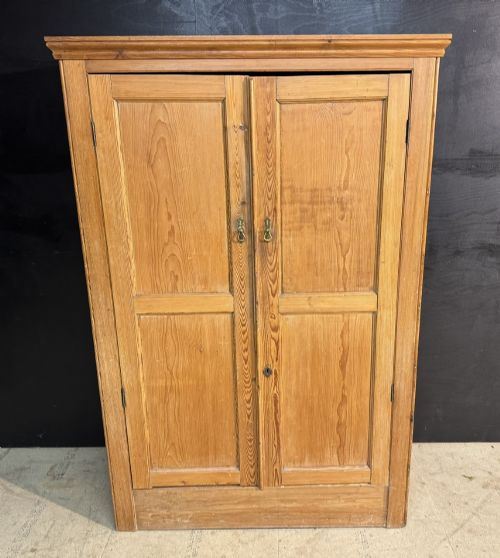
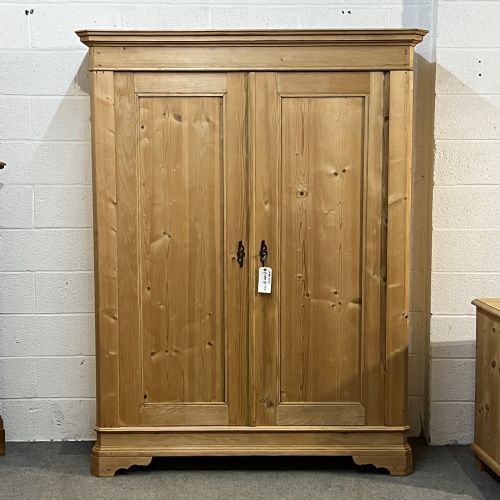
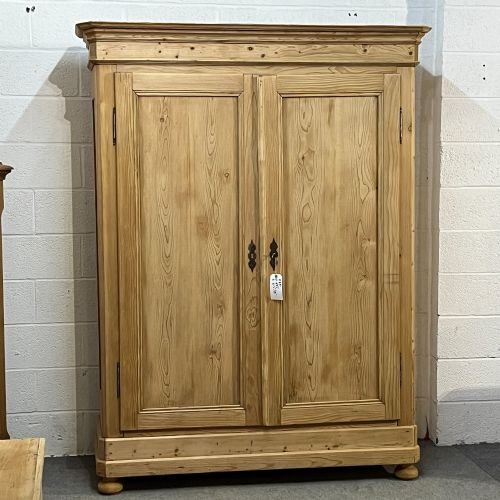
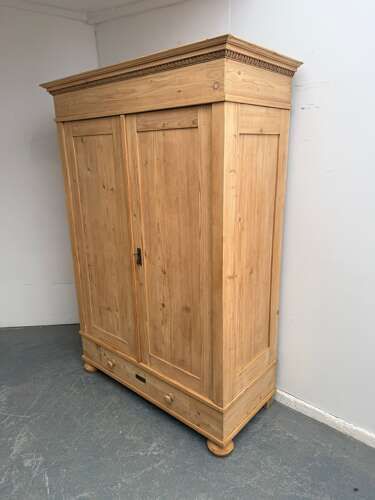
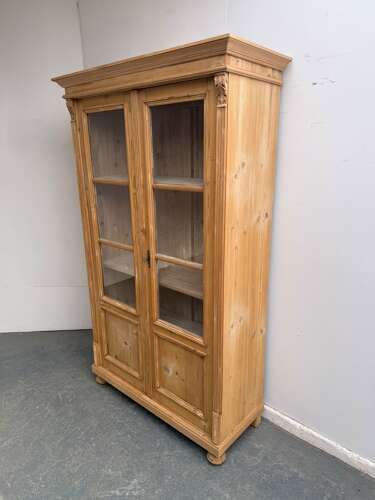
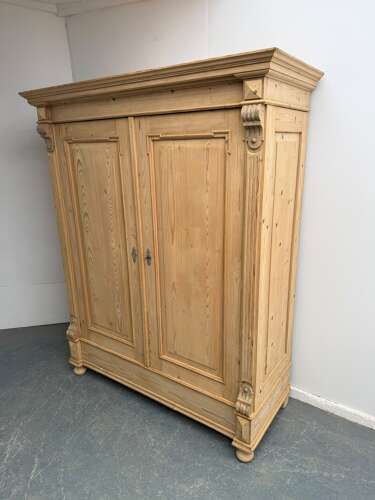
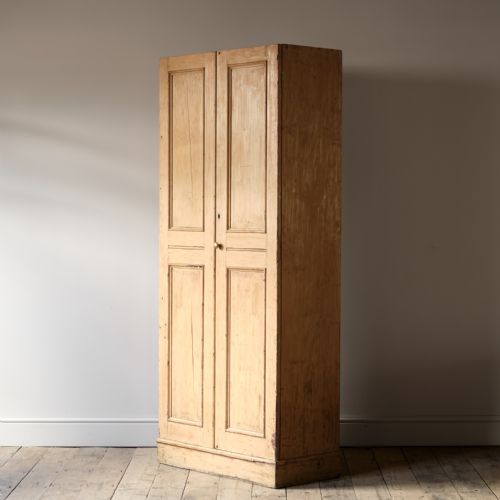
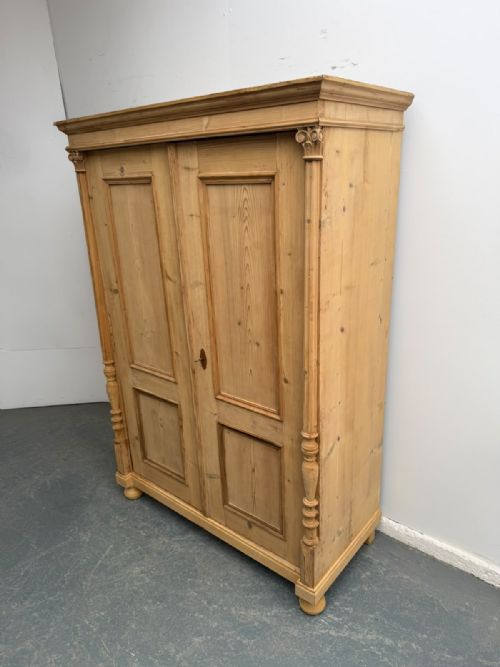
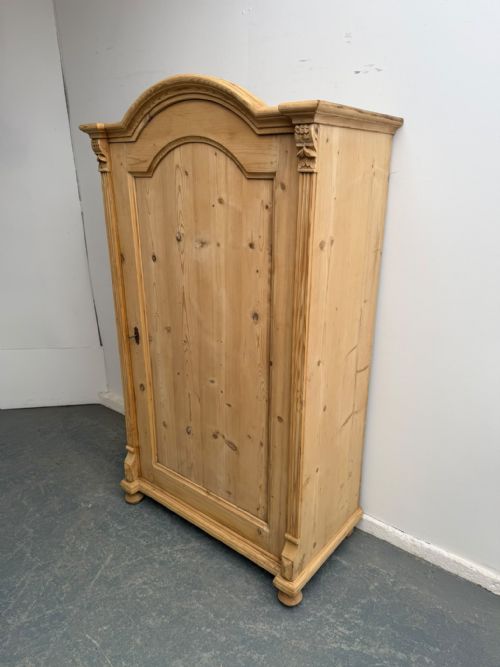
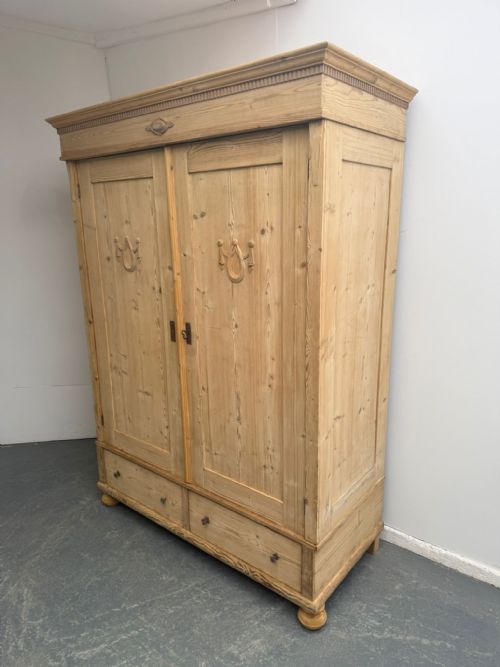
A traditional pine wardrobe is a large storage piece built predominantly from softwood, spanning several distinct periods from the eighteenth century through to the early twentieth century. These pieces serve to house garments and linens in domestic settings, offering substantial internal volume behind panelled or mirrored doors.
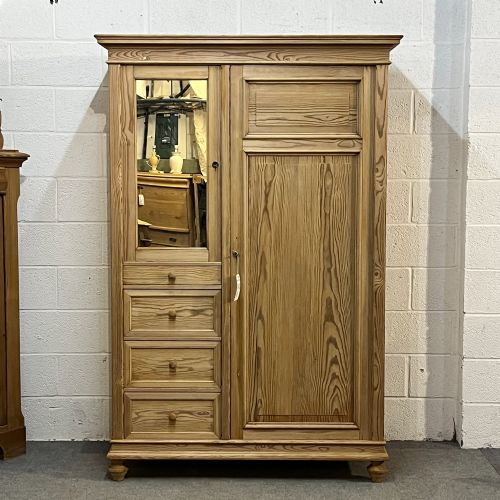
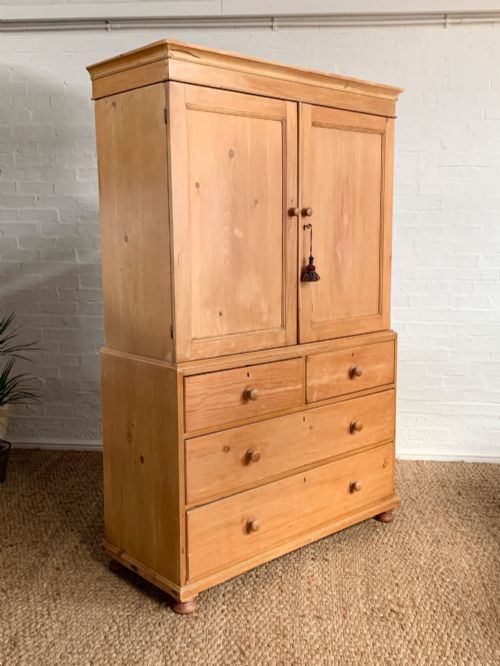
The versions most commonly met on this page date from the Victorian era and the Georgian period, often constructed with knockdown frames that allow the furniture to be dismantled for transport. Buyers also encounter regional variations including French, Hungarian, and English country pieces, alongside related forms such as compactums and linen presses.
Many examples retain their original paint finishes or historical layers of colour, while others have been stripped back to reveal the natural grain of the timber. Proportions vary from low cottage heights to grand, columned proportions intended for high-ceilinged rooms.
How they were made
Traditional pine wardrobes rely on solid softwood construction, joined with pegged mortise and tenon joints and frequently built as knockdown units secured by internal wooden or metal fixings. Cabinetmakers utilised durable pine boards for the main body, paired with iron or brass hardware for hinges and locks, and occasionally incorporated glass mirrors into the door panels.
Surfaces were treated in several ways, with makers applying lead-based or oil paints, decorative folk art schemes, or leaving the wood bare to receive traditional beeswax finishes over time. Internal configurations combined hanging space with fixed shelving and bottom drawers, constructed to support the heavy loads of domestic linens and clothing.
Materials recorded across the inventory include solid pine, iron hardware, glass mirror plates, and painted wood surfaces.
What varies in quality
Quality in these wardrobes rests on the integrity of the timber selection and the retention of original structural components such as panelled backs, cornices, and feet. Pieces featuring sophisticated knockdown engineering demonstrate greater joinery skill than simple nailed carcases.
The survival of original painted surfaces, distinct regional mouldings, or specialised internal fittings like linen presses elevates an example above standard utility pieces. The weight and thickness of the pine boards used throughout the doors and frame distinguish robust workshop production from lighter output.
The Traditional Pine Wardrobe Glossary
- Knockdown
- A piece of furniture engineered to be easily dismantled into flat sections using internal bolts or wedges for ease of transport between rooms or properties.
- Compactum
- A multi-functional wardrobe combining hanging space with internal drawers, shelves, and sometimes a mirrored door within a single compact footprint.
- Linen Press
- A tall storage cabinet featuring upper shelving enclosed by doors, positioned above a base section fitted with practical pull-out drawers.
- Cottage proportion
- Dimensions scaled down to suit lower ceiling heights and smaller domestic rooms found in rural dwellings.
- Waxed finish
- A protective treatment applied to bare timber using natural beeswax to nourish the wood and develop a soft, tactile sheen.
Traditional Pine Wardrobe: Frequently Asked Questions
What is a knockdown wardrobe?
A knockdown wardrobe is constructed so the cornice, base, sides, and doors detach from one another entirely. This design allowed large furniture pieces to be carried up narrow staircases and moved between houses.
Makers secured the structural parts using interior wooden pegs, metal bolts, or sliding joints that required no permanent glue. This method means the wardrobe can still be taken apart for modern moves.
How do I care for waxed pine?
Waxed pine requires periodic application of a quality beeswax paste to maintain its moisture balance and protect the surface from drying out. You should apply the wax sparingly with a soft cloth and buff it after a short drying time.
Avoid placing these wardrobes near direct heat sources like radiators, which can cause the softwood panels to shrink or split. Cleaning is best done with a dry or barely damp cloth rather than chemical sprays.
Are these wardrobes painted or natural wood?
These wardrobes appear in both original painted finishes and natural waxed pine, depending on their geographic origin and period. Many regional pieces from Britain and Europe were coated in lead paints or folk art designs from the workshop.
Subsequent generations often stripped the paint to expose the pale timber grain, while other pieces retain their historical layers of colour. Buyers can choose between the rustic charm of old paint and the warmth of bare softwood.
How do I date an old pine wardrobe?
Dating relies on examining the construction methods, such as hand-cut dovetails in the drawers, the profile of the top cornice, and the type of fixings used. Georgian and early Victorian pieces often display heavier proportions and hand-planed internal boards.
Later Victorian and 1900s examples frequently incorporate machine-sawn timber, mirrored doors, or more complex knockdown hardware. Regional styles and painted dates on the woodwork also provide clear chronological markers.