

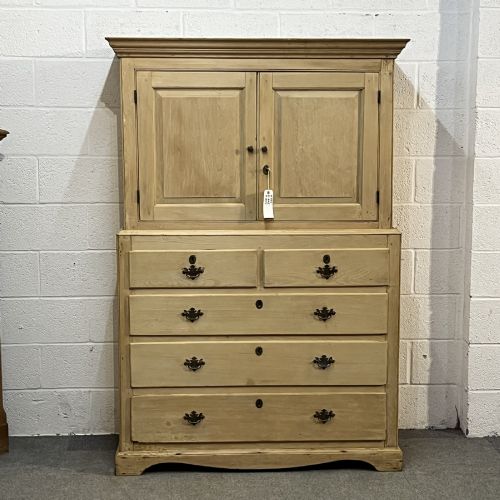
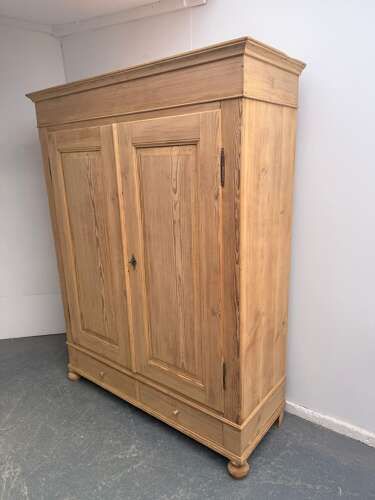
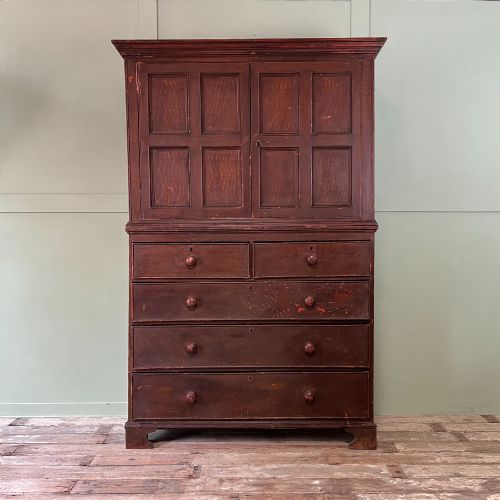
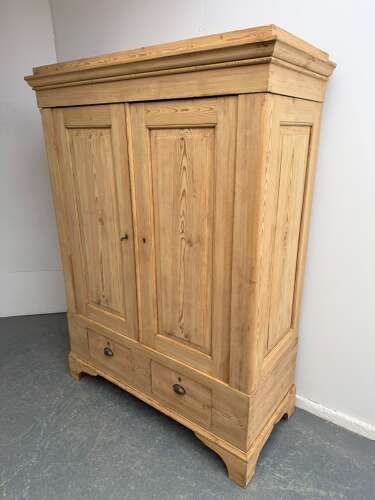
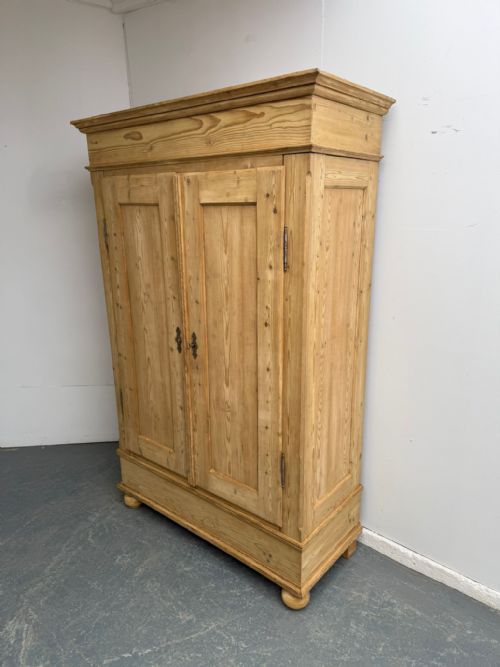

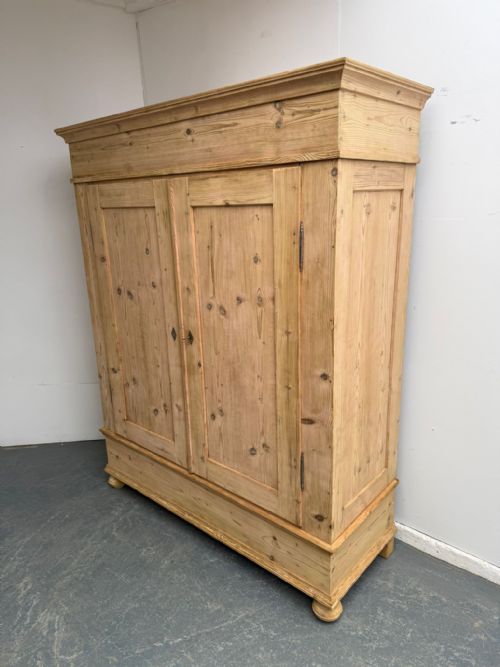

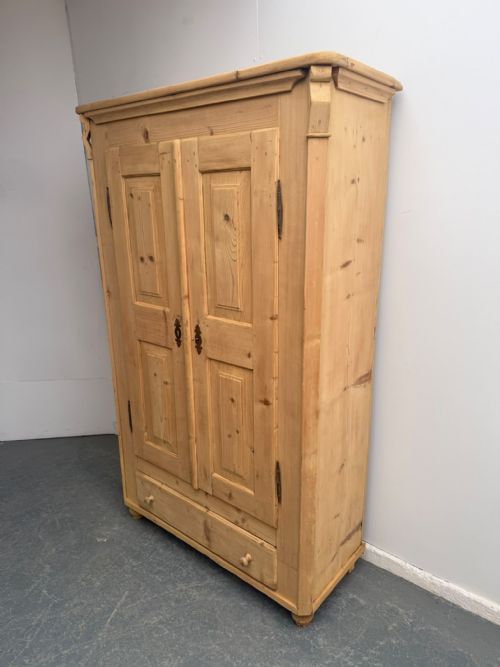


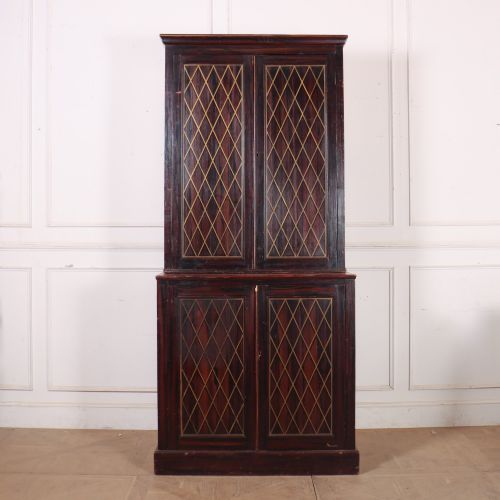
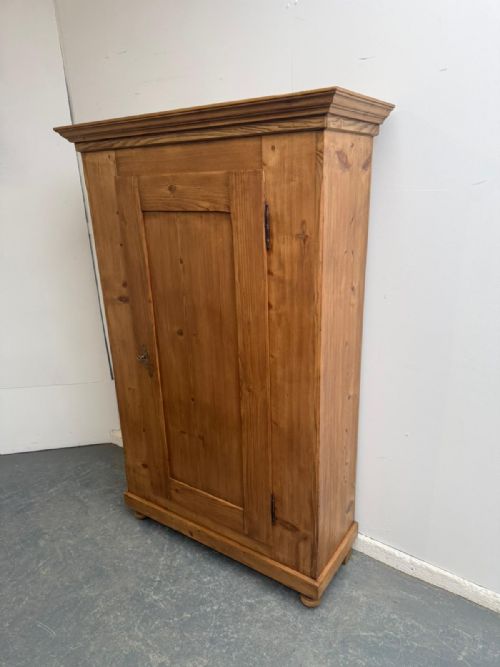
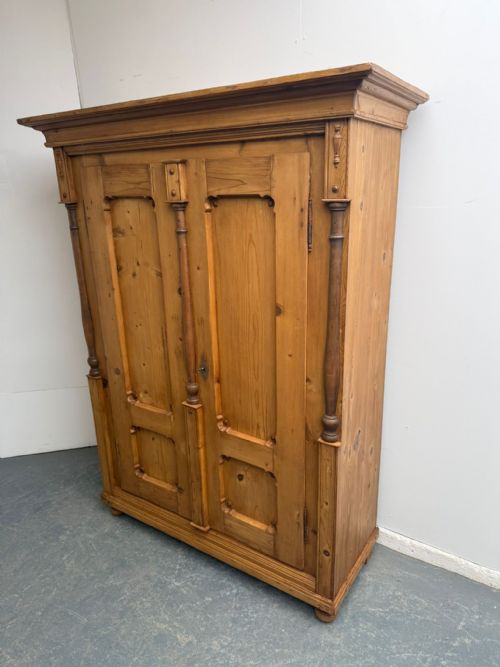


Georgian Pine Armoire
A georgian pine armoire offers robust storage built from honest timber, bringing practical rural character to modern interiors.
Georgian Pine Armoire
A georgian pine armoire represents large-scale utilitarian storage built during the eighteenth and nineteenth centuries, often taking the form of knockdown wardrobes, housekeepers cupboards, and linen presses. These substantial pieces originate from regional workshops across England, Wales, Ireland, and continental Europe, reflecting local domestic needs.
Buyers meet variations ranging from low cottage wardrobes to massive panelled storage cupboards designed for rural halls and chambers. The selection balances English and Welsh vernacular pieces with continental examples, showing both fitted interiors and shelved storage.
Materials and Technique
Makers utilised solid pine timbers for carcass construction, frequently pairing the wood with iron or brass hardware on hinges and latches. Surfaces arrived either bare for subsequent waxing and painting or finished with original and later coats of paint, green, white, and grey pigments appearing often.
Construction methods included knockdown frames for transport between rooms, alongside pegged panels and fielded door designs. Workshop traditions from Yorkshire to Hungary dictated straightforward joinery focused on durability.
Georgian Pine Armoire Retail Price Guide 2026
Typical asking prices for georgian pine armoire among the pieces listed under this phrase on Sellingantiques today, from the lower quarter to the upper quarter. They describe what is for sale here now, not the wider market.
Listings feature pine furniture spanning the eighteenth and nineteenth centuries, incorporating painted finishes and waxed timber.
Judging the Build
Quality rests on the integrity of the original pine carcass and the survival of early or original paint surfaces. Pieces retaining knockdown pins, panelled doors without excessive timber shrinkage, and balanced proportions stand apart.
The degree of alteration determines standing, as later paint layers or replaced hardware alter the original domestic character. Untouched waxed finishes and structural soundness distinguish superior regional examples.
The Georgian Pine Armoire Glossary
- Armoire
- A large wardrobe or cupboard for storing clothes, typically featuring two doors. These pieces provide deep storage capacity for modern homes.
- Knockdown
- A piece of furniture designed to be dismantled into modular sections for ease of transport and assembly. This technique was vital for moving large wardrobes through narrow cottage staircases.
- Housekeeper's cupboard
- A large storage cabinet traditionally used in country houses for linens, provisions, and household stores. They combine lower drawer banks with upper cupboard doors.
- Vernacular
- Architecture and furniture built by local craftsmen using regional materials and traditional methods, rather than following formal academic design. These pieces reflect the specific domestic requirements of their local area.
- Fielded panel
- A wooden panel with bevelled or recessed edges set within a heavier frame to allow for natural wood expansion and contraction. This method prevents the timber from splitting as humidity changes.
Georgian Pine Armoire: Frequently Asked Questions
What is a knockdown wardrobe?
A knockdown wardrobe is built with modular sections that dismantle easily using pegs or bolts. This clever construction allowed large furniture to travel through tight stairwells in older homes.
Craftsmen designed these pieces to be taken apart and reassembled repeatedly without losing structural integrity.
How do I care for waxed pine?
Waxed pine requires periodic application of natural beeswax to nourish the timber and maintain a soft lustre. Avoid placing these pieces near direct heat sources to prevent the wood from drying out.
Gentle dusting with a dry cloth keeps the surface clean without stripping the protective wax layer.
Were these cupboards always painted?
Many pine cupboards left the workshop bare or simply waxed, receiving coats of paint later in their working lives. Original paint schemes often indicate regional vernacular traditions, particularly in Welsh and Irish pieces.
Owners frequently refreshed the exterior to match changing domestic interiors over the centuries.
Where were these pieces used?
These large cupboards served in farmhouses, country houses, and rural cottages for storing winter clothing, bedding, and food supplies. Hallways, sculleries, and bedrooms housed them depending on their specific form.
Housekeeper's cupboards operated primarily in service rooms, while wardrobes occupied private chambers.