

Country Pine Wardrobe
A country pine wardrobe brings honest utility and quiet grain to a bedroom, offering deep hanging space built for everyday service.
Country Pine Wardrobe
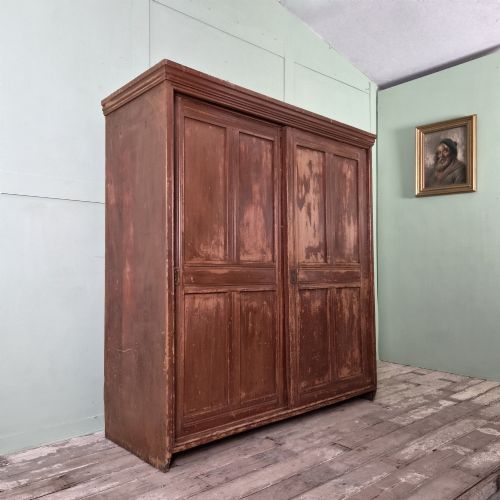
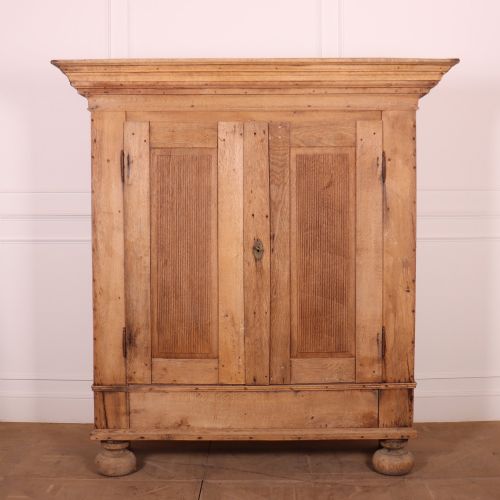
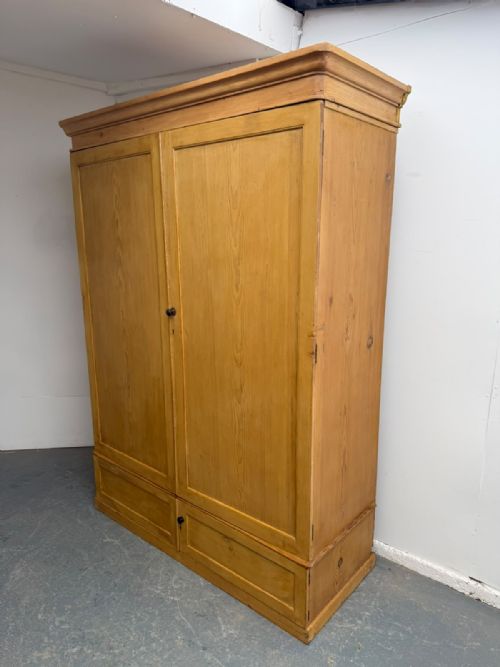
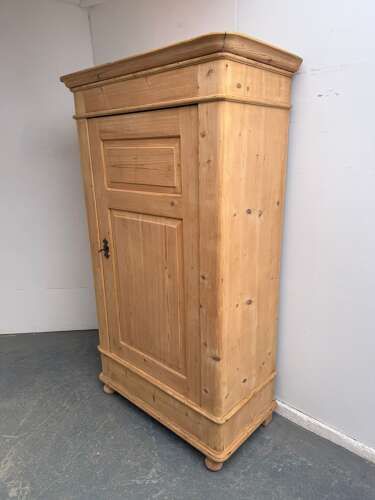
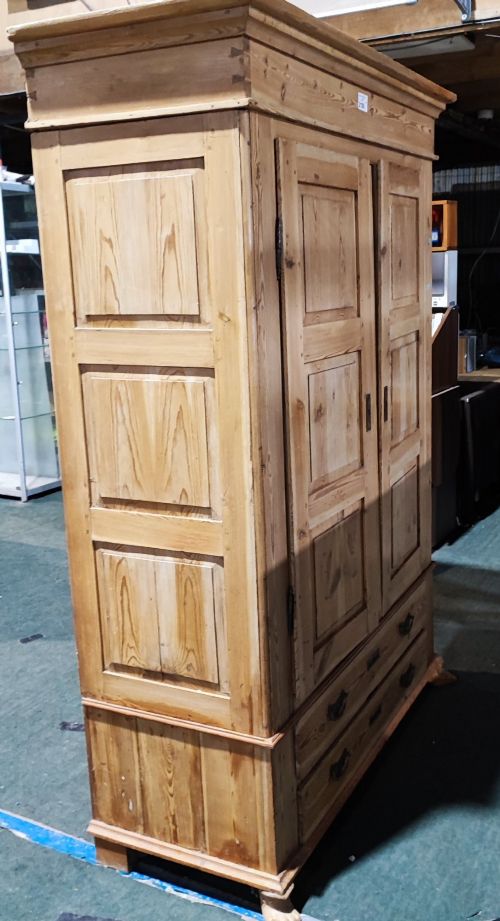
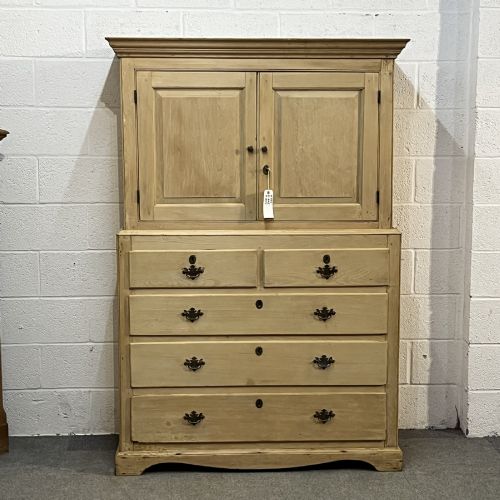
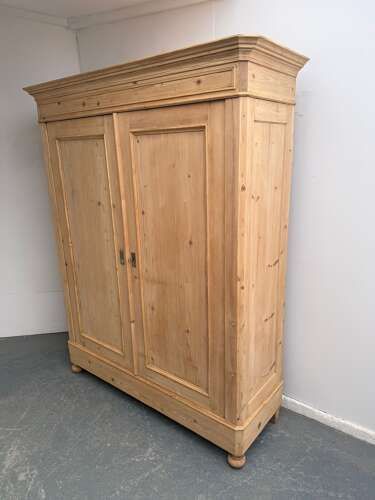
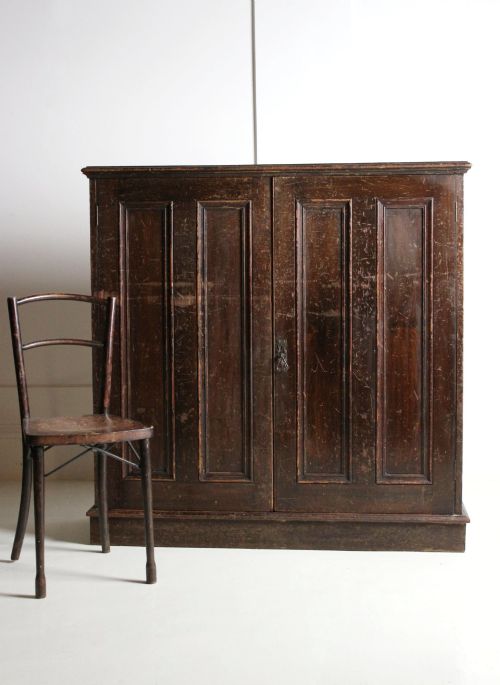
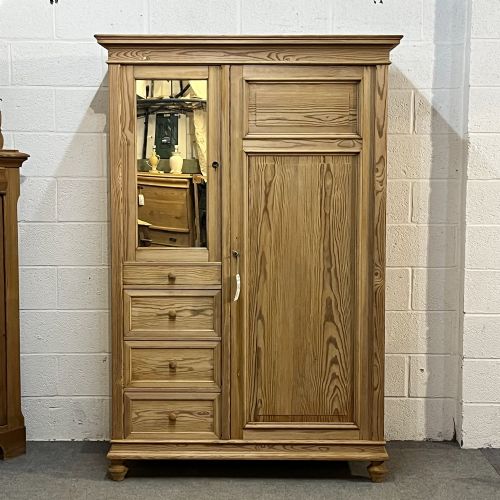
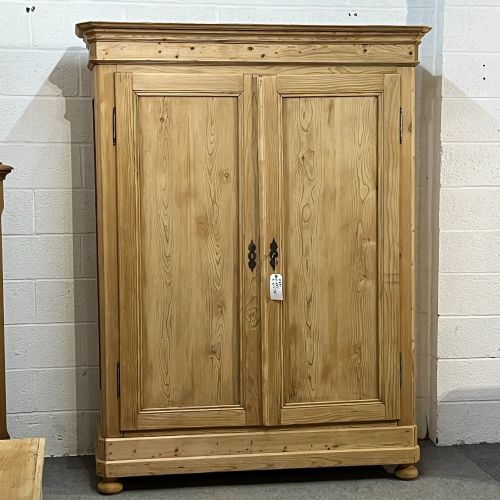
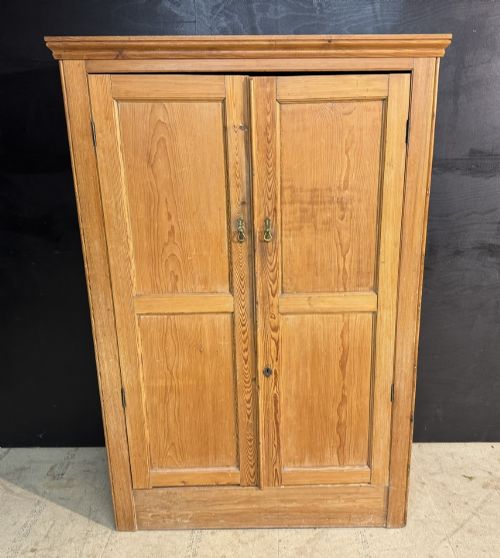
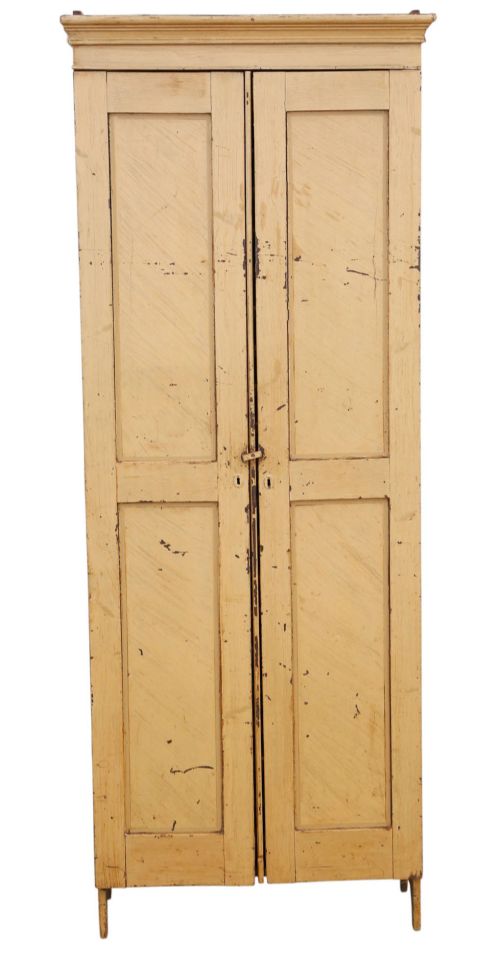
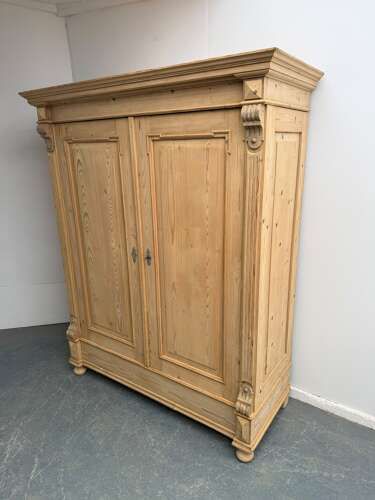
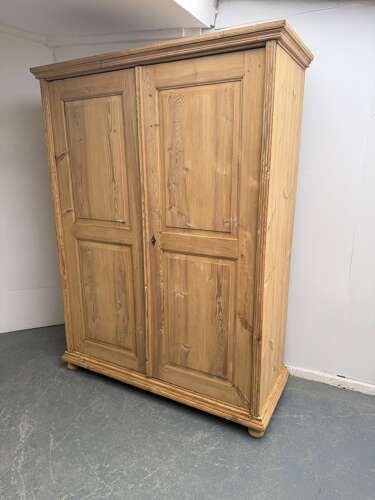
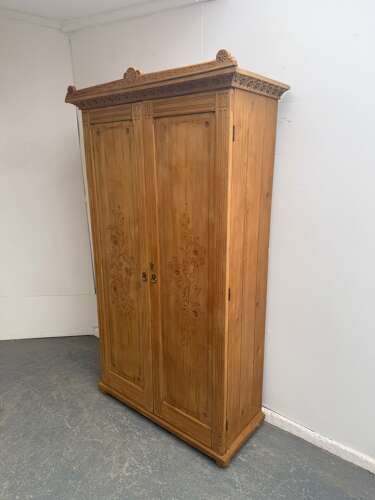
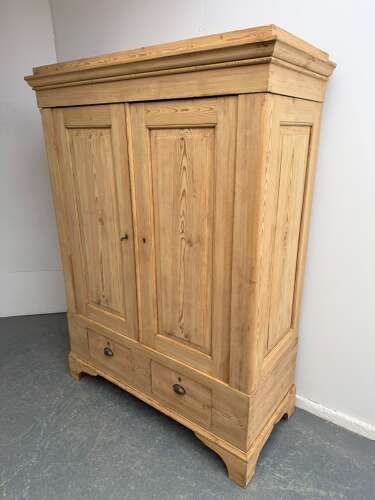
A country pine wardrobe provides substantial bedroom or hallway storage, taking the form of large double doors, compactum designs with internal drawers, or tall single-door cupboards. These pieces emerge from domestic and agricultural settings across Britain, France, Hungary, and Scandinavia.
The pieces on this page span several centuries, with nineteenth-century Victorian and Georgian examples appearing alongside early twentieth-century pieces. Buyers encounter both monumental knockdown wardrobes that dismantle for transport and one-piece cupboards suited to smaller rooms.
Makers shaped these utilitarian items for regional homes, utilising local coniferous timber to build practical storage for linens, garments, and provisions. The resulting forms range from rustic farmhouse cupboards to panelled wardrobes with architectural mouldings.
How They Were Made
Carpenters constructed these wardrobes from solid pine timber, often joining large panels with tongue and groove methods to accommodate natural wood movement. Iron and brass hardware, including hinges, latches, and occasional locks, secured the heavy doors.
Surfaces received various treatments depending on regional taste and domestic preference, including clear wax finishes, applied paint schemes, or original polychrome decoration. Many examples survive with traces of historic paint layers beneath later wax coats.
Country Pine Wardrobe Retail Price Guide 2026
Typical asking prices for country pine wardrobe among the pieces listed under this phrase on Sellingantiques today, from the lower quarter to the upper quarter. They describe what is for sale here now, not the wider market.
Several heavy wardrobes retain unexpected interior scents of old beeswax and dry timber, carrying the distinct atmosphere of country estate linen rooms.
What Varies in Quality
Construction methods dictate structural integrity, distinguishing between pegged knockdown frames designed for repeated assembly and simpler glued joints. The presence of original backboards, working iron hardware, and untouched timber surfaces elevates an individual piece.
Proportion and architectural detailing set finer examples apart from utilitarian utility cupboards, particularly where makers incorporated moulded cornices, panelled doors, or raised feet. Surviving original paint finishes also alter the character and historical weight of a wardrobe.
The Country Pine Wardrobe Glossary
- Compactum
- A multi-functional wardrobe combining hanging space with internal compartments and drawers. This fitted interior maximises storage within a single footprint.
- Knockdown
- A piece of furniture designed to be dismantled into flat sections for ease of transport and installation. Pegs and bed bolts typically hold the frame together without permanent glue.
- Linen Press
- A tall cupboard traditionally used for storing folded textiles on internal sliding trays or shelves. Upper storage sections sit above banks of lower drawers.
- Polychrome
- Decorated in multiple colours, often found on painted European armoires and cupboards. This decorative treatment ranges from simple regional borders to intricate folk art motifs.
- Fielded
- A door or panel featuring a central raised portion tapered toward the edges. This traditional carpentry technique allows the wood to expand and contract with humidity changes.
Country Pine Wardrobe: Frequently Asked Questions
How do I dismantle a knockdown wardrobe?
Knockdown wardrobes typically rely on internal wooden pegs or metal bolts that secure the cornices, sides, and base to the backboard. Unscrewing or unpegging these joints allows the heavy carcass to separate into manageable flat panels for moving.
Marking the corresponding joints with chalk before disassembly ensures the components reassemble correctly in a new room without alignment issues.
Should I wax or paint my pine wardrobe?
Choosing between a wax finish and paint depends on the existing surface history and personal interior style. Pieces retaining historic or original paint layers are best preserved without stripping, while stripped pine responds well to traditional beeswax to nourish the dry grain.
Applying modern breathable paints over bare timber allows the pine to breathe while offering a custom colour suited to contemporary bedrooms.
How do I tell a Georgian wardrobe from a Victorian one?
Georgian wardrobes generally exhibit cleaner, simpler architectural lines with lower proportions and flatter cornices designed for cottage or farmhouse ceilings. Victorian examples often display heavier moulded cornices, deeper panels, and occasionally more elaborate bracket feet or mirror doors.
Construction marks, such as hand-cut nails or deeper adze tool marks on internal boards, also help differentiate eighteenth-century framing from later nineteenth-century workshop practices.
Will a large wardrobe fit up my stairs?
Many country pine wardrobes are knockdown models specifically engineered to travel up narrow staircases in pieces. One-piece cupboards and large armoires require careful measurement of ceiling clearance, stair turns, and doorway heights before purchase.
Confirming whether a specific listing dismantles prevents installation difficulties upon delivery.