

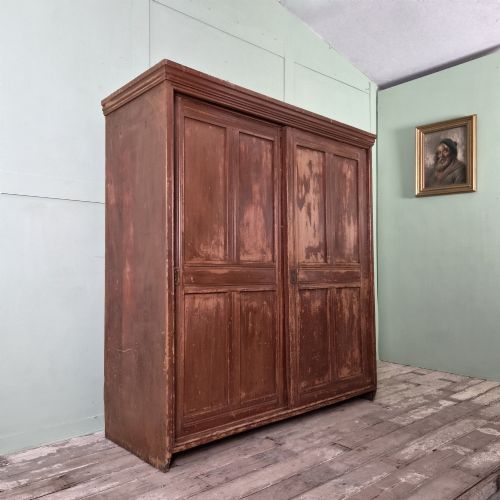
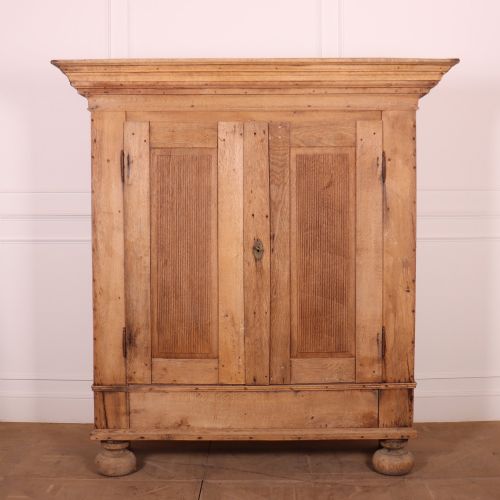
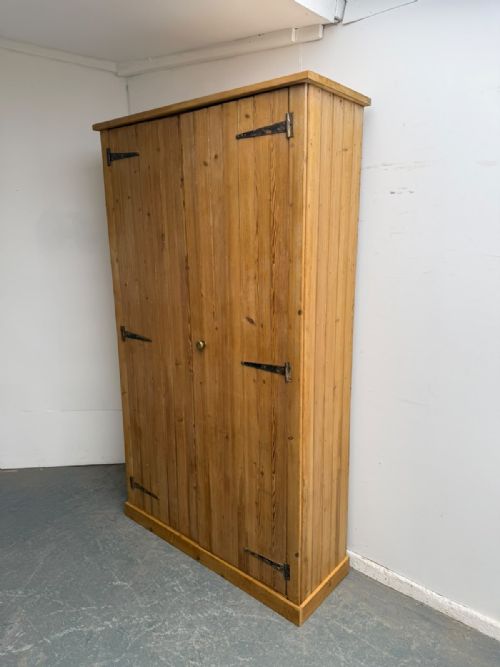
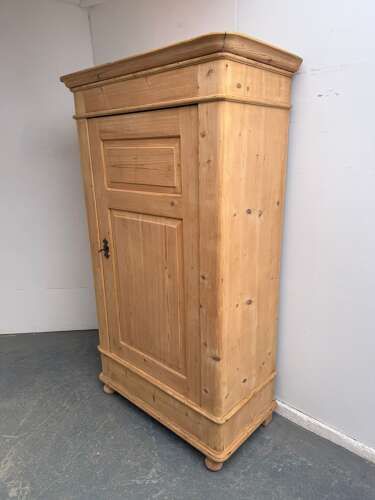
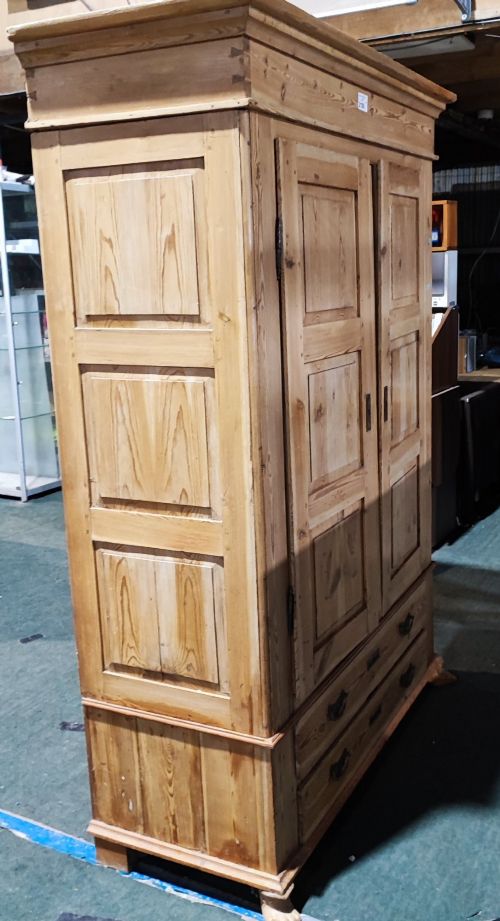
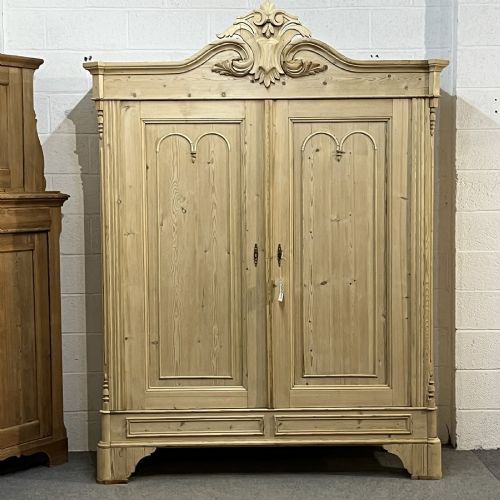
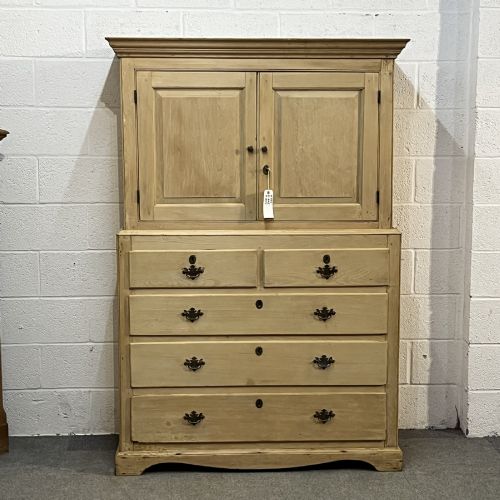
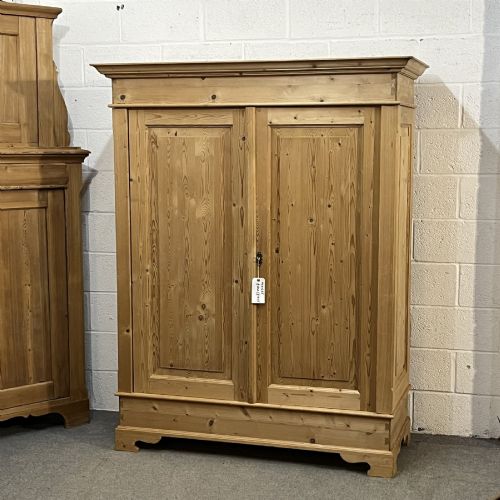
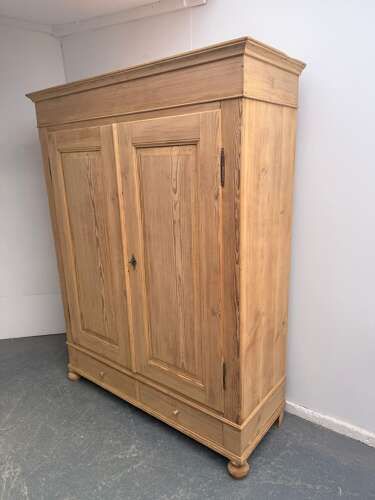
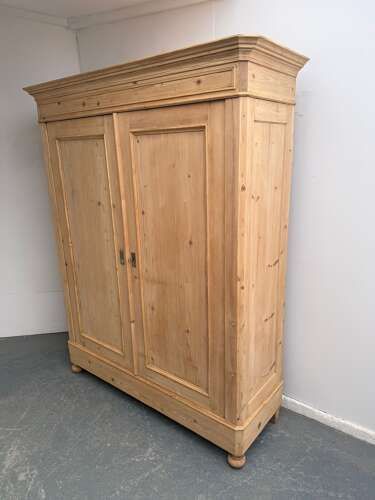
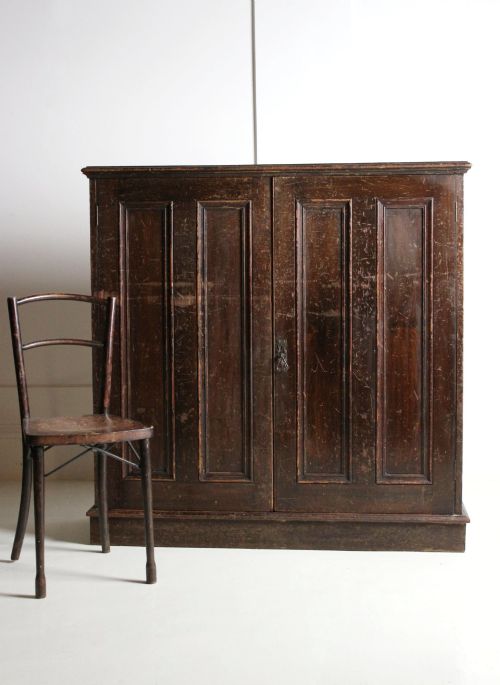
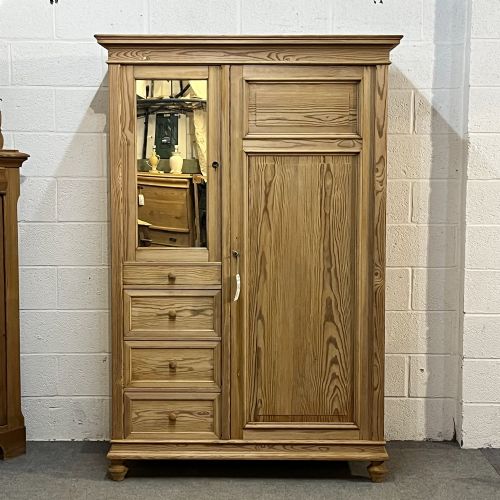

Vintage Pine Wardrobe
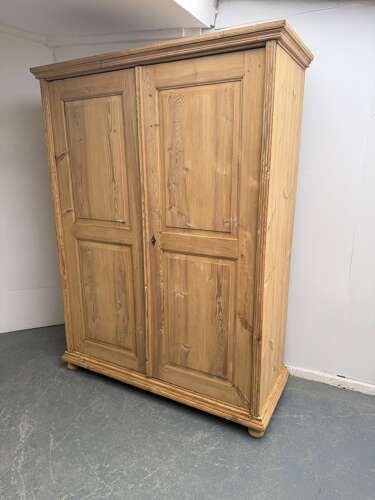
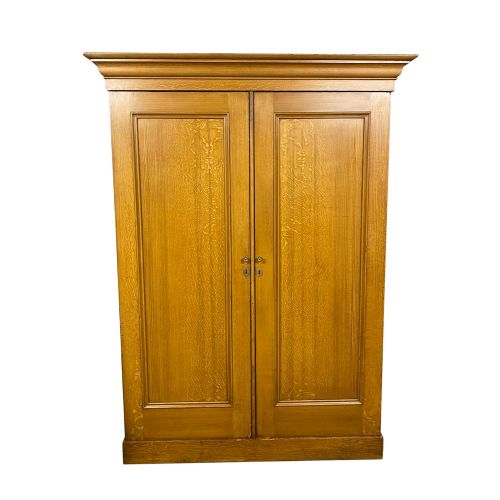
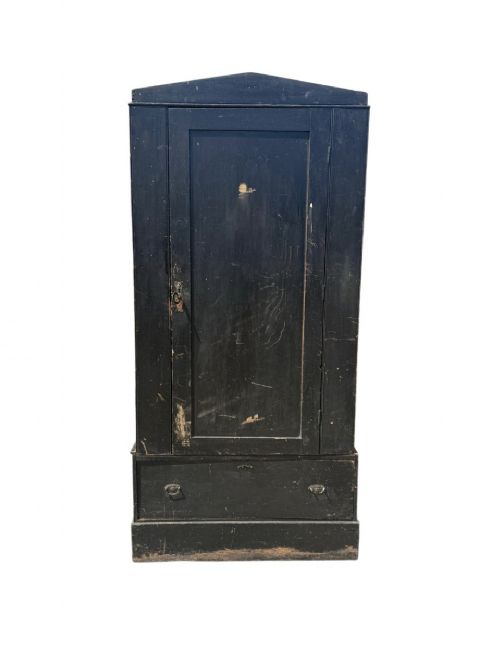
These vintage pine wardrobe pieces bring genuine character and robust storage to a room, offering the practical heft collectors want.
Vintage Pine Wardrobe
A vintage pine wardrobe brings practical timber storage and simple presence to a room, drawing buyers who appreciate honest grain and generous proportions. When you search for vintage pine wardrobe, you encounter heavy functional furniture designed to house garments and linens with straightforward reliability.
The pieces on this page span several distinct periods, including Georgian, Victorian, and early twentieth-century examples up to nineteen-ten. Forms range from single door storage cupboards and two door linen cupboards to wide arched formats and knockdown designs.
Origins vary between British country workshops and continental makers, sometimes featuring French qualities such as mirrored doors. Buyers frequently meet pieces described for finishing in wax or paint, alongside examples already finished in waxed pine.
Materials and construction methods
Construction relies upon solid pine timber, selected for its workable nature and sturdy structural capabilities in domestic furniture. Joinery often incorporates knockdown construction methods to allow large carcasses to be dismantled for transport.
Iron and cast iron hardware provide structural reinforcement and functional operation for doors, hinges, and internal fittings. Surfaces are typically prepared for traditional wax finishes or painted treatments, highlighting the natural timber grain.
Vintage Pine Wardrobe Retail Price Guide 2026
Typical asking prices for vintage pine wardrobe among the pieces listed under this phrase on Sellingantiques today, from the lower quarter to the upper quarter. They describe what is for sale here now, not the wider market.
Some larger wardrobes retain faint historical pencil marks left by joiners on internal panels to keep dismantled sections matched.
Judging the standard of a piece
Quality reveals itself in the balance of proportions and the integrity of the original timber rather than surface embellishment. Pieces with knockdown capability demonstrate clever historical engineering designed for ease of movement between rooms.
The refinement of architectural details, such as arched topframes or panelled doors, separates standard utility cupboards from finer examples. Ironwork originality and the depth of the pine grain further distinguish the character of each piece.
The Vintage Pine Wardrobe Glossary
- Knockdown wardrobe
- A large piece built to be dismantled into sections for transport and reassembly. This clever construction method made moving bulky bedroom furniture practical in older homes.
- Linen cupboard
- A tall storage piece traditionally used for household textiles and bedding. These often feature internal shelving alongside hanging space.
- Waxed pine
- Timber treated with a traditional wax finish to nourish the grain and provide a soft sheen. This finish is common across Victorian and Georgian examples.
- Continental
- Furniture originating from mainland Europe, frequently noted for distinct proportions and specific decorative details like mirrored doors. These pieces bring a slightly different aesthetic to British vernacular designs.
- Arched
- A curved structural topframe above the doors that softens the rectilinear geometry of the wardrobe. This detail elevates the architectural presence of the piece.
Vintage Pine Wardrobe: Frequently Asked Questions
How do I dismantle a knockdown wardrobe?
Knockdown wardrobes utilise wedge joints, wooden pegs, or internal bolts that allow the cornices, sides, and base to separate safely.
Working methodically with a helper ensures each heavy pine section unlatches without straining the original timber joints.
Can I paint a waxed pine wardrobe?
Many pieces are sold ready to wax or paint, making them adaptable to different interior colour schemes.
Removing existing wax thoroughly and applying a suitable primer ensures modern paint adheres properly to the pine surface.
How do I date a pine wardrobe?
Dating relies upon observing construction traits, hardware types, and timber characteristics associated with Georgian, Victorian, or early twentieth-century periods.
Hand-cut joints and cast iron fixings often point toward earlier eras, while machine milling suggests later nineteenth or twentieth-century origins.
Are these wardrobes deep enough for modern hangers?
Older wardrobes sometimes feature shallower internal depths than contemporary furniture due to historical sizing standards.
Checking internal measurements helps confirm whether modern coat hangers will fit comfortably with the doors closed.