


Traditional Pastoral Landscape Art
Traditional pastoral landscape art captures quiet rural scenes of rivers, cattle, and farm life, offering a window into historical country living that brings calm to a room.
Traditional Pastoral Landscape Art
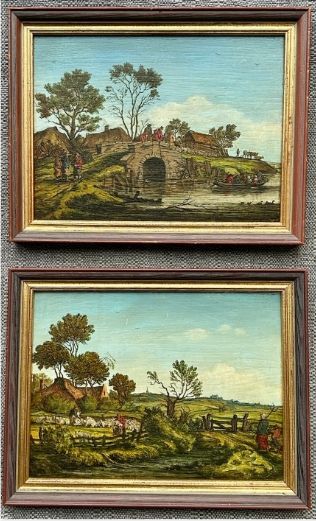
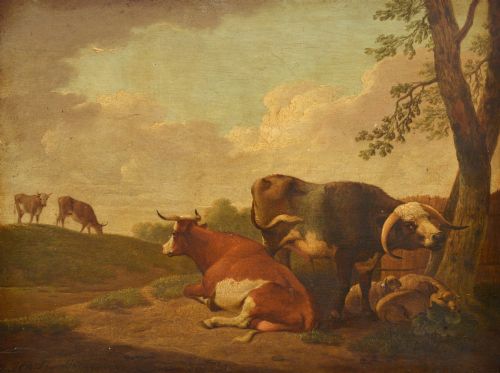
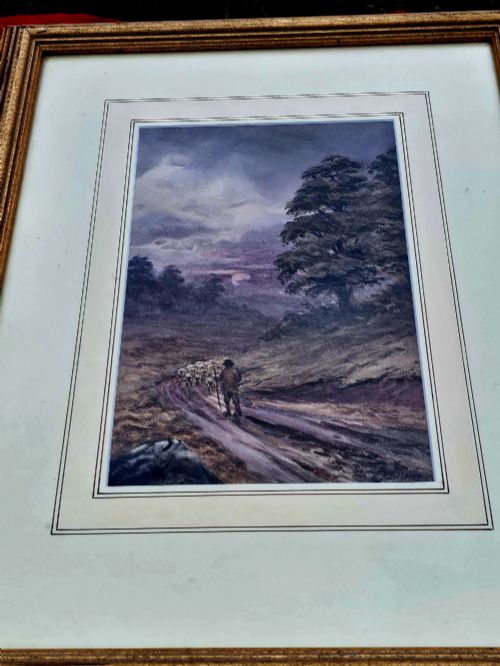
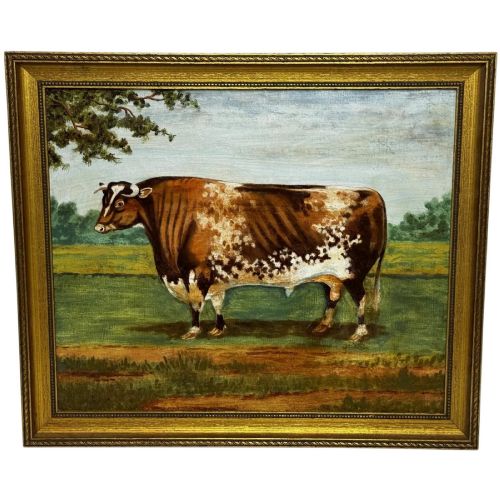
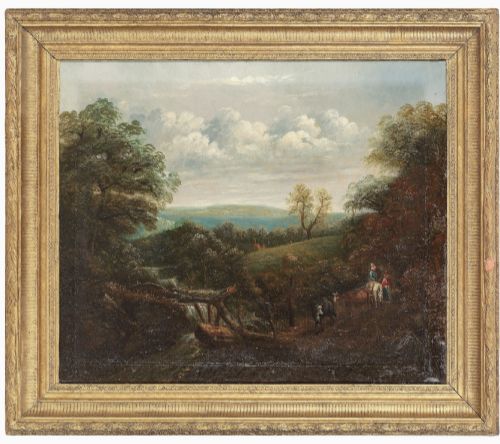
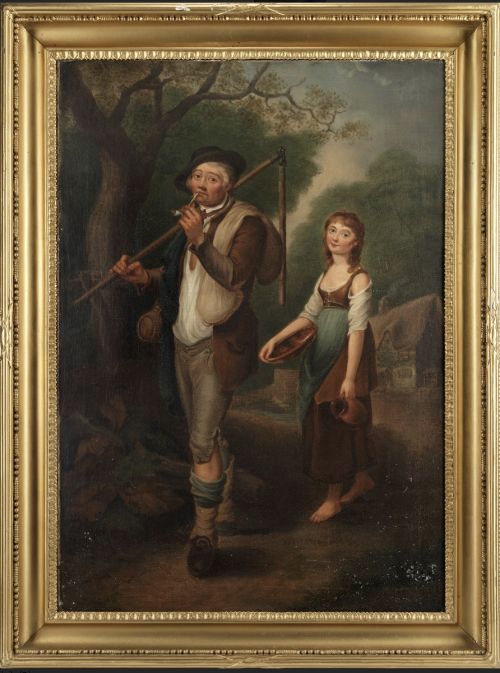
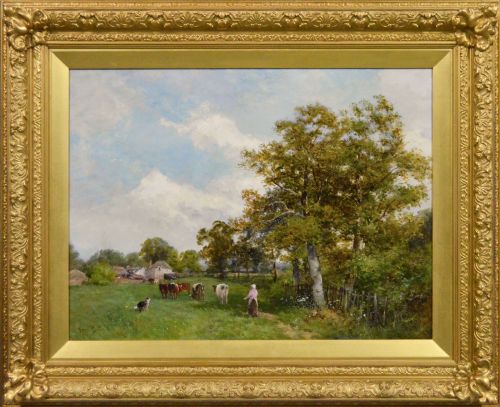
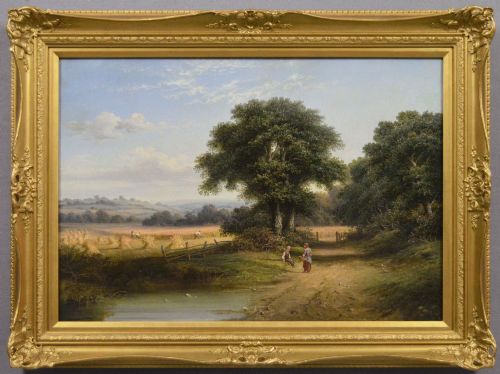
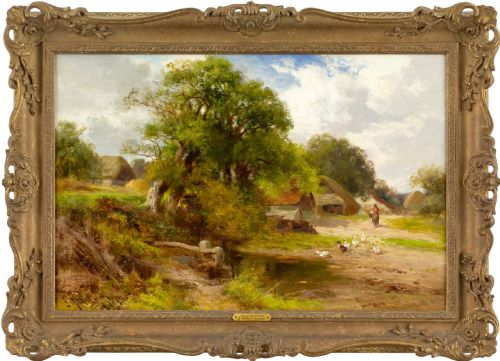
Traditional pastoral landscape art depicts serene country views populated by figures, farm animals, and rural workers. These pieces focus on agricultural life, featuring shepherds, cattle, and harvest scenes set against rivers, woodlands, and hills.
The selection on this page centres heavily on nineteenth-century oil paintings and watercolours, alongside works from the eighteenth and early twentieth centuries. Painters from the British School, Scottish traditions, and continental Europe dominate the selection.
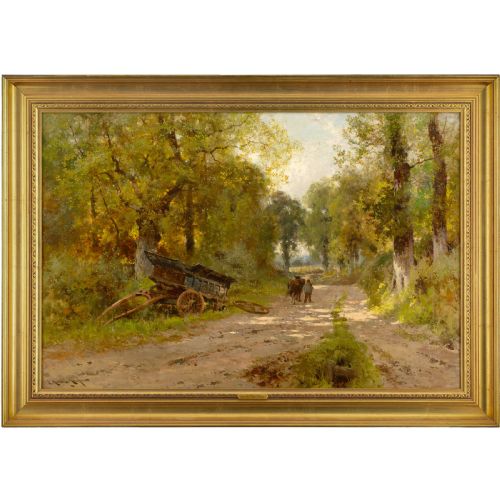
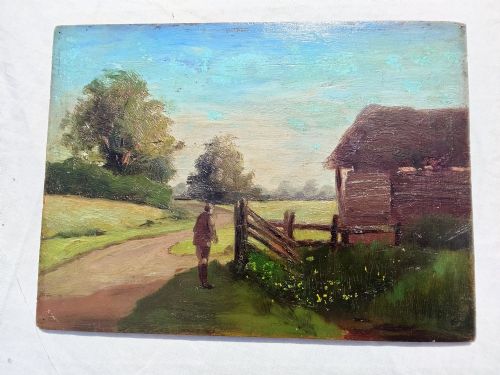
Common formats include framed canvas works, wooden panels, and watercolours on paper. Domestic scenes of livestock near water or figures on country paths recur across the entire range.
Materials and construction methods
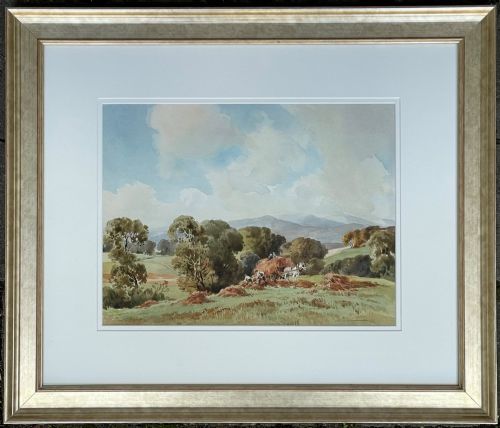
Artists painted primarily with oil on canvas or wooden boards, utilising oil paint to build rich textures and deep tones. Watercolours on paper also appear frequently, often finished with protective glass and framed in giltwood or gesso frames.
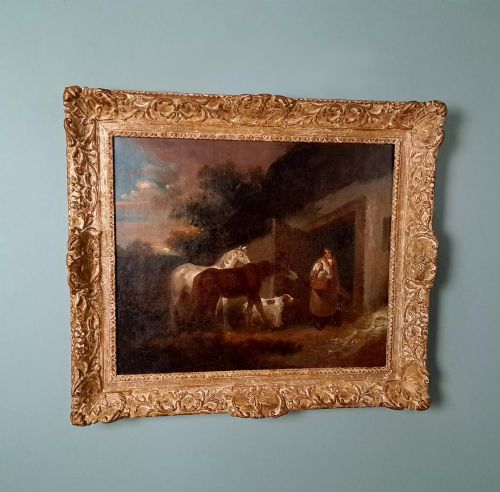
Wooden panels and canvas supports provide the foundation for most nineteenth-century works, while paper serves for delicate watercolour compositions. Original frames incorporate moulded gesso and gilt finishes that match the period of the artwork.
Countless Victorian cows gaze placidly from these frames, having spent over a century judging the modern viewer right back.
Factors influencing quality
Quality rests in the precision of brushwork, the handling of natural light, and the anatomical accuracy of animals and figures. Master hands capture atmospheric depth and texture in foliage and water with distinct confidence.
The integrity of the original surface and the condition of the support dictate the grade of a piece. Works retaining their initial canvas, unblemished paint layers, and period frames hold greater visual cohesion.
William H Myers·George Graham·Tom Campbell·W Klombeck·Percy Lancaster·John Horace Hooper·William Joseph Shayer Senior·Hendrik Willem Schweickhardt·EJ Letheren·Thomas Barker of Bath·David Bates·Walter Heath Williams·Thomas Sidney Cooper·George Oyston·Robert Watson·Albert Rieger·Russell Sidney Reeves·William Watson Jnr·Johann Friedrich Voltz·T C Hofland·Henry H Parker·Miles Birkett Foster·Henry Schouten·George Morland·Charles Edward Wilson
The Traditional Pastoral Landscape Art Glossary
- Oil on Canvas
- A painting technique where pigment mixed with drying oil is applied to stretched woven fabric. This method allows for rich colour blending and textured brushwork.
- Watercolour
- A painting method where fine pigment is suspended in a water-based solution on paper. It creates luminous, translucent washes of colour.
- Giltwood
- Timber carved and coated with a thin layer of gold leaf. It is commonly found on traditional picture frames from the eighteenth and nineteenth centuries.
- Gesso
- A paint mixture consisting of a neutral binder mixed with chalk, gypsum, or pigment. It prepares wooden panels or frames for gilding and painting.
- Wood Panel
- A solid flat piece of timber used as a rigid support for oil painting before canvas gained widespread use.
Traditional Pastoral Landscape Art: Frequently Asked Questions
What subjects appear in pastoral landscapes?
These works typically show rural settings featuring cattle, sheep, rivers, and agricultural workers. Common motifs include herdsmen guiding animals to market and quiet riverbanks.
Scenes often reflect specific regional topographies, from Scottish highlands to English woodlands and European countryside.
How do I date an antique painting?
Dating relies on stylistic clues, artist signatures, and the materials used for the canvas or panel. Nineteenth-century works often employ standard stretcher frames and specific pigment compositions.
Framing styles also offer clues, as original giltwood frames frequently match the period of the artwork they enclose.
Where should I hang these paintings?
Traditional landscape art suits living rooms, studies, and dining spaces where traditional interior decor prevails. Hang them at eye level away from direct sunlight to protect pigments.
Pairing oil paintings with classic wooden furniture helps anchor the historic character of the room.
What is the difference between oil and watercolour?
Oil paintings utilise slow-drying pigmented oil on canvas or wood, offering rich textures and deep colour layering. Watercolours use water-soluble pigments on paper, producing lighter, translucent effects.
Watercolours require protective glass framing to prevent moisture damage over time.