




Traditional Pastoral Fine Art
Traditional pastoral fine art captures rural life through oil on canvas, bringing quiet fields and livestock into your home.
Traditional Pastoral Fine Art
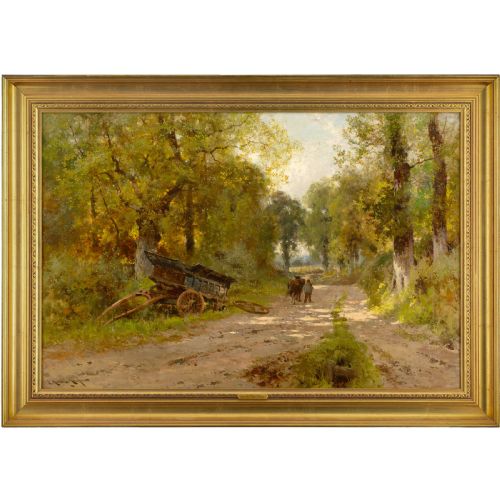
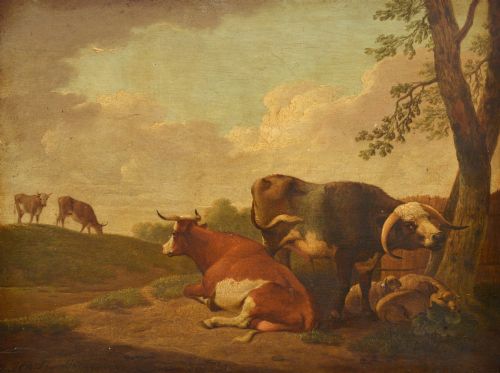
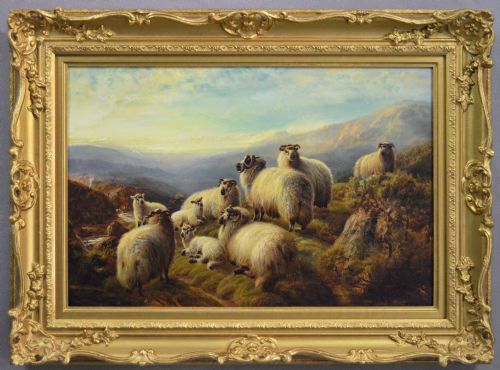
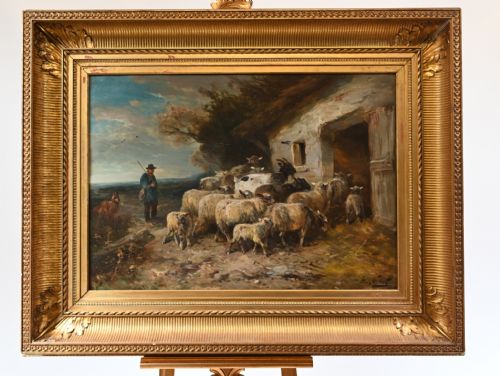
Traditional pastoral fine art comprises framed oil paintings depicting rural scenes, agricultural labour, and grazing animals in British and European countryside settings. These works focus on shepherds, harvest fields, rivers, and herds of cattle or sheep resting beneath expansive skies. Most examples encountered here date from the nineteenth and early twentieth centuries, reflecting Victorian and Edwardian artistic sensibilities.
The compositions range from intimate wooded river views to wide mountain landscapes populated by domestic animals and rustic figures. Painters of this genre sought to preserve an idealized vision of agrarian life before the rapid industrialisation of the twentieth century. Collectors select these canvases to introduce a sense of historical calm and natural space into domestic interiors.
Materials and Technique
These works are executed in oil paint applied to stretched canvas, wood panels, or occasionally card, utilising traditional layering techniques to build depth and luminosity. Artists worked with brushes of varying stiffness to render soft foliage, animal pelts, and reflective water surfaces with precision.
Many surviving pieces retain their original wooden frames, often enriched with gesso ornamentation and finished in giltwood to complement the rich tones of the painted landscape.
Several canvases manage to capture the stubborn expression of a recalcitrant cow refusing to cross a stream.
Assessing Quality
Quality in these pastoral works rests upon the artist's handling of natural light, atmospheric perspective, and anatomical accuracy in rendered animals. Superior paintings demonstrate a confident brushwork that conveys movement in water or texture in wool without resorting to stiff mechanical repetition.
The strength of the composition and the harmonious balance between landscape and figures distinguish master works from routine studio production. Original period frames that match the age and scale of the canvas also elevate the integrity of the piece.
Tom Campbell·John Horace Hooper·Hendrik Willem Schweickhardt·Henry Schouten·Thomas Sidney Cooper·John Sanderson Wells·George Vicat Cole·Sidney Richard Percy·Eugene Joseph Verboeckhoven·Heinrich Harder·Charles Vickers·Robert Finley McIntyre·Henry H Parker·Arthur Winter Shaw·Thomas Baker·George Turner·Thomas Creswick·Claude Cardon·Arthur Walker Redgate·Alfred Banner·John Percy Cooke·Alfred Vickers Senior·William Greaves·David Bates·Sir Ernest Albert Waterlow
The Traditional Pastoral Fine Art Glossary
- Oil on Canvas
- Pigment suspended in a drying oil medium applied to a woven fabric support. This combination allows for rich blending of colour and long-term durability.
- Giltwood
- Wood carved and coated with a thin layer of gold leaf or metallic powder. It provides a reflective, ornate border designed to frame and enhance dark landscape tones.
- Gesso
- A paint mixture consisting of a neutral binder mixed with chalk, gypsum, or pigment. It is applied to wooden frames to create a smooth surface for gilding and moulding.
- Pastoral Realism
- An artistic movement focusing on the unvarnished depiction of rural life and agricultural workers. It balances documentary observation with atmospheric mood.
Traditional Pastoral Fine Art: Frequently Asked Questions
What defines a pastoral painting?
A pastoral painting depicts rural subjects such as shepherds, herds of cattle, and agricultural workers within open landscapes. These scenes emphasise a peaceful connection to the land and traditional farming methods.
The genre draws heavily on European landscape traditions, capturing the changing light of harvest fields and river valleys.
How do I care for an oil painting?
Keep oil paintings away from direct sunlight and fluctuating humidity to prevent the canvas from warping or the paint from cracking. Dust the surface gently with a soft, dry brush without applying pressure.
Avoid using liquid cleaners or damp cloths on the painted surface or the gilt frame.
Are these paintings original works?
The listings consist of original oil paintings created by hand rather than mass-produced prints or reproductions. Each piece bears the distinct brushstrokes and textural details of the individual artist.
Signatures or historical attribution notes often appear in the corners of the canvas or on the reverse.
How can I tell the period of a frame?
Period frames often display hand-carved wooden construction beneath layers of gesso and gold leaf, showing subtle irregularities consistent with nineteenth-century craftsmanship. Corners may reveal mitred joints secured with wooden pegs or early adhesives.
Later replacements frequently use cast composition ornaments or modern synthetic materials.