

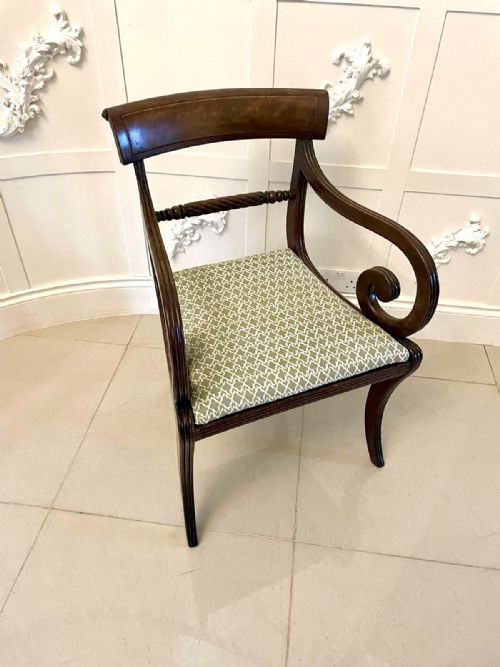
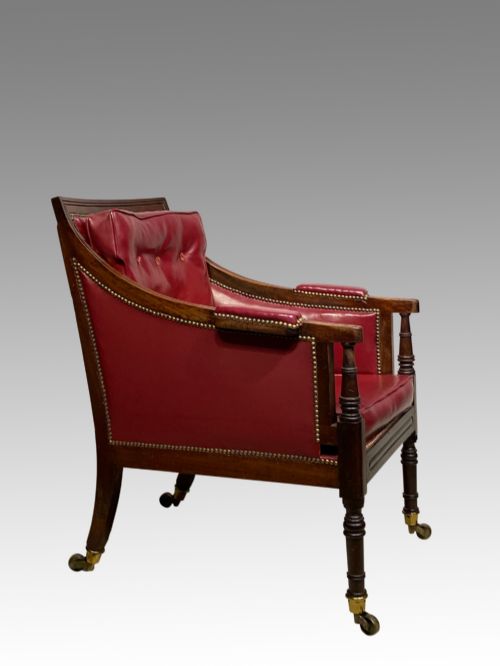
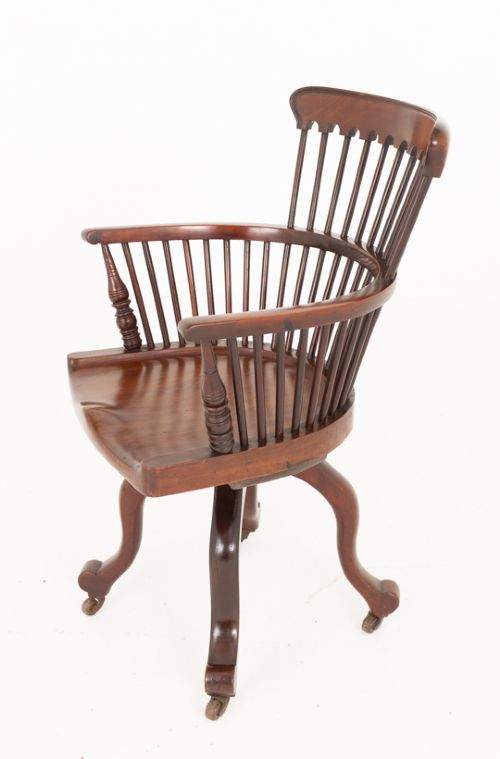
Traditional Office Armchair
A traditional office armchair anchors a workspace with solid timber and leather, offering proper support for long hours at a desk.
Traditional Office Armchair
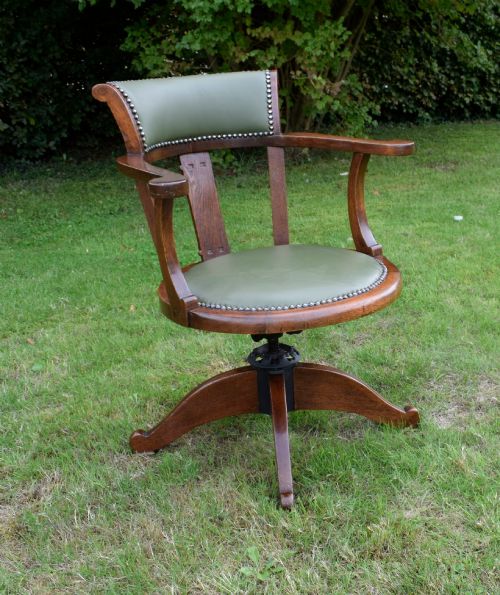
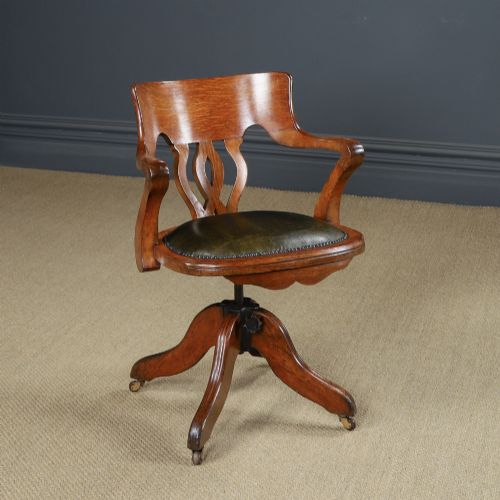
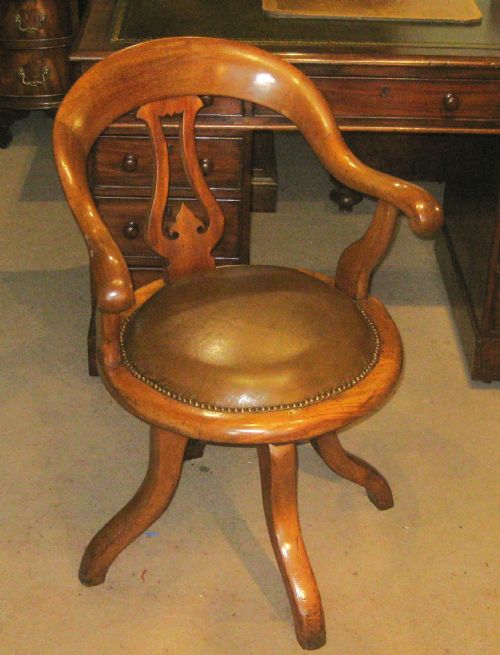
A traditional office armchair serves as a sturdy seat for a study, library or home workspace, designed with supportive arms and often a revolving or tilting mechanism.
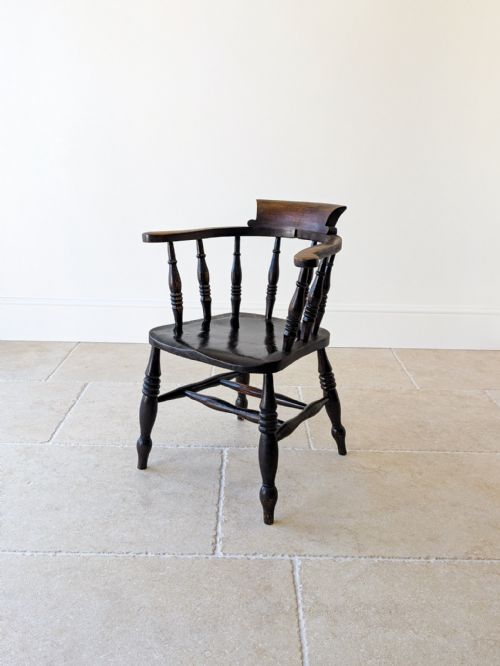
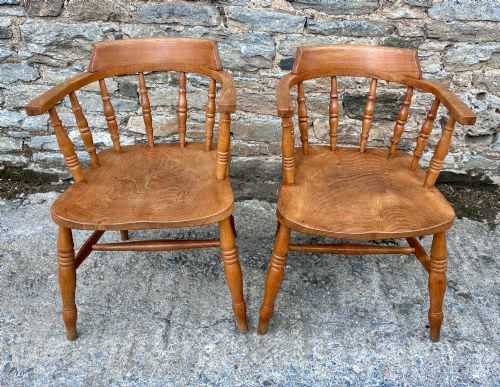
Buyers browsing this selection will most frequently encounter nineteenth-century and Edwardian pieces, ranging from sturdy elm and ash captain's chairs to mahogany desk chairs upholstered in leather.
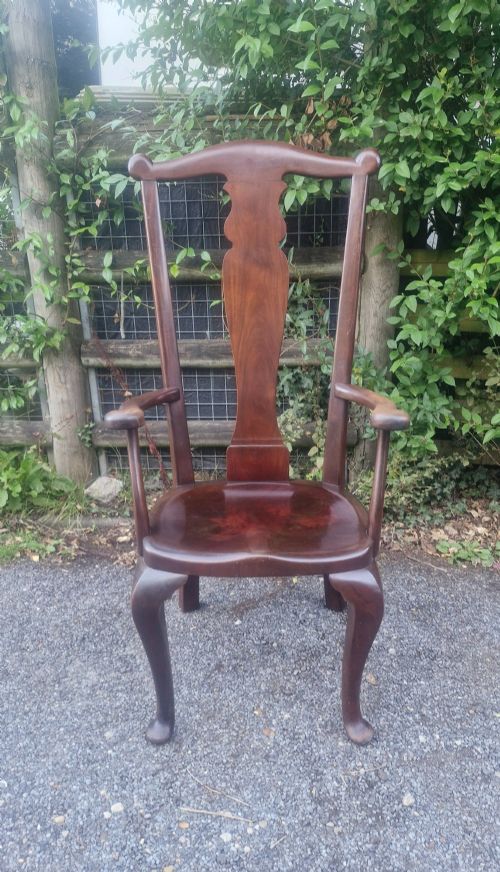
The styles span formal library chairs in mahogany and walnut to provincial country pieces shaped from elm, beech and oak.
Materials and construction
Cabinet makers utilised dense hardwoods such as mahogany, oak and walnut for formal desk chairs, often incorporating turned wooden spindles and carved details.
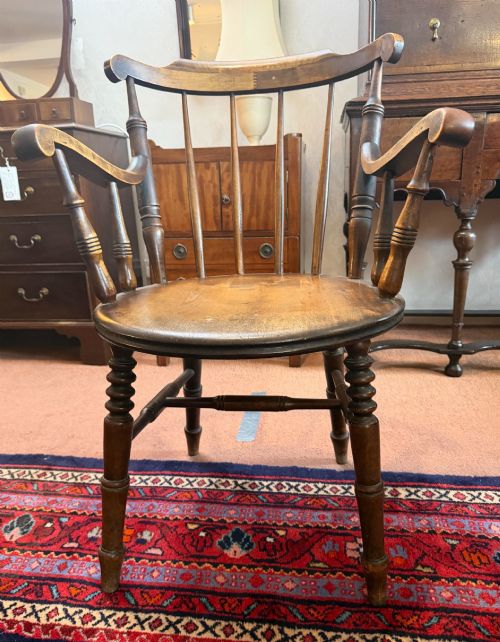
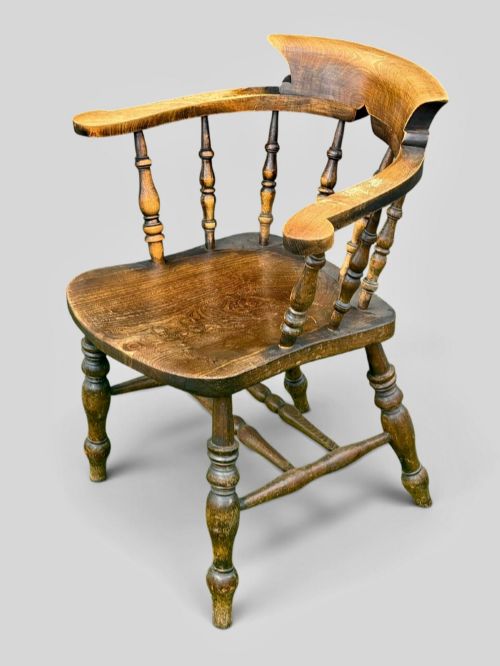
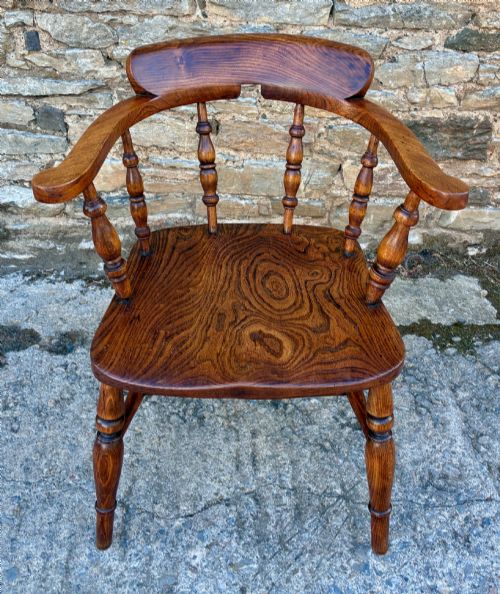
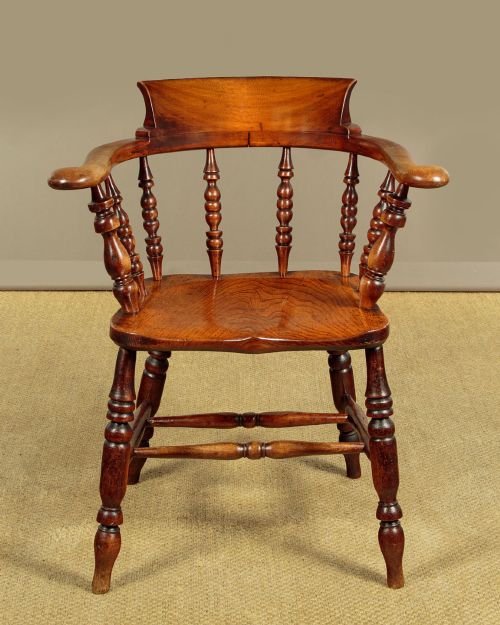
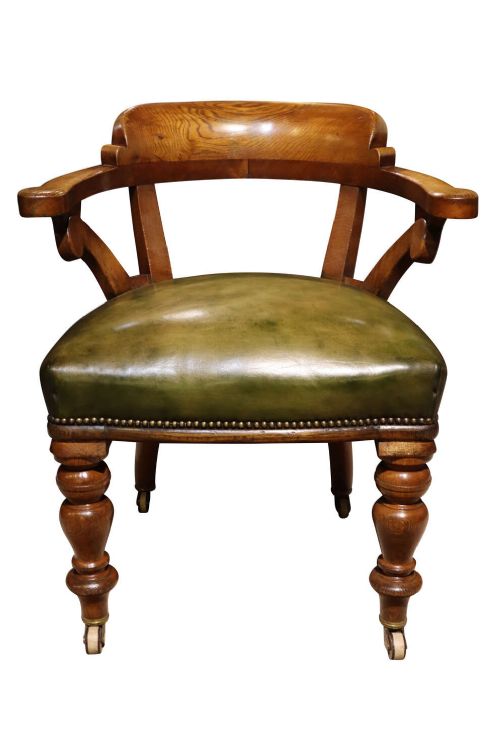
Country workshops relied on native timbers like elm, ash, beech and alder, shaping solid plank seats and steam-bending sturdy back rails for captain's chairs and smoker's bows.
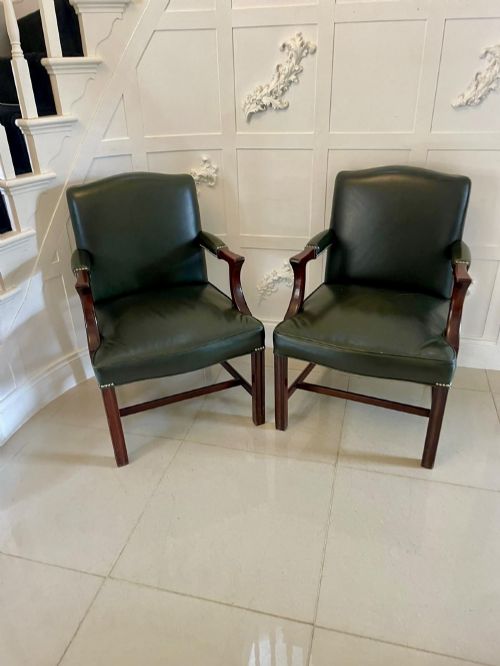
Upholstered models combined supportive internal webbing with leather, hide or velvet covers fixed with brass studs.
Listings feature mahogany, oak, elm, ash, beech and alder, spanning the Victorian and Edwardian eras alongside Georgian styles.
Assessing quality and craftsmanship
Superior examples demonstrate careful selection of timber grain, particularly in golden mahogany or figured elm, paired with robust joinery that withstands daily rotation and tilt.
Refined carving on the arms and back rail distinguishes formal library chairs from utilitarian workshop seating, while original leather upholstery with hand-tooled borders elevates a piece.
The complexity of the mechanism on revolving desk chairs, from early wooden screws to later swivel and tilt iron hardware, marks the standard of manufacture.
The Traditional Office Armchair Glossary
- Captain's chair
- A sturdy wooden armchair with a horseshoe-shaped back rail supported by turned spindles, traditionally used in offices and ships alike.
- Smoker's bow
- A low-backed Windsor-style armchair with a continuous curved arm rail, common in vernacular English interiors and office settings.
- Revolving desk chair
- An office seat mounted on a central pivot mechanism, allowing the sitter to turn and tilt while seated at a large partner's desk.
- Library chair
- A comfortable armchair, frequently upholstered in leather and framed in mahogany or oak, designed for reading in private studies.
- Windsor chair
- A wooden seat constructed with individual legs and back spindles socketed directly into a thick sculpted solid plank seat.
Traditional Office Armchair: Frequently Asked Questions
Can I use an antique desk chair for daily computer work?
Many nineteenth-century and Edwardian desk chairs include swivel and tilt mechanisms that function well in modern offices.
Solid wood frames and leather seats provide reliable support, though buyers should check seat heights to match modern desks.
How do I identify the wood used in these armchairs?
Formal library and office chairs are commonly framed in dark mahogany, walnut or oak with distinct grain patterns.
Provincial and country captain's chairs frequently combine local timbers such as elm seats with ash or beech spindles and beech legs.
Are revolving office chairs from the nineteenth century rare?
Swivel desk chairs appear in late Victorian and Edwardian periods, often constructed in oak or mahogany with early mechanical tilt hardware.
They combine the sturdy joinery of traditional cabinet making with functional mobility for office use.