
Traditional Oak Seat Set
A traditional oak seat set brings sturdy character to a dining room through matched numbers of timber chairs or benches.
Traditional Oak Seat Set
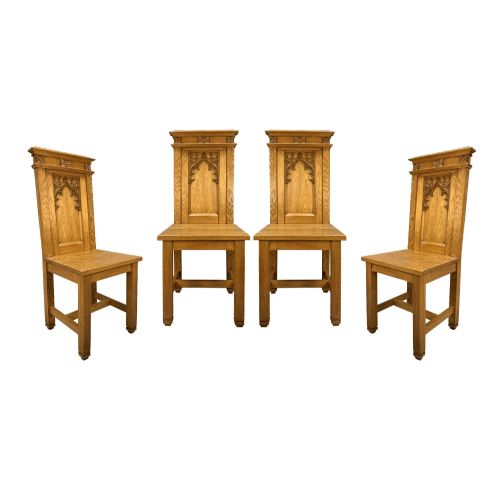
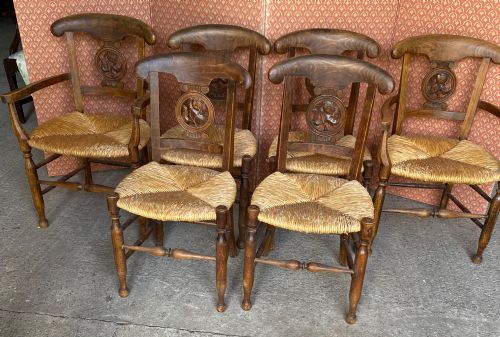
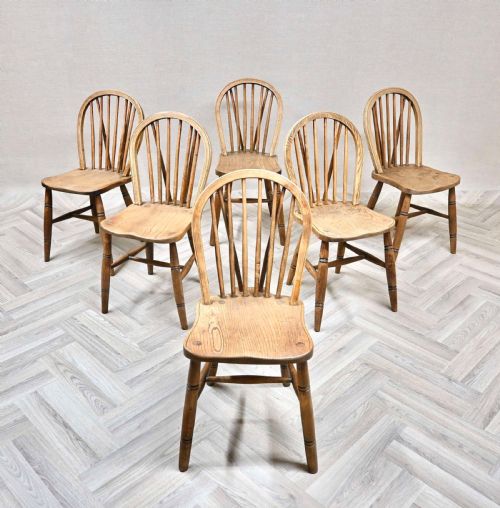
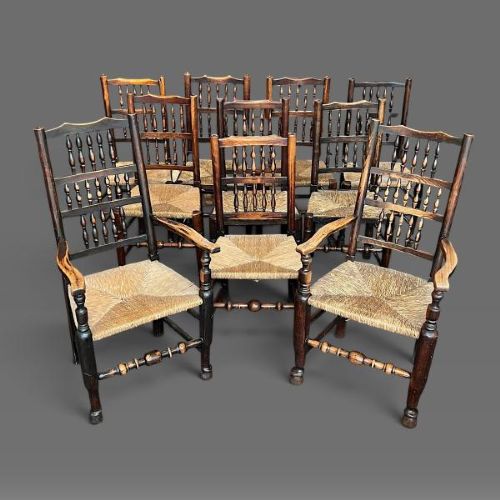
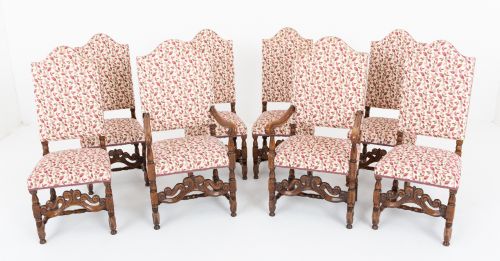
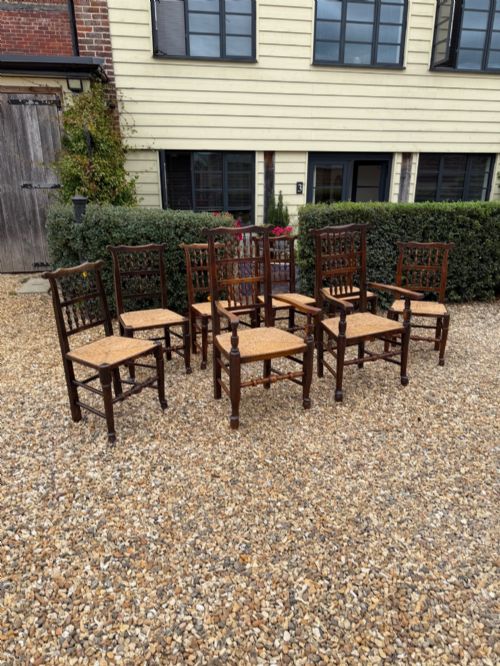
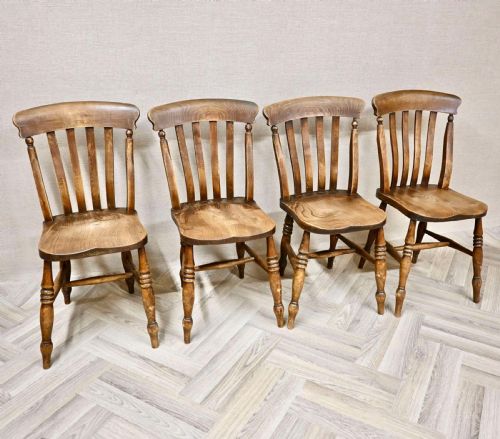
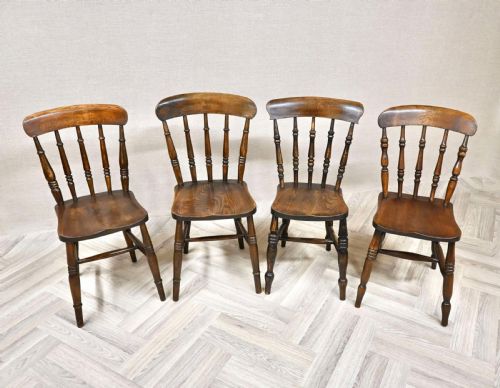
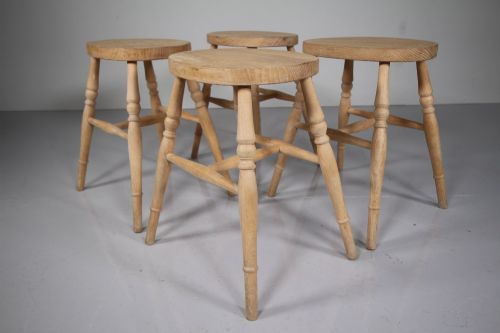
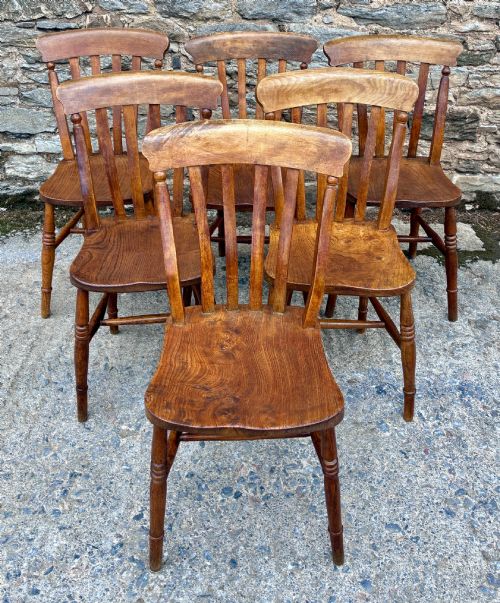
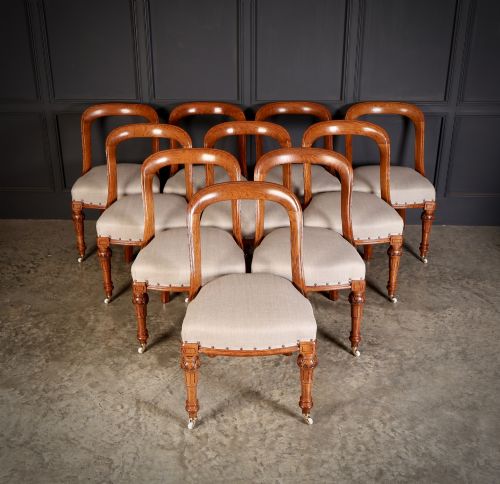
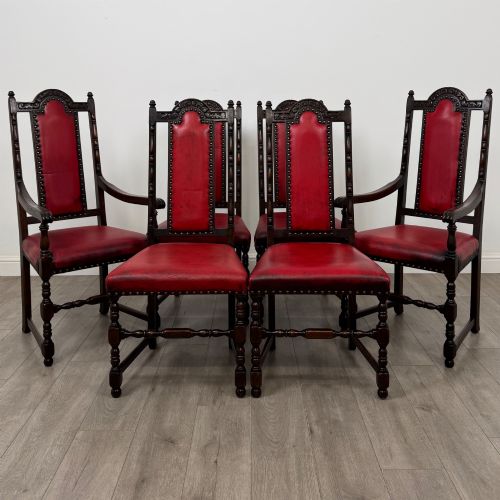
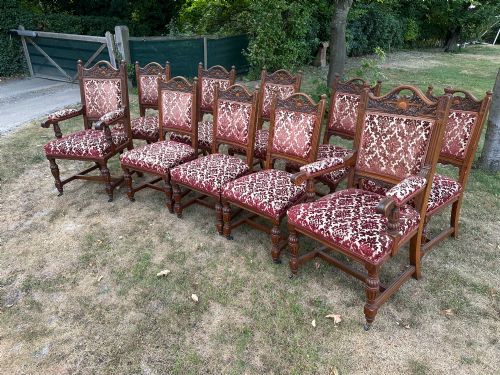
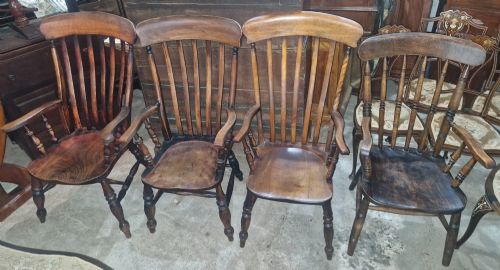
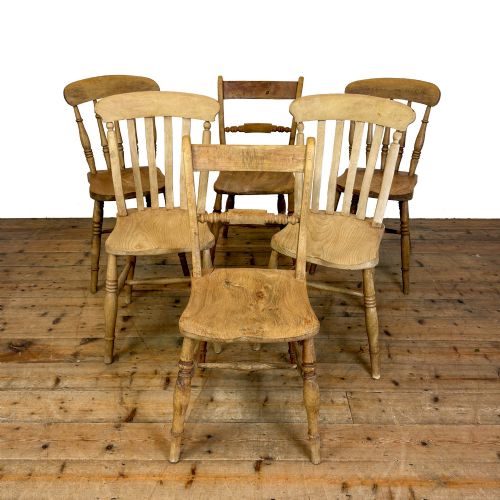
A traditional oak seat set comprises multiple matching or harmonised chairs gathered for communal dining, most commonly seen as sets of four, six, eight or ten pieces. Buyers searching for a traditional oak seat set encounter sturdy farmhouse forms, Windsor kitchen seating, and high-backed revival dining chairs. These groupings span from the nineteenth century into the 1930s, reflecting domestic eating habits that required durable, practical seating around large timber tables.
The dominant forms on this page include ladder back chairs, lathe back designs, spindle-backed Windsor farmhouse models, and upholstered or caned seat configurations. Many sets originate from the Victorian and Edwardian periods, while others draw on earlier seventeenth-century revival styles produced in the early decades of the twentieth century. Harlequin sets also appear, bringing together subtly mismatched individual chairs that share a common material and regional country aesthetic.
Materials and Construction Methods
Makers built these sets predominantly using solid oak, often combining it with supporting timbers such as elm, beech, ash and rush for seats or structural spindles. Oak provided the heavy, resilient framework necessary to withstand daily household use, while turned components utilised dense hardwoods for durability.
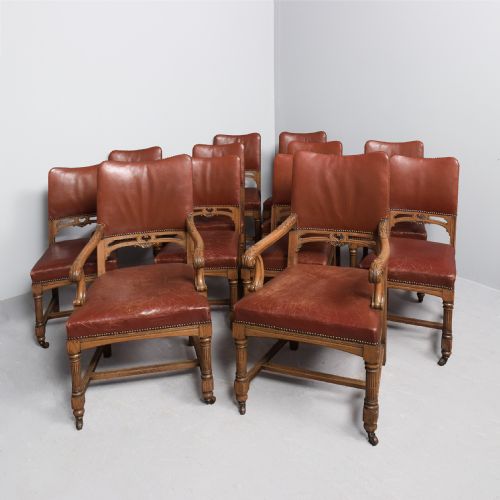
Joinery relied on traditional mortise and tenon joints, pegged frames, and steam-bent wooden bows for Windsor arms and backrests. Some later Edwardian and 1930s examples incorporated brass hardware, leather squabs or fabric upholstery fixed directly onto the wooden frames.
Listings feature oak combined with elm, ash, beech, rush and leather across Victorian, Edwardian and 1930s periods.
Distinctions in Quality and Craftsmanship
Quality in a traditional oak seat set depends upon the consistency of the timber grain, the tightness of the joinery, and the matched proportion across all pieces in the grouping. Superior sets display uniform colour and grain direction in the oak, whereas lesser examples reveal mismatched timber patching or heavy replacement parts.
The integrity of the construction dictates longevity, with hand-turned spindles, well-pegged joints, and original rush or timber seats holding higher regard than loose frames or poorly executed structural repairs.
The Traditional Oak Seat Set Glossary
- Windsor chair
- A wooden chair built with a heavy solid timber seat into which the legs and back spindles are separately inserted. This form is common in farmhouse kitchen settings.
- Ladder back
- A chair back featuring multiple horizontal wooden slats or rails between two upright posts. These are frequently found on traditional country dining chairs.
- Harlequin set
- A collection of dining chairs that are not originally from the same batch but match closely in style, period and material. They offer a collected rather than factory-matched appearance.
- Smokers bow
- A low-backed wooden armchair with a continuous curved armrail supported by turned spindles, often used as a captain or desk chair.
- Caned back
- A chair back woven from split rattan cane, providing a lighter decorative panel within a solid oak frame. This technique appears in revival and Edwardian seating.
- Jacobean Revival
- A nineteenth or twentieth-century furniture style copying the heavy turned legs, straight backs and carved ornamentation of seventeenth-century English design.
Traditional Oak Seat Set: Frequently Asked Questions
What is a harlequin set of chairs?
A harlequin set is a group of dining chairs assembled to match in style, wood and general period, even though they were not originally manufactured together as a single batch.
Such sets allow buyers to seat larger numbers of guests around a table using authentic period pieces that share a harmonious country aesthetic without needing a strict factory match.
How do I care for antique oak chairs?
Antique oak benefits from occasional treatment with traditional beeswax to nourish the timber and maintain a soft lustre without sealing the grain under modern synthetics.
Keep wooden seating away from direct heat sources and sudden temperature shifts to prevent the timber from drying out or joints from shrinking.
Are these chairs suitable for daily dining?
Most traditional oak and elm dining chairs were built specifically for heavy domestic use in farmhouses and kitchens, making them exceptionally durable for everyday meals.
Checking that the underframe remains tight and the legs are stable ensures the seating handles regular daily weight without loosening.