




Vintage Oak Highback Chairs
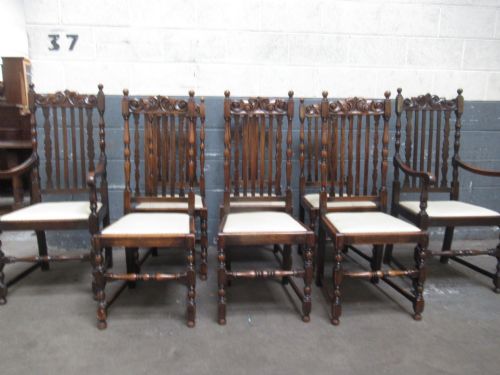
These vintage oak highback chairs offer striking vertical lines and solid timber construction that instantly elevate any dining room or study.
Vintage Oak Highback Chairs
Vintage oak highback chairs bring together strong vertical proportions and robust timber construction, drawing on historical forms from the eighteenth, nineteenth and early twentieth centuries. When searching this phrase, buyers encounter various interpretations including Jacobean Revival, Arts and Crafts, Gothic Revival and Georgian styles.
The selection ranges from single throne chairs and side chairs to sets of four, five or six dining chairs, alongside comfortable armchairs. Common configurations feature tall timber backs designed to make a formal visual statement in a room.
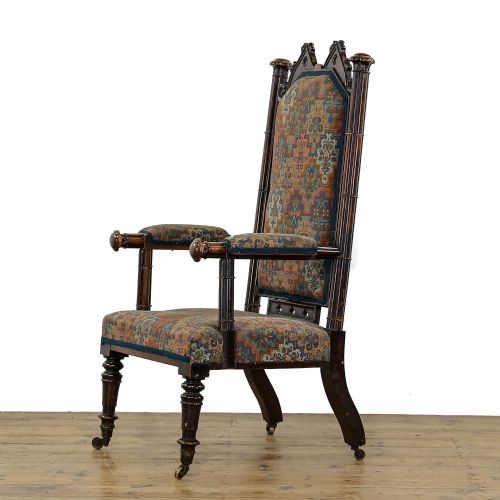
Origins span distinct periods, most notably the Victorian era, Edwardian period, and the nineteen-twenties, alongside pieces attributed to workshops such as Liberty Morris and Co. Buyers frequently find armchairs with rush, leather, cane, or upholstered seats alongside simpler wooden side chairs.
How they were made
Makers utilised solid oak for the primary framework, employing traditional joinery techniques to support the characteristic tall backs and substantial legs. This heavy timber is frequently shaped with carved ornamentation reflecting Carolean or Jacobean revivals.
Seating areas incorporate a variety of traditional materials applied directly to the oak frames, including woven rush, stretched cane, plain leather, and plush velvet or textile upholstery secured with brass detailing.
Listings feature oak combined with brass, fabric, rush, leather, cane, velvet and textiles across multiple historical periods.
What varies in quality
Quality rests in the crispness of the oak carving and the structural integrity of the high backs, which endure significant leverage during everyday use. Better examples display careful selection of timber grain and precise joinery rather than purely decorative surface application.
The finish of the secondary materials also dictates standard, from tightly woven rush and supple leather to robust upholstery fabrics that complement the heavy timber structure without overwhelming its proportions.
Liberty Morris and Co
The Vintage Oak Highback Chairs Glossary
- Rush Seating
- A traditional method of weaving dried marsh grasses around a wooden seat frame to create a durable, textured surface. It appears frequently on Arts and Crafts chairs.
- Carolean Revival
- A decorative style mimicking late seventeenth century English design during the reign of Charles II, characterised by elaborate scrollwork, carved crowns, and pierced splats.
- Crofter Chair
- A vernacular Scottish seating form typically constructed from local timber with a high, protective back designed to shield the occupant from draughts in traditional dwellings.
Vintage Oak Highback Chairs: Frequently Asked Questions
What periods do these chairs come from?
The listings span several eras, including the eighteenth century, the nineteenth century, the Victorian period, the Edwardian period, and the nineteen-twenties.
Design influences reach even further back, drawing on historical revivals such as the Jacobean and Carolean periods.
What materials are used in the seats?
Seats feature a diverse range of traditional materials depending on the style and maker of the piece.
Common options include woven rush, natural cane, supple leather, and various tactile fabrics or velvet upholstery.
Are these chairs suitable for daily dining?
Many examples are designed specifically as dining chairs and are sold in sets ranging from four to six pieces.
Their solid oak construction provides the sturdy foundation necessary for regular household use.
How do I identify a revival style?
Revival pieces incorporate specific decorative motifs borrowed from earlier centuries, such as the elaborate scrollwork of the Carolean style or the geometric framing of Jacobean design.
Examining the construction methods and timber ageing helps distinguish these later interpretations from genuine period antiques.