



Traditional Oak Monastery Table
A traditional oak monastery table brings substantial length and solid timber into a dining space, offering enduring utility for large gatherings.

Traditional Oak Monastery Table
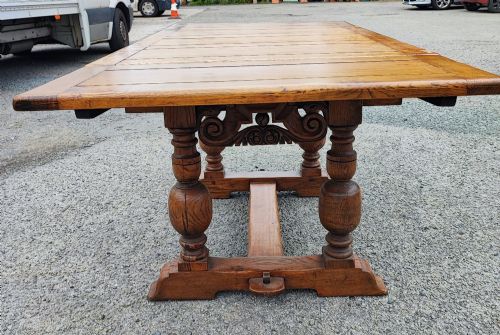
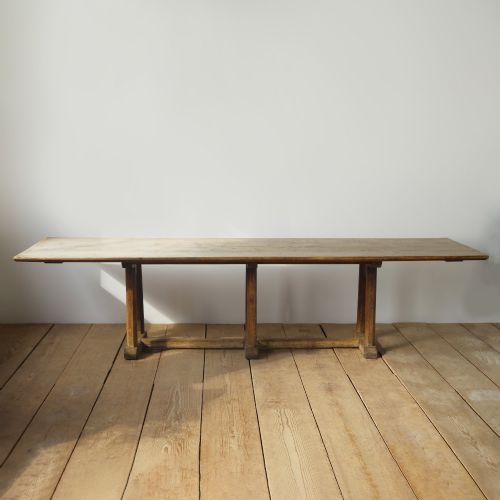
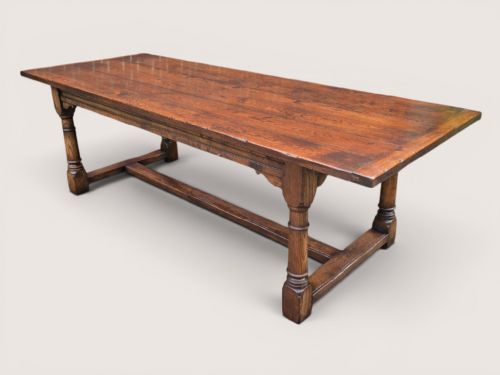
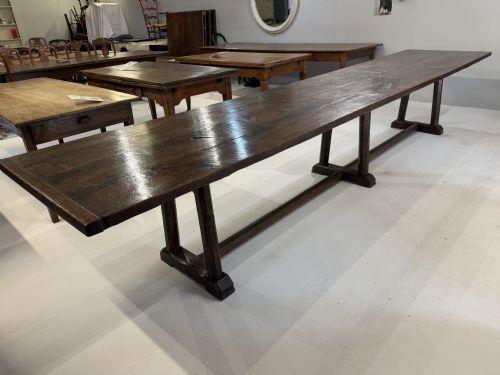
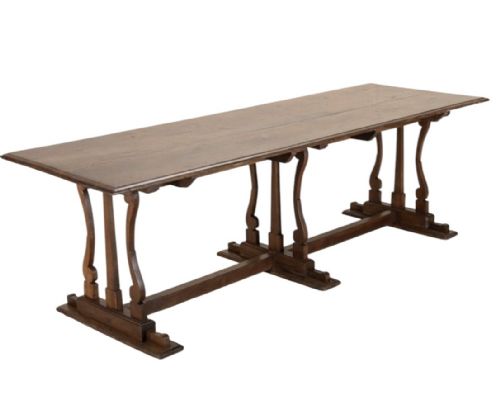
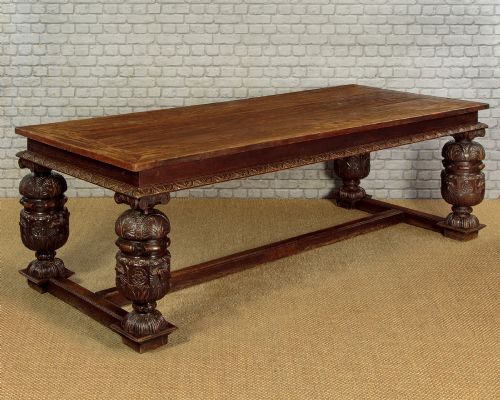
When you search for a traditional oak monastery table, you encounter substantial dining furniture designed for communal meals, frequently taking the form of refectory or trestle tables. These pieces span centuries of production, stretching from authentic seventeenth-century examples to later revivals from the nineteenth and early twentieth centuries. The listings predominantly feature oak, solid oak, and bleached oak, alongside occasional variations in walnut, elm, and pine.
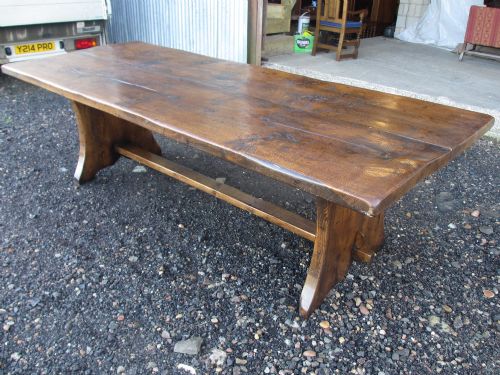
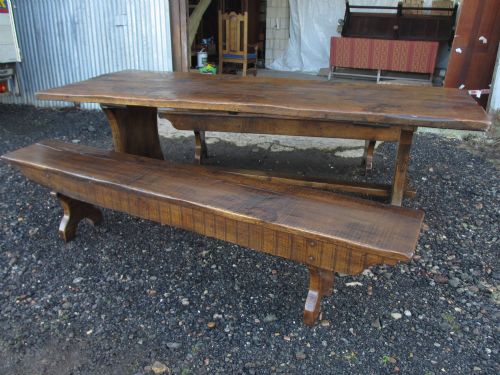
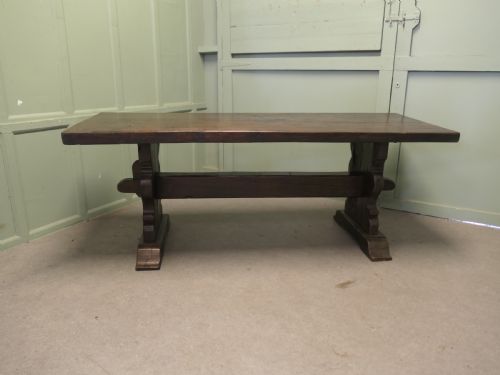
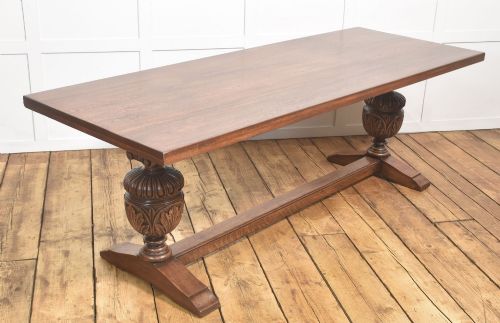
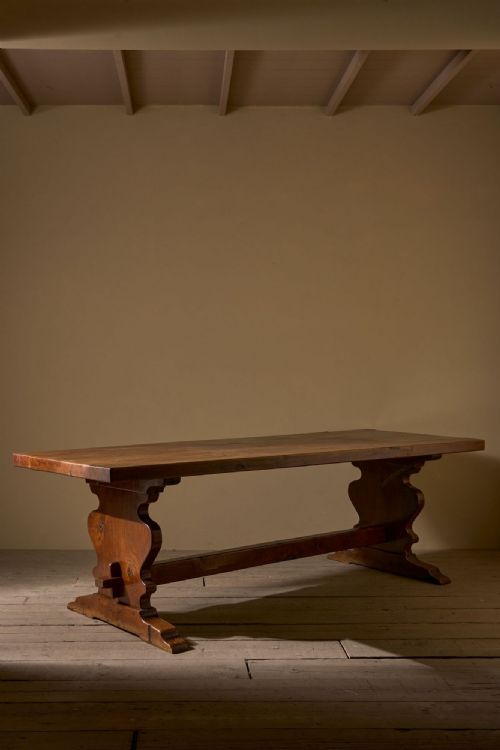
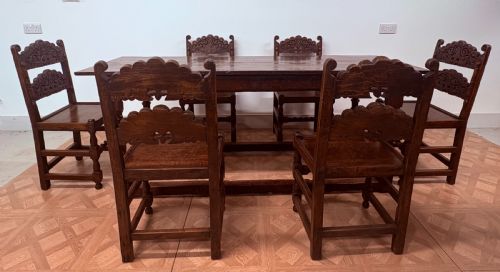
The physical form relies on long timber boards supported by trestle ends, shaped legs, or sturdy pedestals, sometimes accompanied by matching bench forms. You will find styles ranging from rustic farmhouse and English country to Jacobean revival, French country, and Gothic revival. Dining table sets and extended seating arrangements appear regularly among the objects.
Makers and craftsmen constructed these surfaces to seat large numbers comfortably, often accommodating six to twelve people depending on the length of the top. The visual character derives directly from the grain of the wood, the plank construction, and the period-specific details applied to the trestle ends.
Materials and construction methods
Carpenters relied primarily on solid oak, utilising thick timber planks for the tabletops and sturdy structural supports for the underframes. Some examples incorporate elm or walnut, while brass hardware occasionally appears on associated elements. Workshops joined the heavy planks using traditional woodworking techniques suited to long, load-bearing surfaces.
Trestle ends and shaped legs provided the necessary foundation to support massive plank tops without sacrificing legroom along the length of the table. Surface finishes varied from natural wax to bleached treatments, highlighting the organic texture and grain patterns inherent in the hardwood.
Several tables claim enough length to comfortably seat twelve hungry monks, or at least a very large modern family.
Markers of quality and construction
The division between standard examples and superior pieces rests on the selection of timber and the integrity of the plank top. Tables built from wide, single- or multi-plank solid oak boards demonstrate a higher grade of material sourcing than those assembled from smaller, mismatched sections. The thickness of the timber and the stability of the trestle construction dictate the overall longevity of the piece.
Proportion and period authenticity also separate ordinary production from exceptional craftsmanship. Pieces retaining their original structural elements, genuine period patination, and balanced architectural proportions command greater appreciation among collectors than heavily altered or reconstructed items.
The Traditional Oak Monastery Table Glossary
- Refectory table
- A long, narrow dining table traditionally used in monastic dining halls. These forms feature prominently in the available selections.
- Trestle table
- A table supported by two or more upright structures connected by a horizontal beam. This design provides stability for heavy wooden tops.
- Draw leaf table
- A table equipped with pull-out leaves hidden beneath the main surface to extend the overall length. This mechanism offers flexible seating capacity.
- Plank top
- A tabletop constructed from several long boards joined edge to edge. The width and number of planks define the visual character of the surface.
- Jacobean revival
- A nineteenth-century stylistic movement mimicking seventeenth-century English furniture design. Pieces in this style display heavy turning and dark finishes.
Traditional Oak Monastery Table: Frequently Asked Questions
What is a monastery table?
A monastery table is a long, heavy dining table modeled after those used in medieval religious refectories. They are built for communal dining and large gatherings.
These pieces utilise solid timber and robust support systems to handle daily use in domestic or institutional kitchens and dining rooms.
How do I seat guests comfortably?
These tables typically measure long enough to accommodate six to twelve people depending on the specific length. Trestle designs allow diners to sit along the entire length without obstruction from corner legs.
Matching bench forms frequently accompany these tables, offering flexible alternative seating options that tuck neatly underneath.
How do I identify a 17th century piece?
Seventeenth-century examples display authentic period construction methods, heavy oak timbers, and natural wear accumulated over centuries. Stylistic indicators include turned legs and structured framing characteristic of the period.
Later nineteenth-century revivals often imitate these early forms, meaning timber analysis and joint inspection help clarify the actual age.
Can I use these tables daily?
Solid oak and hardwood construction makes these tables exceptionally durable for everyday family meals and kitchen activities. The robust timber resists normal wear when properly maintained with wax or appropriate finishes.
Using placemats and coasters protects the historic or treated surface from heat and moisture while preserving the grain.