


Traditional Oak Flap Table
These traditional oak flap table pieces span the seventeenth century to the twentieth century, offering sturdy drop-leaf surfaces and versatile gateleg frames for modern homes.
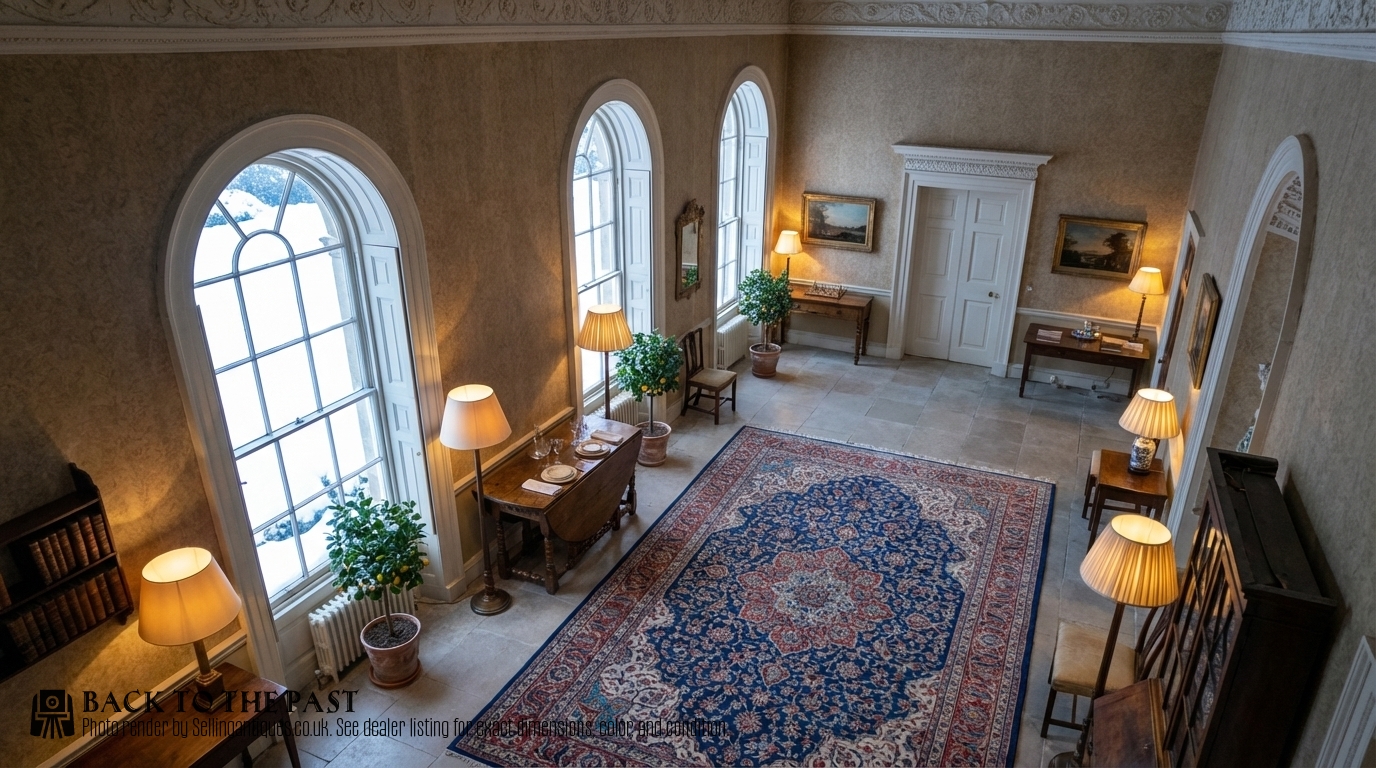
Traditional Oak Flap Table
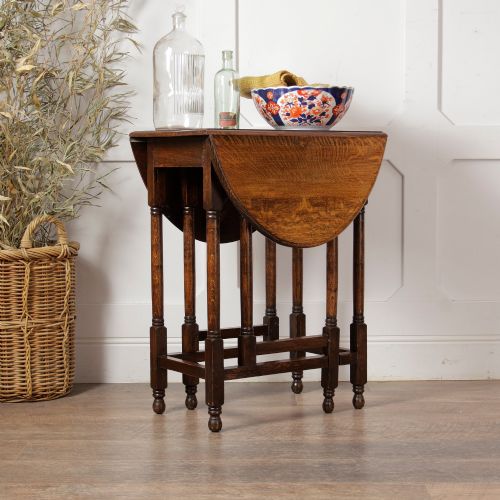
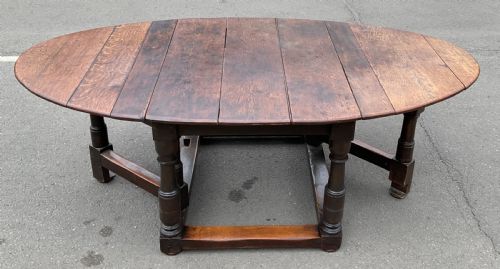
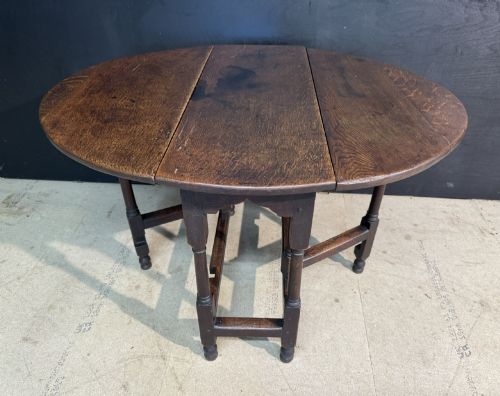
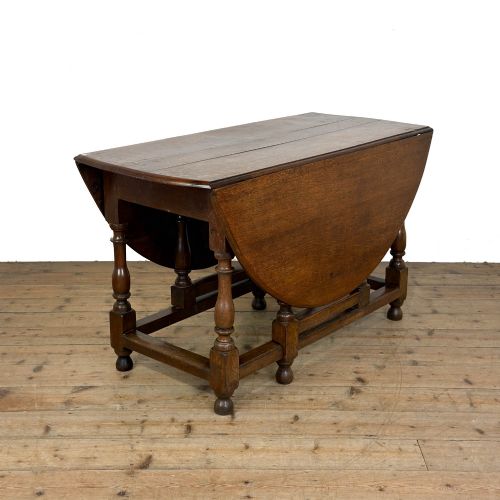
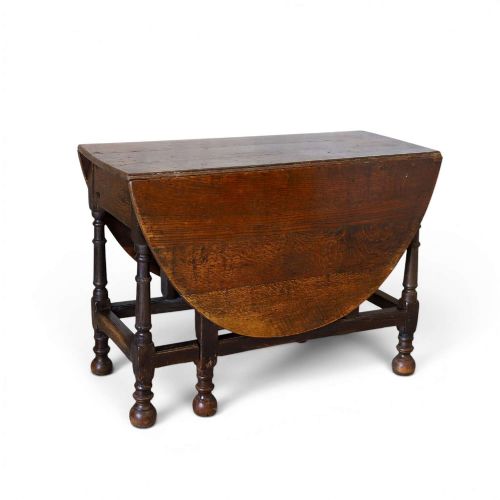
A traditional oak flap table primarily appears as a gateleg dining table, side table, or coffee table spanning periods from the seventeenth century through to the early twentieth century. Buyers seeking these items will frequently encounter seventeenth-century, eighteenth-century, and 1920s examples configured for dining or occasional use.
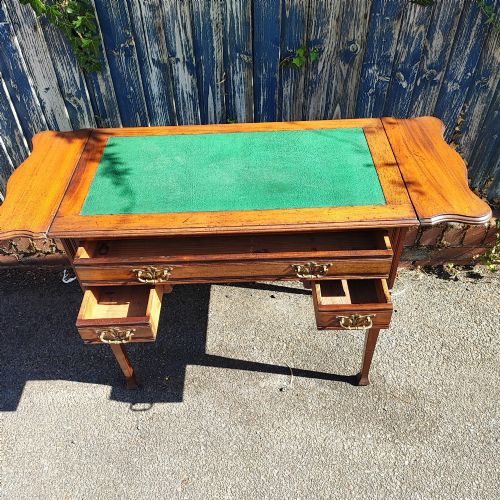
The selections range from large six-seater dining tables down to small occasional coffee tables and writing tables with drop side flaps. Gateleg tables form the vast majority of the listings, utilising folding leaves supported by swinging legs to save space when not fully extended.
Distinctions in quality and execution
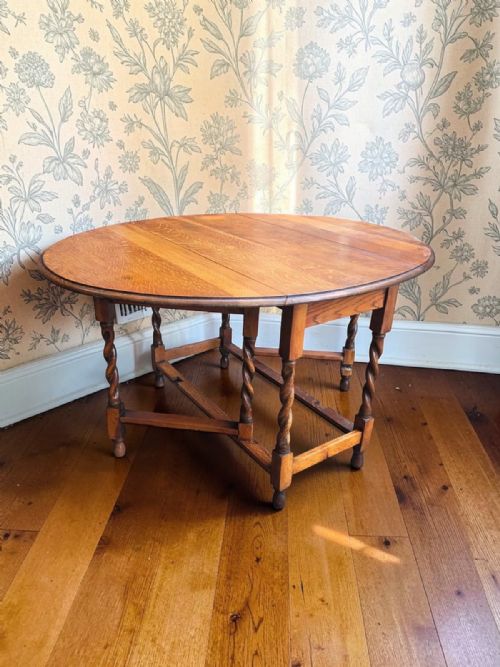
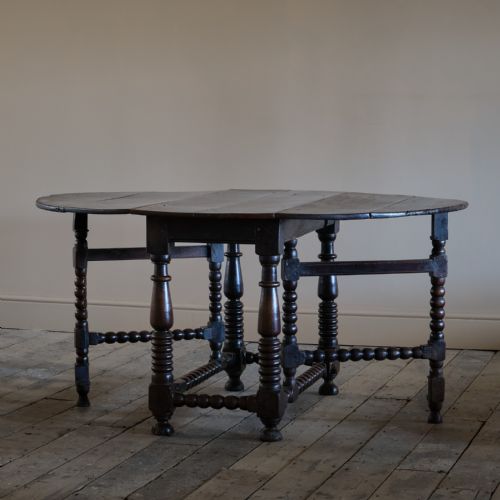
The calibre of a traditional oak flap table depends heavily upon the age of the timber and the complexity of its turned woodwork, such as bobbin or barley twist legs. Earlier seventeenth-century and eighteenth-century examples exhibit hand-worked joinery and rich patination that distinguish them from later revival pieces.
Proportion and scale dictate utility, with larger six-seater dining formats requiring robust gateleg framing to support extended leaves reliably. The presence of original hardware, including early hinges, adds significant historical integrity to the piece.
Listings span seventeenth-century origins through to 1930s revivals, featuring solid oak alongside brass, iron, and leather components.
The Traditional Oak Flap Table Glossary
- Gateleg table
- A table with hinged leaves that are supported by legs which swing outward from the frame. This clever mechanism allows the surface area to expand or contract easily.
- Barley twist
- A type of decorative turning resembling a spiral rope. Craftsmen shaped solid timber into this distinctive helical form on seventeenth-century and revival furniture.
- Bobbin turning
- A form of lathe-turned leg featuring spool-shaped or rounded segments stacked vertically. It is commonly found on seventeenth-century oak tables.
- Drop-leaf
- A tabletop design featuring central fixed boards flanked by hinged flaps. These flaps fold down vertically when space is restricted.
- Patina
- The deep sheen and surface character acquired by wood over long periods of handling and age. It reflects the history of the material.
Traditional Oak Flap Table: Frequently Asked Questions
How do I use a gateleg table daily?
Keep one or both flaps folded down against the wall for compact daily living, pulling the swinging gatelegs out only when extra surface space is required for dining or writing.
Position the table away from direct heat sources and radiators to prevent the solid oak timbers from drying out and splitting over time.
What is the difference between 17th and 18th century tables?
Seventeenth-century examples frequently incorporate heavier turned components like bobbin or barley twist supports alongside darker, dense oak patinas. Eighteenth-century versions often present more restrained leg turnings and refined Georgian proportions suited for larger dining rooms.
Both periods rely on solid oak construction, but the earlier centuries display distinct joinery techniques and heavier framing structures.
Are these tables suitable for small rooms?
Drop-leaf and gateleg configurations make these pieces exceptionally adaptable for compact spaces because the leaves lower when not in use. Small occasional and coffee table formats provide surface area without overwhelming narrow rooms.
Ensure you measure the floor space with the leaves fully extended before placing a larger six-seater dining version in a modest interior.
How do I care for antique oak surfaces?
Dust the timber regularly with a soft, dry cloth and apply a quality beeswax periodically to nourish the wood and maintain its natural patina. Avoid using harsh chemical sprays or excess water on historic oak.
Use coasters and felt pads beneath hot dishes or wet glasses to protect the historic polish and prevent staining.