


Traditional Oak Desk Chair
A traditional oak desk chair brings solid construction and warm timber tones to a workspace, drawing on centuries of vernacular seating design.
Traditional Oak Desk Chair
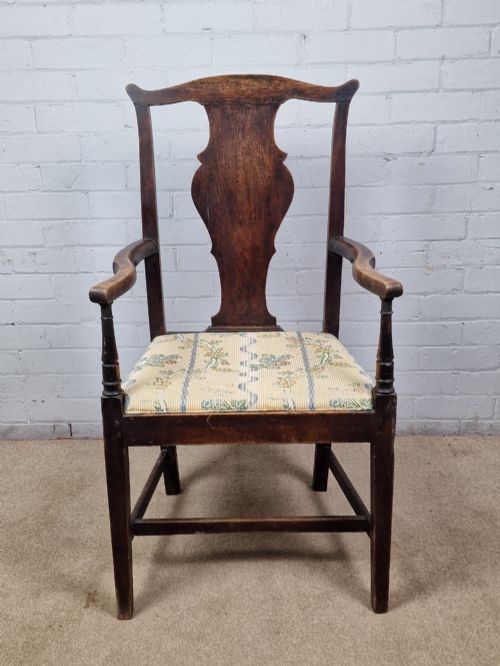
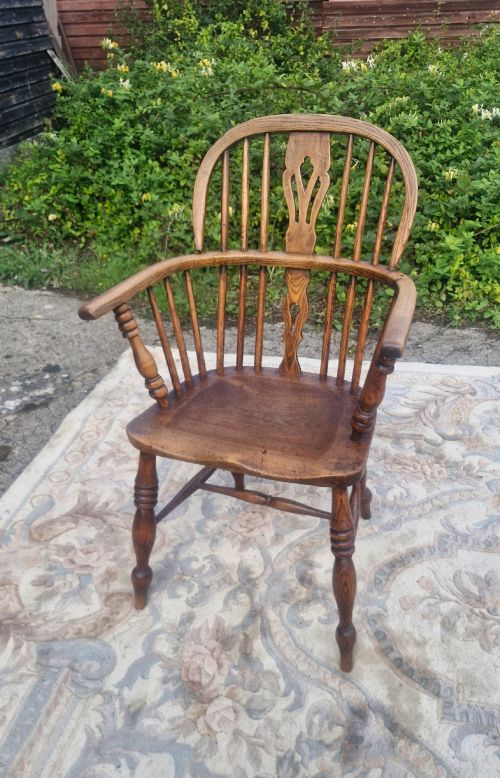
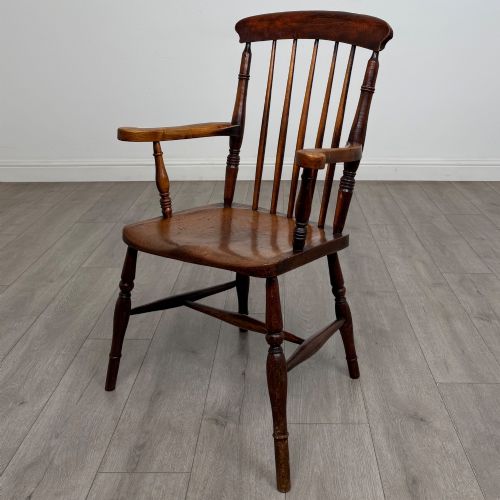
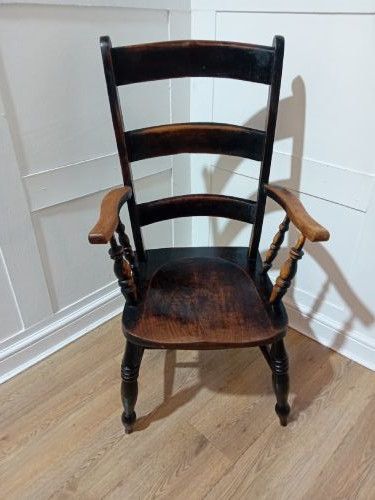
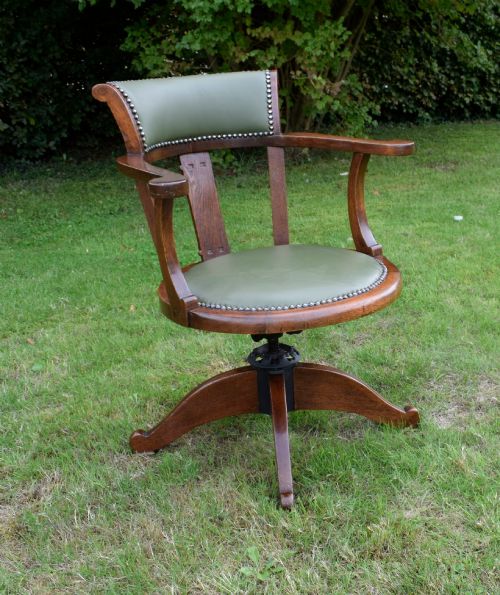
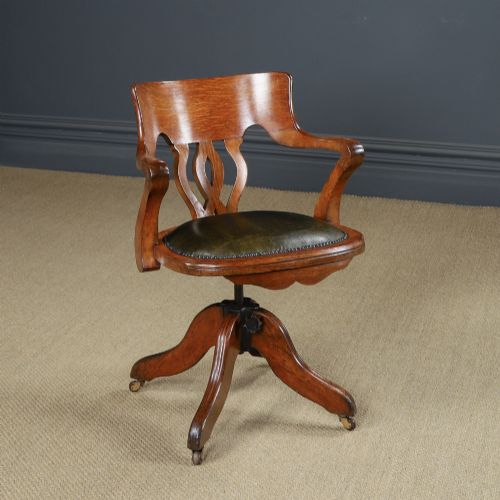
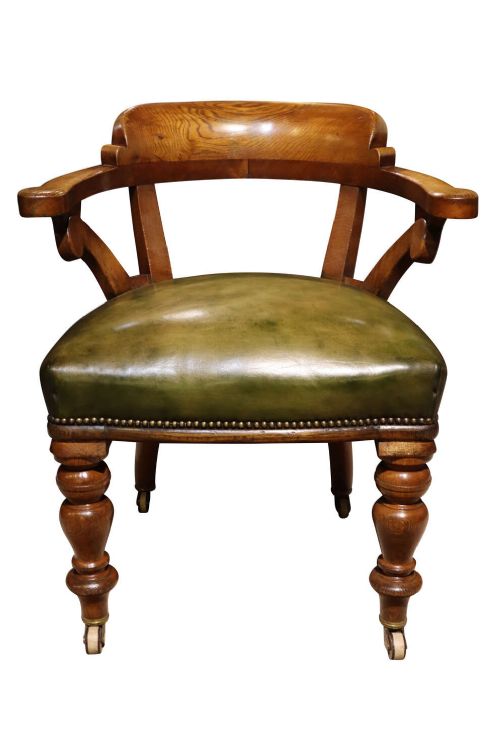
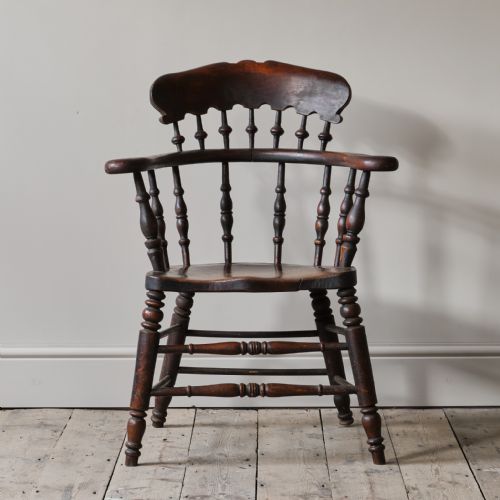
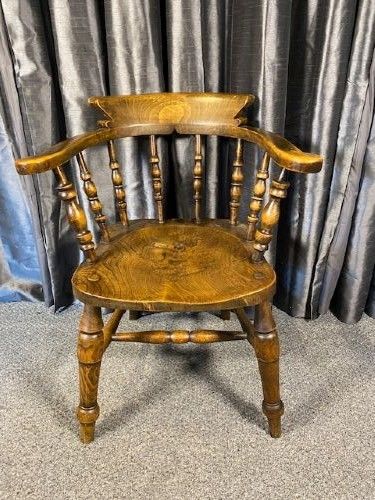
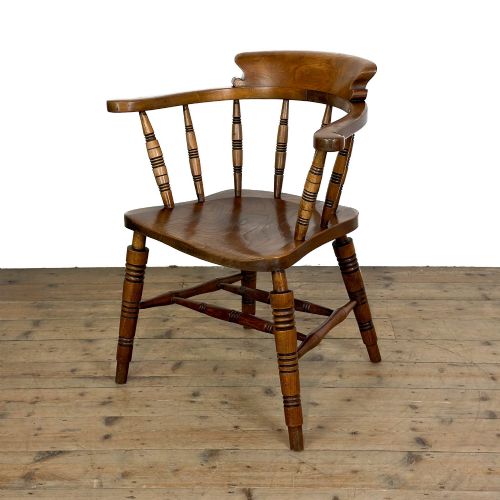
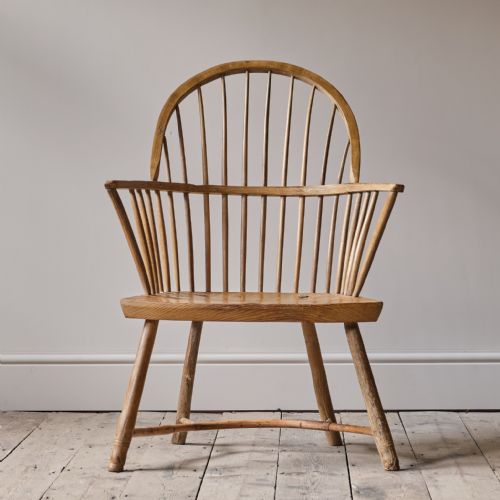
A traditional oak desk chair encompasses sturdy country forms, including Windsor chairs, smoker's bows, and captain's chairs, alongside revolving office seating from the nineteenth and early twentieth centuries. These pieces combine heavy timber frames with functional seating designs intended for daily utility at a desk or library table.
Regional variations appear across the selection, from Thames Valley designs to Scottish vernacular armchairs, showing distinct local turning patterns and construction methods. The assortment ranges from simple stick-back models to elaborate swivel and tilt office chairs fitted with brass hardware.
How they were made
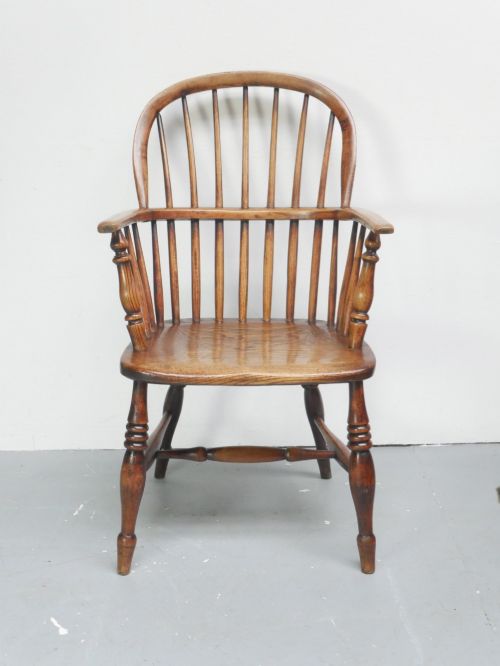
Construction relies heavily on solid oak for the primary frames, frequently combined with secondary timbers such as elm, ash, and beech used for seats, spindles, and bentwood components. Traditional Windsor and stick-back designs utilise pegged joints and steam-bent wooden hoops to secure the backrests directly into thick, sculpted plank seats.
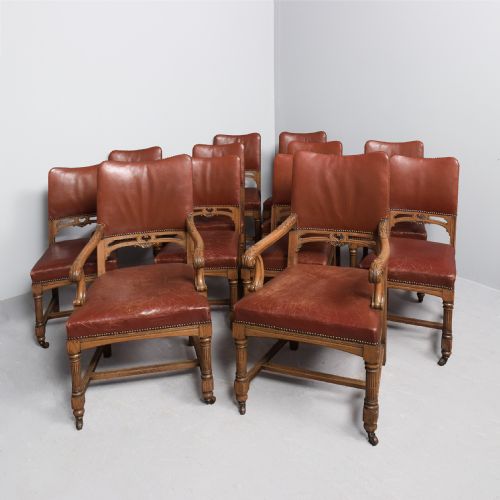
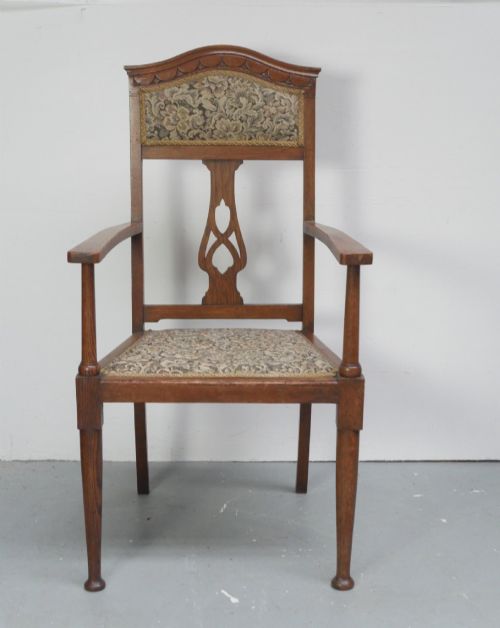
Upholstered versions incorporate durable materials like leather, green and red hide, velvet, and woven fabric fastened with brass studs to provide a cushioned seat and backrest. Office variants integrate metal swivel mechanisms and adjustable tilting screws to accommodate the practical demands of early workspace seating.
Upholstered elements on these chairs primarily feature leather, hide, and fabric secured with brass studs.
What varies in quality
Quality rests in the depth of the timber grain, the crispness of the spindle turnings, and the original integrity of the pegged joinery rather than surface polish alone. Chairs retaining their original finish and uncompromised structural tightness command greater interest than heavily restored examples.
The sophistication of the seat carving and the balance of the bentwood arms distinguish finer library and office models from basic utility seating. Leather upholstery quality and the smoothness of early swivel mechanisms further separate standard production pieces from finer workshop commissions.
The Traditional Oak Desk Chair Glossary
- Windsor chair
- A chair built with a solid wooden seat into which the legs and back spindles are separately bored and wedged. This technique creates a remarkably robust frame typical of English country seating.
- Smoker's bow
- A low-backed Windsor armchair featuring a rounded, continuous armrail supported by turned spindles above a deep wooden seat. These comfortable elbow chairs were common in country houses and offices.
- Captain's chair
- A sturdy low-back armchair designed for office or library use, often featuring a rounded crest rail supported by numerous vertical spindles. They provide compact support while allowing freedom of movement.
- Swivel desk chair
- An office chair mounted on a central rotating pivot, frequently incorporating a tilting mechanism and adjustable height settings. Edwardian and Victorian versions often combine oak frames with leather upholstery.
- Comb back
- A Windsor chair variation where the vertical back spindles extend upward through a top rail, resembling the teeth of a dressing comb. This regional style denotes eighteenth-century craftsmanship.
Traditional Oak Desk Chair: Frequently Asked Questions
What is a smoker's bow chair?
A smoker's bow is a sturdy low-back Windsor armchair characterised by a continuous curved armrail and turned wooden spindles.
These pieces were widely used in studies, offices, and country houses as comfortable seating for writing or reading.
How do I date an oak desk chair?
Dating relies on examining construction techniques, such as hand-turned spindles, peg joinery, and the presence of nineteenth-century mechanical swivel bases.
Earlier eighteenth-century pieces display different Windsor or Chippendale design influences compared to later Victorian and Edwardian office variants.
Are oak desk chairs comfortable for daily work?
Many traditional designs feature sculpted wooden saddle seats or padded leather inserts intended to support long periods of sitting.
Swivel and tilt models from the Edwardian period were specifically engineered for office tasks and long hours at a desk.
What timber was used besides oak?
While oak forms the primary frame for these chairs, makers frequently incorporated elm, ash, and beech.
Elm and ash provided flexible strength for bentwood components and steam-bent back hoops, while beech was commonly utilised for turned spindles.