


Traditional Oak Delft Rack
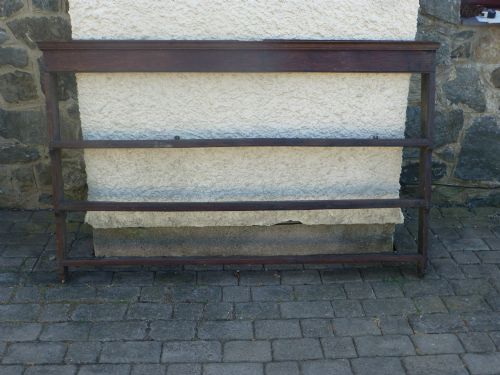
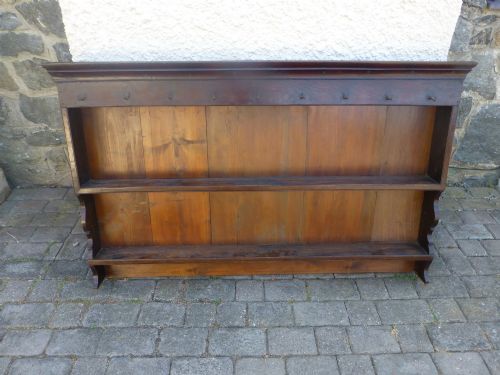
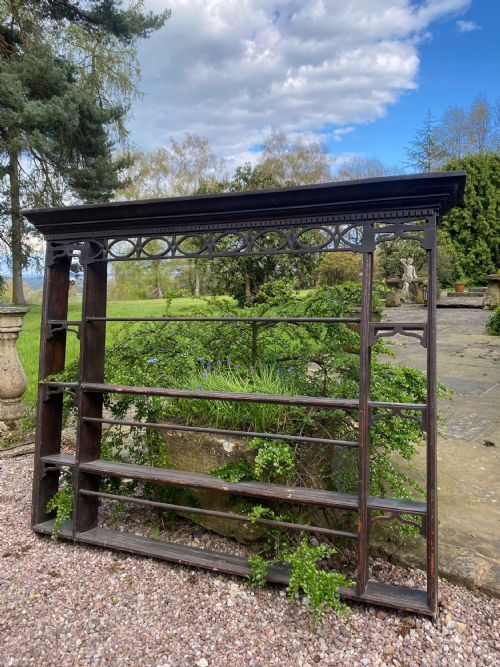
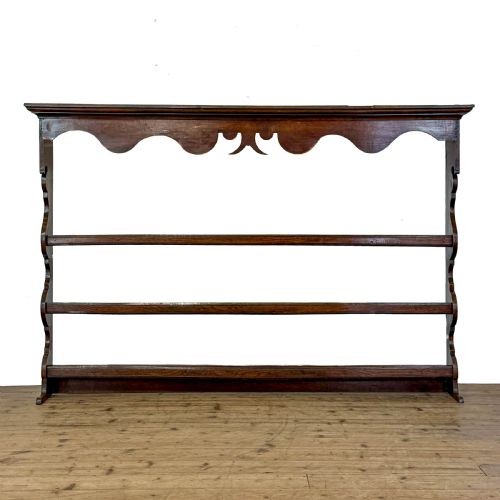
A traditional oak delft rack organises household pottery with rustic wall-mounted timber shelves designed for display.
Traditional Oak Delft Rack
A traditional oak delft rack is a wall-mounted shelving unit designed to display plates and ceramic wares upright in domestic spaces. These pieces appear mainly in 18th Century and Georgian forms, alongside later 1900 interpretations.
Buyers encounter variations ranging from simple plate racks and wall shelves to larger dresser racks and complete dresser components. The primary structure is built to hang on walls or sit atop base units, keeping everyday tableware visible and accessible.
How they were made
Makers constructed these racks predominantly using solid oak, often shaped in country workshops using straightforward timber framing techniques. Iron and brass components occasionally appear as structural or hanging hardware.
Surfaces show historical treatments including stained oak and natural wood finishes that highlight the grain. Joinery aligns with Georgian, English Country, Gothic Revival, and Country Oak styles seen across the inventory.
Every plate rack carries the quiet ghost marks of countless Sunday dinners tucked into its timber grooves.
What varies in quality
Quality rests on the integrity of the timber selection and the purity of period construction methods. Earlier 18th Century examples demonstrate traditional hand-tool work that differs fundamentally from later 1900 stylistic revivals.
The refinement of the mouldings and the balance of the shelving proportions separate standard utilitarian racks from finer Georgian iterations. Preservation of the original wood surface also dictates the standing of each piece.
The Traditional Oak Delft Rack Glossary
- Delft rack
- A wall-mounted wooden shelving unit specifically proportioned for displaying ceramic plates and platters. These fixtures are traditionally hung in kitchens and dining areas.
- Dresser rack
- The upper section of a kitchen dresser, featuring open shelves and plate grooves designed to hold tableware. It can also function as a standalone wall-mounted hanging rack.
- Country oak
- A designation for vernacular furniture produced using native British timber without high-style urban refinements. It reflects robust domestic utility.
- Georgian style
- Design characteristics spanning the 18th century marked by classical proportions and disciplined decorative restraint. This aesthetic informs many traditional wall shelves.
Traditional Oak Delft Rack: Frequently Asked Questions
How do I hang a heavy oak rack?
These timber units require secure fixing directly into wall studs or masonry using appropriate heavy-duty brackets. The substantial weight of the oak framework demands robust load-bearing support.
Professional installation ensures the wall fixings safely bear both the rack and the subsequent weight of displayed ceramics.
Can these racks hold heavy pottery?
Original oak construction provides the natural strength needed to support earthenware and heavy plates during daily use. The deep ledges and plate grooves keep items stable against the backboards.
Historical joinery distributes the downward pressure evenly across the vertical supports and wall attachments.
How do I clean old oak wood?
Maintain the surface by dusting gently with a dry, soft cloth to prevent particulate buildup in the grain. Avoid excessive moisture and modern chemical sprays that can degrade historic finishes.
Periodic application of appropriate furniture wax helps nourish the timber and preserves the natural lustre of the oak.
What distinguishes an 18th century rack?
Eighteenth-century examples feature distinct hand-worked timber surfaces, period joinery techniques, and patination acquired through generations of domestic use. Construction details often reflect regional vernacular traditions.
Later reproductions and 1900 stylistic interpretations lack the specific wear patterns and tool marks associated with genuine period pieces.