

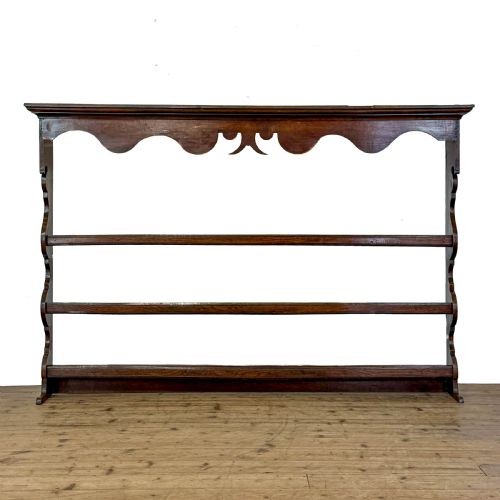


Vintage Kitchen Plate Rack
A vintage kitchen plate rack brings practical display and honest craft to a room, holding everyday earthenware while anchoring the wall with timber character.
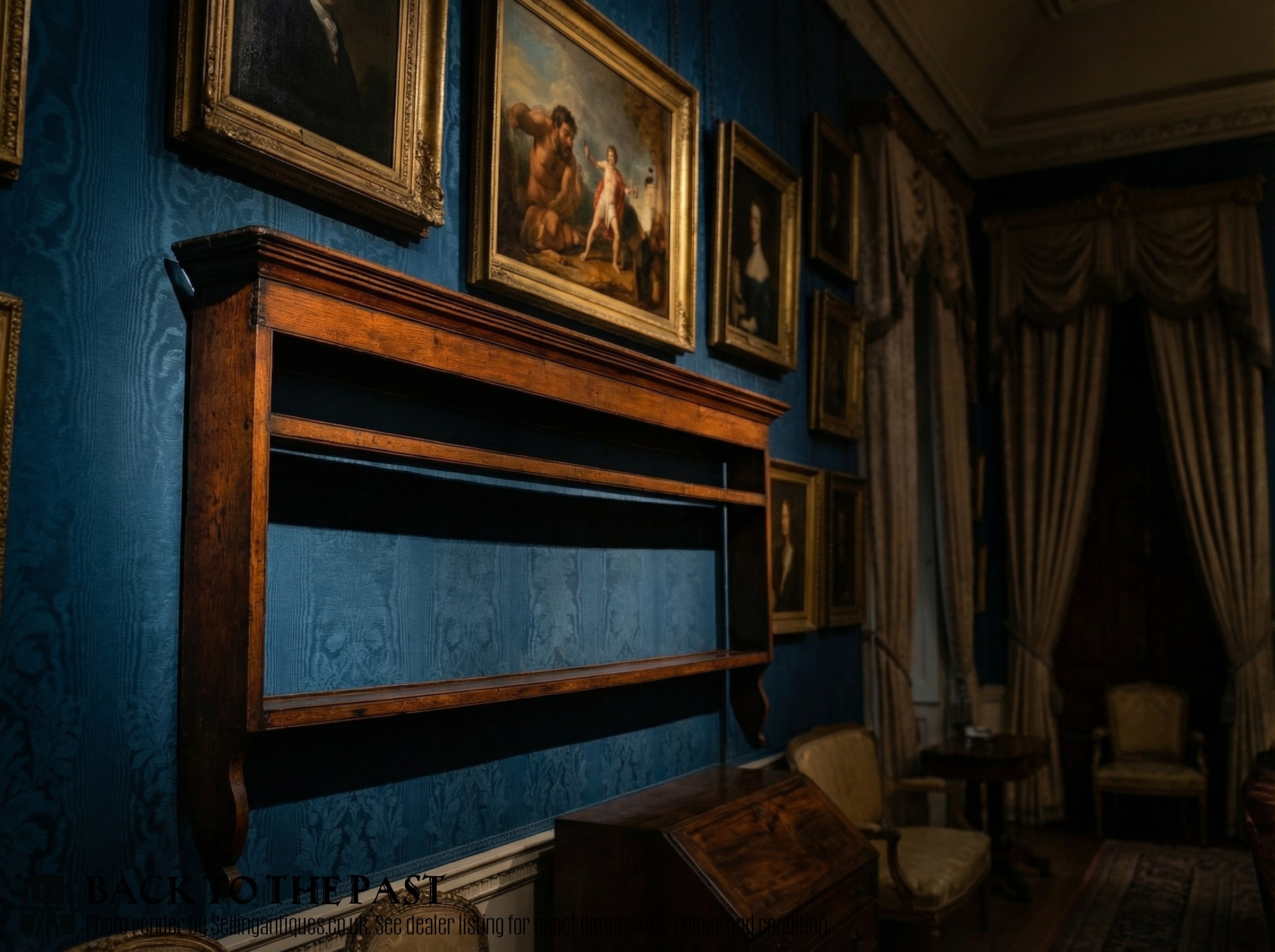
Vintage Kitchen Plate Rack
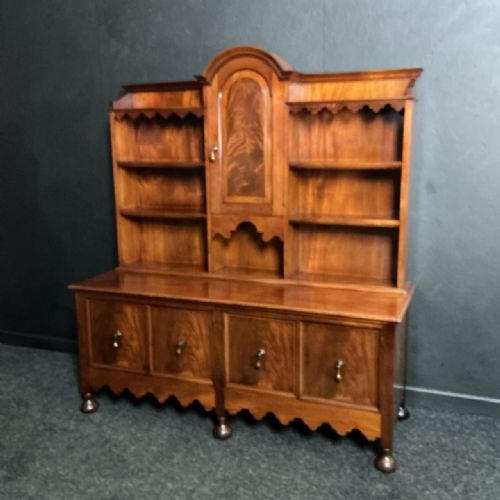
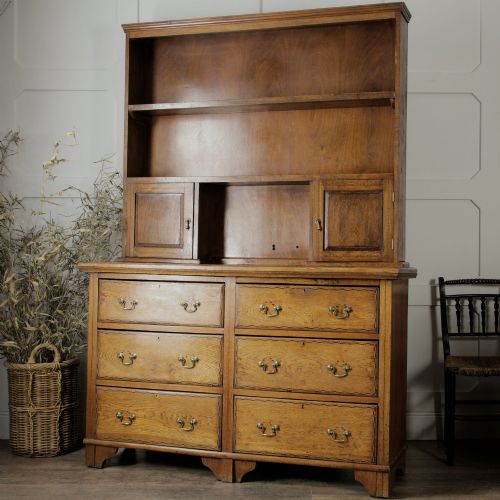
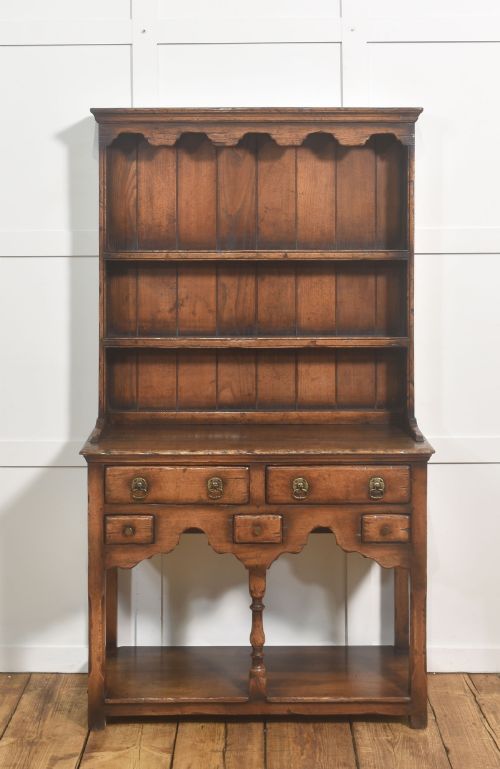
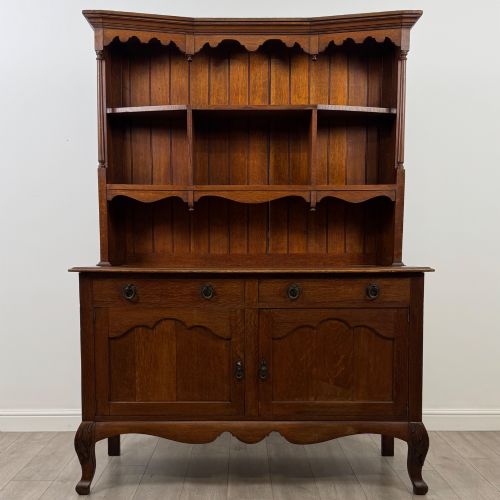
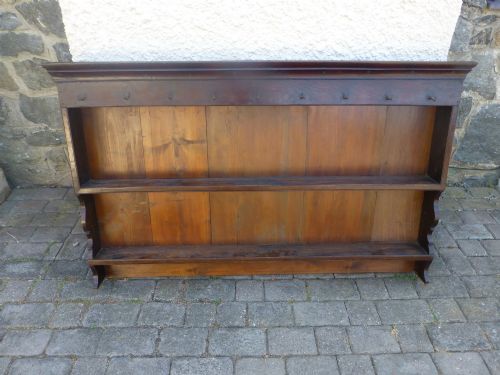
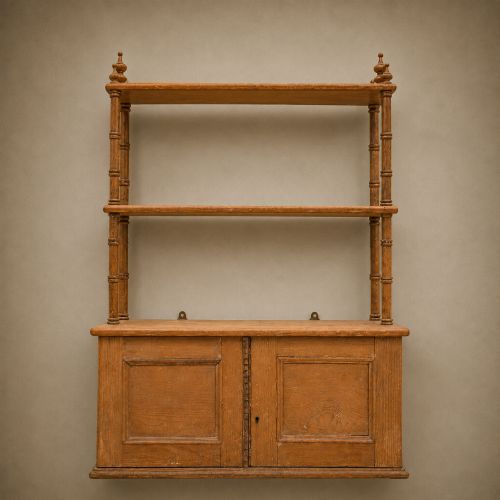
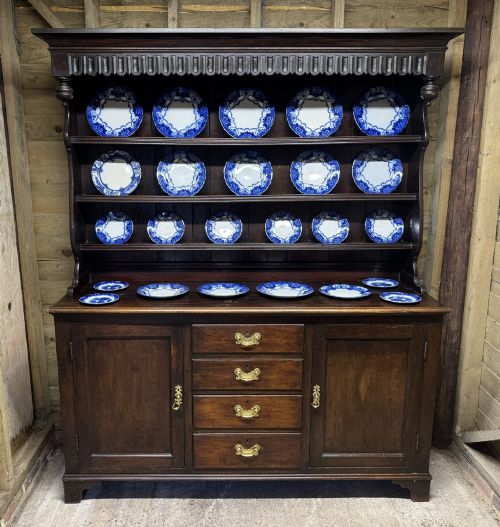
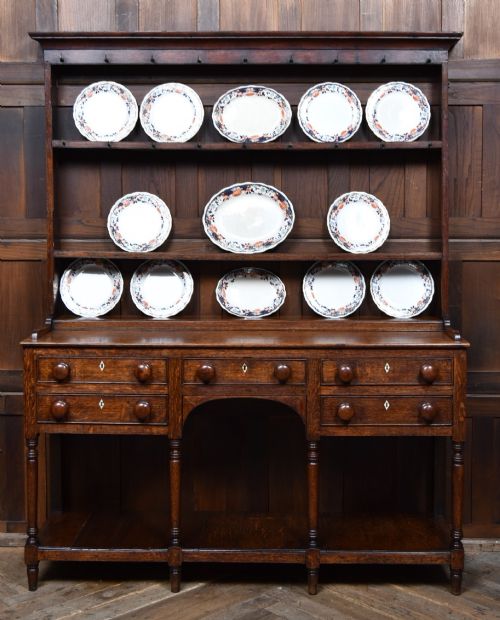
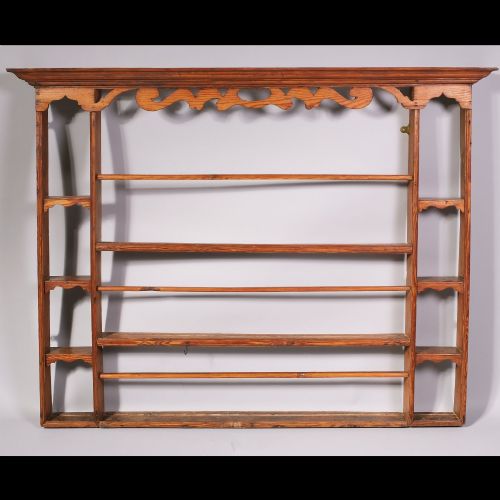
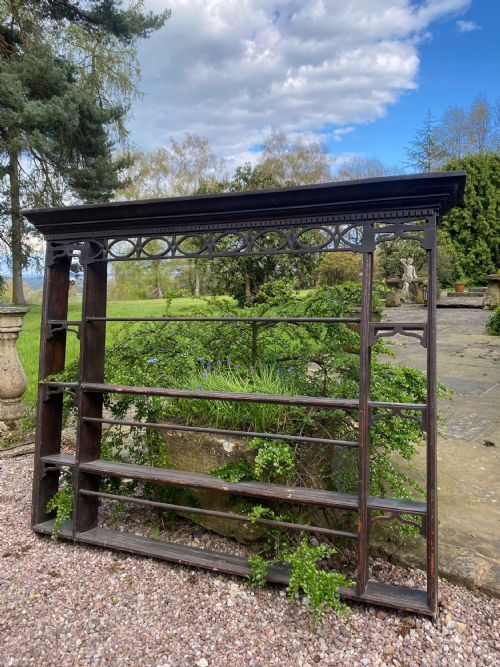
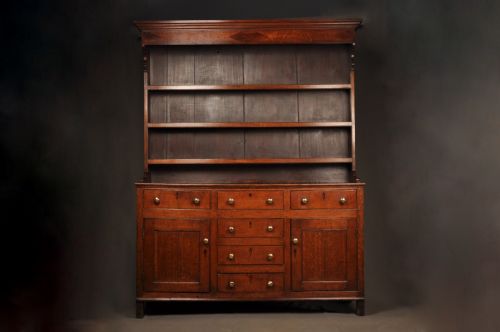
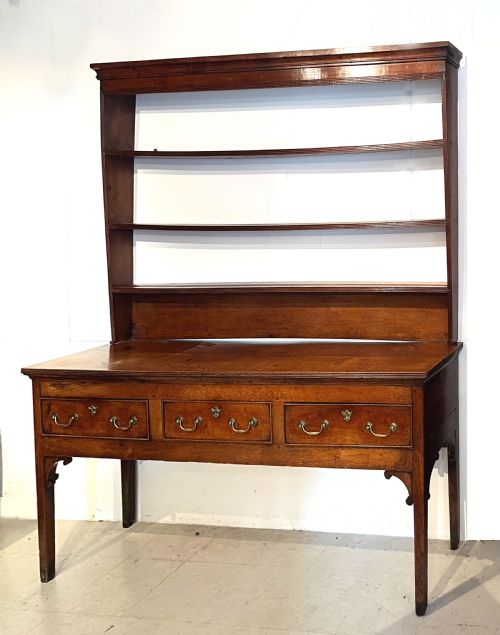
A vintage kitchen plate rack serves as both a storage solution and a display unit for ceramic tableware, appearing on this page in forms ranging from wall-mounted shelves to complete dressers with integrated racks. These pieces emerge predominantly from the eighteenth and nineteenth centuries, alongside early twentieth-century examples shaped by Edwardian and rustic farmhouse traditions.
The most frequent forms met here include oak and pine dressers with dedicated upper plate tiers, standalone wall shelves, and country plate racks. Stylistically, English country, Welsh country, and Georgian designs dominate the selection, bringing utilitarian functionality from domestic kitchens of the past straight into modern homes.
Originating in regional workshops and country houses, these racks reflect local cabinet-making habits rather than uniform factory production. Buyers searching this phrase encounter everything from small cottage wall racks to substantial Welsh dressers complete with pot boards and Delft rails.
How they were made
Cabinet-makers relied primarily on solid oak and pine, shaping timbers with hand tools to build sturdy frames capable of supporting heavy rows of ceramic plates. Backboards often consist of vertically laid pine planks, while structural elements and plate rails utilise harder oak or mahogany.
Surface finishes range from natural stripped wood showing deep grain patterns to painted wooden surfaces utilising historical colours like Pompeian Ash. Iron and brass brackets, hinges, or hooks occasionally provide structural reinforcement and hanging capability.
Listings on this page span the 18th century, 19th century, Edwardian period, and 1910, utilising oak, pine, mahogany, and painted wood.
What varies in quality
Quality rests in the integrity of the timber selection and the honesty of the construction, where seasoned solid oak boards outlast soft pine subject to heavy moisture and wear. The survival of original backboards, unaltered plate slats, and authentic surface patination elevates a piece far above later assembled or heavily restored examples.
Proportion and regional character dictate desirability, as country pieces displaying well-balanced drawer arrangements and subtle mouldings command greater attention. The crispness of hand-cut joints and the sympathetic retention of old paint or wax finishes separate everyday utilitarian boxes from superior vernacular furniture.
The Vintage Kitchen Plate Rack Glossary
- Delft plate rack
- A wall-mounted or dresser-integrated rack specifically designed with narrow wooden slats or grooved bases to display tin-glazed earthenware plates upright.
- Pot board
- A low slatted shelf fitted near the floor between the legs of a traditional Welsh dresser, originally intended for storing heavy metal pots and earthenware.
- Welsh dresser
- A large kitchen storage unit combining a base cupboard or drawer section with an open-backed multi-tiered plate rack superstructure.
- Arts and Crafts
- A design movement valuing hand-craftsmanship and simple vernacular forms over mass-produced ornamentation, frequently reflected in early twentieth-century oak furniture.
- Patina
- The deep surface sheen and mellow colour developed by aged wood through decades of daily use, cleaning, and waxing.
Vintage Kitchen Plate Rack: Frequently Asked Questions
How do I hang a wall plate rack safely?
Heavy timber racks require secure fixing directly into wall studs or masonry using appropriate heavy-duty brackets suited to the weight of the wood and dinnerware.
Distributing the load evenly across multiple fixing points ensures the antique frame remains stable against the wall under daily use.
Can these racks hold heavy modern dinner plates?
Most traditional plate racks accommodate standard ceramic plates comfortably within their vertical slats and retaining rails. Measuring the depth of the plate groove beforehand ensures thicker contemporary stoneware sits securely without slipping forward.
How should I clean antique oak and pine?
Dusting regularly with a dry lint-free cloth preserves the surface wax and prevents dirt accumulation in carved details or grain crevices. Applying a traditional beeswax sparingly once or twice a year feeds the dry timber without building up a sticky residue.
What is the difference between a dresser rack and wall shelves?
A dresser rack is typically designed to sit directly on top of a matching base unit or sideboard, though many survive independently. Wall shelves mount directly to vertical surfaces as standalone display units without lower support cabinetry.