
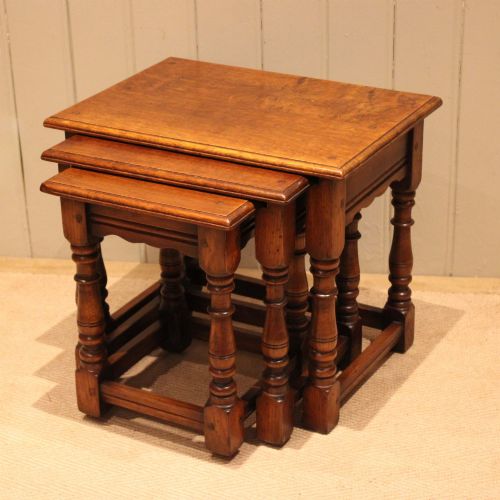
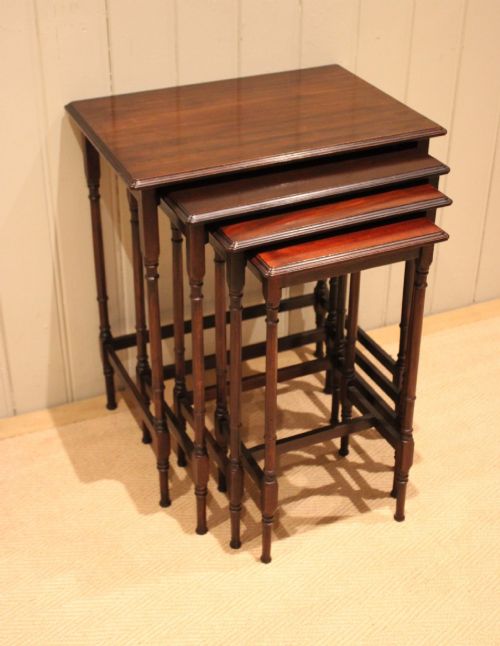
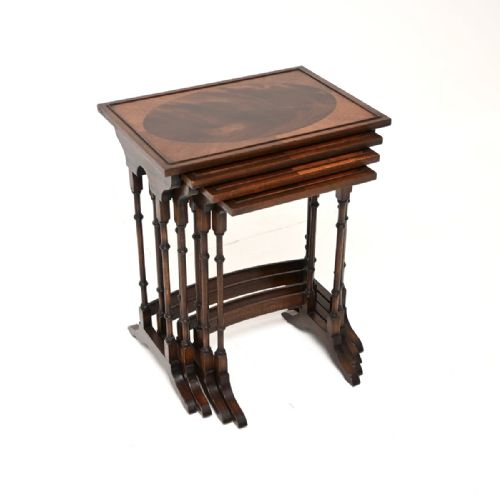
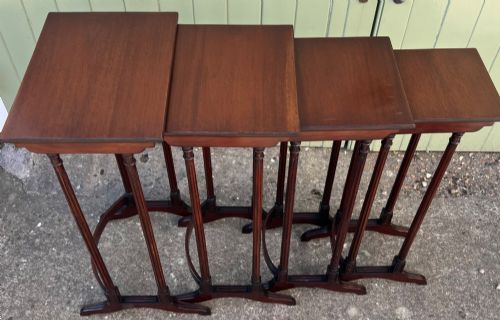




Traditional Nested Tables
Traditional nested tables bring together multiple surfaces that slide neatly into one footprint, offering practical tiers for daily use without crowding a room.
Traditional Nested Tables
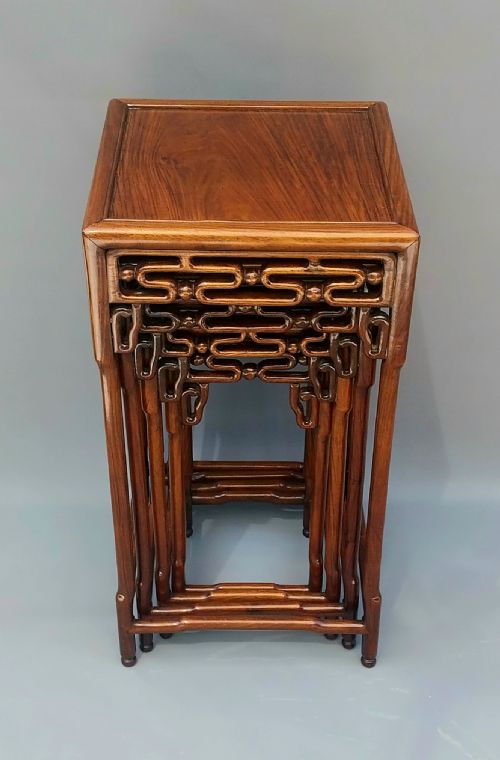
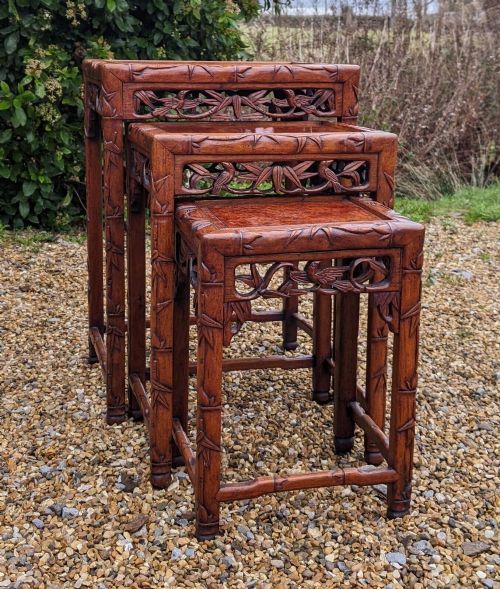
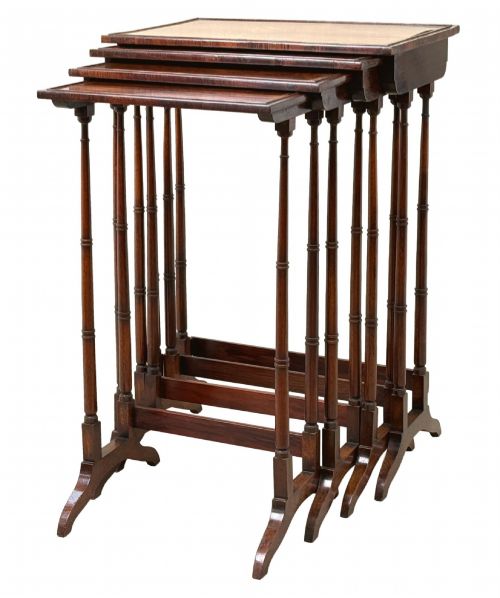
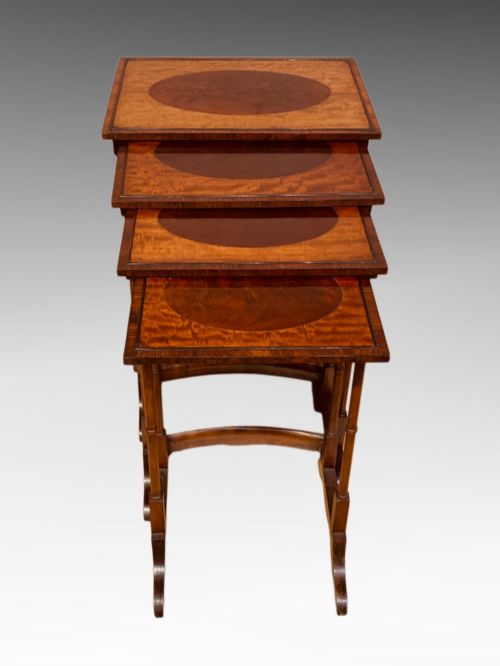
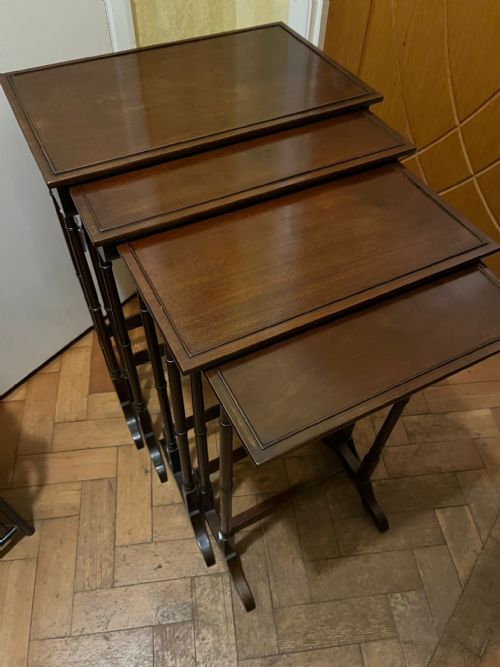
Traditional nested tables present sets of three or four graduated surfaces designed to slide one beneath another when not in use. These pieces appear in forms ranging from plain mahogany to elaborate Chinese export designs, distributed across periods spanning the nineteenth century through the 1930s.
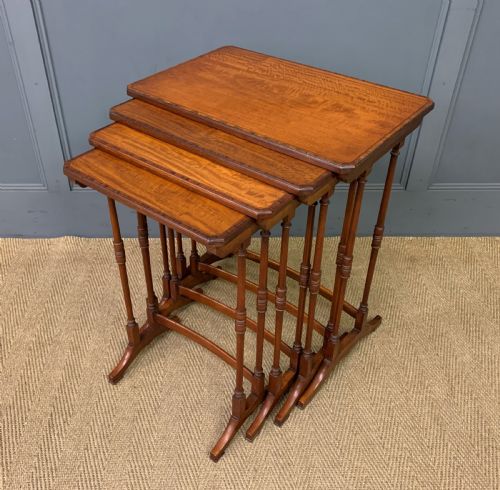
Edwardian examples in mahogany and walnut emerge most frequently on this page, often showing simple rectangular tops or inlaid decoration. Buyers encounter various configurations, including round and oval coffee table formats alongside traditional rectangular quartetto sets.
Materials and construction methods
Cabinetmakers constructed traditional nested tables using dense timbers such as mahogany, oak, walnut, rosewood, and exotic hardwoods. Workshops applied decorative techniques including satinwood inlay, parquetry, and veneer to enhance the visible grain of the wood.
Construction prioritized stability and precise scaling so each smaller table fit smoothly into the frame of the next. Skilled joinery allowed these multi-tiered sets to endure frequent sliding and daily use.
Assessing quality in nested sets
Superior sets display careful timber selection with matching grain patterns carried across all graduated surfaces. The depth of colour and precision of inlay work distinguish finer examples from standard production pieces.
Build quality reveals itself in the weight and proportion of the frames, ensuring the smallest table maintains structural integrity despite its slender dimensions. Finer pieces retain original surface finishes that highlight the natural figure of the hardwood.
The Traditional Nested Tables Glossary
- Quartetto
- A set of four matching tables designed to nest together. This term appears frequently in nineteenth-century descriptions of occasional tables.
- Inlay
- A decorative technique where contrasting woods or materials are set into the surface of the timber. Satinwood is commonly used for this purpose on Edwardian pieces.
- Parquetry
- A geometric mosaic of wood pieces used for decorative surfacing on table tops. This technique adds visual texture to the grain.
- Chinese Export
- Items produced in China specifically for Western markets, often featuring dense hardwoods like hongmu or huanghuali. These pieces combine traditional Eastern joinery with forms suited to European homes.
Traditional Nested Tables: Frequently Asked Questions
How were traditional nested tables used?
These sets served as versatile side surfaces in sitting rooms during the Victorian and Edwardian eras. Owners pulled out individual tiers to hold tea cups, books, or writing materials as guests arrived.
Once the gathering ended, the smaller tables slid back into the main frame to save floor space. This adaptable design made them popular in smaller drawing rooms and parlours.
How do I date a set of nested tables?
Dating relies on timber choice, construction methods, and stylistic details recorded across the periods. Victorian and nineteenth-century pieces often feature solid mahogany or rosewood with heavy, robust frames.
Edwardian and 1920s examples frequently incorporate lighter satinwood inlay or walnutveneers. Looking at the underside and interior joints helps confirm the period of manufacture.
What is a quartetto set?
A quartetto set consists of four tables that graduate in size to fit one beneath another. This nineteenth-century term comes from musical groupings of four.
These sets offer maximum flexibility because they provide four distinct surfaces while occupying the floor space of just one small table.
How do I care for antique nested tables?
Maintaining these tables involves keeping them away from direct sunlight and steady heat sources to protect the wood and veneer. Regular dusting with a soft, dry cloth preserves the finish.
Applying a traditional wax polish occasionally helps nourish hardwood surfaces like mahogany and walnut. Avoid placing hot or wet items directly on the antique timber.