



Georgian Quartetto Side Tables
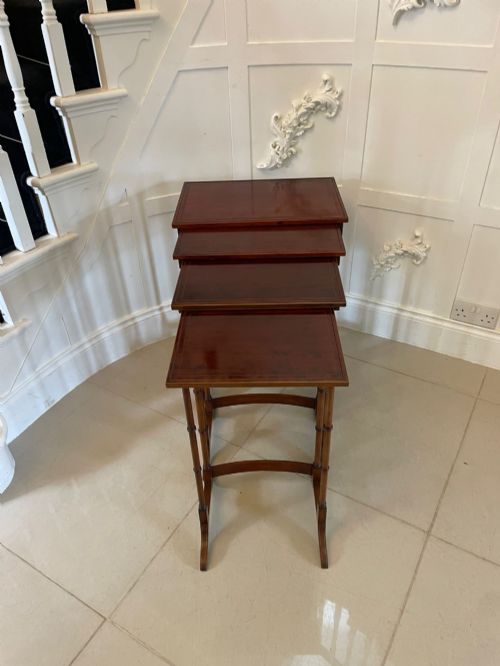
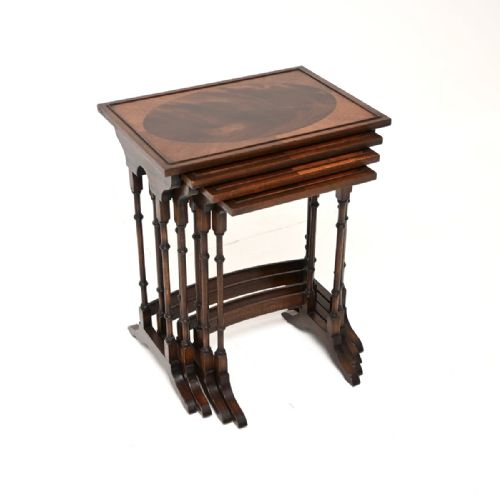
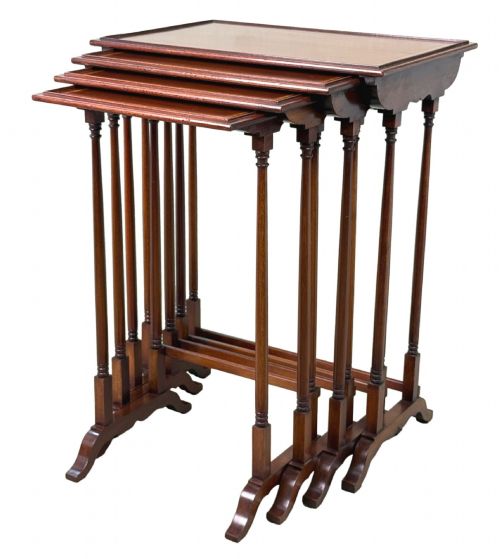
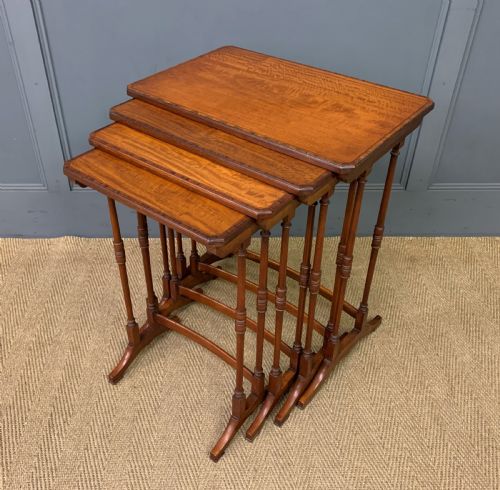
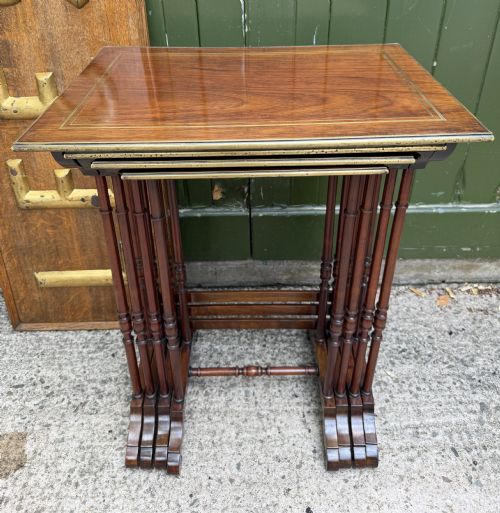
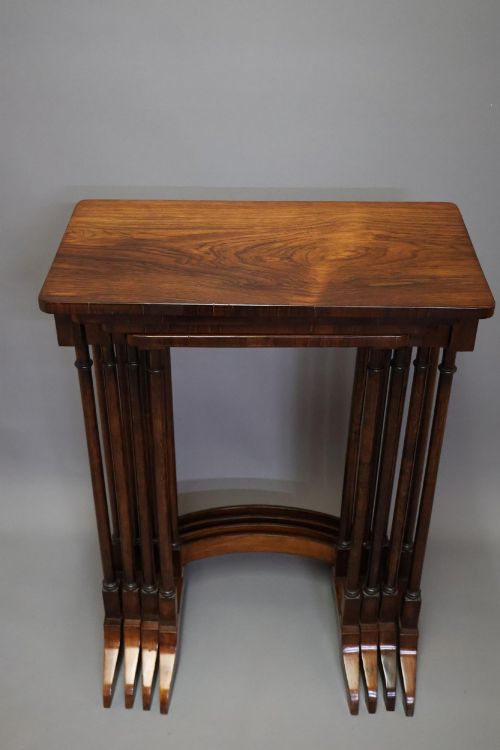
Georgian quartetto side tables are nesting sets designed to slide together neatly, offering flexible surface space without crowding a room.
Georgian Quartetto Side Tables
Georgian quartetto side tables appear here primarily as nests of four tables designed to graduate in size so the smaller tables slide completely beneath the largest one. The selection includes examples from the Regency and Georgian periods alongside later Edwardian and Victorian revivals.
These pieces function as versatile occasional furniture, moving easily around a room to serve tea or hold lamps before stacking into a compact single footprint. Most examples are encountered in mahogany or rosewood, sometimes taking the form of a nest of three or four tables.
How they were made
Cabinetmakers constructed these tables using solid timber and fine veneer, frequently selecting mahogany and rosewood for their rich grain and durability. Artisans shaped the wood to form graduated frames supported by slender legs.
Decoration often involved intricate boxwood inlay or brass inlay set directly into the wood surfaces. These contrasting materials highlight the outlines of the tops and frame the structural joints.
Listings for georgian quartetto side tables span the Georgian and Regency eras alongside Victorian, Edwardian, and early twentieth-century periods.
What varies in quality
Quality rests on the precision of the nesting mechanism and the stability of the frames when the tables stand independently. Superior examples maintain tight joints and smooth sliding action across all four tiers without excessive wobble.
The choice of timber and the execution of the inlay also distinguish finer pieces from simpler workshops. Selected grain patterns and crisp, even inlay work elevate the visual presence of the set.
Gillows
The Georgian Quartetto Side Tables Glossary
- Quartetto
- A set of four graduated tables designed to nest together. The term originates from musical sets of four.
- Nest of tables
- A group of several small tables built in progressive sizes to fit one beneath another. This arrangement saves floor space when the tables are not in use.
- Inlay
- A technique where contrasting materials such as boxwood or brass are inserted into recesses carved in the wood. This creates decorative patterns on the table tops.
- Veneer
- A thin layer of finely figured wood applied over a secondary timber base. It allows makers to display decorative grain patterns efficiently.
Georgian Quartetto Side Tables: Frequently Asked Questions
How do you use a nest of tables?
These tables separate to provide individual surfaces for drinks, books, or lamps across a room during gatherings. When the event concludes, they slide back together into a single compact stack.
This arrangement allows a household to maintain open floor space while keeping multiple small surfaces immediately accessible for daily needs.
What is the difference between Georgian and Regency tables?
Georgian furniture generally emphasises traditional proportions and mahogany construction with carved details. Regency pieces often incorporate specific classical revival motifs and exotic woods like rosewood.
Both styles appear within the quartetto format, though Regency examples frequently feature distinctive brass inlay work.
Are all quartetto tables made of four pieces?
While the name traditionally denotes a set of four graduating tables, some surviving sets consist of three tables. The number depends on the specific workshop design and the period of manufacture.
Most listings for this furniture type present the standard four-tier arrangement.
How do you identify Edwardian reproductions?
Edwardian interpretations from around nineteen hundred often combine mahogany with satinwood inlay and lighter framing structures. They echo earlier Georgian and Sheraton styles while reflecting the decorative preferences of the early twentieth century.
Examination of the timber backing and interior construction typically helps distinguish these later revivals from older pieces.