


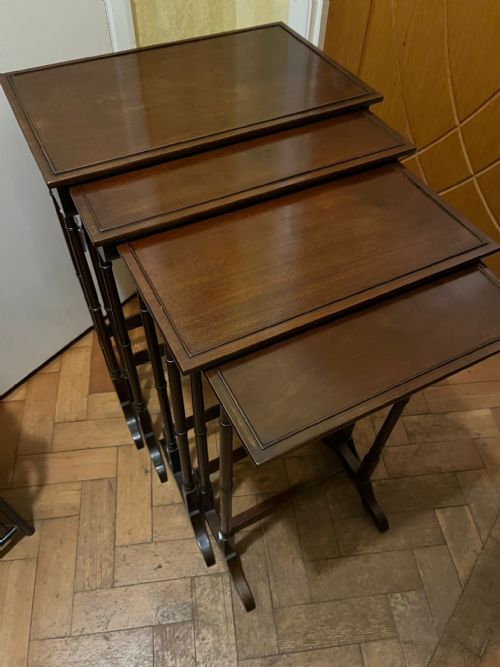

Traditional Nested Side Tables
Traditional nested side tables offer practical surface space that tucks neatly away when not in use.
Traditional Nested Side Tables
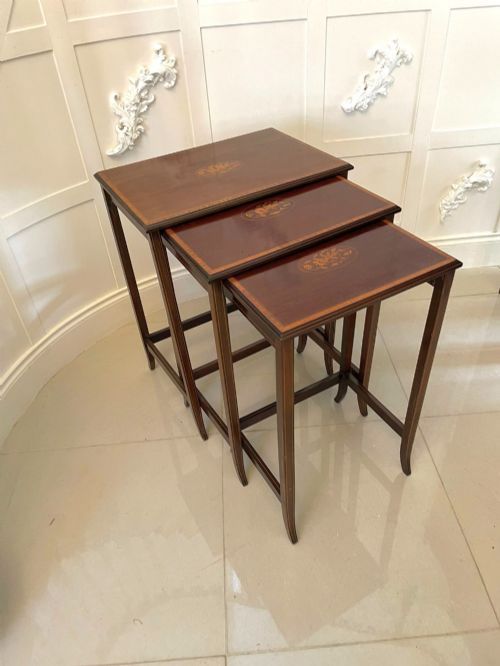
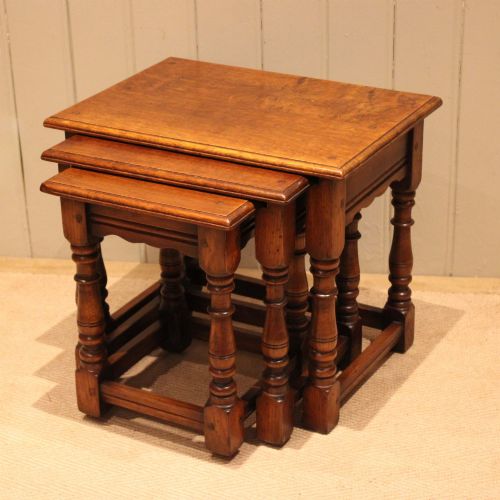
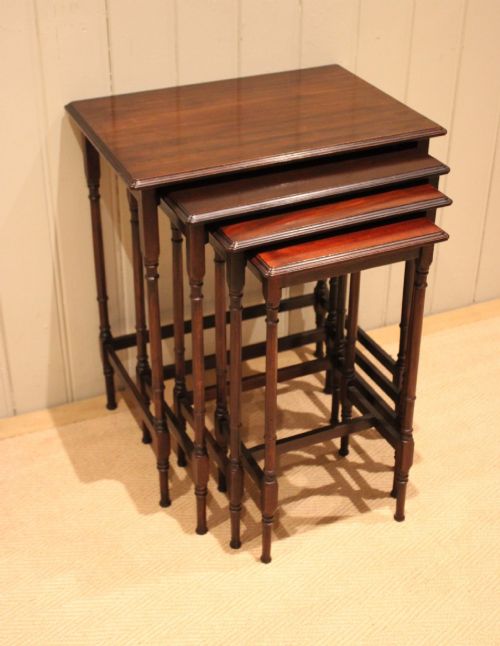
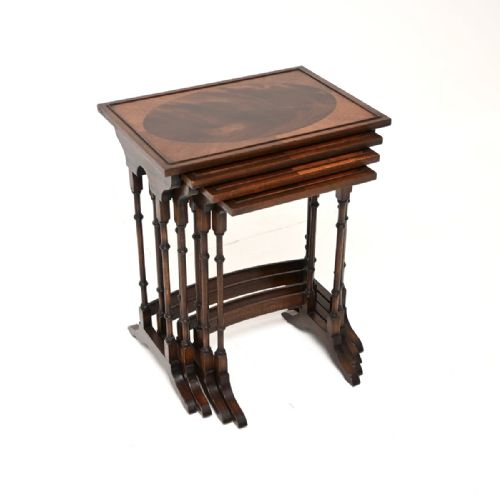
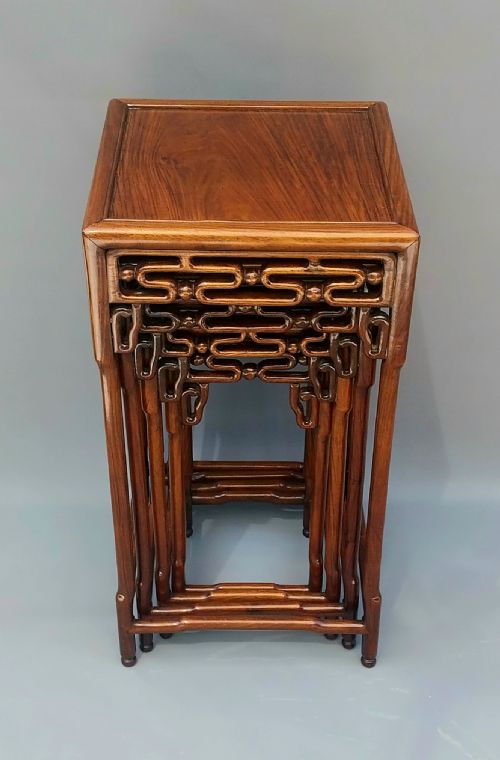
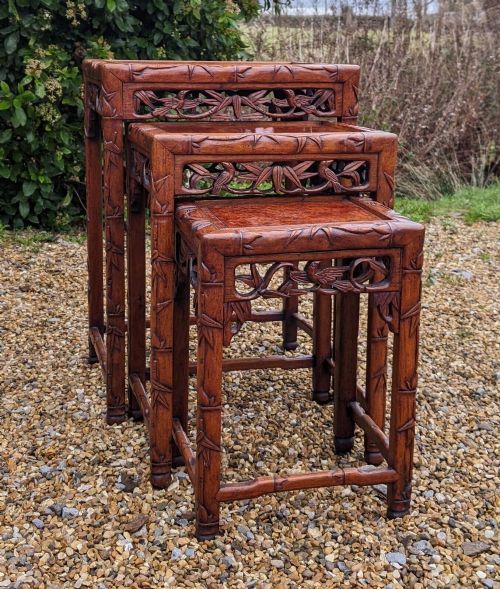
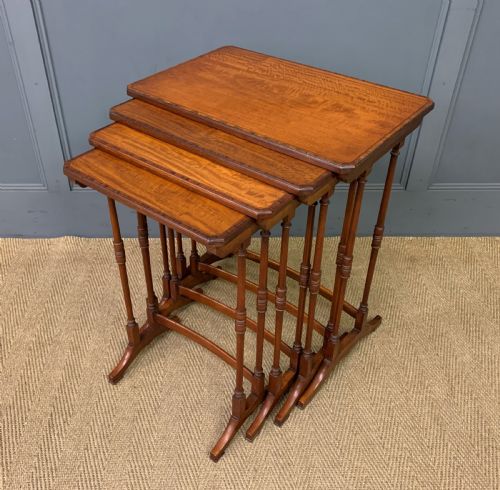
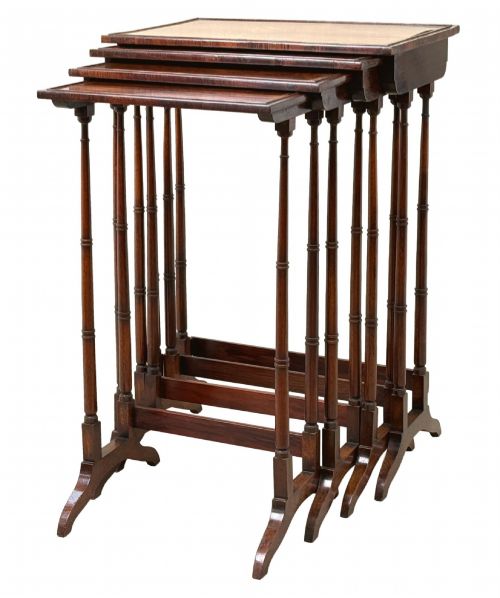
The selection ranges from simple Edwardian and 1920s oak or mahogany versions to intricate nineteenth-century Chinese hardwood and rosewood examples. Most pieces on this page follow classic forms originating in the Victorian, Edwardian, and early twentieth-century periods.
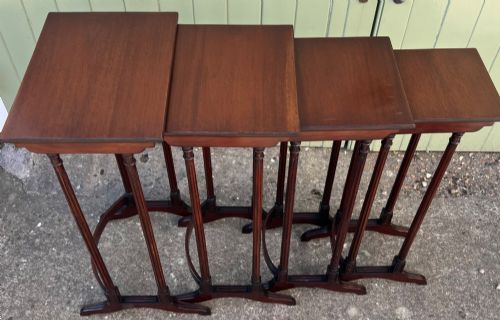
Makers produced these sets primarily as versatile occasional furniture for drawing rooms and parlours where space required flexible placement. Sets typically include tables that graduate evenly in size so each smaller piece slides entirely under the next.
How they were made
Cabinetmakers constructed these tables using solid timbers and decorative veneers such as mahogany, walnut, oak, satinwood, and rosewood. Workshops applied fine grain patterns and surface inlays to enhance the visual appeal of individual tabletops.
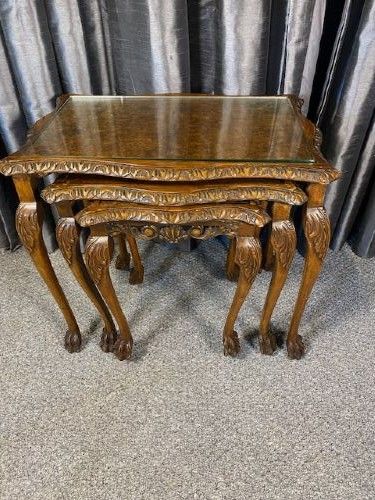
Construction methods involved traditional joinery to ensure the frames remained sturdy despite the tight clearances required for nesting. Chinese export pieces utilised dense hardwoods like huanghuali and hongmu, often featuring carved details or recessed panels.
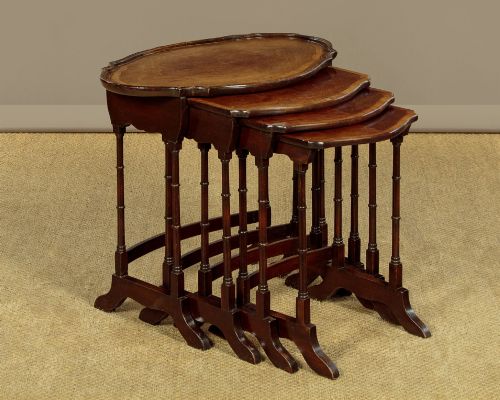
Some sets hide a fourth tiny table so small it feels like a trick played by a Victorian carpenter with a sense of humour.
What varies in quality
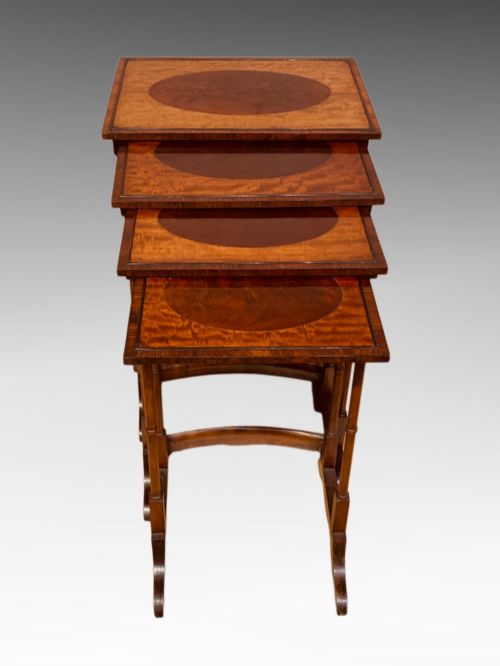
Quality rests upon the selection of timber and the precision of the joinery that allows the tables to slide smoothly without binding. Superior examples display carefully matched wood grains and subtle string inlay rather than plain surfaces.
The density and weight of the chosen wood distinguish finer nineteenth-century quartetto sets from standard twentieth-century production. Construction integrity in the legs and frame joints ensures the smaller tables remain stable during daily use.
The Traditional Nested Side Tables Glossary
- Quartetto
- A matched set of four occasional tables designed to nest together. This term appears frequently in nineteenth-century descriptions of nested furniture.
- Inlay
- A technique where pieces of contrasting wood or satinwood are inserted into the primary timber surface to create decorative patterns. It adds visual complexity to the tabletop.
- Chinoiserie
- European decorative style reflecting Chinese artistic motifs and techniques. Often seen on lacquer or painted occasional tables from the early twentieth century.
- Graduated
- Describing tables built in progressive sizes so each smaller unit fits beneath the preceding one. This scaling is essential for proper nesting functionality.
- Barley twist
- A carved spiral decorative motif applied to table legs. This turning style is common on early twentieth-century oak sets.
Traditional Nested Side Tables: Frequently Asked Questions
How were nested tables used historically?
Historically, people deployed these tables in drawing rooms and sitting rooms as versatile auxiliary furniture. Servants or hosts could easily pull out the smaller tables when guests required places for cups or needlework.
Once the gathering concluded, the tables slid back together into a single stack against a wall or beside a chair. This space-saving utility made them popular in formal Victorian and Edwardian homes.
How do I date a nested table set?
Dating relies on examining the timber, construction methods, and stylistic details present in the set. Victorian and nineteenth-century pieces often feature heavier solid hardwoods and hand-cut joints, while 1920s examples frequently incorporate oak or lighter walnut veneers.
Design influences such as Edwardian inlay work or Chinese export carvings also point toward specific manufacturing eras. Comparing the overall weight and finish helps confirm the period of origin.
Are Chinese export nested tables different?
Chinese export nested tables generally utilise dense tropical hardwoods like hongmu, huanghuali, or general oriental hardwood. These nineteenth-century sets often showcase exceptional grain patterns and precise corner joinery without relying on European veneer techniques.
Many of these Asian market pieces feature graduated sizing across four tables designed specifically for export to Western buyers. Their construction emphasises natural wood figure and sturdy frame proportions.
How should I live with nested tables?
Living with these tables involves utilising their modular nature to adapt your room layout as needed. You can separate the pieces around a seating area when entertaining or keep them stacked to preserve floor space.
Protect the timber surfaces from excessive moisture and direct sunlight to preserve the original polish and inlay work. Regular gentle dusting keeps the nested frames sliding smoothly within one another.