


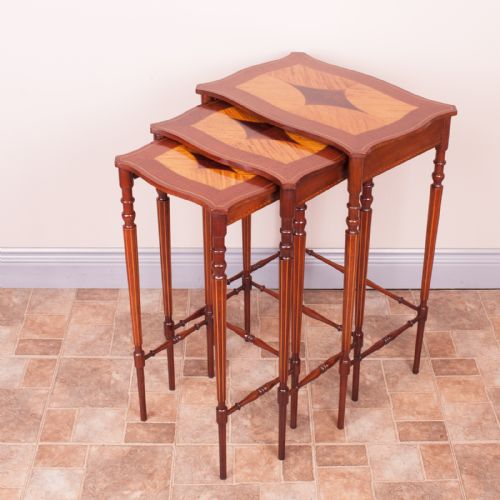


Traditional Nested End Tables
Traditional nested end tables offer clever tiered convenience, fitting neatly together when floor space matters and separating easily for serving.
Traditional Nested End Tables
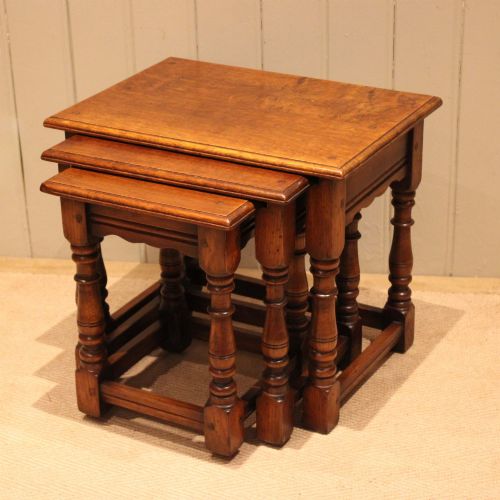
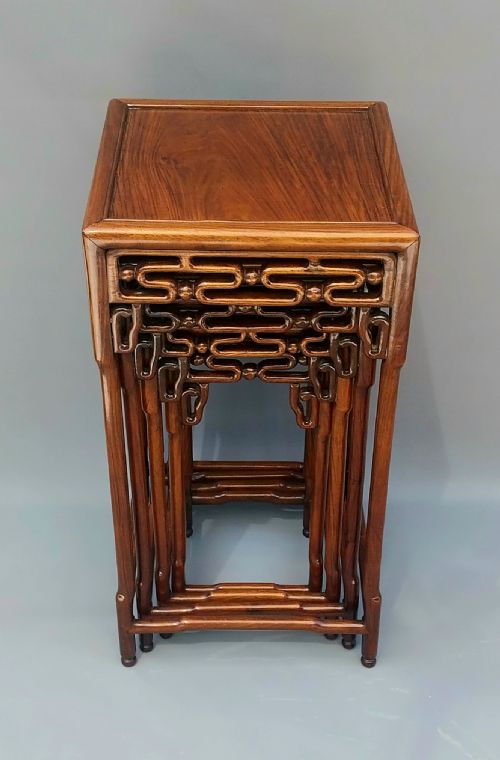
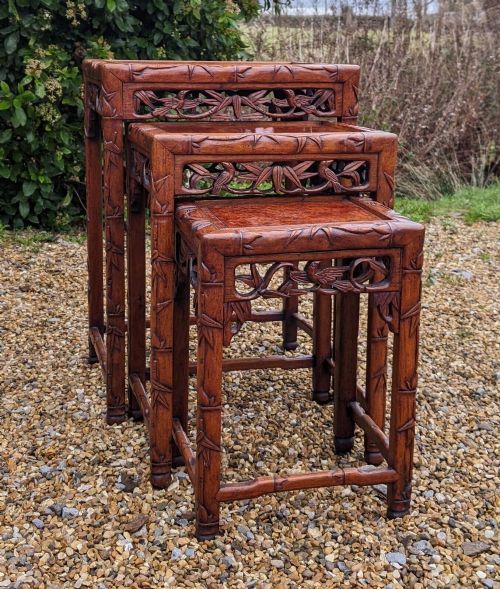
Traditional nested end tables arrive as sets of three or four graduated surfaces designed to slide one beneath the other. Buyers browsing traditional nested end tables encounter forms ranging from Edwardian parlour sets to Chinese Export rosewood designs.
The selection encompasses English country oak, walnut, and inlaid mahogany alongside oriental hardwood and huanghuali wood. Most examples appear from the Victorian, Edwardian, and early twentieth-century periods, as well as the nineteenth century.
How they were made
Cabinetmakers utilised dense timbers including mahogany, walnut, oak, and exotic rosewood to build these multi-tiered sets. Grain selection mattered greatly, particularly on top surfaces where figured veneers and parquetry showed off the timber.
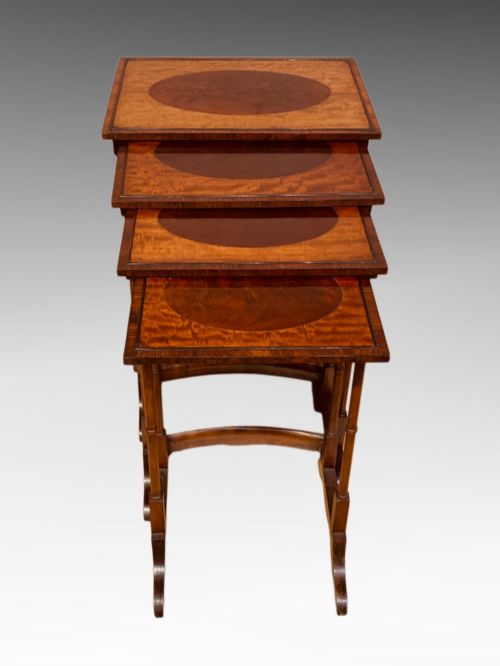
Inlaid decoration in satinwood or contrasting woods often accented the edges, while regional techniques spanned from English cross-banding to Chinese joinery with carved detailing.
Some nineteenth-century makers built quartetto sets so tightly toleranced that sliding the smallest table created a satisfying gentle whoosh of displaced air.
What varies in quality
Quality rests in the precision of the frame junctions and the smoothness with which each smaller table slides into its neighbour. Sets that maintain square alignment without sagging timber demonstrate superior original construction.
The choice of timber grade and depth of grain figure also separate standard utility items from finer parlour pieces. Richness of natural colour and crispness of inlaid or carved ornamentation elevate specific examples.
The Traditional Nested End Tables Glossary
- Quartetto
- A matching set of four nested tables designed to slide together into the footprint of the largest one.
- Inlay
- Ornamental wood, satinwood, or contrasting material set flush into the surface of the primary timber to create decorative patterns.
- Parquetry
- Geometric mosaic woodwork arranged in regular patterns, frequently seen on the top surfaces of occasional tables.
- Hongmu
- A traditional Chinese term denoting dense red or dark hardwoods utilised in fine historic furniture manufacture.
Traditional Nested End Tables: Frequently Asked Questions
What are traditional nested end tables?
Traditional nested end tables are sets of graduated tables designed to stack completely underneath one another to save floor space.
They provide multiple surfaces that can be pulled out independently when needed for tea, drinks, or books.
How were they used historically?
These sets served domestic drawing rooms and parlours where flexible surface space proved essential for entertaining guests.
Servants or hosts could deploy the smaller tables across a room as required and tuck them away neatly afterwards.
How do I identify Edwardian examples?
Edwardian versions often feature lighter timbers such as mahogany enhanced with delicate satinwood inlay or stringing.
They reflect the refined, space-conscious interior fashions of the early twentieth century.
What materials are common?
Mahogany, walnut, and oak dominate English examples, while Chinese export pieces utilise dense rosewood, huanghuali, and oriental hardwoods.
Selection depends heavily on the geographic origin and stylistic period of the specific set.
How do Chinese export sets differ?
Chinese export sets frequently consist of four pieces built from heavy rosewood or huanghuali with distinct joinery.
They often emphasise natural grain beauty and carved detailing rather than British inlay patterns.