


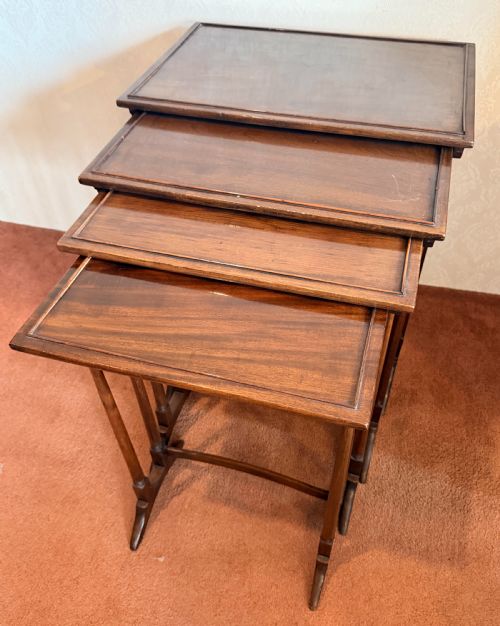


Set of Four Side Tables
A set of four side tables gives you a cascading stack of four surfaces that tuck neatly away when floor space matters.
Set of Four Side Tables
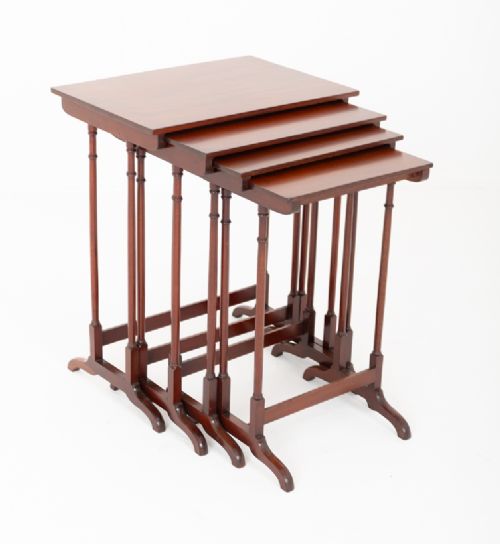
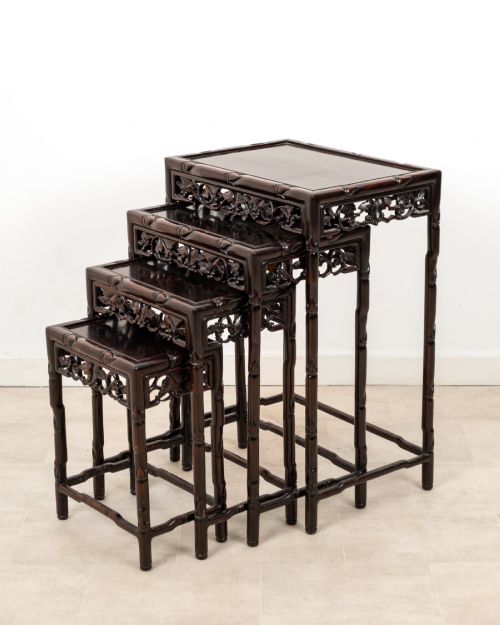
When you search for a set of four side tables, you encounter graduated nests of four surfaces designed to slide beneath one another in a strict descending scale. These pieces appear primarily as Edwardian and nineteenth-century designs, alongside Art Deco, Regency, and Chinese hardwood examples.
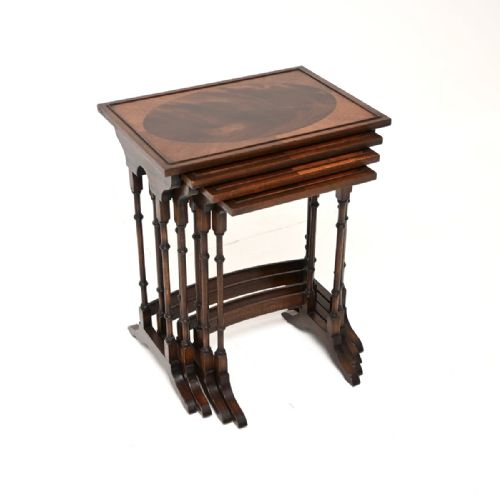
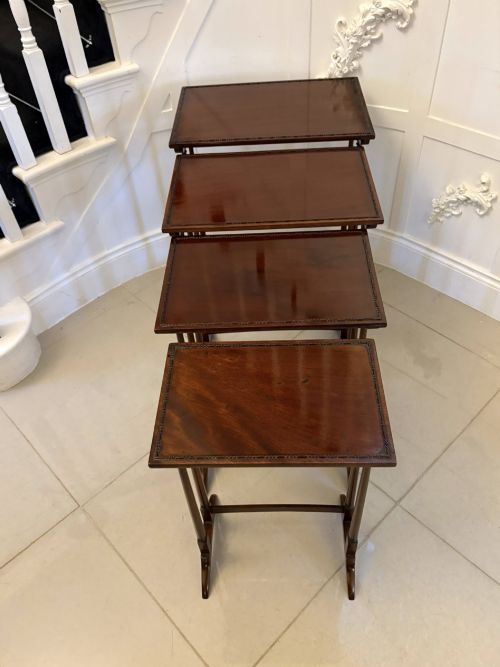
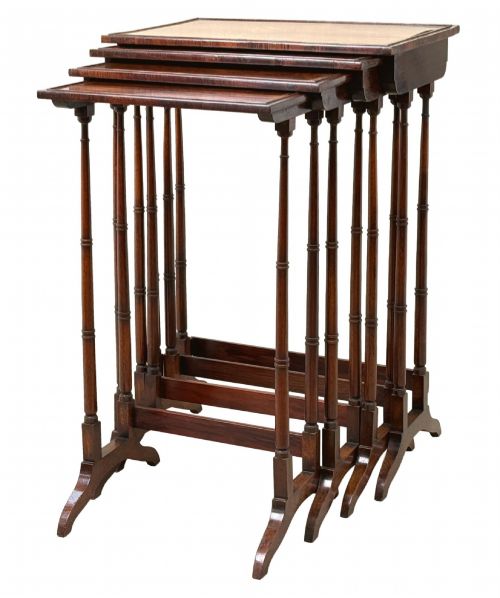
The format relies on individual tables scaling down in height and width so the smallest rests entirely inside the next, culminating in the largest frame at the back or top of the stack. Mahogany dominates the selection, accompanied by walnut, rosewood, satinwood, and oriental hardwoods.
Makers produced these configurations for flexible entertaining, allowing hosts to distribute independent surfaces around a room and consolidate them into a single footprint afterward. The form spans plain timber frames to inlaid satinwood crossbanding and decorated lacquer surfaces.
Materials and construction methods
Cabinet makers utilised solid timbers and veneer over hardwood carcases, employing mahogany, walnut, and rosewood for strength across slender legs and thin table tops. Timber selection ensured the stack remained light enough to lift yet stable when freestanding.
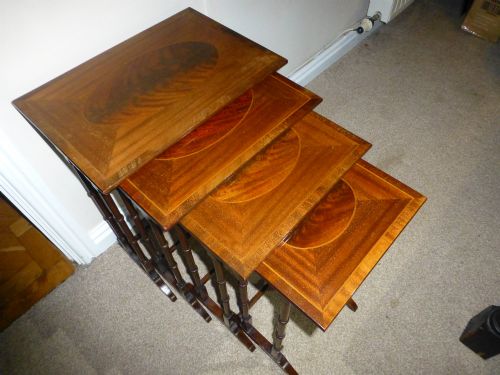
Inlay work relied on contrasting strips of satinwood and boxwood, set into channels routed along table edges or geometric borders. Chinese and oriental pieces introduced carved hardwood frames and decorated lacquer panels requiring specialised joinery to maintain structural integrity under frequent sliding.
Leg construction varied from square tapered supports to slender turned columns and sabre profiles, depending on the stylistic period. Joints required precise tolerances so each of the four tables cleared the next without binding against the interior frame.
Listings span multiple eras from nineteenth-century pieces to Edwardian items, featuring mahogany, walnut, satinwood, and oriental hardwoods.
Distinctions in quality
Quality rests on the crispness of the graduated sizing and the precision with which the four tables nest into a singular unit. Superior examples maintain exact clearance without excessive lateral play, ensuring the legs slide parallel to one another.
The choice of timber grain and secondary woods dictates the visual standard, where figured mahogany or matched walnut veneer elevates the piece above plain utility items. Hand-cut inlay work and refined tapering on the legs separate standard production from accomplished cabinet work.
The Set of Four Side Tables Glossary
- Quartetto
- A traditional term for a set of four stacking tables designed to nest together. The name derives from the Italian musical term for a group of four.
- Crossbanding
- A decorative border of veneer where the grain runs perpendicular to the surrounding surface. Cabinet makers applied this technique to frame table tops and accentuate geometric shapes.
- Graduated
- Describing tables built in diminishing scales so smaller items fit inside larger ones. This stepped arrangement allows the complete set to occupy the floor space of a single table.
- Satinwood
- A pale, lustrous timber utilised for contrasting inlay work and stringing. Its bright yellow hue provides distinct visual separation against darker woods like mahogany or rosewood.
- Chinoiserie
- European decorative styles reflecting Chinese artistic motifs, often rendered in lacquer or painted decoration. These finishes appear on specific imported or influenced occasional tables.
Set of Four Side Tables: Frequently Asked Questions
How were a set of four side tables used historically?
These tables served as versatile occasional furniture in drawing rooms and parlours during the nineteenth and early twentieth centuries. Hosts separated the four surfaces to hold tea cups, books, or lamps across different seating areas.
Once the gathering concluded, the nested arrangement allowed the complete set to slide back into a compact single footprint against a wall or beside a chair.
How do I tell Edwardian nests from nineteenth century ones?
Edwardian examples typically exhibit lighter mahogany frames with delicate satinwood stringing and slender square tapered legs. They reflect the refined, space-saving domestic requirements of the early twentieth century.
Nineteenth century pieces often display heavier timber scantlings, deeper rosewood or mahogany tones, and more robust structural framing reflecting earlier cabinet making traditions.
Can I use these tables separately in different rooms?
Each table functions as an independent surface and works effectively when distributed across a room or placed beside separate chairs. The graduated heights mean individual tables suit different seating positions.
Keeping them apart alters the visual impact, as the primary appeal of a nest lies in the stacked sculptural form when assembled together.
What is the difference between quartetto tables and standard nests?
Quartetto is simply the period term specifically denoting a set of exactly four graduated stacking tables. While modern terminology often uses nest of tables as a catch-all, quartetto specifically identifies the four-tier format.
Both terms describe the same cascading mechanical arrangement designed to save floor space.