



Traditional Nautical Seascape Painting
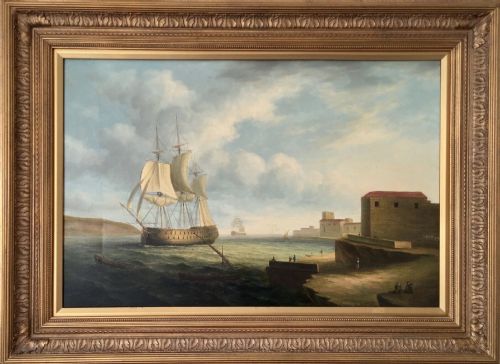
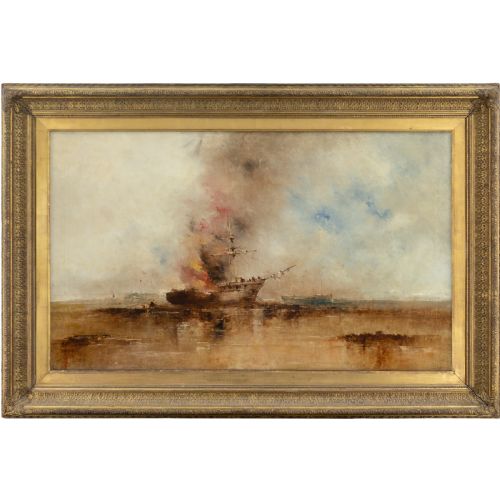
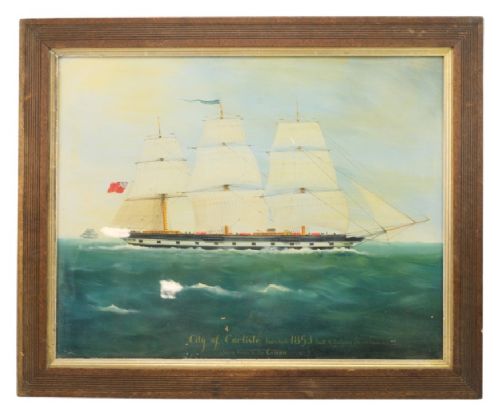
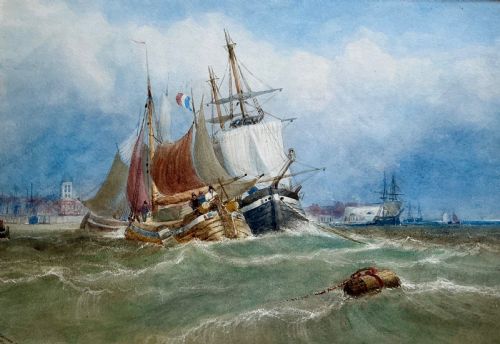
A traditional nautical seascape painting captures the drama of the open water, showing historic vessels, coastal harbours and turbulent sea battles.
Traditional Nautical Seascape Painting
Traditional nautical seascape painting spans works depicting historic naval battles, merchant shipping, lighthouses and coastal fishing boats. A buyer exploring this genre encounters compositions ranging from calm moonlight harbour scenes to turbulent channel crossings and shipwrecks.
The pieces available originate primarily across the nineteenth and twentieth centuries, including Victorian marine art, early twentieth-century interpretations and mid-century Cornish and Brixham harbour views. Oil on canvas and board predominate, alongside finely detailed watercolours.
Subjects often record specific vessels, such as three-masted schooners, galleons and steamships, anchored off harbours or navigating choppy seas. These artworks function simultaneously as historical maritime records and atmospheric decorative pieces.
How they were made
Artists utilised oil paint and watercolour applied to prepared canvas, wood panels, board and paper. Canvas supports frequently received a priming layer before the application of oil paint, allowing for rich impasto textures in rendering churning waves.
Frames play a significant role in the presentation of these works, with many pieces housed in original gilt wood, gilded wood or oak frames finished with gold leaf. Hand-enamelled polychrome frames occasionally encase delicate watercolours.
Listings feature works across the nineteenth and twentieth centuries, including Victorian maritime art and mid-century harbour scenes.
What varies in quality
The strength of a composition rests on the artist's command of light, shadow and atmospheric perspective over water. Superior works convey the palpable weight of a hull in heavy seas and the specific riggings of named vessels with technical precision.
Handling of the medium distinguishes standard decorative paintings from masterly fine art. Finer examples display subtle gradations in sky and swell, whereas lesser pieces rely on formulaic brushwork for waves and clouds.
James Hardy·William McAlpine·Henry Barlow Carter·George SHAW·Hendrik Willebrord Jansen·John Douglas Perrett·Dion Pears·George Henry Knight·Marie-Edouard Adam·john callow·Ebeneezer Colls·Hubert Thornley·William Edward Webb·Micheal Matthews·Pieter Cornelis Dommersen·Edward Fletcher·James Aitken·Charles Martin Powell
The Traditional Nautical Seascape Painting Glossary
- Marine art
- Artwork that depicts or draws its main inspiration from the sea. This genre encompasses naval vessels, coastal scenes and maritime shipping.
- Gilt wood
- Wood carved and coated with a thin layer of gold leaf or metallic gilt. It provides a traditional ornamental border for nineteenth-century canvases.
- Impasto
- Paint applied thickly to a canvas, standing out in relief from the surface. Artists use this technique to render the churning crests of waves and white water.
- Barque
- A sailing rig with three or more masts having the fore- and main-masts square-rigged and the mizzen-mast fore-and-aft rigged. These commercial vessels frequently feature in nineteenth-century maritime art.
- Watercolour painting
- Artworks created using water-soluble pigments on paper supports. They offer translucent washes ideal for calm coastal atmospheres.
Traditional Nautical Seascape Painting: Frequently Asked Questions
What periods do these paintings date from?
The available artworks span the nineteenth and twentieth centuries, with a strong representation of Victorian marine art and works from the early nineteen-hundreds.
Examples stretch from eighteen-hundred depictions of naval vessels to mid-twentieth-century harbour scenes painted in nineteen-sixty.
How were these marine paintings constructed?
Artists primarily employed oil paint on canvas, wood panel or board, alongside watercolours on paper. Many retain their period frames constructed from gilt wood or oak.
Techniques range from smooth, blended washes for calm river scenes to thick impasto applications capturing stormy channel waters.
How do I choose between oil and watercolour?
Oil paintings on canvas or board generally offer deeper colour saturation and textured brushwork suited to dramatic, stormy seas and large naval engagements.
Watercolour paintings on paper provide lighter, more luminous depictions of coastal harbours and calmer shipping waters, usually displayed behind glass.
How should I hang a maritime painting?
These works suit study walls, living rooms or hallways where traditional wooden furniture complements the period aesthetic. Ensure placement avoids direct sunlight to protect pigments and nineteenth-century gilt frames.
Pairing pieces by subject matter, such as grouping fishing trawlers with coastal lighthouses, creates a cohesive historical display.