
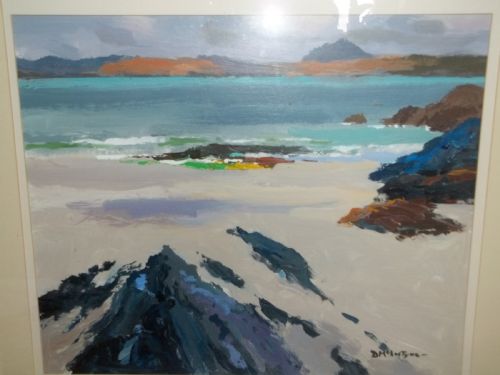


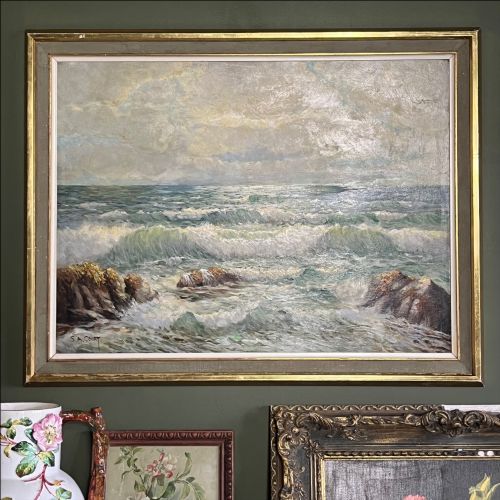
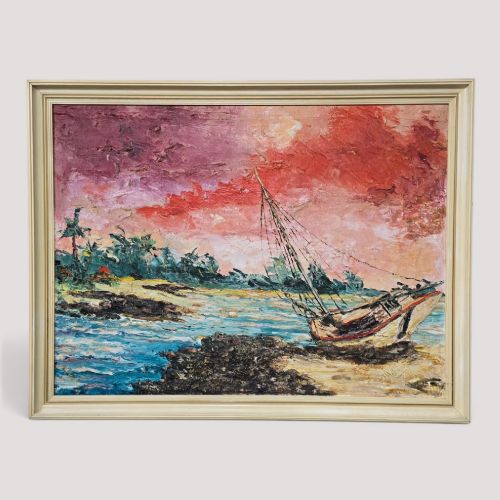
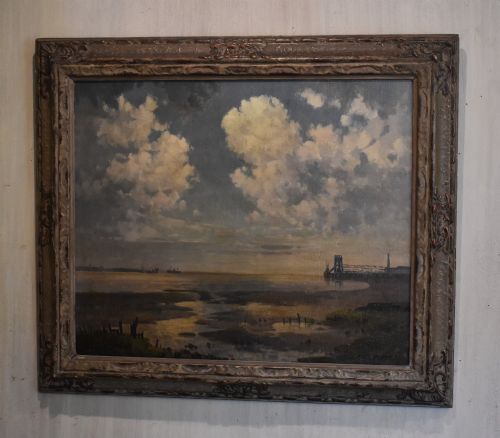


Mid Century Marine Seascape
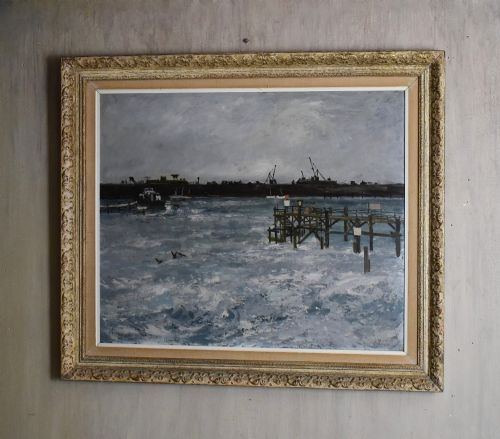
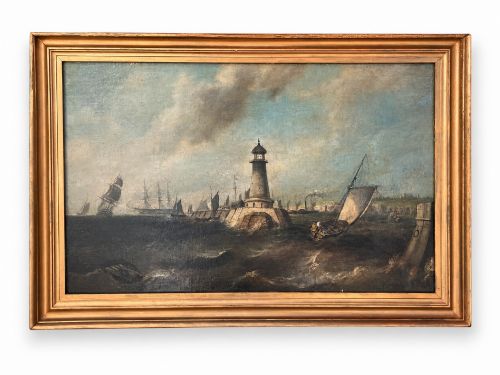
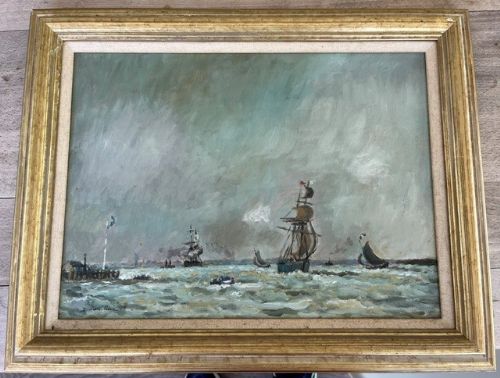
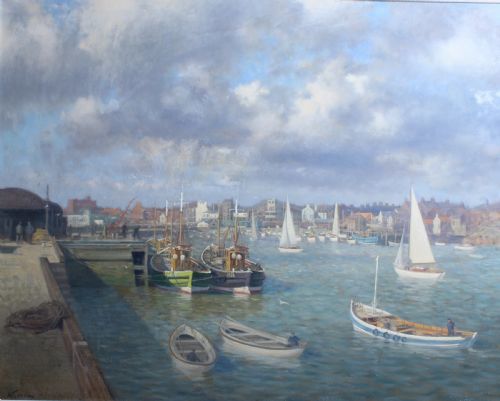
A mid century marine seascape captures the restless motion of open water and busy harbours through the vibrant brushwork of post-war artists.
Mid Century Marine Seascape
A mid century marine seascape brings coastal views, harbour walls and open water into the interior through paintings produced primarily between the 1930s and 1960s. These works range from French post-impressionist scenes of Brittany ports to British modernist interpretations of estuaries and tidal flats.
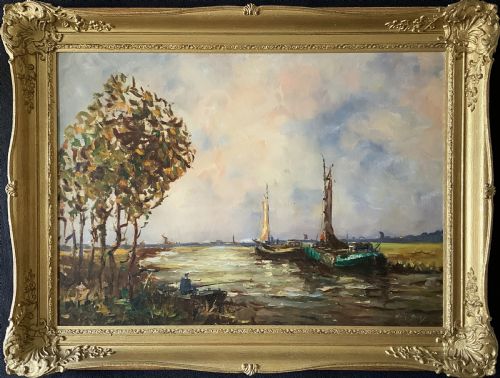
Buyers will most frequently encounter oil paintings on canvas or board, alongside watercolours and gouache on paper, reflecting the varied output of mid-century British and European painters. Subjects span from quiet Cornish fishing trawlers and Welsh bays to bustling Dutch canalscapes and dramatic open sea vistas.
Materials and methods
Artists working on a mid century marine seascape typically utilised oil paint on stretched canvas or wooden panels, applying pigment with loaded brushes or palette knives to capture the texture of water and sky. Watercolours and gouache on paper offer a lighter, more immediate medium favoured for coastal views executed en plein air.
Supports often include traditional canvas over wooden stretchers or sturdy wood panels, sometimes housed in original gilt or painted frames that complement the maritime subject matter.
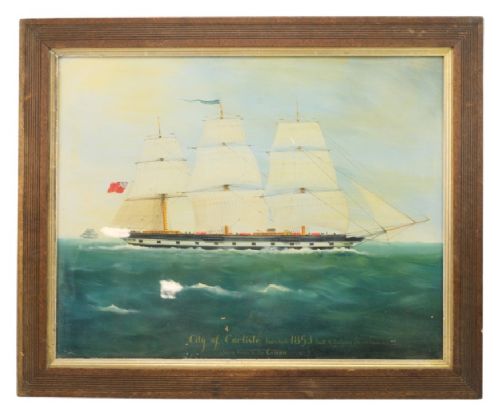
Depicted vessels range from old barges on the Tees and Royal Navy shipping to French fishing ports and modern abstracted sailboats.
Factors of distinction
The distinction between ordinary and exceptional works rests on the confidence of the brushwork and the artist's command of atmospheric light over water. Stronger pieces display a distinct individual hand and assured compositional rhythm, moving beyond standard topographical recording to evoke the genuine movement of the sea.
Condition and originality also separate examples, particularly the preservation of the paint surface and the retention of period framing that suits the mid-century aesthetic without overwhelming the canvas.
Kenneth Cozens·Sidney A Court·Clive Browne·Peter Brannan·Willem Bos·Walter Goodin·Lionel Horsnell·Raymond Picque·Fernando Del Basso·George Shaw·Edward Seago·Roger de la Corbiere·Dion Pears·Edward M Elliott·S J Lamorna Birch
The Mid Century Marine Seascape Glossary
- En plein air
- Painting outdoors in natural light to capture immediate visual conditions. This technique was widely utilised by mid-century artists recording coastal weather and shifting harbour light.
- Post-Impressionism
- An art movement extending beyond impressionism to emphasise symbolic content and heavier brushwork. French and British works from this tradition often feature simplified forms and bold colour.
- Gouache
- An opaque water-based paint that dries to a matte finish. It allows for vibrant, solid blocks of colour frequently seen in mid-century works on paper.
- Estuary
- A tidal mouth of a large river where the tide meets the stream. These locations provided artists with rich subjects involving mudflats, shipping and changing water levels.
Mid Century Marine Seascape: Frequently Asked Questions
What defines a mid century marine seascape?
These works are paintings and watercolours depicting coastal views, harbours, and open water created during the middle decades of the twentieth century. They combine traditional maritime subjects with modernist or impressionist painting techniques.
The aesthetic focuses on atmosphere and light rather than rigid maritime accuracy, reflecting how artists of the period experienced the coast.
Where were these coastal scenes painted?
Artists painted these scenes across British, French, Dutch and Italian coastlines, recording specific harbours, bays and estuaries. Locations range from Cornish fishing ports and Welsh shores to Breton inlets and Mediterranean waters.
Many works were executed on location to capture the changing light and weather of working waterfronts and open seas.
How do I hang a maritime painting?
These works suit spaces with good natural light that complements the marine palette of blues, greys and earth tones. Pair them with simple wall backgrounds to let the texture of the oil paint or watercolour stand out.
Ensure paintings are kept away from direct heat sources and strong sunlight to protect the canvas and original pigments over time.
How can I tell the period of a seascape?
Dating relies on stylistic clues, framing materials, and artist biographies documented across the works. Mid-century pieces often display looser brushwork, abstracted forms, or post-impressionist colour palettes distinct from Victorian or eighteenth-century conventions.
Signatures, exhibition labels on the reverse, and artist working dates help confirm the exact decade of creation.