


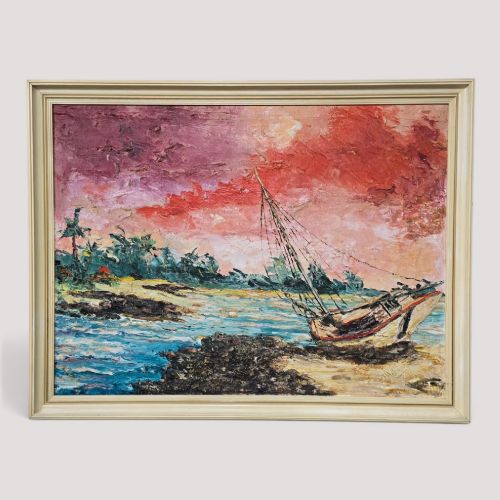
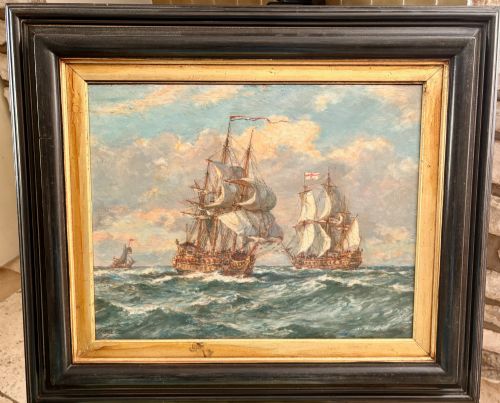
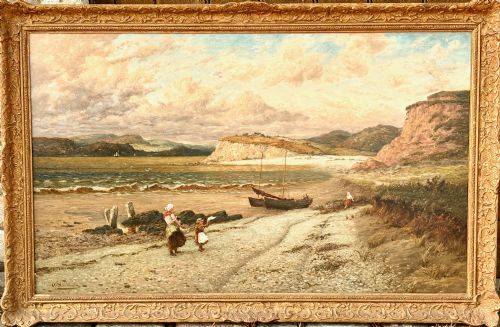
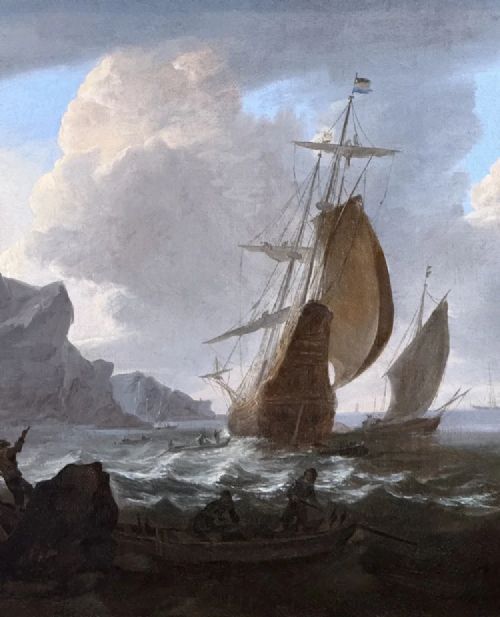
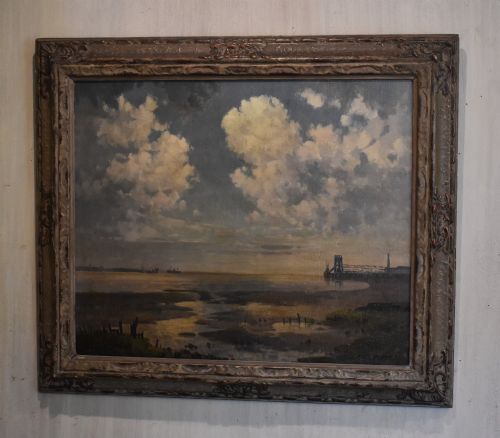
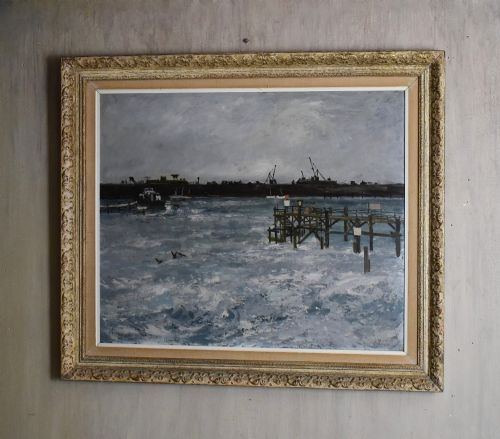
Framed Seascape Canvas Art
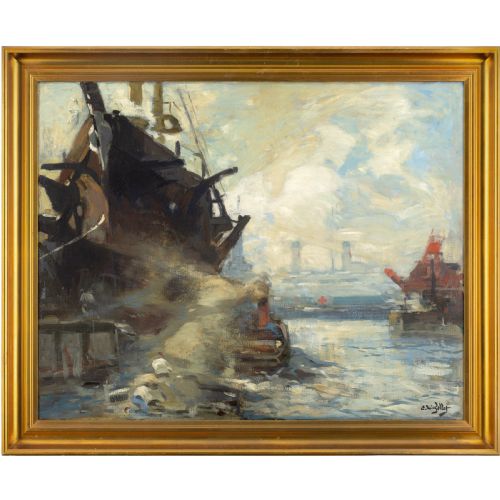
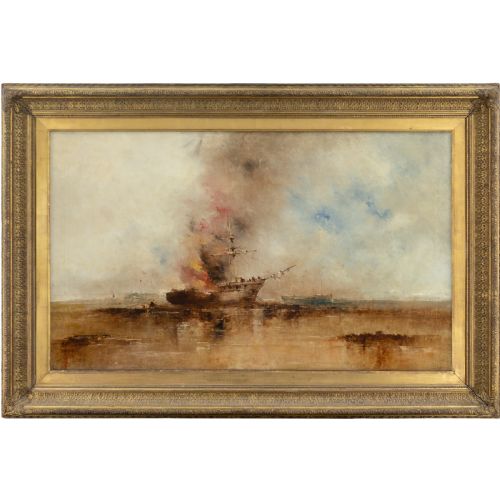
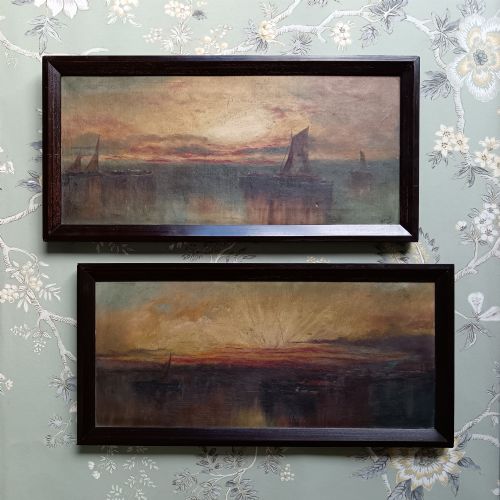
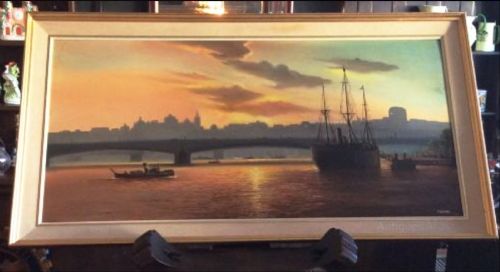
Framed seascape canvas art brings open water and coastal air indoors through oil paint applied directly to woven fabric and held within timber surrounds.
Framed Seascape Canvas Art
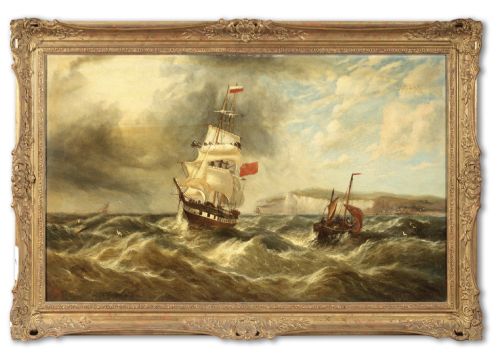
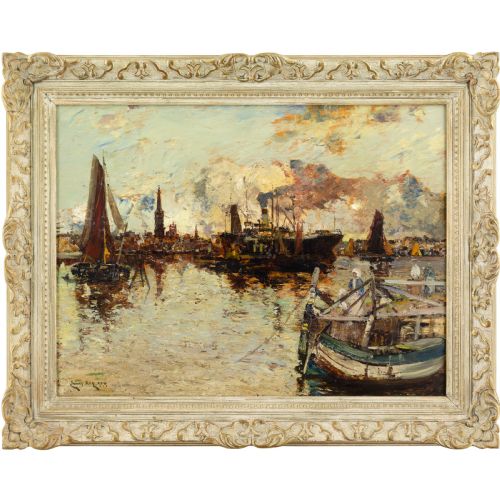
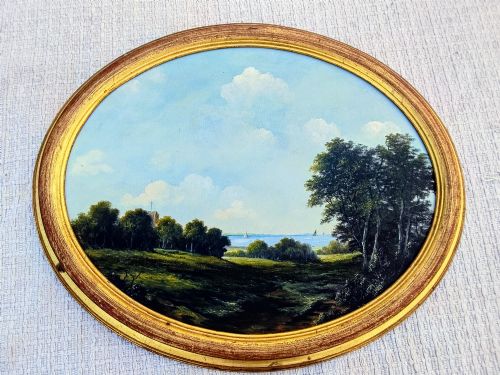
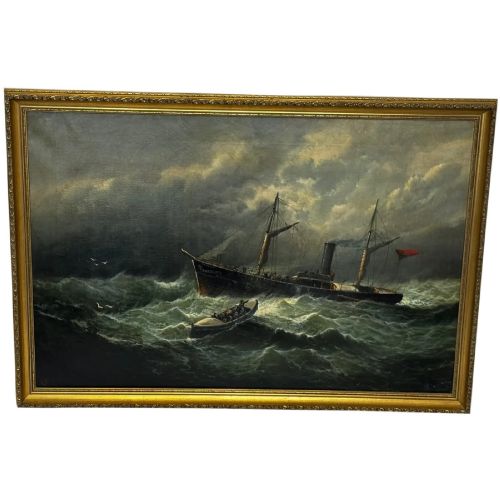
Framed seascape canvas art captures maritime views, coastal shores, and open shipping lanes across centuries of painterly tradition. These works record turbulent gales, calm harbours, and distant vessels through the medium of oil paint.
Most examples found within this selection date from the nineteenth and twentieth centuries, spanning Victorian marine scenes to mid-century modern interpretations. The predominant forms utilise oil on canvas, preserved within period wood or gilt frames.
How They Were Made
These works rely upon oil paint brushed onto stretched canvas substrates, allowing artists to build layered textures for water, sky, and atmosphere. Pigments are handled to capture shifting light upon coastal waves and marine horizons.
Surrounding the canvas, the enclosures utilise timber constructions, frequently enhanced with gilt or carved detail to complement the maritime subject matter. These wooden surrounds provide structural support while framing the painted view.
Periods represented span from the 17th century through the Victorian era to the mid-20th century.
What Varies in Quality
Quality rests in the handling of light and atmospheric depth, where accomplished brushwork conveys the motion of waves and the density of sea mists. Lesser examples rely on rigid repetition and flat application without tonal nuance.
The integration between the canvas and its wooden surround marks the distinction between standard decorative pieces and finer works. Original giltwood framing that complements the period of the painting elevates the integrity of the whole object.
Clifford Hanney·Eugène-Louis Gillot·William McAlpine·James Kay·Bernard Gribble·Bonaventura Peeters·Clive Browne·Peter Brannan·Francis Moltino·Bernard Benedict Hemy·Thomas Creswick·Willem Bos·Charles Euphraisie Kuasseg·John Wilson Carmichael·Lai Fong·Thomas Hodgson Liddell·William Henry Williamson·Erich Mercker
The Framed Seascape Canvas Art Glossary
- Canvas
- A heavy woven fabric stretched across a wooden stretcher frame to serve as the foundation for oil paintings. This textile surface accepts layered pigments and holds tension over decades.
- Giltwood
- Timber that has been coated with a thin layer of gold leaf or metallic gilt paint. This decorative finish catches light and enhances the display of nineteenth-century marine works.
- Maritime Art
- Depictions of ships, harbours, coastal views, and naval engagements. This genre encompasses historical shipping scenes as well as quiet coastal inlets.
- Post-Impressionism
- An artistic movement following impressionism that explores emotional resonance through bold colour and expressive brushwork. Works in this style prioritize personal interpretation over strict optical realism.
Framed Seascape Canvas Art: Frequently Asked Questions
What periods do these paintings come from?
The selections span from the seventeenth century through the Victorian era and into the mid-twentieth century. Most examples originate in the nineteenth and early twentieth centuries.
Victorian and Edwardian maritime works sit alongside later mid-century interpretations. Each period brings distinct framing styles and handling of marine subjects.
How should I hang a framed seascape canvas?
These works require sturdy wall fixings that match the weight of the timber and canvas construction. Position them away from direct sunlight and excessive moisture to protect the oil paint.
Allow sufficient wall space for the accompanying frame to project. Proper lighting from above highlights the texture of the brushwork on the canvas surface.
Are the frames original to the canvas?
Many works retain their period wooden or gilt surrounds, which show appropriate signs of age. Some pieces have been paired with complementary frames during their history.
Examine the fit at the reverse to understand how the canvas rests within the rebate. Original giltwood surrounds often feature corner ornamentation specific to their manufacturing era.
What subjects appear in these coastal scenes?
Common motifs include merchant sailing ships, fishing boats in heavy seas, and calm harbour inlets. Coastal cliffs and Venetian waterways also feature prominently across the selections.
Some works record specific historical vessels or maritime rescues. Others capture generalized views of waves breaking along shorelines at sunset.