


Historical Vessel Seascape Artwork
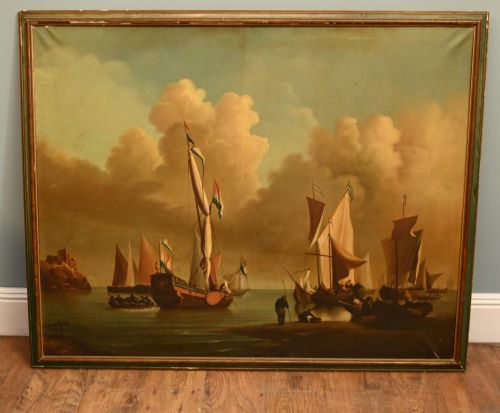
Historical vessel seascape artwork brings maritime history to life through painted canvas and paper depicting ships upon the sea.
Historical Vessel Seascape Artwork
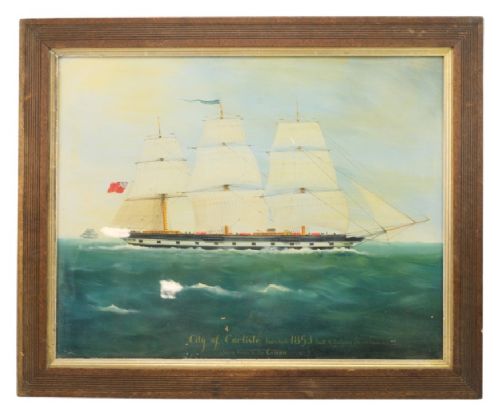
Buyers encounter named vessels such as the City of Carlisle, the steamship Queen, and HMS Nairana, alongside works by identifiable artists including Vincenzo D’Esposito, George Shaw, Samuel Owen, Frank Wood, Paul Jean Clays, Richard Ball Spencer, and Hubert Thornley. Many pieces originate from English and Scottish coastal contexts, capturing specific maritime operations and vessels.
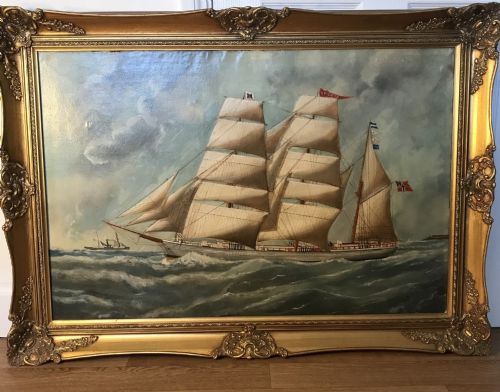
Forms span framed paintings, wall art, and oil paintings depicting schooners, barques, fishing boats, and frigates in coastal waters, rough seas, and harbour settings. The range encompasses both attributed historical works by named painters and representative pieces by the English School.
Materials and technique
Artists painted these works primarily in oil paint upon canvas, alongside watercolours executed on paper, mounting finished pieces within frames often finished with gold leaf and giltwood.
Supports incorporate wood stretcher frames for canvas works, while physical composition relies on layered oil pigments to capture the movement of water, atmospheric sky conditions, and the rigging of sailing ships and steamships.
Listings feature works spanning the eighteenth to the mid-twentieth century, executed in oil on canvas, watercolour on paper, and giltwood frames.
Judging quality
Quality rests upon the artist's ability to render the specific rigging, hull structure, and proportional scaling of vessels accurately against convincing sea and sky conditions.
The sophistication of brushwork and the clarity of historical provenance, such as identifiable naval vessels or recorded maker attributions, distinguish accomplished pieces from standard school works.
Vincenzo D’Esposito·George Shaw·Samuel Owen·Frank Wood·Paul Jean Clays·Richard Ball Spencer·Hubert Thornley
The Historical Vessel Seascape Artwork Glossary
- Barque
- A sailing ship with three or more masts having the fore- and mainmasts square-rigged and the mizzenmast fore-and-aft rigged. This vessel type appears frequently in nineteenth-century maritime paintings.
- Giltwood
- Wood carved and covered with a thin layer of gold leaf or gold paint. Frames of this material often accompany period oil paintings.
- Frigate
- A warship built with a full-rigged sail plan, designed for speed and escort duties. Such naval subjects feature prominently in nineteenth-century coastal art.
- Watercolour
- A painting method in which the paints are made of pigments suspended in a water-based solution. These works are typically executed on paper supports under glass.
Historical Vessel Seascape Artwork: Frequently Asked Questions
What periods do these paintings cover?
The works span from the eighteenth century through the Victorian and Edwardian eras into the mid-twentieth century.
Specific dates within the listings range from 1800 to 1960, encompassing Georgian and mid-century maritime movements.
How should I hang maritime artwork?
Display these framed oil paintings and watercolours away from direct sunlight to protect canvas, paper, and giltwood frames.
Ensure wall fixings adequately support the weight of wooden frames and glass-fronted watercolours.
Are the ships in these paintings real?
Many works depict documented vessels, including named steamships, naval carriers, and merchant ships participating in historical events.
Other pieces portray typical regional shipping, fishing boats, and coastal vessels of their respective periods.
What is the difference between an oil painting and a watercolour?
Oil paintings use pigment bound in oil applied to stretched canvas, offering textured brushwork and deep colour saturation.
Watercolours utilise water-soluble pigments on paper, creating lighter, translucent atmospheric effects under protective glass.