


Traditional Monks Bench
A traditional monks bench provides dual seating and surface utility, anchoring a hallway or living space with solid historical timber.
Traditional Monks Bench
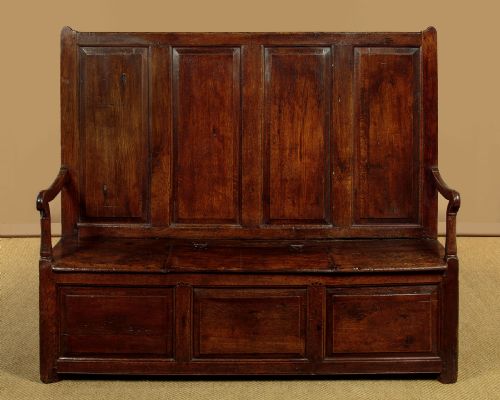
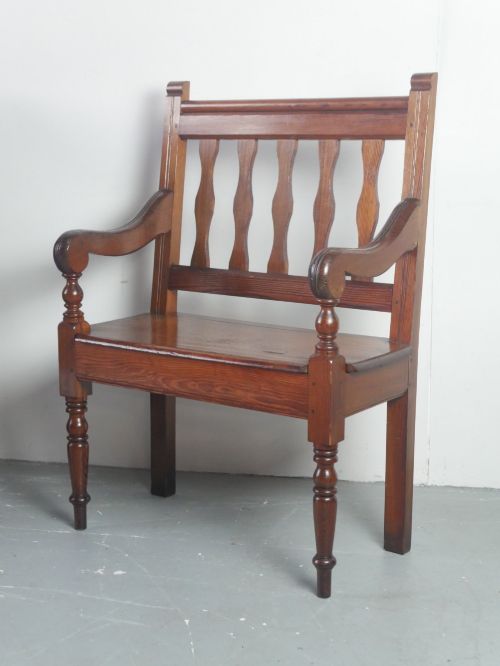
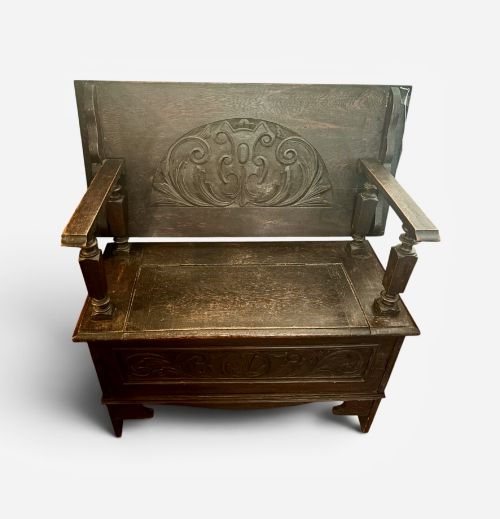
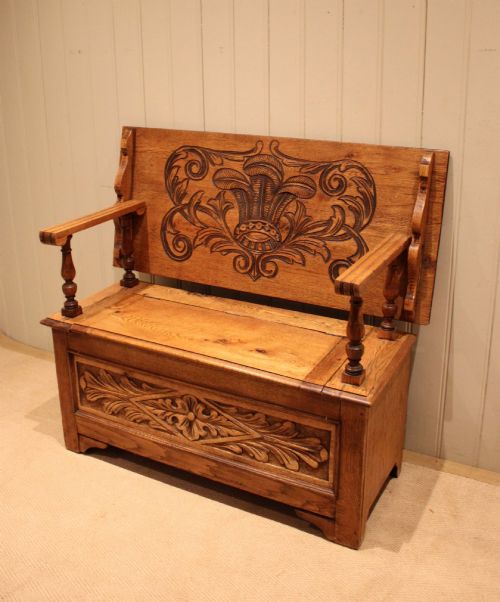
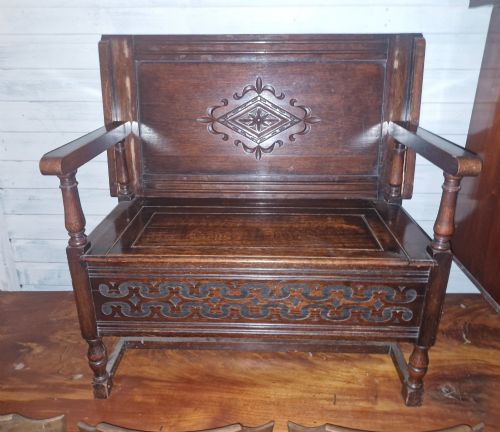
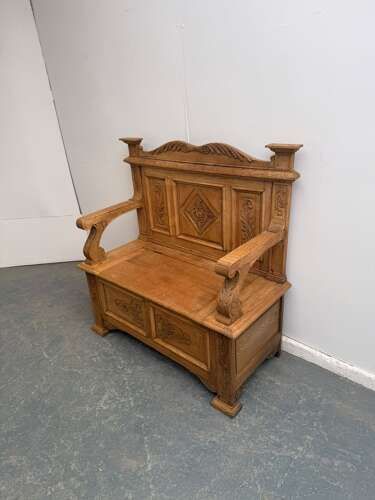
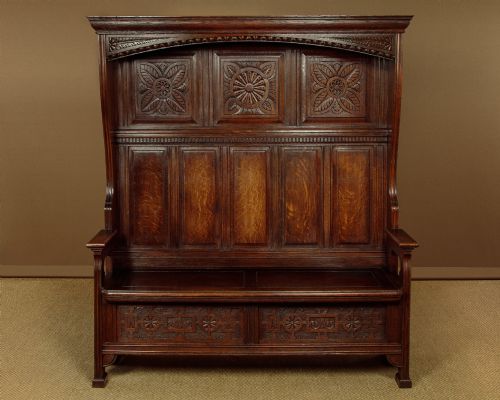
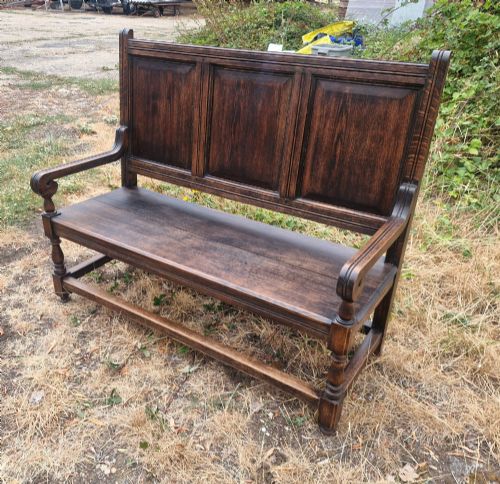
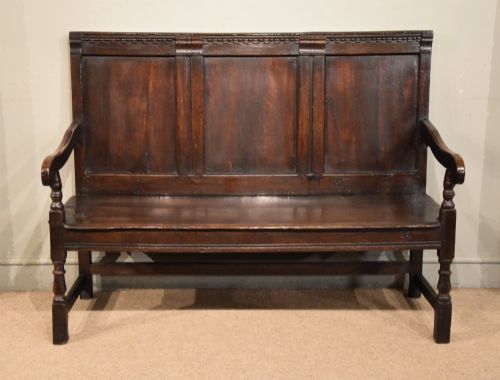
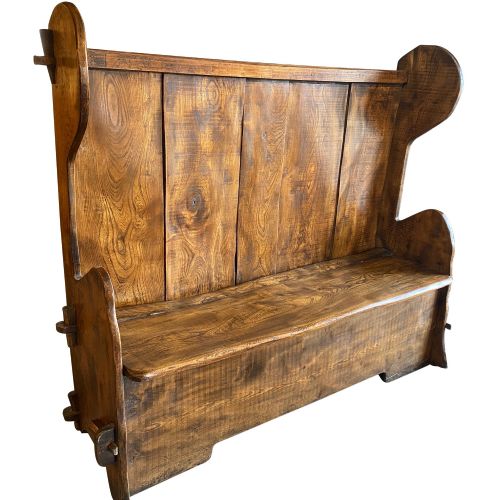
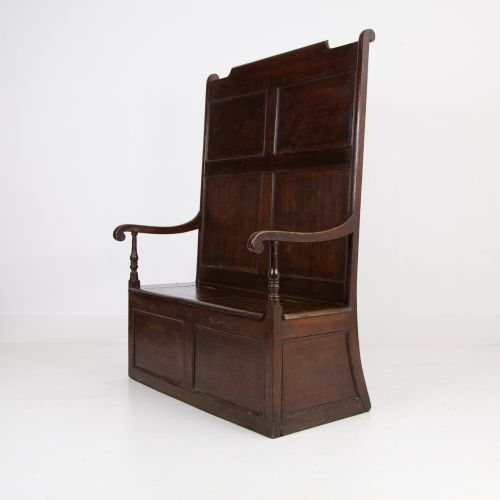
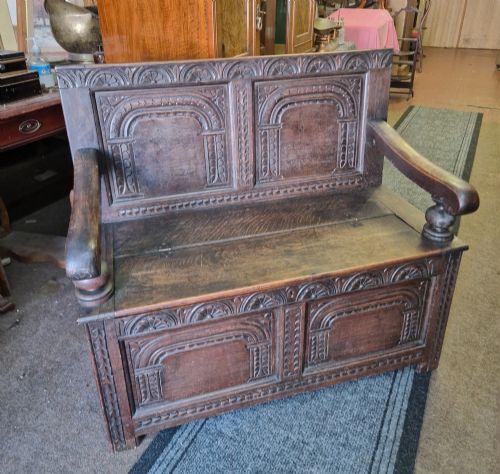
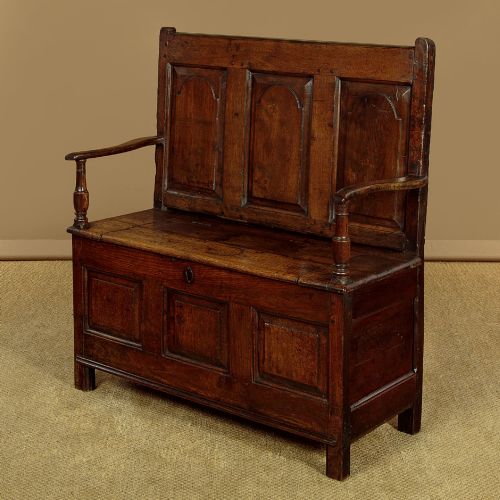
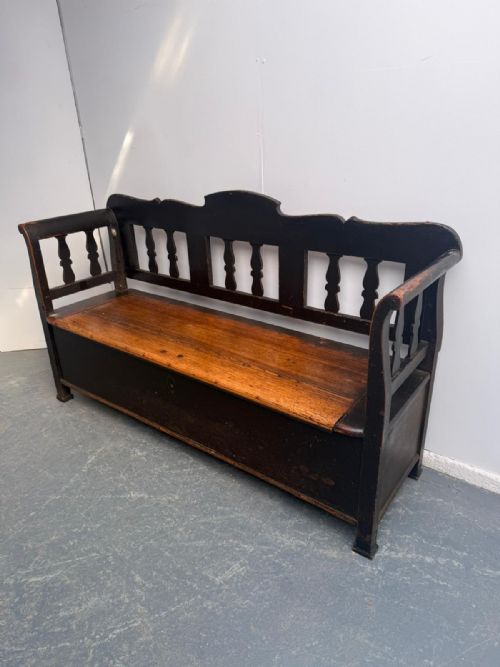
Traditional monks bench designs incorporate forms such as box settles, hall seats, and convertible tables spanning the eighteenth century through the nineteen thirties. Pieces range from straightforward country pine variants to heavily carved Victorian and Jacobean Revival oak examples.
Buyers encounter regional interpretations, including English oak framework and imported Hungarian pine configurations. These items function primarily as hallway seating that doubles as storage compartments or transforms into flat surfaces.
The selection reflects domestic utility, moving from high-backed eighteenth century settles to compact early twentieth century hall benches. Each variation retains the fundamental property of combining seating with enclosed space underneath.
Materials and construction methods
Carpenters relied principally on native hardwoods and softwoods, utilising solid oak, pine, elm, and pitch pine. Surfaces show natural waxed finishes, applied paint in grey or black, and occasionally bleached treatments.
Joinery relies on panelled construction, hinged lift-up lids, and fold-over mechanisms that convert seat backs into tables. Iron hardware frequently fastens lids and structural joints.
Listings feature structural materials spanning solid oak, elm, pitch pine, and painted pine alongside fabric and metal elements.
Distinctions in construction and finish
Quality rests in timber selection and the integrity of the joinery, distinguishing heavy solid oak frameworks from lighter pine alternatives. The crispness of hand-carved detailing and the original state of waxed or painted surfaces dictate the standing of a piece.
Proportion and mechanical execution define better examples, particularly where fold-over tops and storage boxes operate smoothly without compromising the structural balance of the bench.
The Traditional Monks Bench Glossary
- Box settle
- A wooden bench featuring a high back and a concealed storage compartment beneath the seat. This form protected occupants from drafts in older properties.
- Fold over top
- A hinged backrest that rotates downward to rest on the arms, creating a table surface. It represents the defining characteristic of convertible monks benches.
- Jacobean Revival
- A nineteenth and twentieth century design style mimicking seventeenth century English oak furniture. Pieces display geometric mouldings and deep carved relief.
- Pitch pine
- A durable softwood yielding a distinctive dense grain pattern. Cabinet makers valued this timber for its strength in domestic furniture.
- Straight back settle
- A rigid high-backed wooden bench lacking upholstery. These items stood in hallways and kitchens to block cold air.
Traditional Monks Bench: Frequently Asked Questions
What is a traditional monks bench?
A traditional monks bench is a dual-purpose wooden item combining a seat with built-in storage or a convertible tabletop. Makers constructed these primarily from oak and pine.
They served functional roles in domestic hallways and living rooms across the eighteenth, nineteenth, and early twentieth centuries. The design allowed households to maximise small spaces through hidden compartments.
How do I date a wooden settle?
Dating relies on identifying timber species, joinery methods, and stylistic revival markers. Eighteenth-century examples typically feature pegged oak panels, while Victorian and later pieces show machine-sawn components.
Surface treatments also help establish age, with original waxed finishes and early layers of paint indicating period authenticity. Hardware such as iron hinges provides further chronological clues.
Where should I place a hall bench?
Hall benches suit entranceways, corridors, and large living spaces where storage and seating are required. Their narrow profiles allow them to fit against walls without blocking passageways.
The enclosed box seat accommodates shoes, blankets, or household items while offering a practical spot for putting on footwear.