






Traditional Maritime Landscape Art
Traditional maritime landscape art captures the enduring pull of the coast, offering buyers painted windows into historic harbours, busy ports and open seas.
Traditional Maritime Landscape Art
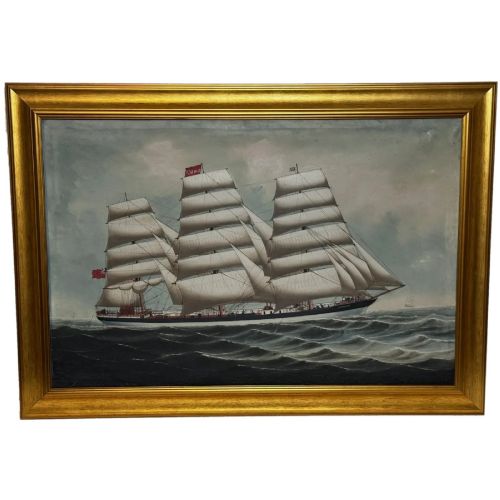
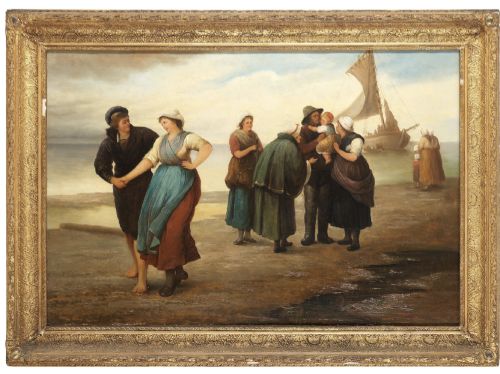
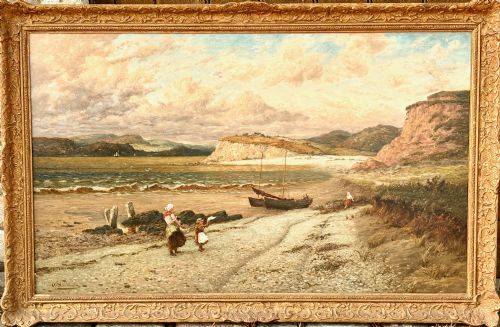
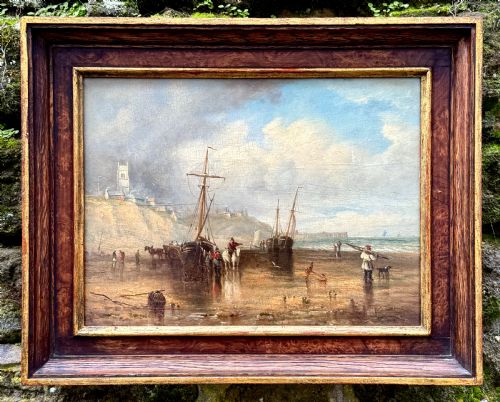
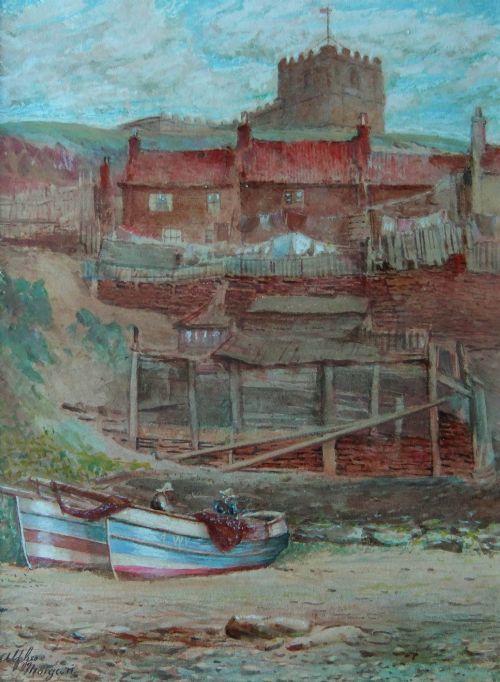
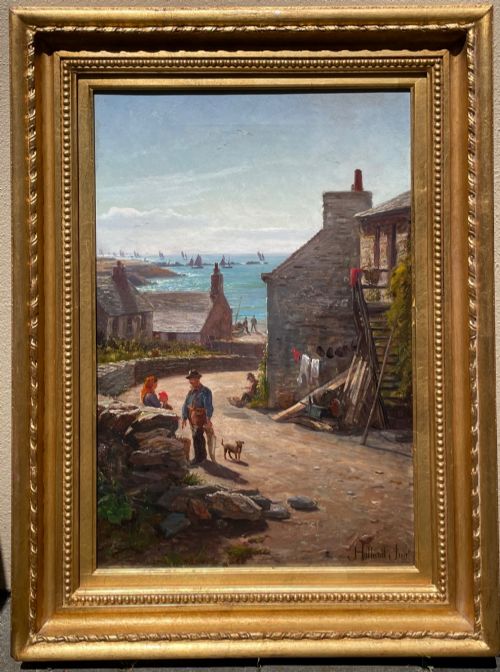
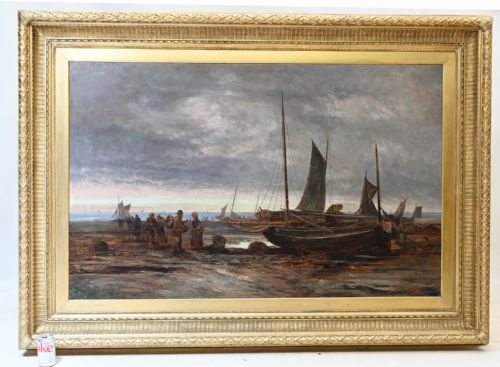
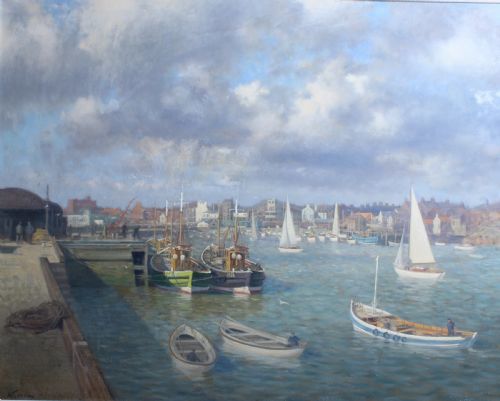
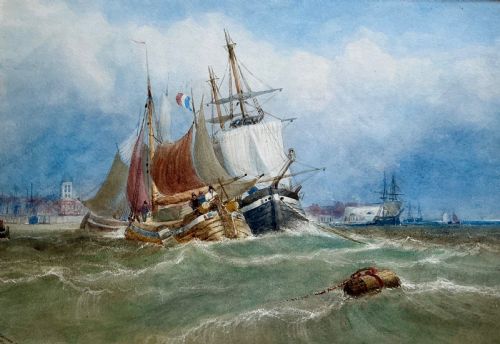
Traditional maritime landscape art comprises oil and watercolour paintings depicting coastal views, village harbours and shipping scenes from the nineteenth and early twentieth centuries. These works record historic ports and working boats across Britain, France, Holland and Venice, rendered in Victorian and Edwardian styles.
Buyers encounter framed canvases and paper works ranging from intimate watercolours to large scale oil paintings set in giltwood or ebonised frames. The subjects focus closely on nautical life, capturing everything from quiet estuaries to choppy seas and coastal towns.
Materials and methods
Artists painted primarily with oil on canvas or board, alongside watercolours on paper, utilising traditional pigments to build up sea and sky. Canvases were stretched and secured within wooden frames, often accented with giltwood or hand enamelled polychrome details.
Watercolours relied on fluid washes and precise brushwork on paper, mounted behind glass to protect the delicate medium. Oil painters layered pigment to achieve depth in water and atmospheric effects in coastal light.
Regional coastal scenes include views of Cornish harbours, Yorkshire fishing ports and Dutch canals.
Distinctions in quality
The standard of a traditional maritime landscape rests in the artist's handling of light, movement and maritime atmosphere, particularly in the rendering of choppy seas and rigging. Stronger works demonstrate confident brushwork and accurate perspective in shipping and architecture.
Composition and condition also separate pieces, with well preserved surfaces and original frames offering a more complete historical record. Named artists with documented regional subjects typically command greater recognition than anonymous works.
Reginald Arthur Borstel·Edward Mills·William Banks Fortescue·Thomas Creswick·Alfred G Morgan·John Holland·Walter Goodin·Henry Barlow Carter·William Edward Webb·Arthur Tucker·Thomas Bush Hardy·Stanley Leader·Hendrik Willebrord Jansen·George Hamilton Constantine·John Bell·William Pitt·James Webb·Jane Vivian·Ebeneezer Colls·Owen Bowen·Edward Henry Holder·Madeline Hughes
The Traditional Maritime Landscape Art Glossary
- Seascape
- A work of art depicting the sea or marine subjects. These pieces focus on open water, coastal views and shipping activity.
- Giltwood
- Wood that has been coated with gold leaf or a gold coloured finish. This material is commonly found on traditional frames from the Victorian period.
- Watercolour
- A paint consisting of pigment suspended in a water based solution, used on paper. This medium produces translucent washes suited to atmospheric coastal scenes.
- Provenance
- The chronology of the ownership and origin of an item. A clear history helps authenticate nineteenth century paintings.
Traditional Maritime Landscape Art: Frequently Asked Questions
What defines traditional maritime art?
Traditional maritime art focuses on coastal scenes, harbour views and shipping vessels created during the nineteenth and early twentieth centuries. These paintings record working ports and coastal life using established academic and impressionist techniques.
They reflect a period when maritime trade and seaside travel shaped coastal communities across Europe. The works serve as historical records of specific locations like St Ives, Whitby and foreign ports.
How should I hang maritime paintings?
Hang these works away from direct sunlight and damp environments to protect oil canvases and watercolour paper. Adequate spacing allows the giltwood or ebonised frames to complement the wall.
Consider the lighting in the room to minimise glare on glass fronted watercolours. Keeping paintings at eye level enhances the detail in harbour scenes and seascapes.
Are watercolours different from oils?
Watercolours use pigment on paper under glass, resulting in delicate and luminous coastal views. Oils use pigment on canvas or board, allowing for heavier texture and deeper colour saturation.
Both mediums capture marine subjects but offer different visual textures. Watercolours often feel light and atmospheric, whereas oils present rich impasto and deeper shadows.
How do I identify the period?
Period identification relies on frame styles, artist signatures and subject matter conventions. Nineteenth century works often feature detailed rigging and specific regional costume in coastal figures.
Examining the canvas backing, stretcher bars and paper type provides further clues. Victorian and Edwardian pieces carry distinct aesthetic markers tied to their decades of production.