



Framed Coastal Ocean Scene
A framed coastal ocean scene brings the movement of the sea and shore into a room through oil and watercolour.
Framed Coastal Ocean Scene
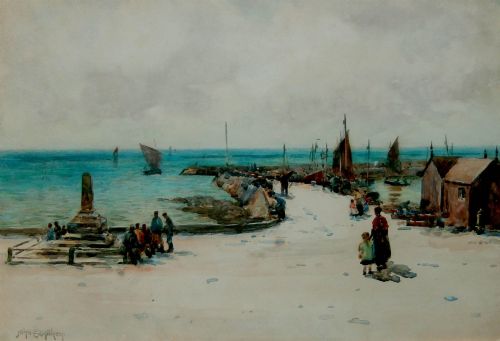
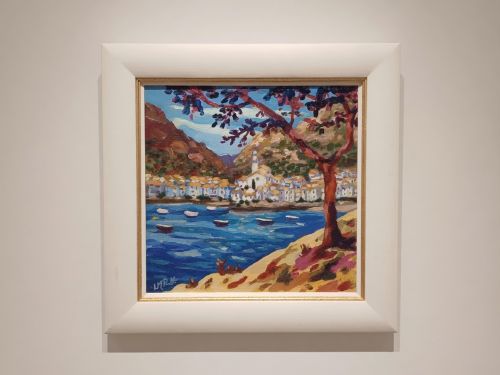
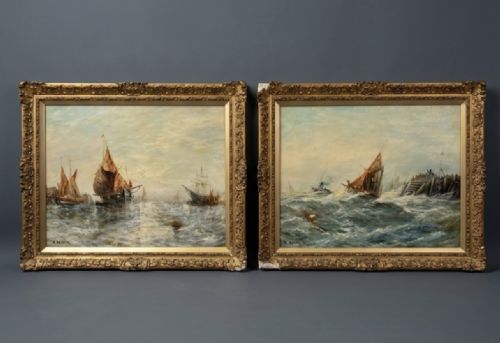
A framed coastal ocean scene captures harbours, fishing boats, lighthouses, and breaking surf along the water's edge. You encounter these works primarily as nineteenth-century watercolours and oils, alongside early twentieth-century interpretations and later twentieth-century impressionism.
The subjects range from tranquil Cornish and Scottish fishing ports to dramatic shipwrecks and choppy seas under wide skies. Works appear on canvas, board, and paper, typically housed within period gilt wood or ebonised frames.
Makers and artists documented here span Victorian marine art, British Impressionism, and regional schools across Britain and Europe.
Materials and Technique
Painters applied oil paint to canvas or board to build rich textures of sea foam and turbulent water, while watercolours on paper achieved lighter, transparent washes of light and atmosphere.
Finished works found their homes within protective wooden surrounds, frequently finished with gilt leaf or dark ebonisation to complement the palette of the marine subject.
Listings feature works spanning the nineteenth century, the Edwardian era, the 1920s, and later twentieth-century impressionism.
Assessing Quality
The success of a marine painting rests upon the artist's command of light, atmosphere, and the convincing movement of water rather than mere scale.
Compositional energy and the preservation of the original painted surface separate standard topographical records from works of lasting artistic conviction.
John E. Aitken·William Banks Fortescue·Gustave De Bréanski·Sir William Russell Flint·Claude Thomas Stanfield Moore·Frederick Stuart Richardson·Sir David Murray RA·Owen Bowen·James Watson·Daniel Sherrin·Thomas Bush Hardy·Charles Martin Powell·James G. Faulds·Arthur Joseph Meadows·Harry John Pearson
The Framed Coastal Ocean Scene Glossary
- Gilt wood
- Wood carved or moulded and coated with a thin layer of gold leaf. This finish frames many traditional marine paintings.
- Watercolour
- A paint consisting of pigment suspended in a water-soluble binder, applied to paper. This medium suits translucent coastal light and distant skies.
- Board
- A rigid wooden panel or stiff card used as a painting support instead of woven canvas. It provides a stable surface for smaller plein-air oil studies.
- Ebonised
- Wood stained or treated to resemble heavy, black ebony. This dark finish appears on frames from the early twentieth century.
Framed Coastal Ocean Scene: Frequently Asked Questions
How do I identify a Victorian coastal painting?
Victorian maritime works often depict sailing vessels, fishing trawlers, and dramatic harbours rendered in detailed oil or delicate watercolour. The handling typically focuses on realistic atmospheric conditions and traditional coastal trades.
Frames from this era are commonly constructed from wood and finished with gilt leaf, matching the period aesthetic of the painting within.
What subjects appear in these coastal scenes?
The subjects range from quiet beach scenes with children playing in the surf to stormy seas featuring lighthouses and shipwrecks. Many works record specific locations such as Cornish harbours, Scottish borders, and foreign shores.
Artists also documented everyday activities like fishermen hauling boats onto the beach or sorting catches along the quay.
Are these paintings on canvas or paper?
The selection includes both oil paintings executed on canvas or board and watercolours created on paper. Oils provide a heavier texture suitable for choppy seas, while watercolours offer fluid transparency for skies and sea spray.
Each medium dictates the framing style, with heavier oils generally requiring robust gilt surrounds.
How should I display a framed marine painting?
Select a wall with stable humidity away from direct sunlight to protect both the painted surface and the wooden frame. Adequate lighting enhances the depth of the oil glazes or the delicate washes of the watercolour.
Allow the scale of the artwork and its original frame to dictate its placement within a room.