


Dutch Coastal Seascape
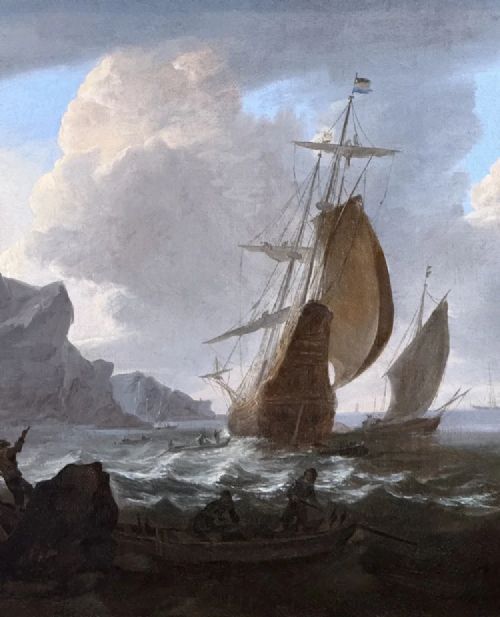
A dutch coastal seascape brings the grey light and heavy skies of the North Sea straight onto the wall.
Dutch Coastal Seascape
A dutch coastal seascape captures the movement of sailing boats, fishing vessels and shipping off the low shores of the Netherlands. You will encounter works spanning the seventeenth century through to the early twentieth century, with nineteenth century interpretations forming the core of the selection.
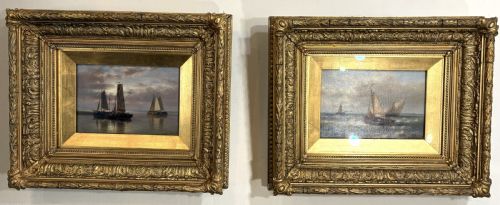
The compositions typically focus on choppy waters, estuaries and shorelines under expansive cloudscapes. Canvases range from intimate cabinet pieces to larger framed works, frequently accompanied by period giltwood or gesso frames.
Materials and methods
These works are painted using oil paint on canvas, or occasionally wood panels, building up layers of pigment to capture the shifting light of the coast. Artists manipulate tone and brushwork to render the heavy texture of water, the billowing canvas of sails and the luminosity of northern skies.
Surrounding the paintings are frames constructed from wood and finished with gesso and gold leaf. These period frames often display intricate moulding or decorative gilt wood details that complement the maritime subject matter.
The listings span from the seventeenth century Dutch Golden Age through the nineteenth century marine revival to the early twentieth century.
Judging quality and hand
Quality rests in the handling of atmosphere, the natural movement of the water and the convincing perspective of the vessels. A stronger piece demonstrates confidence in the brushwork, particularly in the rendering of turbulent skies and the play of light upon the sea.
The integrity of the canvas and the preservation of the original paint surface also distinguish superior examples. Furthermore, the presence of a well-matched period giltwood frame enhances the overall coherence and historical value of the work.
Bonaventura Peeters·Abraham Hulk I·Pieter Cornelis Dommersen·Adrian Van Porten·Florence Hess·Hendrik Willebrord Jansen·Owen Bowen·Frank Myers Boggs·Charles Martin Powell·Thomas Bush Hardy·Alfred Montague
The Dutch Coastal Seascape Glossary
- Seascape
- A painting depicting the sea, coastal views or marine subjects. These works focus predominantly on water, shipping and coastal weather rather than land topography.
- Giltwood
- Wood carved and covered with a thin layer of gold leaf or gilt. This material is standard for framing traditional marine paintings from the seventeenth to the nineteenth centuries.
- Gesso
- A plaster-like mixture applied to wood frames as a base for gilding. It allows craftsmen to carve intricate decorative details before applying gold leaf.
- Estuary
- The tidal mouth of a large river where the tide meets the stream. Many coastal paintings feature these sheltered waters crowded with local fishing boats.
Dutch Coastal Seascape: Frequently Asked Questions
How do I date a marine painting?
Dating relies on stylistic evidence, artist signatures, and the construction methods of the canvas and stretcher. Costume details on any figures and the rigging of the depicted vessels also provide reliable clues.
Frames often offer secondary evidence, though many paintings were reframed later in their lifespan. Comparing the pigment handling to dated works by the same school helps narrow the period.
Are these works painted on canvas or panel?
The majority of these marine works utilise oil on canvas as their primary support. Canvas allowed artists to create larger expanses of sky and water with considerable textural variation.
A smaller number of works employ wood panels, which provide a rigid and exceptionally smooth surface suited to fine, detailed brushwork.
What subjects appear alongside the boats?
Common secondary subjects include coastal castles, navigational towers, and figures such as local women mending fishing nets on the shore. These elements provide scale and anchor the maritime activity to a specific Dutch location.
Skies dominate many of these compositions, reflecting the meteorological conditions characteristic of the North Sea coast.