




Traditional Mahogany Secretary Desk
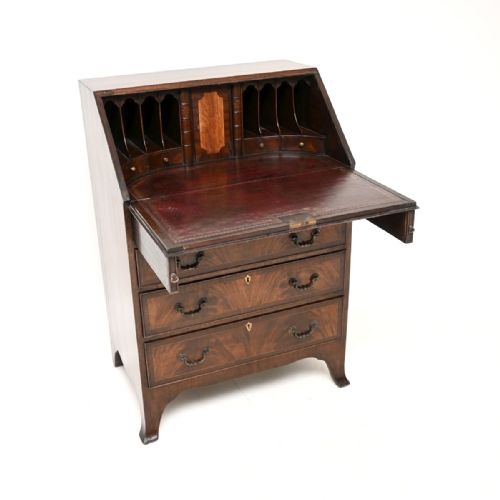
A traditional mahogany secretary desk brings together fine cabinetmaking, concealed compartments and practical workspace in a single piece.
Traditional Mahogany Secretary Desk
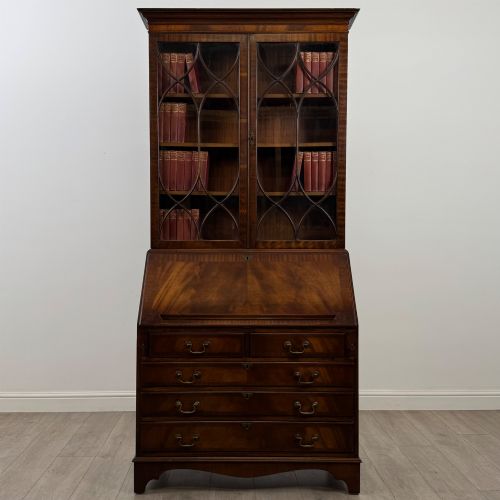
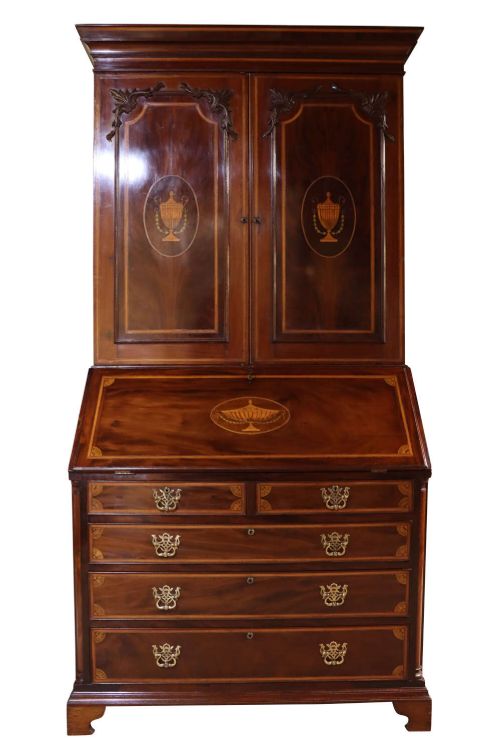
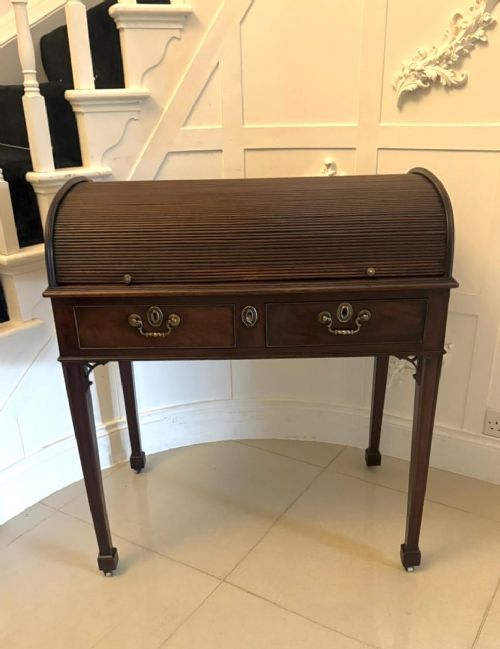
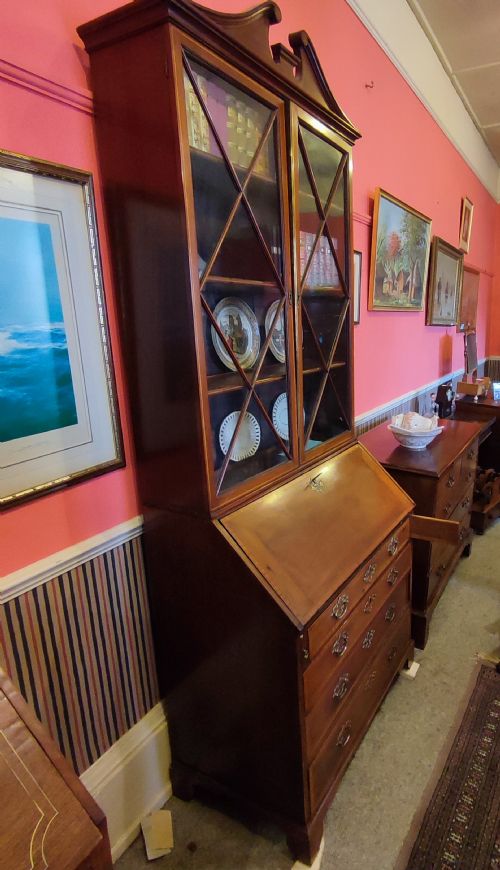
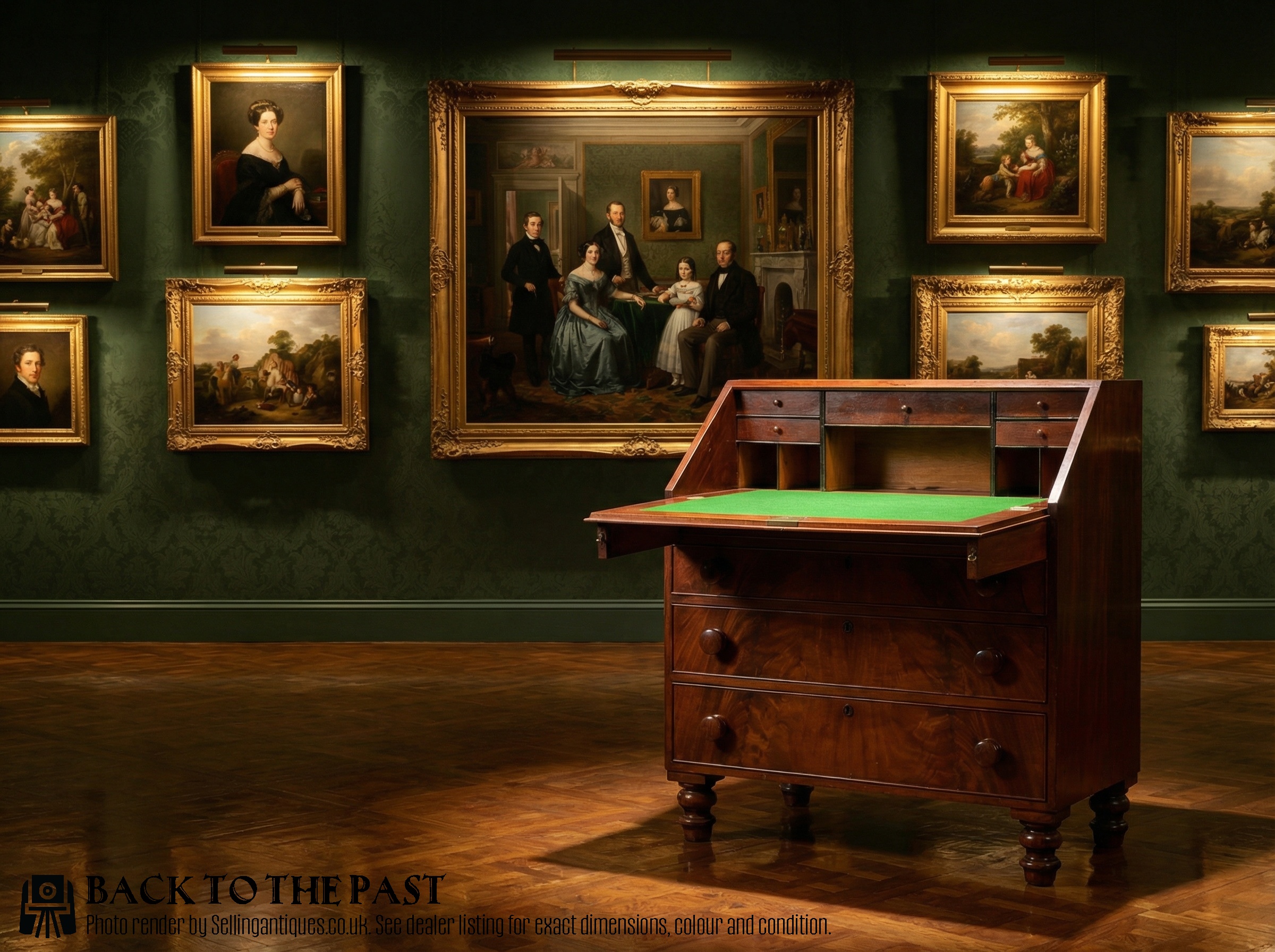
A traditional mahogany secretary desk encompasses bureau bookcases, cylinder desks, Carlton house desks and writing bureaus across multiple eras. These pieces range from mid-18th century Georgian examples to Edwardian and later revival styles.
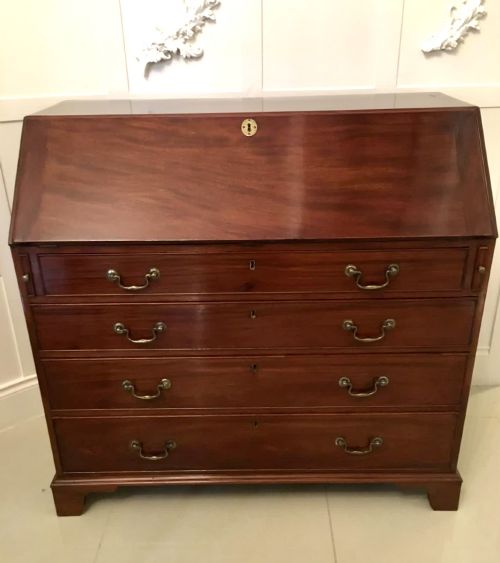
The most common forms on this page pair a sloping fall-front or cylinder desk with a shelved upper bookcase enclosed by glass doors. Simpler bureau formats without the upper bookcase appear frequently alongside grander cabinet variants.
Origins stretch from the height of the Georgian period through the Regency and William IV eras into Victorian times. Later Edwardian and Sheraton Revival interpretations continue the tradition with lighter proportions.
Judging quality
The standard of a traditional mahogany secretary desk depends on the figuration of the timber and the precision of the cabinetwork. Finer examples display carefully matched grain patterns across the fall front and drawer facades.
Internal complexity sets apart superior pieces, demonstrated by clever hidden compartments, finely dovetailed drawer construction and well-organised fitted interiors. The integration of brass hardware and the crispness of any inlay further distinguish the tier of craftsmanship.
Materials appearing across the inventory include solid mahogany, Cuban mahogany, glass, brass, leather, baize, oak and satinwood.
The Traditional Mahogany Secretary Desk Glossary
- Bureau bookcase
- A writing bureau combined with an enclosed set of upper bookshelves, often featuring glazed doors. This dual-purpose furniture piece serves for both correspondence and library storage.
- Secretaire
- A desk or cabinet with a pull-out drawer or drop-front panel revealing a fitted writing surface and internal compartments. The term often applies interchangeably with bureau.
- Tambour
- A sliding shutter formed of narrow vertical strips of wood glued to a canvas backing, used to enclose the writing area on cylinder desks. This mechanism conceals the desk interior when not in use.
- Escutcheon
- A decorative and protective brass plate surrounding a keyhole. It prevents wear to the surrounding mahogany timber.
- Satinwood
- A pale, dense exotic wood used extensively for contrasting inlay and stringing on mahogany furniture. Its lustrous quality provides visual depth to drawer borders and panels.
Traditional Mahogany Secretary Desk: Frequently Asked Questions
How do I identify a Georgian bureau?
Look for sturdy proportions, heavy mahogany timber, hand-cut dovetails on the drawer linings and traditional brass drop handles. The interior typically contains small drawers and pigeonholes surrounding a central cupboard.
Later Victorian and Edwardian pieces often display lighter framing, machine-sawn elements or revival stylistic markers such as Sheraton satinwood crossbanding.
Where are the hidden compartments?
Secret compartments usually reside within the central well of the fitted interior inside the bureau section. Removing specific small drawers often releases a spring or reveals a sliding panel covering a concealed space.
Makers designed these spaces to secure private letters, currency or valuables.
How do I care for mahogany furniture?
Keep mahogany pieces away from direct sunlight and heat sources to prevent the wood from drying out and the veneer from lifting. Apply natural beeswax periodically to nourish the grain and maintain the polish.
Avoid excessive moisture and use dry cloths for routine dusting.