
Victorian Mahogany Chest Bureau
A victorian mahogany chest bureau combines practical storage with a writing surface, bringing nineteenth-century craftsmanship into a modern interior.
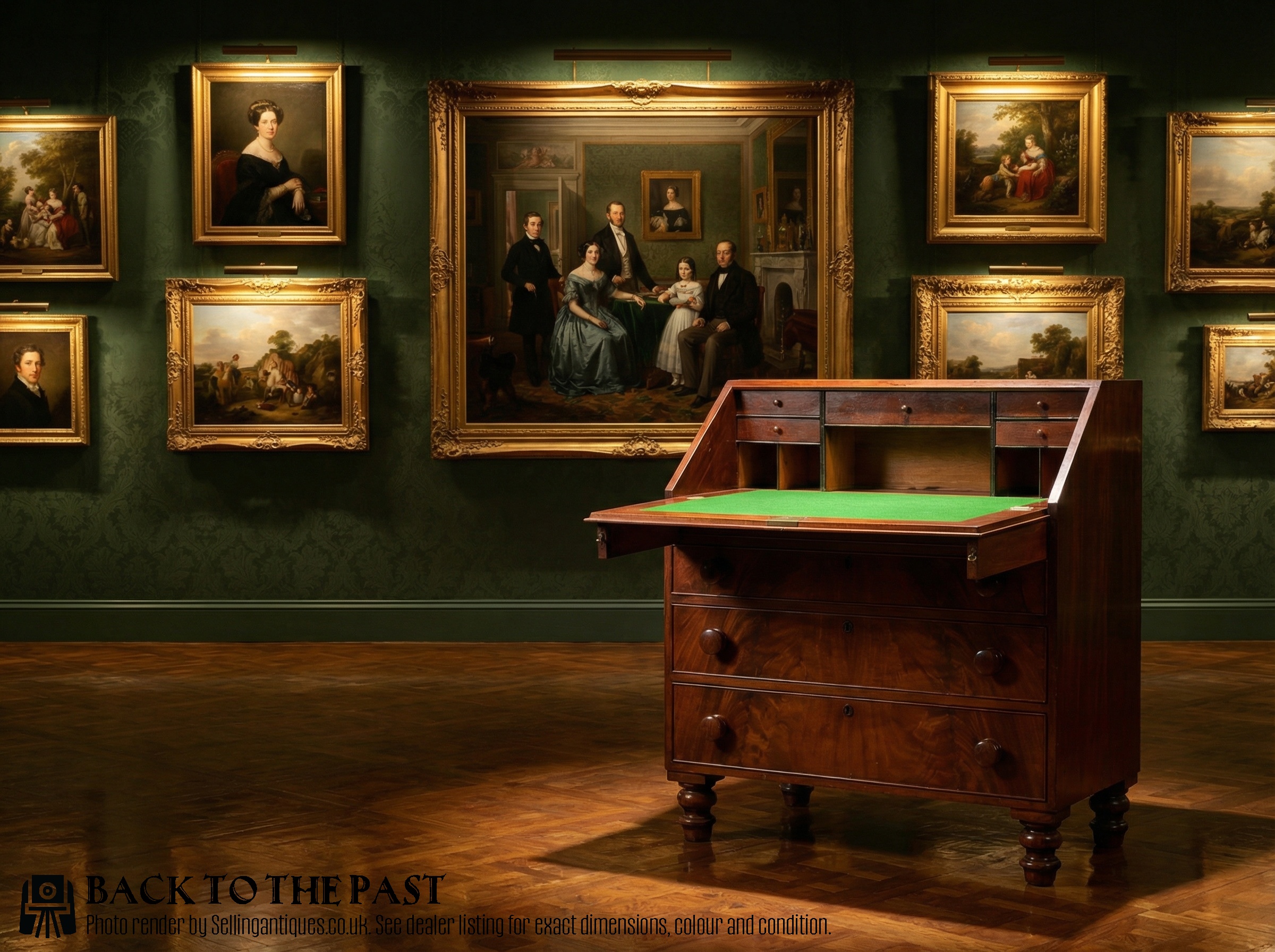
Victorian Mahogany Chest Bureau
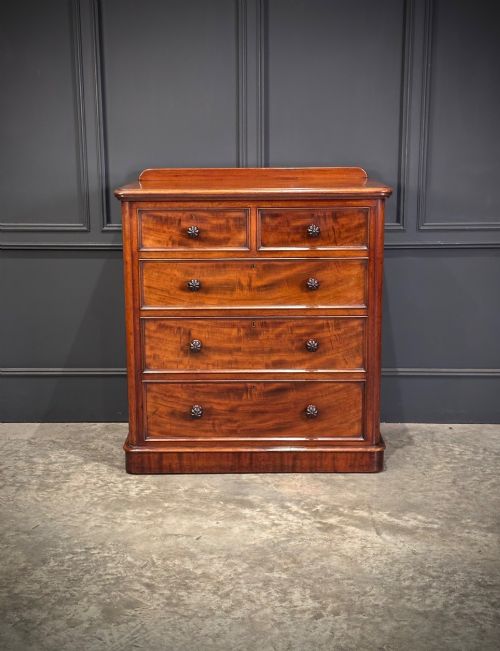
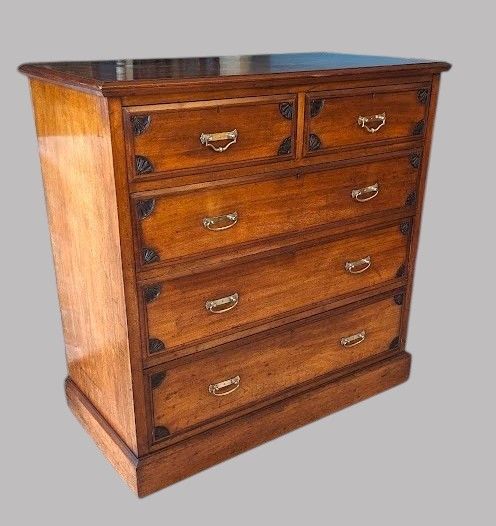
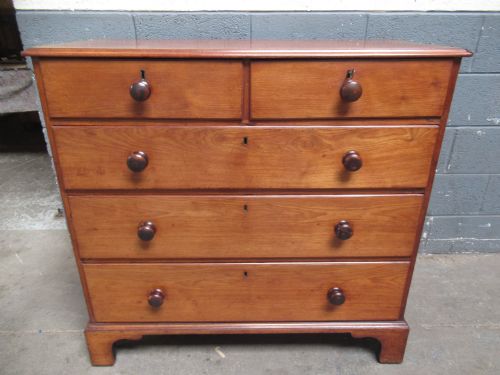
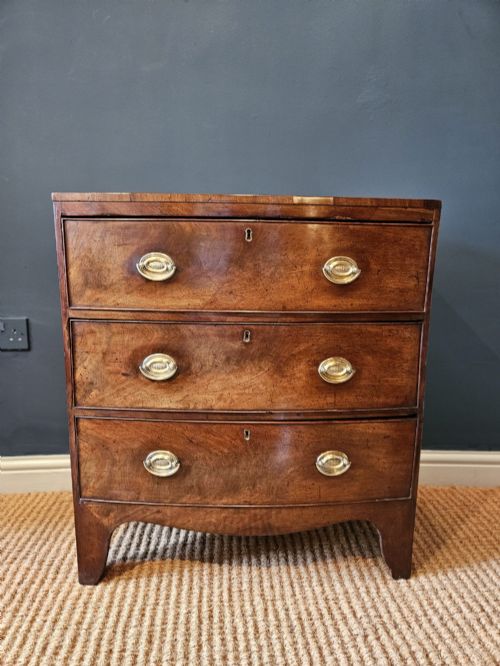
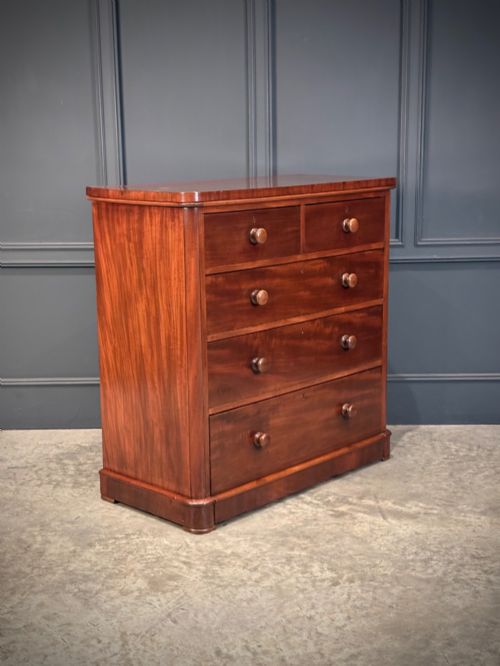
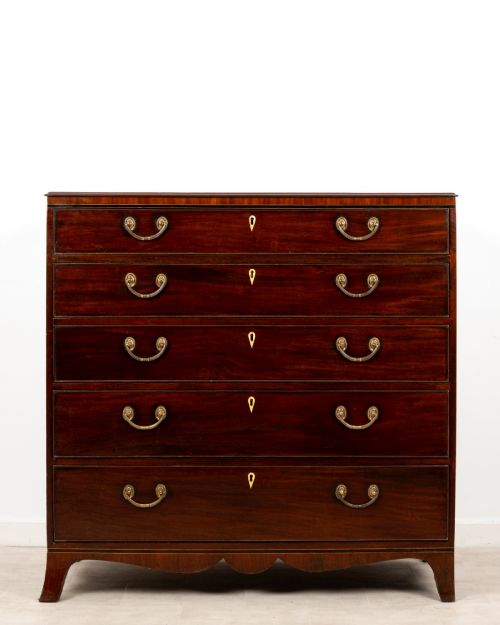
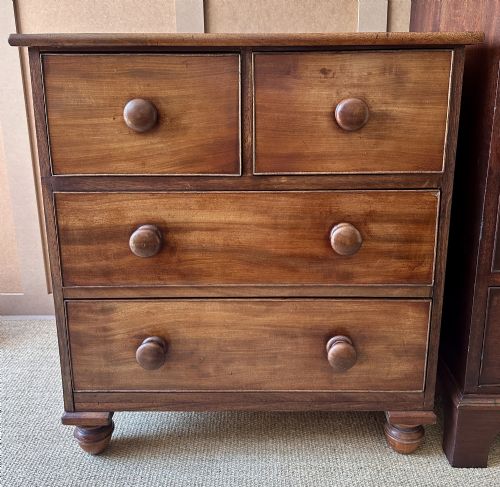
When you search for a victorian mahogany chest bureau, you are looking at substantial nineteenth-century case furniture designed for domestic study and storage. The pieces meeting this description span the Victorian era, alongside related examples from the broader nineteenth century.
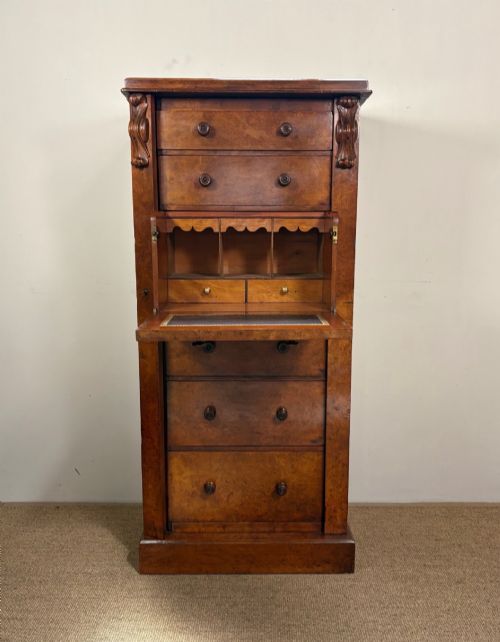
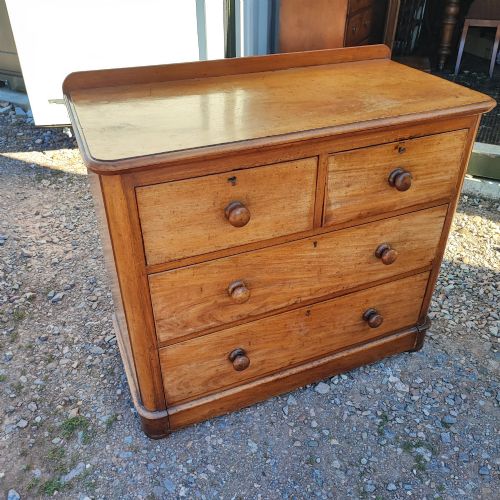
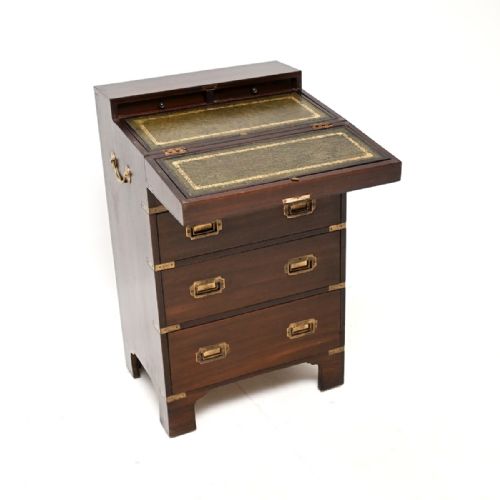
The most common forms on this page include chests of drawers alongside secretaire desks and bureaux. These incorporate drop-front writing compartments that conceal internal pigeonholes and small drawers.
Materials and Construction
Construction relies heavily on solid mahogany and flame mahogany veneer applied over secondary woods such as pine. Cabinetmakers utilised brass for hardware, handles and campaign fittings, occasionally incorporating bone or satinwood crossbanding for decorative contrast.
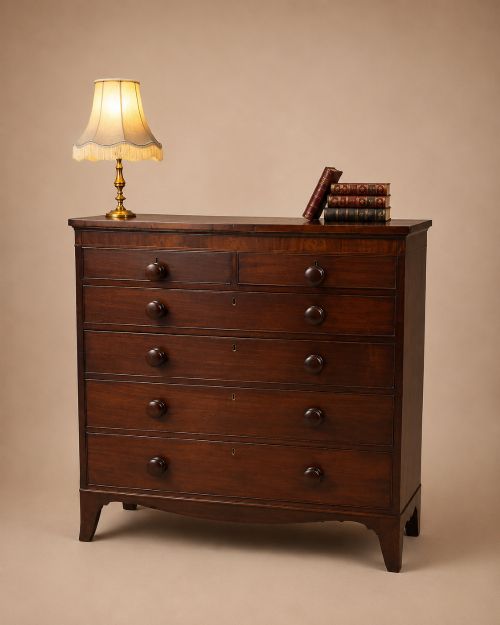
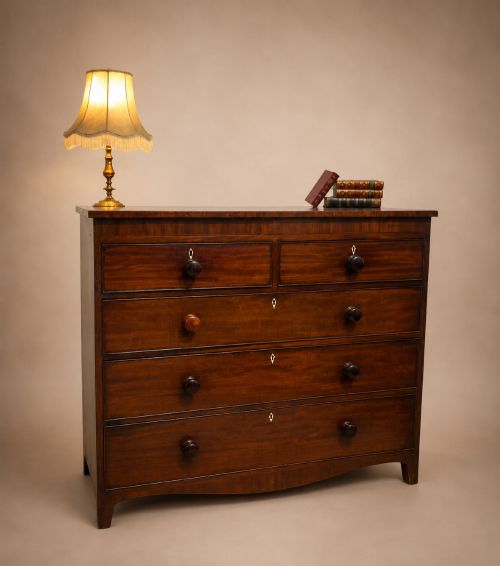
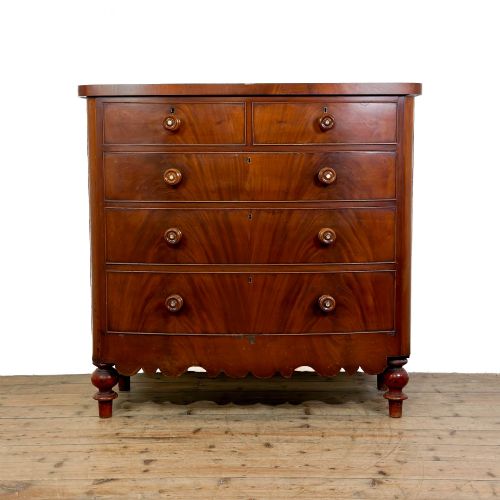
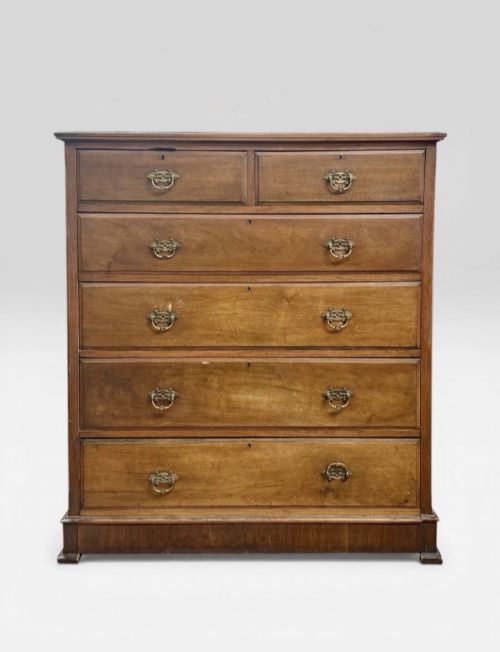
Drawers are constructed with traditional hand-cut dovetail joints, reflecting the standard joinery methods of the period. Carcases range from straight-fronted configurations to bow fronts and tall Wellington chests.
Several chests hide secret compartments within their fitted secretaire interiors, designed for keeping private letters away from prying eyes.
Character and Execution
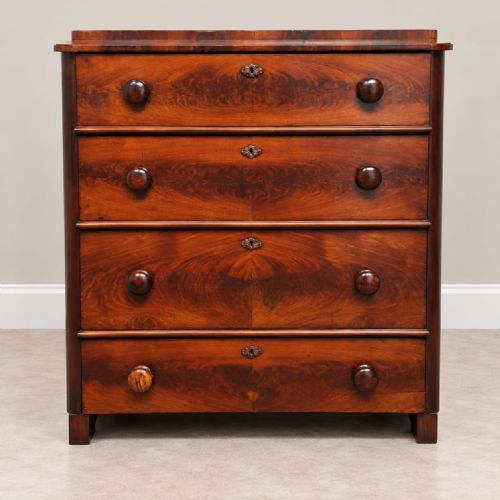
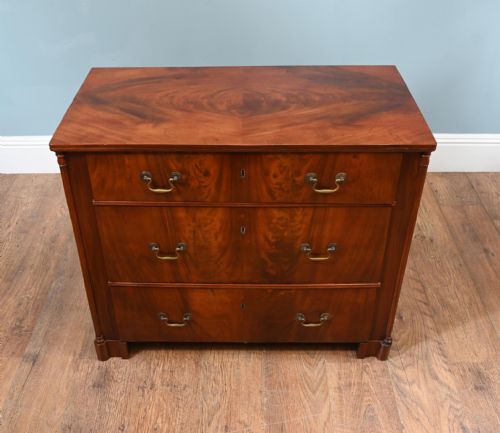
Quality rests upon the selection of timber figures, particularly the grain pattern visible in flame mahogany veneers. Well-executed pieces display continuous grain matching across drawer fronts and crisp execution of inlaid details.
Structural integrity depends on the precision of the joinery and the survival of original brass hardware. Refinements such as fitted secretaire drawers with secret compartments elevate certain examples above standard utilitarian storage.
Mawer & Stephenson
The Victorian Mahogany Chest Bureau Glossary
- Secretaire
- A cabinet or chest featuring a pull-down drawer front that serves as a writing desk. It typically conceals a fitted interior of small drawers and pigeonholes.
- Flame Mahogany
- A veneer cut from the fork of the mahogany tree where the branch meets the trunk. This produces a distinctive, highly figured flame-like grain pattern.
- Wellington Chest
- A tall, narrow chest of drawers secured by a hinged vertical locking stile on one side. This bar is usually held in place by a small padlock.
- Bow Front
- A convex curved cabinet front popular during the nineteenth century. It softens the linear appearance of a standard rectangular chest.
- Crossbanding
- A decorative border of veneer laid around the perimeter of a drawer front or tabletop so that the grain runs perpendicular to the central panel.
Victorian Mahogany Chest Bureau: Frequently Asked Questions
What is a victorian mahogany chest bureau?
It is a nineteenth-century piece of furniture that unites the drawer storage of a chest with a fold-down or pull-out writing desk. These items served as functional writing and storage units in period homes.
They combine robust mahogany timber construction with compartmentalised interiors designed for correspondence and paperwork.
How do I use a chest bureau today?
These pieces function well in studies, bedrooms or living spaces as both storage chests and compact writing stations. The internal drawers and pigeonholes accommodate modern stationery and small items.
The drop-front or secretaire drawer provides a dedicated writing surface that conceals clutter when closed.
How do I identify the Victorian period?
Victorian pieces date from the reign of Queen Victoria between 1837 and 1901. Identifying characteristics include specific timber selections like flame mahogany and characteristic hardware styles.
Construction details such as hand-cut dovetails and secondary woods like pine help differentiate these nineteenth-century pieces from later reproductions.
Are these pieces made of solid mahogany?
Many examples utilise solid mahogany for structural components and primary surfaces. However, cabinetmakers frequently applied figured mahogany veneers over secondary timbers such as pine.
This technique allowed makers to display dramatic flame grain patterns on large drawer fronts while maintaining structural stability.