
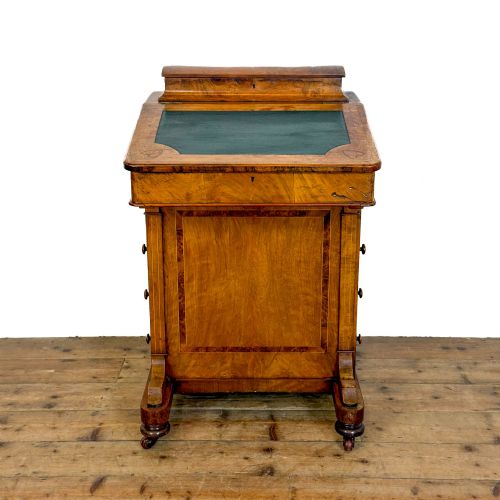


Victorian Slant Front Cabinet
A victorian slant front cabinet offers clever writing surfaces and enclosed storage, combining practical nineteenth-century utility with rich timber grain.
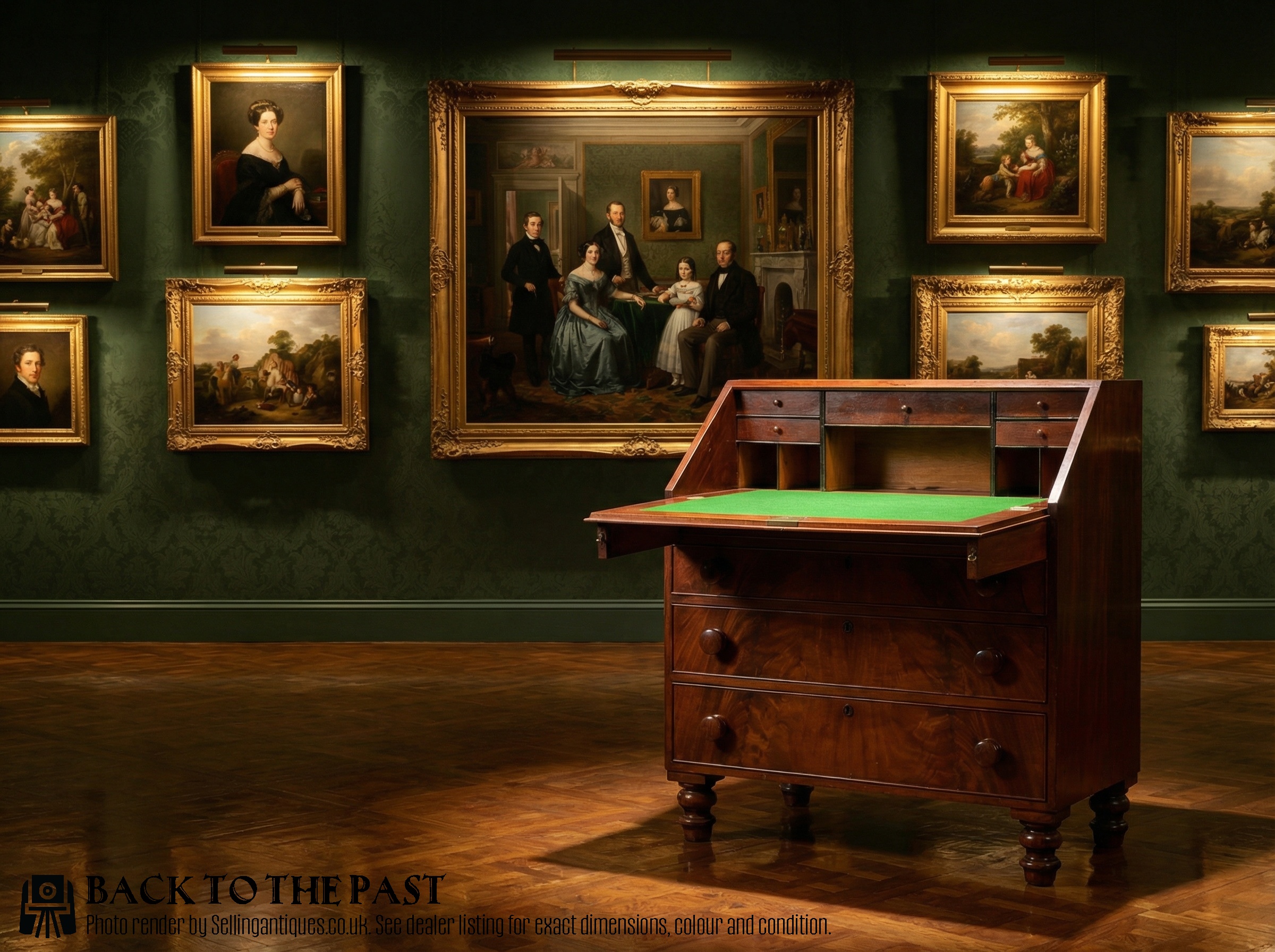
Victorian Slant Front Cabinet
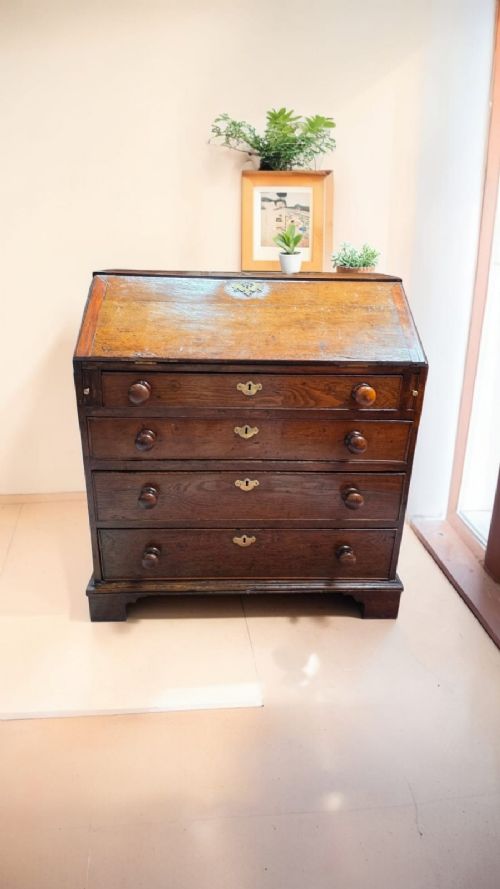
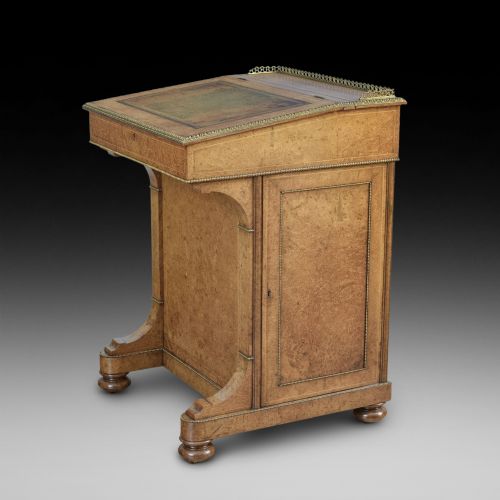
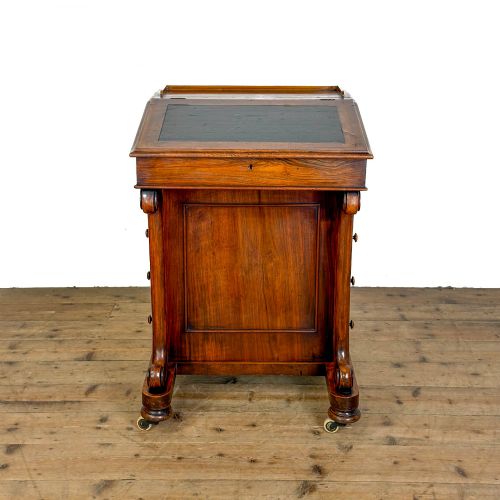
When you search for a victorian slant front cabinet, you encounter a variety of compact writing desks, upright bureaux, and stationery boxes dating from the nineteenth century. The selection leans heavily toward burr walnut and mahogany davenports featuring sloped writing surfaces above sets of drawers, alongside larger bureau bookcases and oak stationery cabinets.
Makers and workshops of the period produced these pieces in diverse regional interpretations, ranging from straightforward oak and walnut designs to elaborate French-influenced marquetry and Anglo-Indian elm pieces. The common thread is a hinged or sliding writing slope that conceals internal compartments for correspondence and ink.
Materials and construction methods
Cabinetmakers of this era relied on solid hardwoods like oak, mahogany, and rosewood for structural integrity, often applying figured veneers such as burr walnut, amboyna, and kingwood to display striking grain patterns. Brass mounts, leather inserts, and occasionally ormolu details were integrated to accent the woodwork and protect high-wear surfaces like desk lids.
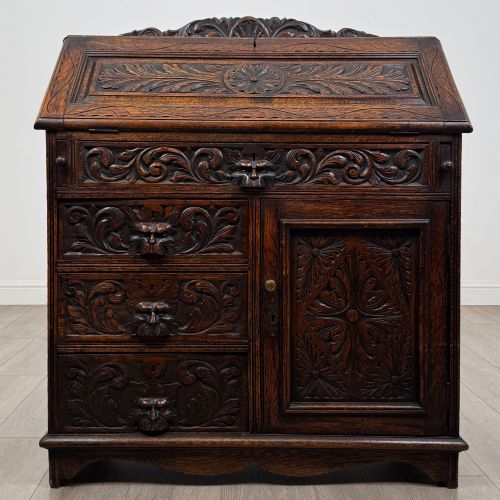
Inlaid marquetry, carved Green Man motifs, and subtle sliding mechanisms demonstrate the high level of joinery skill applied to both modest writing boxes and grander bureau bookcases. Woods were selected not only for durability but for their capacity to take a deep, polished finish that highlighted natural figures.
What distinguishes the finest examples
The distinction between standard pieces and the finest work lies in the choice of timber veneers and the precision of the internal stationery fittings. Superior examples utilise matched burr walnut or pollard oak across every visible surface, while lesser pieces rely on simpler plain timber or straightforward mahogany.
Construction details such as dovetailed drawer linings, original brass hardware, and intricate inlaid marquetry separate standard utilitarian furniture from exceptional pieces produced by premier workshops. The integration of adjustable mechanisms, leather writing surfaces, and clever secret compartments further elevates a piece within the range.
Gillows·Harris Lebus·Liberty of London
The Victorian Slant Front Cabinet Glossary
- Davenport
- A small Victorian desk featuring a sloping writing top with drawers positioned beneath the side. It typically includes internal stationery compartments and rests on a pedestal base.
- Bureau
- A writing desk with a hinged sloping flap that covers a fitted interior of pigeonholes and small drawers. They appear as standalone furniture or atop bookcase sections.
- Burr Walnut
- A specialised wood grain harvested from the wart-like growths on walnut trees. It creates highly figured, swirling patterns prized for decorative veneer work on high-end Victorian cabinetry.
- Stationery Cabinet
- An upright desktop cabinet with doors or a fall front designed to hold paper, envelopes, and writing implements. They frequently incorporate date markers or pigeonholes inside.
- Marquetry
- Decorative veneer work arranged in pictorial or geometric patterns using various coloured woods. It appears frequently on mid-nineteenth-century desks and bonheur du jour tables.
Victorian Slant Front Cabinet: Frequently Asked Questions
How were nineteenth-century stationery boxes used?
These desktop cabinets kept correspondence, envelopes, and writing paper organised in domestic studies and drawing rooms.
They often included internal partitions and integrated calendar mechanisms for daily reference.
Can these desks be used comfortably today?
Many compact nineteenth-century writing desks suit modern laptops and tablet computers despite their historical origins.
Their internal compartments remain practical for organising modern correspondence and stationery supplies.
How do I identify a piece from the Victorian period?
Look for characteristic timber choices such as burr walnut, pollard oak, and rich mahogany paired with period brass hardware.
Construction traits like hand-cut dovetails and traditional secondary woods help confirm nineteenth-century origins.