




Traditional Mahogany Bedside Cabinets
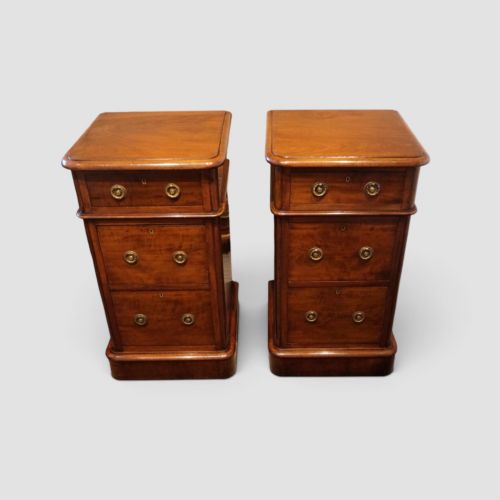
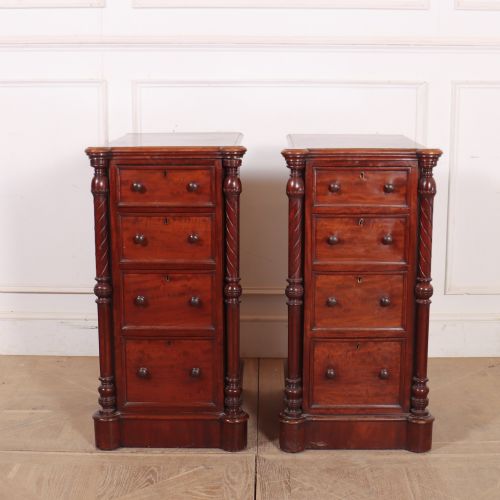
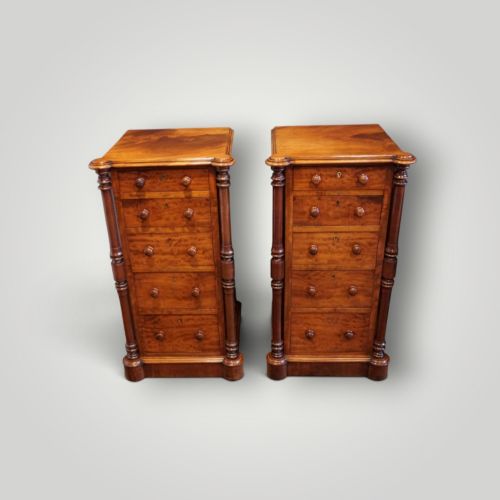
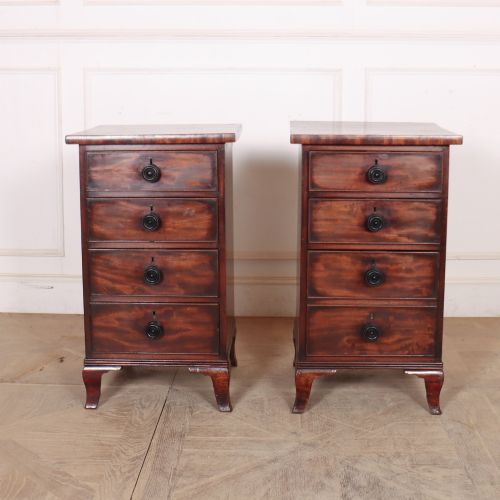
Traditional mahogany bedside cabinets combine period timber and classic storage, offering a practical surface and enclosed space beside a bed.
Traditional Mahogany Bedside Cabinets
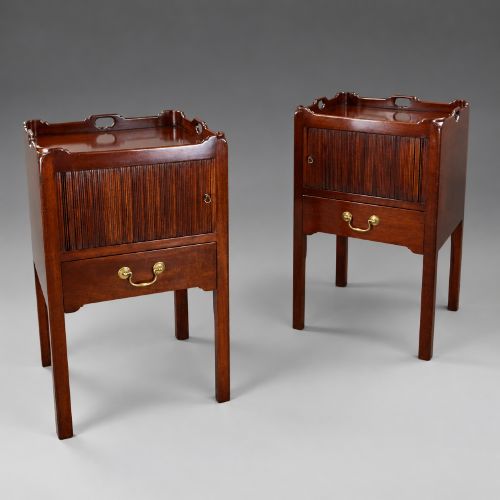
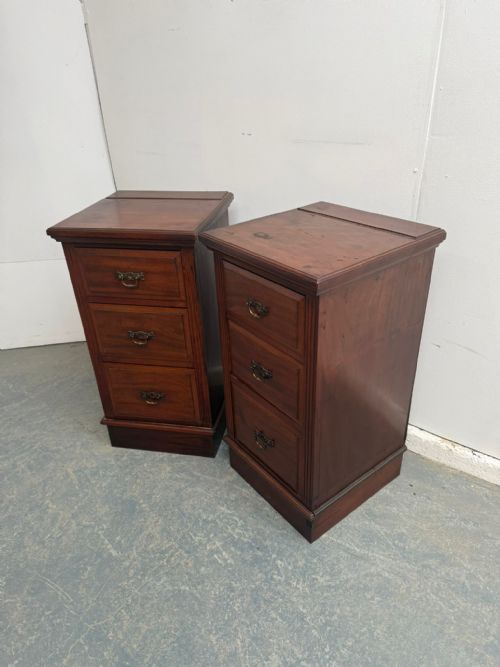
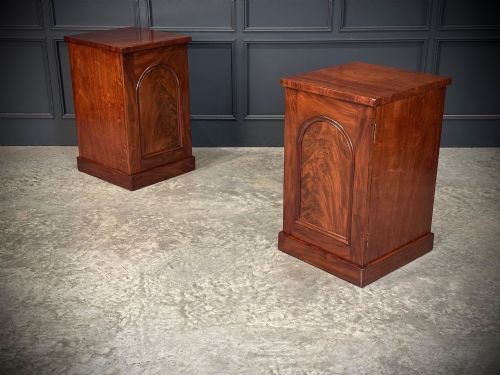
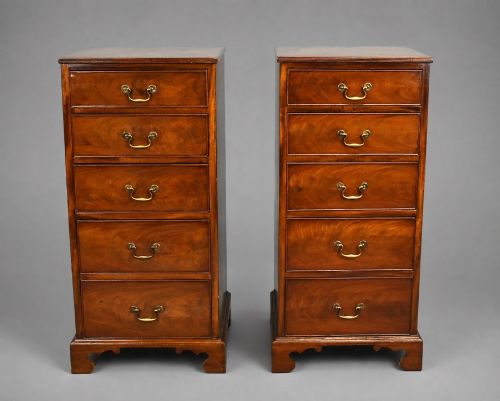
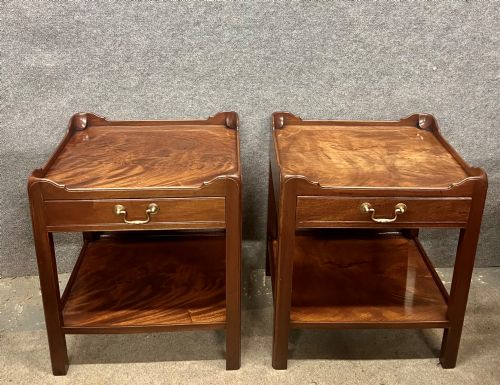
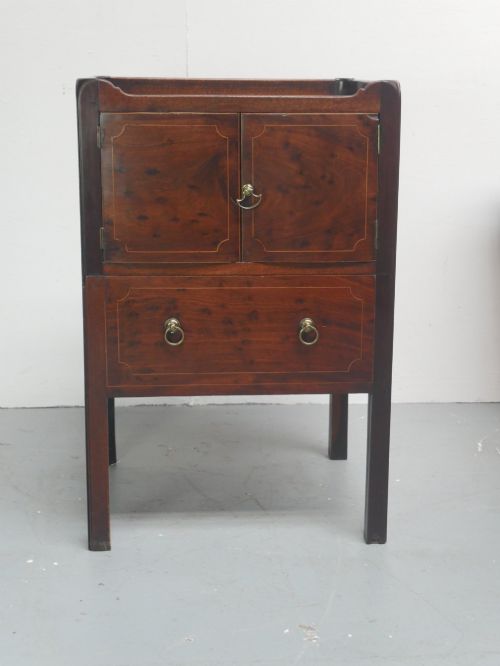
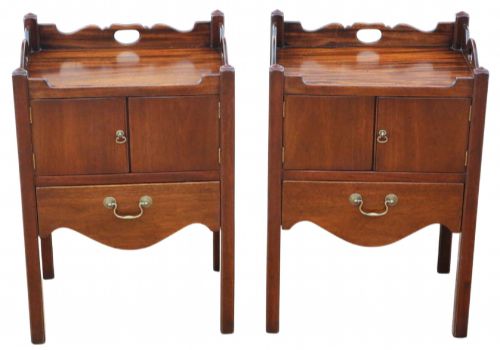
Traditional mahogany bedside cabinets appear across several distinct periods, with Victorian and Edwardian examples alongside Georgian style revivals shaping the selection. Buyers seeking traditional mahogany bedside cabinets frequently encounter pairs of small chests with three drawers, alongside single cupboards and open night stands.
The forms span from compact drop-flap cabinets to tall chests and bowfront cupboards. Makers from the nineteenth and early twentieth centuries produced these pieces primarily in mahogany, often matching larger bedroom suites of the era.
Georgian revival pieces from the early twentieth century sit alongside nineteenth century originals. This mix provides varied proportions, from narrow drawer units to low bedside cupboards designed to sit level with period mattress heights.
Materials and construction
Makers utilised solid mahogany and flame mahogany veneer over secondary timbers, often highlighting the grain on drawer fronts and cabinet doors. Brass handles, escutcheons and occasional boxwood inlay provide contrast against the deep reddish-brown timber.
Construction techniques include hand-cut dovetails on drawer carcasses and panelled cabinet doors. Wax finishes were commonly applied to seal the wood while maintaining a soft sheen on the mahogany surface.
Listings feature mahogany, flame mahogany veneer, brass, boxwood inlay, and glass across Victorian, Edwardian, and Georgian revival periods.
Assessing quality
The depth of figure in the mahogany veneer distinguishes standard workshop output from finer cabinet work. Flame mahogany selections show striking natural patterns across the primary surfaces.
Proportion and decorative restraint dictate the distinction between simpler vernacular pieces and elevated revival or period examples. Subtle details such as boxwood stringing or finely cast brass hardware indicate higher initial manufacture.
Warings Liverpool·Edwards & Roberts
The Traditional Mahogany Bedside Cabinets Glossary
- Flame mahogany
- A veneer cut from the fork of the mahogany tree where the branch meets the trunk. This creates a distinctive swirling pattern highly prized by cabinet makers.
- Dovetail
- A joint used in drawer construction formed by interlocking wedge-shaped fingers. Hand-cut dovetails indicate traditional craftsmanship.
- Bowfront
- A curved cabinet front that swells outward in the centre. This shape requires skilled joinery to bend timber or veneer to a precise radius.
- Escutcheon
- A protective plate surrounding a keyhole. These are often made of brass on traditional mahogany furniture.
- Drop-flap
- A hinged panel that lowers to form a surface. This mechanism appears on compact bedside cabinets designed to save space.
Traditional Mahogany Bedside Cabinets: Frequently Asked Questions
How do I date a bedside cabinet?
Dating relies on timber selection, construction methods, and stylistic cues present in the piece. Victorian and Edwardian examples often feature machine-sawn elements alongside hand joinery.
Cabinet hardware and secondary woods also provide clues to the era of manufacture. Comparing the design to known revival periods helps narrow down the decade.
Were these cabinets originally made in pairs?
Bedside cabinets were frequently produced as single units rather than matching pairs during the eighteenth and early nineteenth centuries. Matching pairs became more common by the Victorian era and into the Edwardian period.
Many pairs found today were assembled later by matching similar single pieces. Checking timber grain and interior construction helps confirm if a pair originated together.
What is flame mahogany?
Flame mahogany is a figured wood veneer harvested from the junction where branches meet the trunk of the tree. The grain pattern resembles flickering flames.
Cabinet makers applied these veneers to the most prominent surfaces of a piece, such as drawer fronts and cabinet doors, to create visual impact.
How do I care for mahogany furniture?
Maintaining traditional mahogany involves dusting with a soft cloth and applying a quality wax periodically. Avoiding direct sunlight prevents the rich reddish-brown colour from fading.
Keeping timber away from direct heat sources stops the solid wood and veneer from drying out or splitting.