


Traditional Living Room Rug
A traditional living room rug grounds a space with deep historical character and enduring woven warmth.
Traditional Living Room Rug
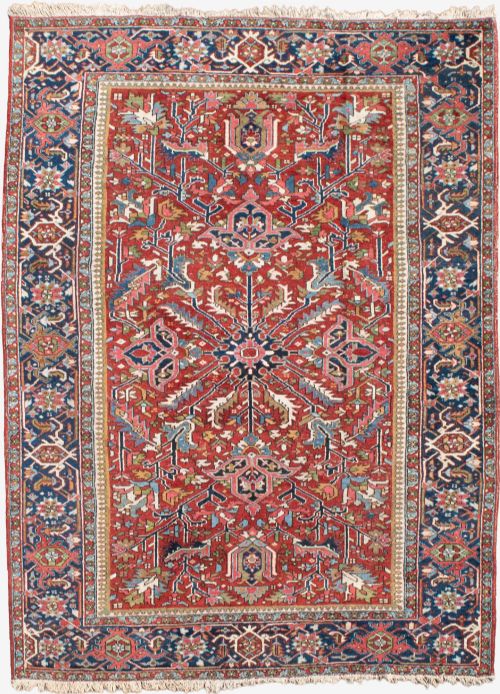
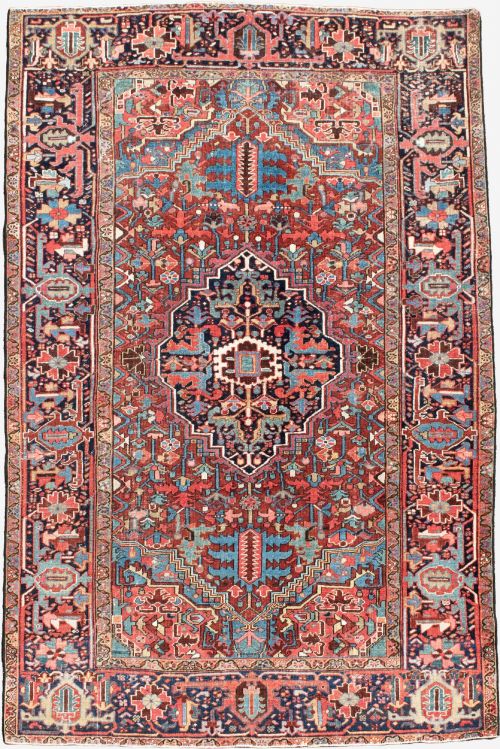
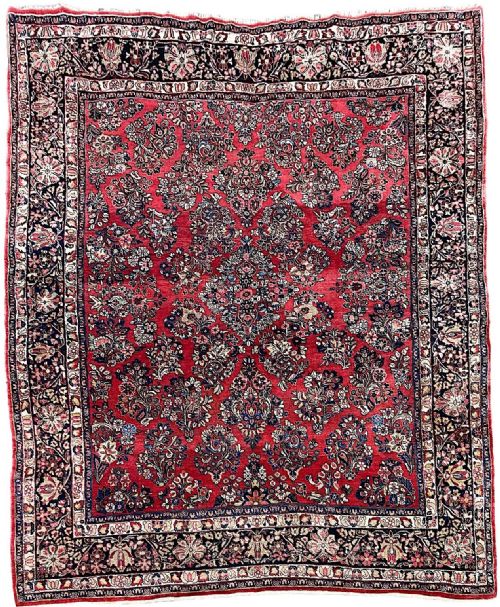
When you search for a traditional living room rug, you encounter hand-knotted floor coverings spanning the late nineteenth century and the early decades of the twentieth century. These pieces predominantly originate from Persian weaving traditions, including Heriz, Sultanabad, Hamadan, and Qashqai styles alongside Afghan examples.
The inventory on this page consists heavily of large area rugs and furnishing carpets designed for practical domestic deployment. Such formats range from compact Hamadan rugs to substantial Heriz and Ziegler carpets exceeding three metres in length.
Buyers seeking these textiles find distinct regional patterns that carry decades of domestic use. The predominant styles reflect traditional oriental and tribal weaving aesthetics preserved from the period between eighteen eighty and nineteen thirty.
How they were made
These floor coverings rely on natural textile foundations utilising wool and cotton. Weavers knotted pile wool onto sturdy cotton warps and wefts to create dense, hard-wearing furnishing carpets suitable for heavy domestic traffic.
The construction methods involve hand-knotting techniques traditional to Persian and Afghan workshops. Artisans built up complex geometric and medallion patterns using dyed wool yarns spun by hand.
Traditional Living Room Rug Retail Price Guide 2026
Typical asking prices for traditional living room rug among the pieces listed under this phrase on Sellingantiques today, from the lower quarter to the upper quarter. They describe what is for sale here now, not the wider market.
Current listings feature pieces produced between eighteen eighty and nineteen thirty, utilising wool and cotton across Persian Heriz, Sultanabad, Hamadan, Qashqai, and Afghan styles.
What varies in quality
The distinction between standard furnishings and exceptional examples lies in the density of the knotting and the complexity of the regional design. Finer carpets display crisper detail within the traditional motifs and superior handling of the wool pile.
Scale and proportion also dictate the standing of a piece within this category. Large room-size carpets with well-balanced dimensions command greater appreciation than smaller utility rugs.
The Traditional Living Room Rug Glossary
- Heriz
- A style of Persian carpet known for bold geometric medallions and durable construction. These rugs originate from the Heris region in northwestern Iran.
- Hamadan
- A designation for rugs produced in and around the hub of Hamadan in western Iran. They typically feature sturdy village weaves and traditional tribal motifs.
- Qashqai
- Textiles produced by the Qashqai confederacy of nomadic pastoralists in southwestern Iran. These pieces often exhibit expressive tribal designs executed in rich wool.
- Warp
- The vertical threads stretched lengthwise on a loom that form the foundational skeleton of the rug. Cotton is the standard material used for this structural support.
- Weft
- The horizontal threads passed across the warp to hold the knots in place. Together with the warp, they create the firm grid of the carpet.
Traditional Living Room Rug: Frequently Asked Questions
How do I clean an antique rug?
Gentle surface vacuuming without a rotating brush helps remove everyday dust. Professional specialist cleaning is recommended for deeper maintenance to protect the wool pile.
Water and harsh chemical detergents should be avoided to prevent dye migration and fibre degradation. Professional conservators understand how to handle nineteenth-century textiles safely.
Are these rugs suitable for busy rooms?
Many examples in this category were constructed specifically as hard-wearing furnishing carpets. Their dense wool pile and sturdy foundations handle regular domestic foot traffic effectively.
Placing an appropriate underlay beneath the carpet provides extra cushioning and prevents slipping. This simple addition reduces friction against the floorboards and extends the lifespan of the textile.
How do I identify a Heriz rug?
Heriz carpets are typically distinguished by a prominent central geometric medallion and robust corner spandrels. The colour palettes often incorporate strong terracotta, navy, and ivory tones.
The weave is notably stiff and heavy compared to finer city carpets. This structural firmness derives from the sturdy cotton foundations and thick wool knots characteristic of the region.
What age are these rugs?
The pieces available here date primarily from the late nineteenth century through to the early decades of the twentieth century. Specific production dates span from eighteen eighty to nineteen thirty.
This era represents a period before the widespread commercial adoption of synthetic dyes in standard village production. The materials and structural wear reflect genuine age earned through decades of domestic service.