

Traditional Kitchen Plate Rack
A traditional kitchen plate rack organises crockery in plain sight, bringing practical country utility and timber character straight to domestic walls.
Traditional Kitchen Plate Rack
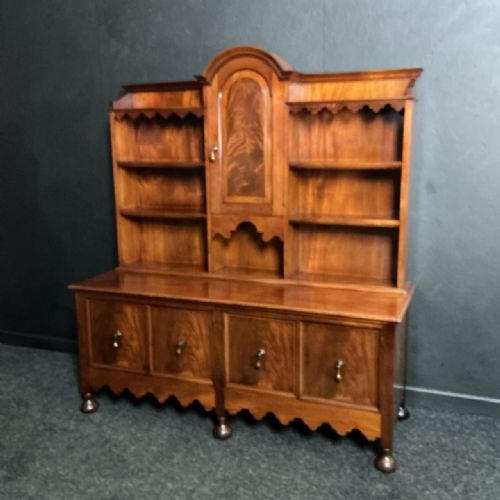
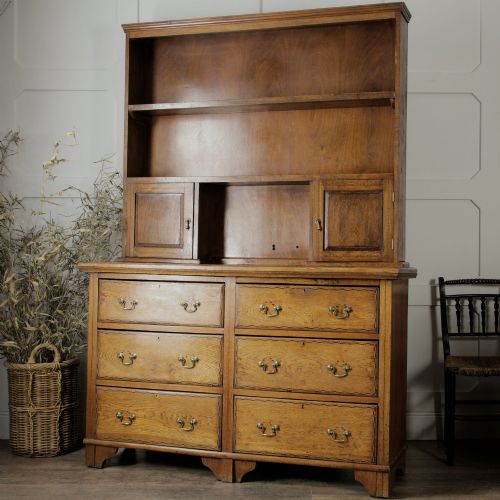
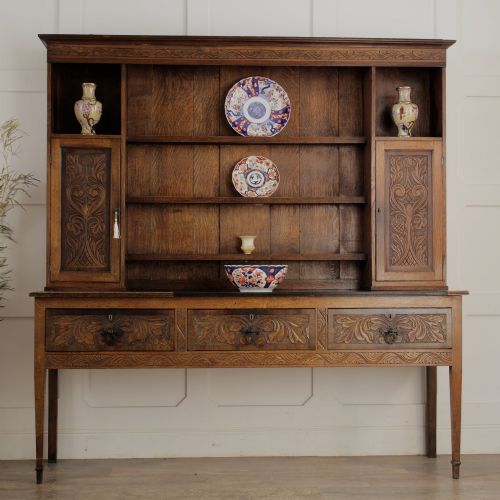
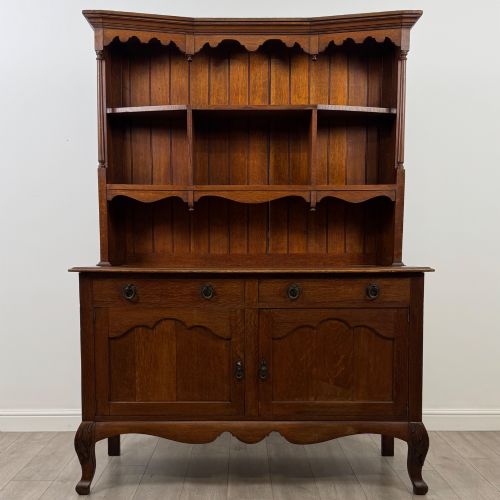
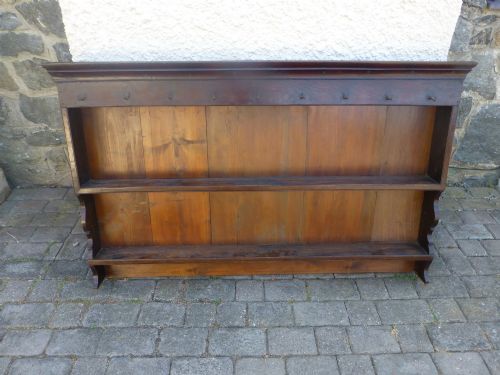
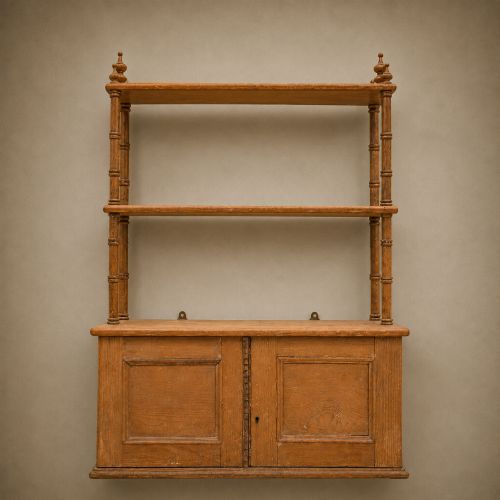
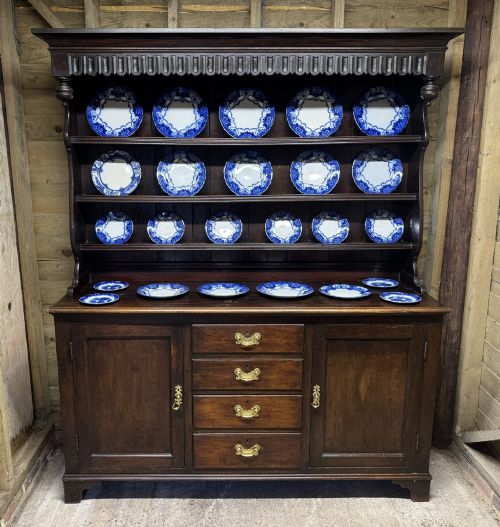
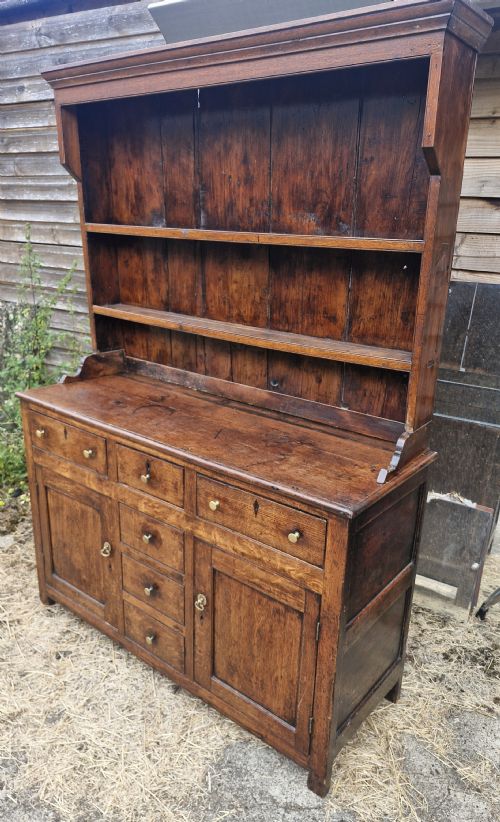
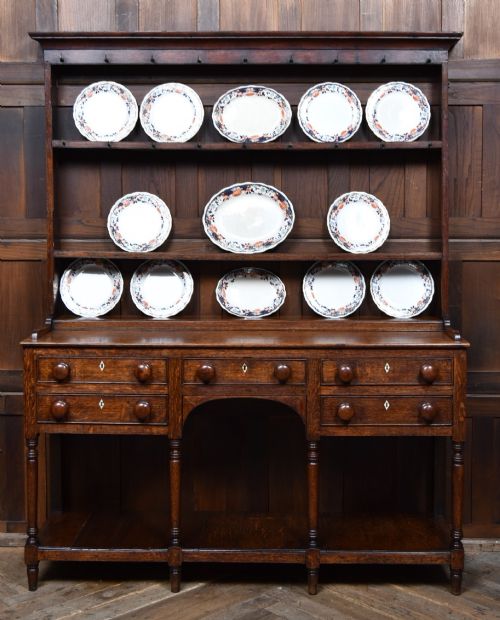
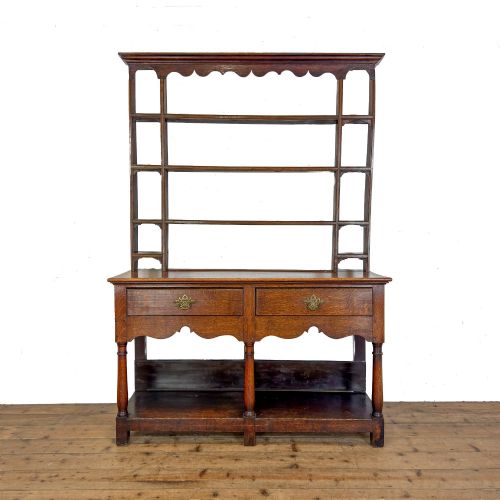
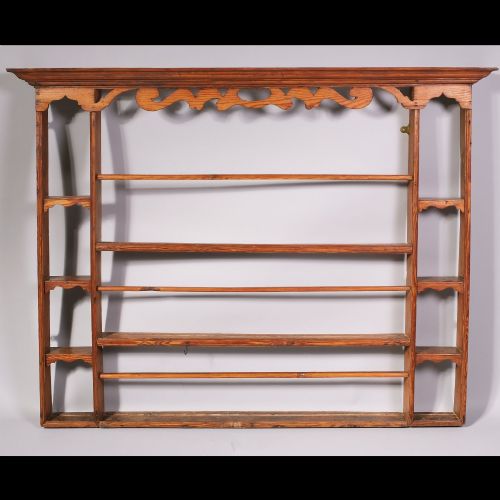
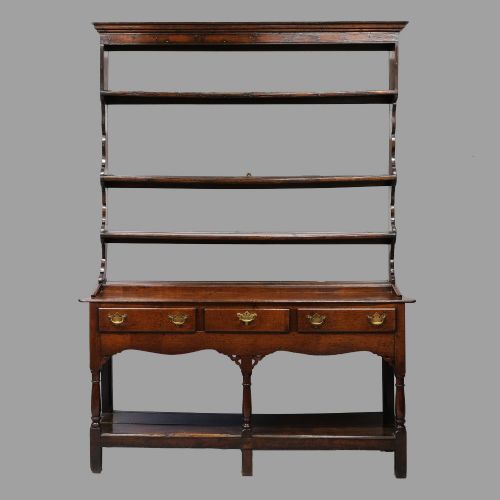
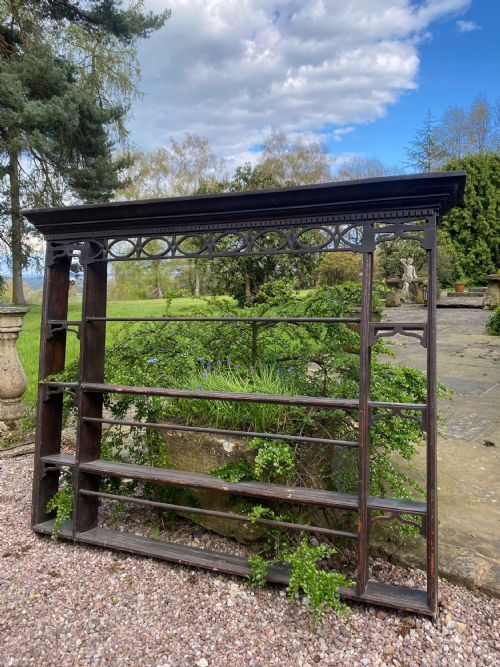
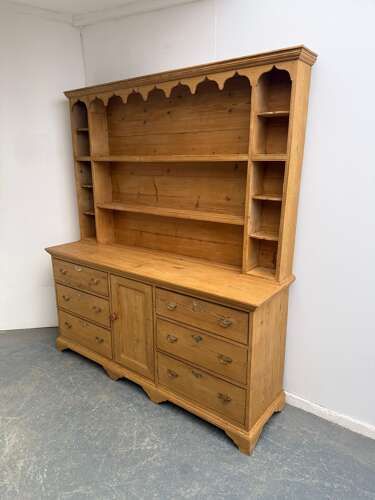
A traditional kitchen plate rack appears across this selection primarily as part of larger country dressers or as standalone wall-mounted shelving units. These pieces emerge from Georgian, Victorian and Edwardian periods, carrying regional designations such as Welsh, Shropshire or West Country origins.
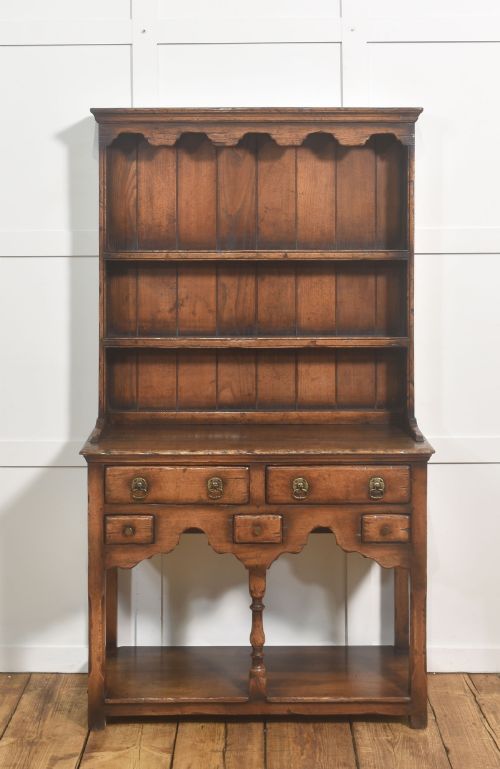
The format ranges from open-backed oak plateracks to pine wall shelves with cupboards and potboard dresser bases. Most examples lean heavily into English country, rustic farmhouse and vernacular traditions designed for everyday domestic life.
Materials and Construction
Makers built these pieces predominantly using solid native timbers like oak, pine and mahogany, occasionally incorporating brass and iron hardware or bone details. Surfaces show traditional wax finishes, honey or golden tones, and occasional folk art paintwork.
Joinery relies on sturdy vernacular methods suited to holding heavy earthenware and ceramic plates. Wall racks and dresser top tiers feature slotted or grooved rails designed to secure plates upright safely.
Listings span the eighteenth, nineteenth and early twentieth centuries, covering Georgian, Victorian and Edwardian periods in oak, pine and mahogany.
Gradations of Make
Quality rests in the choice of timber and the integrity of the original structure. Dense golden oak and flame mahogany display richer grain depth than standard utility pine.
The retention of original backboards, plate slats and mounting hardware distinguishes superior survivors from pieces subjected to later alterations or heavy timber replacement.
The Traditional Kitchen Plate Rack Glossary
- Potboard
- A low open shelf incorporated into the base of a dresser, historically used for storing pots and pans. This lower tier provides structural stability to the whole assembly.
- Delft rack
- An open wall-mounted shelving unit designed specifically to display delftware and ceramic plates upright. The rails prevent the plates from sliding forward.
- Vernacular
- Objects built by local craftsmen following regional traditions rather than strict academic architectural designs. These pieces prioritise practical function and local timber availability.
- Breakfront
- A piece of furniture where the central section projects forward from the flanking sides. This layout adds visual depth and varied storage compartments.
Traditional Kitchen Plate Rack: Frequently Asked Questions
How do I mount a heavy oak plate rack?
Secure the timber frame directly into structural wall studs using appropriate heavy-duty fixings. Distribute the weight evenly across the mounting points.
Because solid oak and pine racks weigh substantially when loaded with ceramics, professional installation ensures the wall supports the load safely.
Can I use these racks for modern heavy dinnerware?
Most traditional plate racks accommodate standard ceramic and earthenware plates securely within their slotted wooden rails.
Check the depth of the plate grooves and the strength of the timber rails before loading exceptionally thick or heavy modern stoneware.
How do I care for the waxed timber finish?
Maintain the surface by dusting with a dry cloth and applying a traditional beeswax sparingly when the timber appears dry. Avoid excessive moisture.
Keeping the wood away from direct heat sources prevents the oak or pine from drying out and splitting over time.
Are wall shelves and dresser racks separate pieces?
Many listings show plate racks that detach from dresser bases, while others comprise integrated wall-mounted shelf units built as single items.
Examine the construction joints and backboards to see whether the top rack originally belonged to the lower dresser base.