

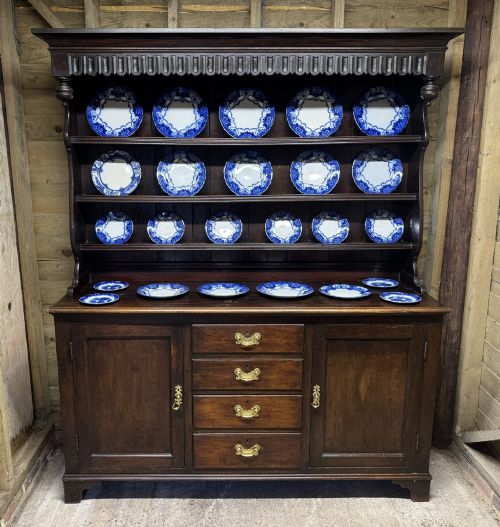
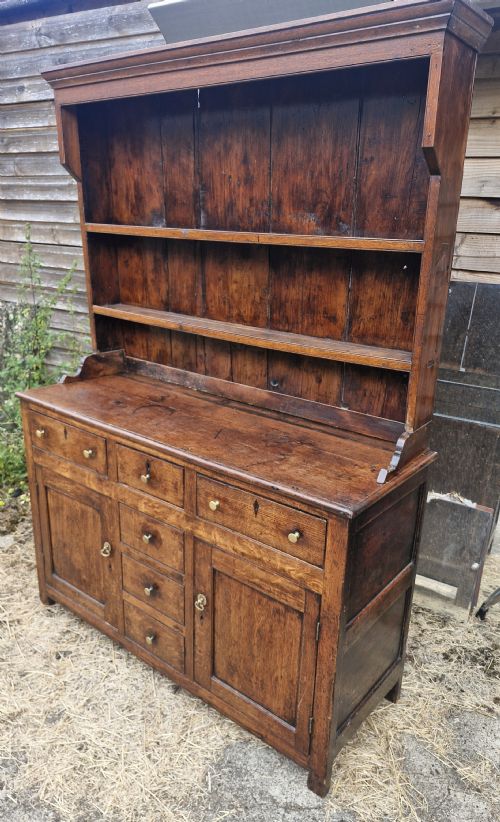
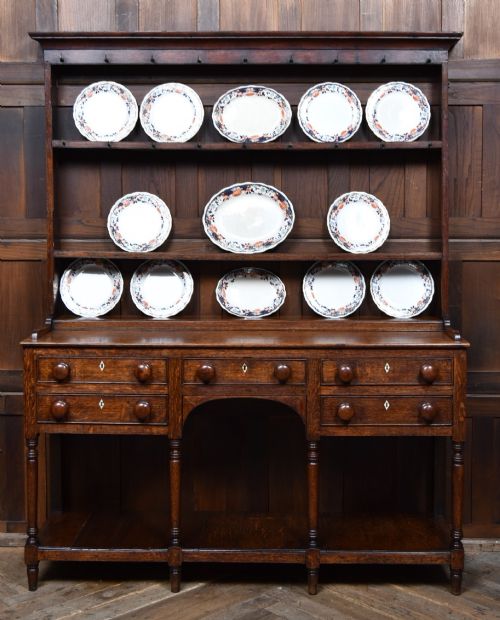
Kitchen Dresser Rack
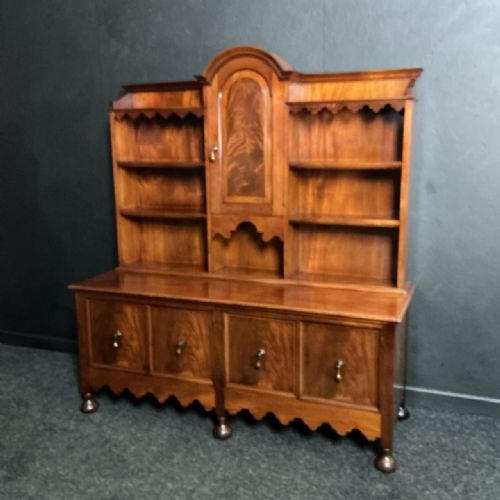
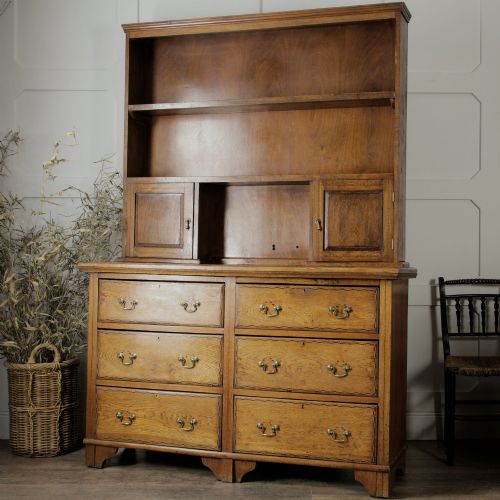
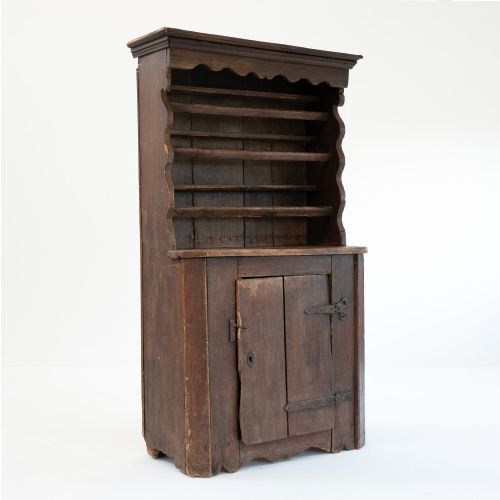
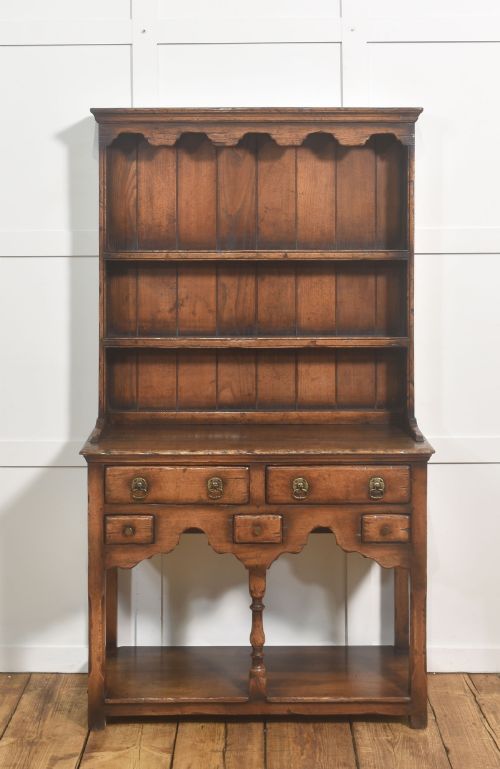
A kitchen dresser rack holds everyday ceramics and displays timber utility with the straightforward honesty of domestic history.
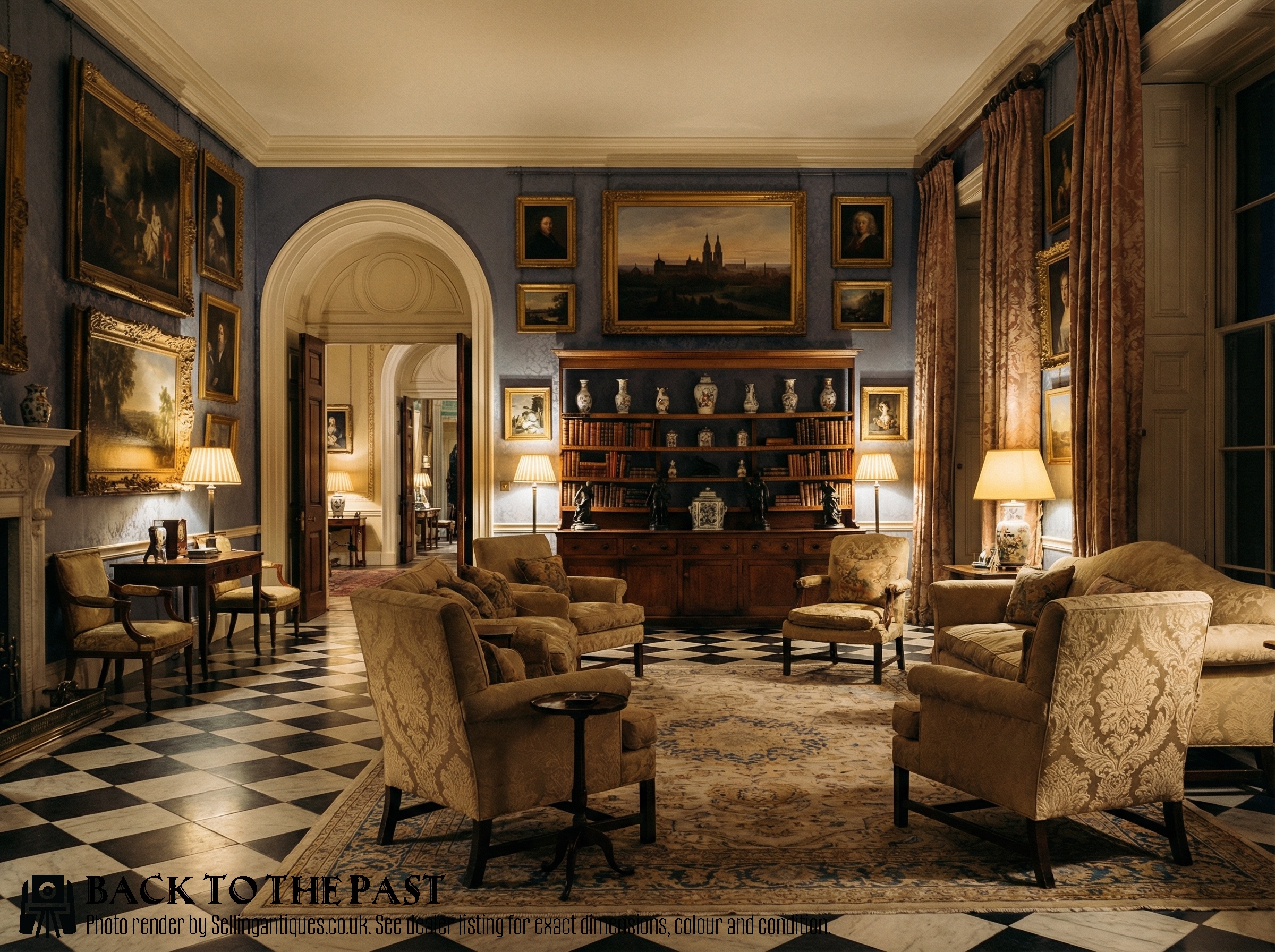
Kitchen Dresser Rack
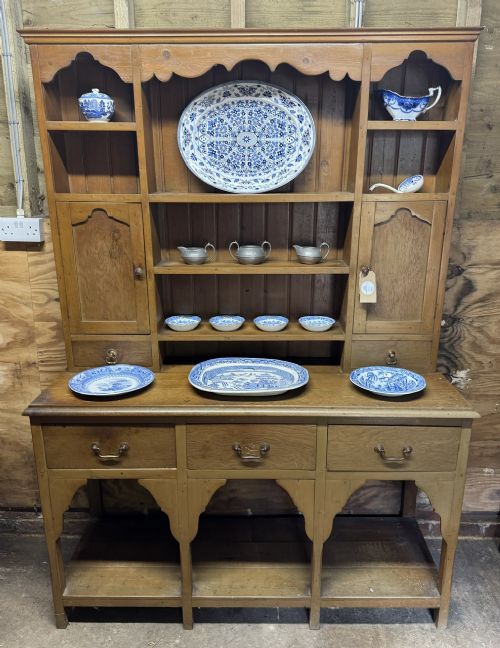
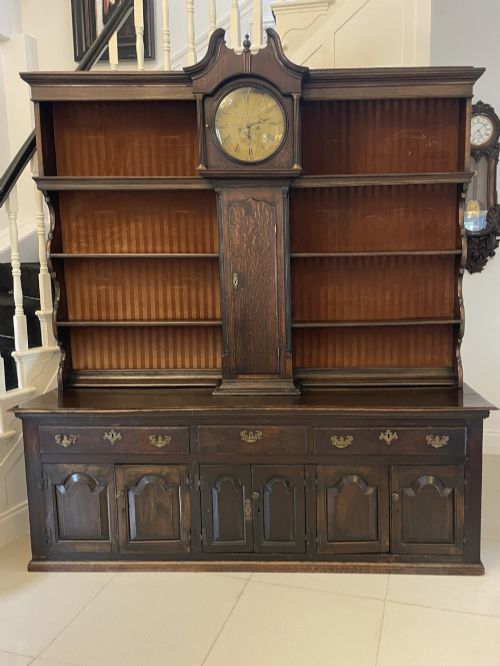
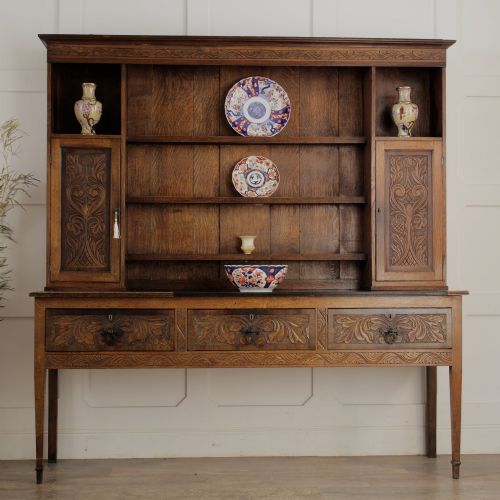
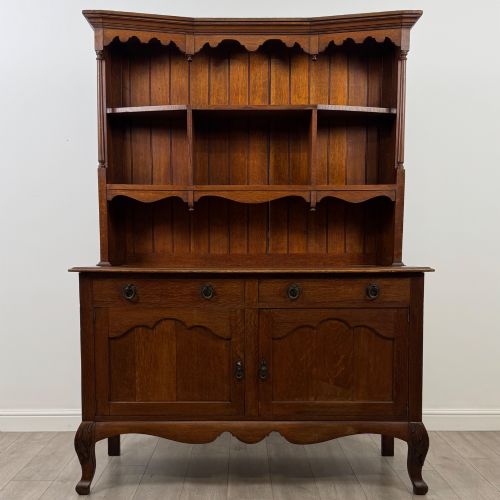
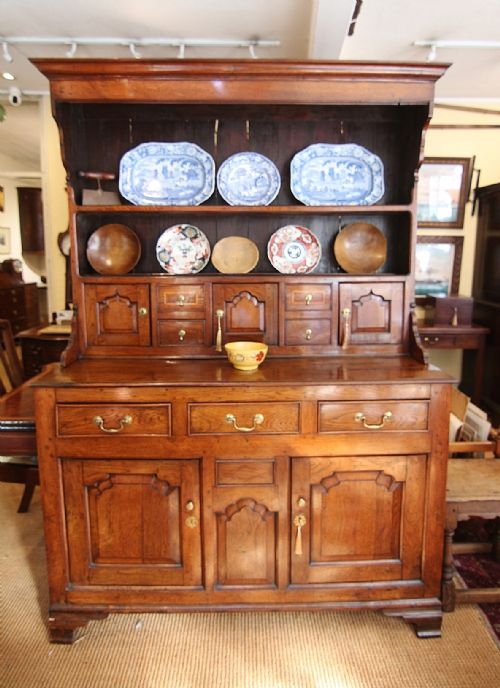
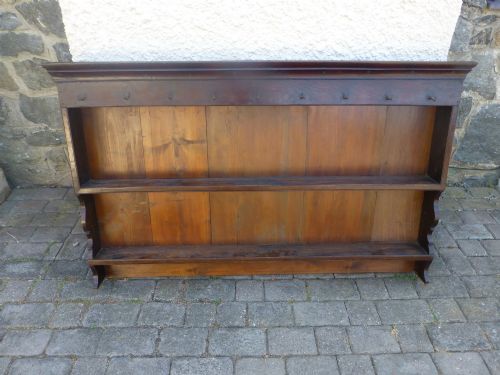
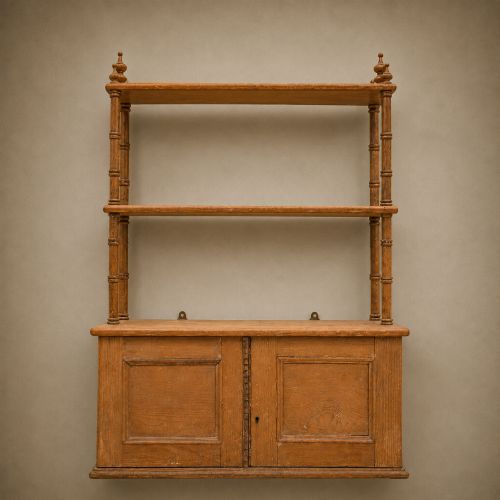
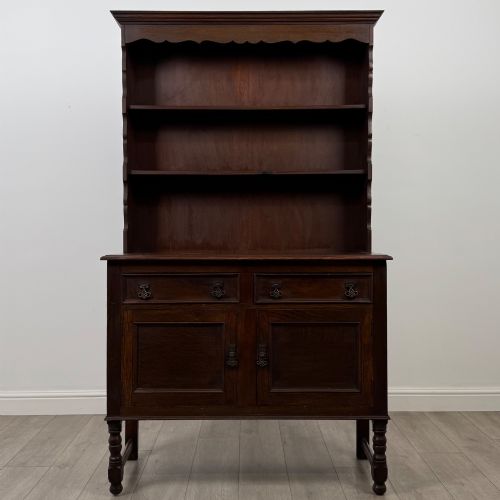
A kitchen dresser rack serves as the upper display shelving or standalone wall hanging portion of a traditional storage unit. These elements organise plates, bowls and serving platters within domestic spaces.
The selections span 18th century, 19th century, Georgian, Victorian, and Edwardian periods. Forms range from dedicated wall shelves and plate racks to complete multi-part dressers featuring integrated display structures.
Regional vernaculars appear strongly, particularly Welsh and English country styles, alongside painted and polished finishes. Buyers encounter everything from simple pine wall boards to substantial oak structures designed for rural kitchens.
How they were made
Construction relies heavily on native timbers such as oak, pine, and mahogany, shaped using traditional hand joinery. Craftsmen built plate rails and shaped cornices to support heavy earthenware safely against walls.
Surfaces receive various treatments, from original wax and paint to carved decorative accents like Green Man motifs. Natural patinas develop through decades of kitchen use, oil exposure, and regular cleaning.
Listings feature oak, pine, mahogany, and painted finishes across Georgian, Victorian, and Edwardian eras.
What varies in quality
Construction depth separates basic utility pieces from finer vernacular examples. Superior items display careful timber selection, proportioned cornices, and integrated peg rails or shaped friezes.
Surface preservation dictates the character of surviving examples. Retaining original paint, untouched patination, and unaltered hanging points separates pieces that keep their historical integrity from heavily restored alternatives.
The Kitchen Dresser Rack Glossary
- Plate rack
- A set of open shelves fitted with grooved bases or wooden rails designed to hold plates upright. This arrangement allows wet crockery to drain and dry while on display.
- Potboard
- The lower open shelf situated near the floor on traditional country dressers. It originally held heavy pots and pans off damp stone kitchen floors.
- Delft
- Glazed earthenware commonly displayed on kitchen shelving. The term often describes the specific style of rack built to showcase imported or domestic ceramic collections.
- Vernacular
- Architecture and furniture built by local craftsmen using regional traditions and available materials rather than formal academic styles. Welsh and English country pieces exemplify this approach.
Kitchen Dresser Rack: Frequently Asked Questions
How do I hang a wall rack?
Wall racks require secure fixings into structural studs or masonry walls to support the heavy weight of timber and ceramics. Fixing points should align with internal vertical framing members.
Distributing the load across multiple brackets prevents timber warping and ensures the display remains stable under daily use.
What is a Welsh dresser rack?
A Welsh dresser rack specifically refers to the upper shelving unit associated with Welsh regional cabinetmaking traditions. These sections often feature stepped plate shelves and boarded backs.
They function independently as wall-mounted plate displays or sit securely atop matching base cabinets.
How do I clean old pine?
Old pine surfaces respond best to gentle dusting with a dry cloth and occasional application of traditional beeswax. Avoid modern liquid cleaners that strip away established patinas.
Keeping timber away from direct heat sources prevents the wood from drying out and splitting over time.
Are these racks suitable for modern kitchens?
These racks integrate well into contemporary spaces by providing open storage for everyday dishware and ceramics. Their neutral timber tones complement modern minimalist or rustic interior schemes.
Measuring available wall space carefully ensures the proportions match surrounding cabinetry and ceiling heights.